Home/Blogs/Your Ultimate Guide to Clicker Training for Dogs
Your Ultimate Guide to Clicker Training for Dogs
raining your dog can transform your relationship and make daily life easier for both of you. Clicker training stands out as one of the most effective, science-based methods available today. This positive reinforcement technique helps dogs learn faster while strengthening the bond between you and your furry companion.
What Is Clicker Training?
Clicker training uses a small handheld device that makes a distinct clicking sound. The click marks the exact moment your dog performs the desired behavior. After each click, you immediately reward your pet with a treat, toy, or praise.
This method works because the click creates a clear communication bridge. Your dog learns to associate the sound with positive outcomes, making it easier to understand which behaviors earn rewards.
Why Choose Clicker Training?
Clear Communication
Dogs understand the clicker’s precise timing better than verbal cues alone. The sound captures the exact second they do something right, eliminating confusion about what earned the reward.
Faster Learning
Research shows that dogs trained with clickers and positive reinforcement learn commands more quickly than those trained with traditional methods. The immediate feedback accelerates the learning process.
Builds Confidence
This training approach creates a stress-free learning environment. Your dog gains confidence as they figure out how to earn clicks and rewards, rather than fearing mistakes.
Strengthens Your Bond
Positive training sessions become quality time you both enjoy. Your dog will look forward to training, viewing it as a fun game rather than a chore.
Getting Started with Clicker Training
Choose the Right Equipment
You’ll need:
A quality clicker (some have adjustable volumes)
Small, soft training treats your dog loves
A quiet space free from distractions
Patience and consistency
Charge the Clicker
Before teaching any commands, your dog needs to learn what the click means. Click the device and immediately give a treat. Repeat this 10-15 times over several short sessions. Soon, your dog will perk up at the sound, expecting a reward.
Start with Simple Behaviors
Begin with easy actions your dog already does naturally. Click and treat when they sit, look at you, or touch your hand with their nose. This builds their understanding of the click-reward connection.
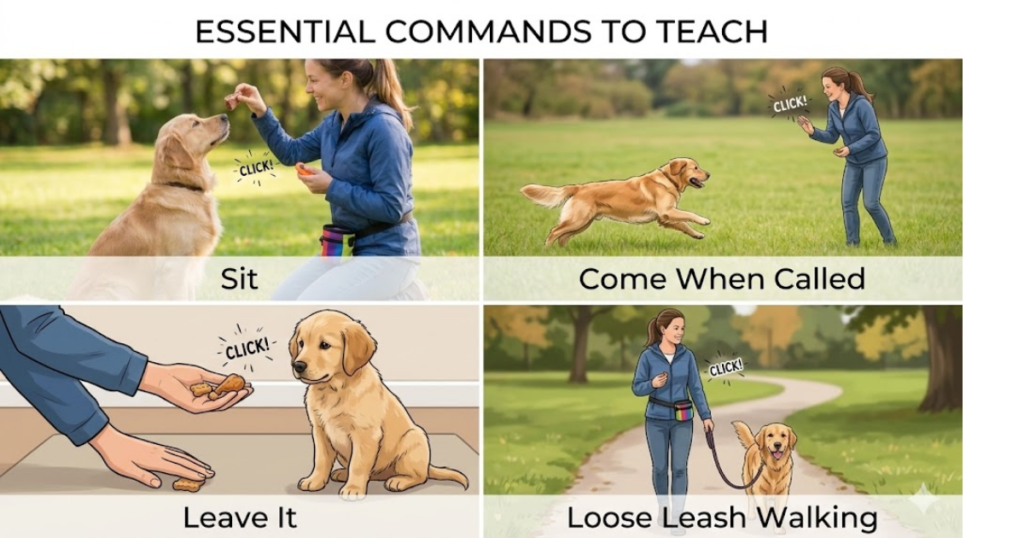
Essential Commands to Teach
Sit
Wait for your dog to sit naturally, then click and treat. After several repetitions, hold a treat above their nose to encourage sitting. Click the moment their bottom touches the ground. Once they understand, add the verbal cue “sit” just before they perform the action.
Come When Called
Start in a small, enclosed area. Say your dog’s name, and when they look at you or move toward you, click and treat. Gradually increase the distance and add distractions as they improve.
Leave It
Place a treat on the floor and cover it with your hand. When your dog stops trying to get it and looks away, click and reward with a different treat from your other hand. This teaches impulse control and keeps your dog safe from picking up harmful items during walks.
Loose Leash Walking
Click and treat whenever the leash has slack during walks. If your dog pulls, stop moving until they return to your side. This creates a pleasant walking experience for both of you, making outdoor time more enjoyable.
Common Mistakes to Avoid
Clicking Too Late
Timing is everything. The click must happen within one second of the desired behavior. Late clicks confuse your dog about what they did correctly.
Using the Clicker as a Toy
Keep the clicker for training sessions only. Random clicking dilutes its meaning and makes it less effective as a training tool.
Forgetting to Treat
Every click must be followed by a reward, even if you clicked by accident. Breaking this rule undermines the entire system and confuses your pet.
Training Sessions That Are Too Long
Keep sessions short—5 to 10 minutes maximum. Dogs learn better through multiple brief sessions than one long, exhausting one. End on a positive note before your dog loses interest.
Moving Too Quickly
Build gradually on each success. If your dog struggles with a step, go back to something easier. Rushing creates frustration for both of you.
Advanced Clicker Training Techniques
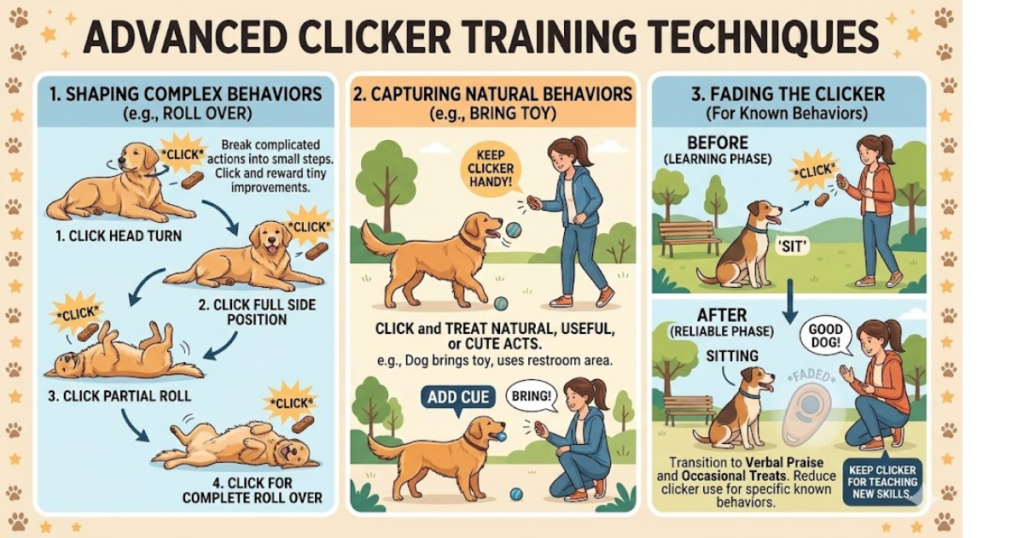
Shaping Complex Behaviors
Break complicated actions into small steps. Click and reward each tiny improvement toward the final goal. For example, teaching “roll over” starts with clicking a head turn, then lying down, then a partial roll, and finally the complete action.
Capturing Natural Behaviors
Always keep your clicker handy. When your dog does something cute or useful naturally—like bringing you their toy or using the designated bathroom area—click and treat it. You can then put this behavior on cue.
Fading the Clicker
Once your dog reliably performs a command, you can gradually reduce clicker use for that specific behavior. Continue using verbal praise and occasional treats. However, keep the clicker for teaching new skills or refining existing ones.
Troubleshooting Common Issues
Your Dog Seems Scared of the Click
Some sensitive dogs find the standard click too loud. Try muffling the sound by keeping the clicker in your pocket, or use a quieter model. You can also use a verbal marker like “yes” instead.
Progress Has Stalled
If your dog stops improving, they might need:
Higher-value treats
Shorter training sessions
Simpler steps to build on
A less distracting environment
A short break from that particular command
Your Dog Only Responds to Treats
This is normal during early training. Gradually introduce variety by occasionally rewarding with play, praise, or a favorite outdoor activity. Intermittent reinforcement actually strengthens behavior over time.
Clicker Training for Specific Situations
Puppy Training
Start clicker training as early as eight weeks old. Puppies have short attention spans, so keep sessions to 3-5 minutes. Focus on basic manners, potty training signals, and bite inhibition during this critical learning period.
Rescue Dogs
Rescue dogs may have gaps in their training or past trauma. Clicker training offers a gentle way to build trust and teach new behaviors. Be patient and celebrate small victories as your rescue learns to trust the process.
Senior Dogs
Old dogs can definitely learn new tricks. Clicker training works beautifully for senior pets because it’s low-stress and mentally stimulating. Adjust your expectations for physical limitations, but continue building their cognitive skills.
Addressing Problem Behaviors
Clicker training helps redirect unwanted behaviors by teaching desirable alternatives. Instead of jumping on guests, train “four paws on the floor.” Rather than barking at the door, teach a “quiet” command and reward calm behavior.
Creating a Training Schedule
Daily Practice
Consistency matters more than duration. Three 5-minute sessions daily outperform one 15-minute session. Incorporate training into your routine—before meals, during commercial breaks, or while waiting for coffee to brew.
Weekly Goals
Set specific, achievable objectives for each week. Maybe this week you’ll perfect “sit,” while next week focuses on “stay.” Tracking progress helps you see improvement and keeps training purposeful.
Monthly Reviews
Every month, review what your dog has learned. Practice old commands to keep them sharp while introducing new challenges to keep your dog mentally engaged.
Making Training Fun
Use Variety
Change up treats, locations, and the order of commands. Variety keeps training interesting and helps your dog generalize behaviors to different situations.
Add Play Breaks
Intersperse training with brief play sessions. Toss a ball, play tug, or simply have a fun moment together outdoors. This maintains enthusiasm and prevents training from feeling like work.
Train Different Commands
Don’t drill the same command repeatedly. Mix things up—practice sit, then come, then down, then back to sit. This mental variety keeps your dog engaged and attentive.
End Positively
Always finish training sessions on a successful note. If your dog is struggling with something new, ask for an easy command they know well, click, treat, and end there. This leaves your dog eager for the next session.
Beyond Basic Obedience
Trick Training
Clicker training excels at teaching fun tricks. “Shake,” “spin,” “play dead,” and “take a bow” are all easily shaped with a clicker. These tricks provide mental stimulation and impress your friends.
Agility Training
Many agility trainers rely heavily on clickers. The precise timing helps dogs learn to navigate obstacles correctly. Even if you’re not competing, backyard agility provides excellent exercise and bonding time.
Service and Therapy Work
Professional trainers use clickers to teach service dogs complex tasks. While most pet owners won’t train to this level, the same principles apply to teaching helpful behaviors around the home.
Training Multiple Dogs
Individual Sessions First
Each dog should understand clicker training individually before group sessions. This prevents confusion and ensures each pet gets adequate attention.
Group Training Benefits
Once both dogs understand the basics, training together can be beneficial. They can learn from watching each other, and you can teach them to wait patiently while the other performs commands.
Managing Competition
Some dogs become competitive for treats and attention. Keep training treats separate and ensure each dog gets equal opportunities to earn rewards. This prevents jealousy and maintains harmony.
The Science Behind Clicker Training
Classical Conditioning
Clicker training relies on classical conditioning—the same principle Pavlov demonstrated with his dogs. Your dog learns to associate the click with positive outcomes, creating an automatic positive emotional response.
Operant Conditioning
The training also uses operant conditioning. Your dog learns that specific behaviors produce specific consequences. Behaviors that earn clicks get repeated, while those that don’t gradually disappear.
Why It Works Better
Traditional training often relies on corrections. Clicker training instead focuses on marking and rewarding correct behavior. This positive approach reduces stress, builds trust, and creates a dog eager to learn and cooperate.
Resources for Continued Learning
Online Communities
Join clicker training groups online to share successes, ask questions, and get support. Other trainers can offer fresh perspectives on challenges you’re facing.
Professional Trainers
Consider taking a class with a certified positive reinforcement trainer. They can observe your technique, offer personalized advice, and help you tackle specific issues.
Books and Videos
Many excellent resources exist for learning advanced techniques. Look for materials from certified trainers who emphasize positive reinforcement methods.
Long-Term Success
Maintain Skills
Even after your dog masters a command, practice it regularly. Skills can fade without reinforcement. Quick, random practice sessions throughout the week keep commands sharp.
Keep Learning
Never stop teaching your dog new things. Continued learning keeps their mind active and strengthens your relationship. Even simple tasks around the house or yard can become training opportunities.
Adapt as Needed
Your dog’s needs change over time. What worked for your energetic puppy might need adjustment for your mellower adult dog. Stay flexible and responsive to your individual dog’s needs.
Final Thoughts
Clicker training offers a powerful, humane way to teach your dog virtually anything. The method respects your dog’s intelligence, builds confidence, and creates a partnership based on clear communication rather than dominance.
Start small, be consistent, and celebrate every success along the way. Your patience will pay off with a well-trained dog who loves learning and enjoys spending quality time with you, whether you’re training new commands, playing in the yard, or simply enjoying each other’s company.
The skills you teach through clicker training extend far beyond simple obedience. You’re building a foundation of trust, communication, and mutual respect that will benefit both of you for years to come. Every click represents progress, every treat celebrates success, and every training session strengthens the incredible bond between human and dog.
So grab your clicker, stock up on treats, and get ready to see your dog thrive. The results will amaze you, and the time you invest now will create a lifetime of better behavior, deeper connection, and mutual joy. Happy training!
Bringing a new puppy home is one of the most exciting days you’ll have as a pet owner. It’s also one of the most chaotic if you’re not prepared. Between the tail wags, the zoomies, and the inevitable accidents, that first day can feel overwhelming fast. That’s why a solid
You call out “bath time,” and suddenly your dog vanishes behind the couch. Sound familiar? You’re not alone. Most dog owners deal with a pup who treats the bathtub like a torture chamber, even though that same dog will happily launch into a muddy puddle at the park. So why
Dog toys can get expensive fast, especially if your pup chews through them in minutes. On top of that, many store-bought options are made with questionable materials that may not be safe for your furry friend. The good news? You don’t need to spend a fortune to keep your dog