Home/Blogs/Why Your Dog Hates Baths (and What To Do About It)
Why Your Dog Hates Baths (and What To Do About It)
You call out “bath time,” and suddenly your dog vanishes behind the couch. Sound familiar? You’re not alone. Most dog owners deal with a pup who treats the bathtub like a torture chamber, even though that same dog will happily launch into a muddy puddle at the park.
So why do dogs hate baths so much? And more importantly, what can you do to make the whole process less stressful for everyone involved?
In this guide, we’ll break down the real reasons behind your dog’s bath-time drama. Then we’ll walk you through practical, vet-backed strategies to turn bath time from a battle into a routine your dog can actually tolerate—maybe even enjoy.
The Real Reasons Dogs Hate Baths
Before you can fix the problem, you need to understand what’s actually going on in your dog’s head. Bath-time anxiety is rarely about one single thing. Instead, it usually comes from a mix of sensory overload, bad memories, and a loss of control.
They Feel Trapped and Out of Control
Think about it from your dog’s perspective. One minute they’re relaxing on the couch, and the next they’re picked up and placed in a slippery tub with water pouring over them. They didn’t choose this, and they can’t leave. That feeling of confinement alone is enough to trigger anxiety in many dogs. On top of that, a wet bathtub is slippery. If your dog’s paws are sliding around, they feel unstable and vulnerable, which makes the whole situation worse.
Bad Experiences Stick With Them
Dogs are masters at forming associations. If your dog ever slipped in the tub, got water sprayed up their nose, or felt scalded by water that was too hot, that single bad experience can shape their feelings about baths for years. Even something as minor as soap getting in their eyes one time is enough to create a lasting negative association. Rescue dogs, in particular, may carry bath-related trauma from rough handling in their past. As a result, they can be especially skittish around water and confined spaces.
Their Nose Is Under Assault
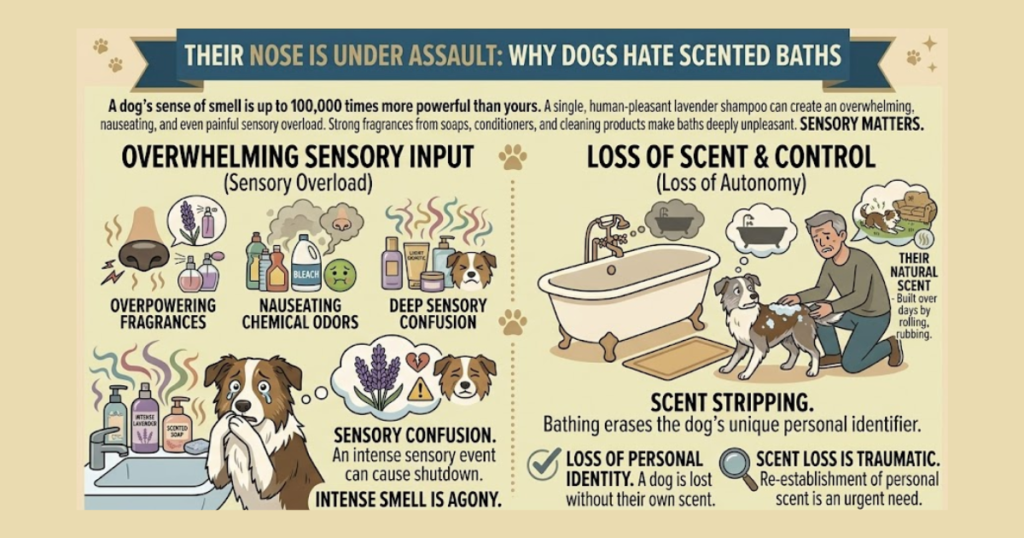
A dog’s sense of smell is up to 100,000 times more powerful than yours. So while that lavender-scented shampoo smells pleasant to you, it can feel overwhelming and even nauseating for your dog. Strong fragrances from soaps, conditioners, and cleaning products create a sensory experience that many dogs find deeply unpleasant. On top of that, baths strip away your dog’s natural scent—the one they’ve spent all week carefully building up by rolling in the grass and rubbing against furniture. To a dog, losing that scent is a big deal.
The Water Temperature Is Off
This one is simple but often overlooked. Water that’s too hot or too cold is uncomfortable for your dog, just like it would be for you. Most owners make the mistake of using water that’s comfortable for human skin, but dogs run warmer than we do. Lukewarm water—around 90 to 98°F—is the sweet spot. Anything outside that range can make your dog want to escape the tub immediately.
Your Dog Picks Up On Your Stress
Here’s something many owners don’t realize: dogs are incredibly tuned into your emotions. If you approach bath time already stressed, frustrated, or tense, your dog will sense it immediately. Your body language, tone of voice, and energy all send signals. If those signals say “this is going to be awful,” your dog will believe you. This creates a cycle where both of you dread the process, making each bath worse than the last.
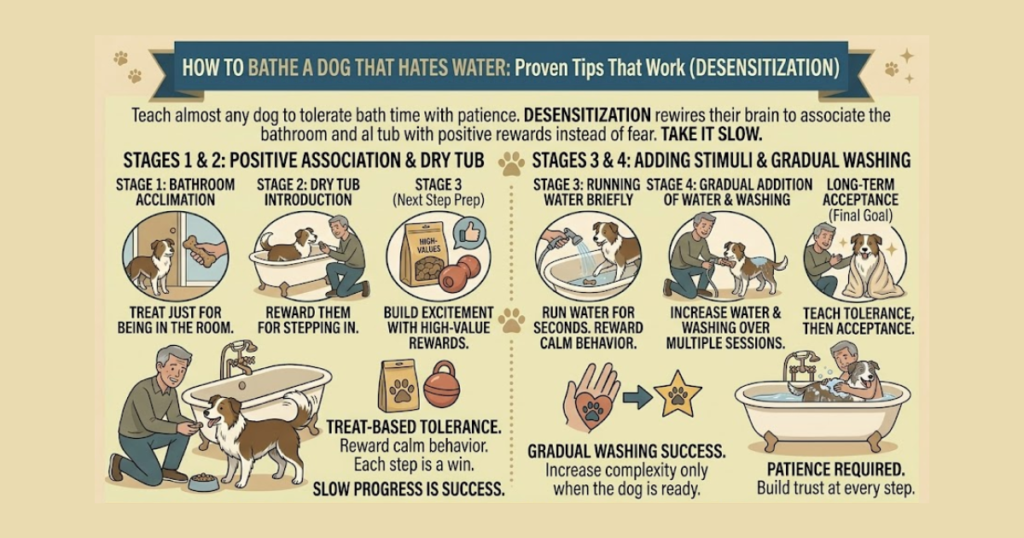
How to Bathe a Dog That Hates Water: Proven Tips That Work
Now that you know why dogs hate baths, let’s talk about solutions. The good news is that with patience and the right approach, you can teach almost any dog to tolerate—and sometimes even accept—bath time.
Start With Desensitization
If your dog is truly terrified of the tub, don’t force them into a full bath right away. Instead, take it slow and build positive associations over several days or even weeks.
Bring your dog into the bathroom and reward them with a high-value treat just for being there.
Help them step into the dry tub and give another treat. Then let them leave.
Run the water briefly while they’re in the tub. Reward calm behavior.
Gradually increase the amount of water and washing over multiple sessions.
This process takes patience, but it rewires your dog’s brain to associate the bathroom with treats and praise instead of fear.
Get the Water Temperature Right
Always test the water on the inside of your wrist before bringing your dog in. It should feel lukewarm—not warm, not cool. Aim for 90 to 98°F. Check the temperature several times during the bath, too, because it can shift as your water heater adjusts. A sudden blast of cold or hot water can undo weeks of trust-building in seconds.
Use a Non-Slip Mat
A rubber bath mat or even a folded towel at the bottom of the tub gives your dog secure footing. When their paws aren’t sliding around, they feel far more stable and in control. This one small change can make a dramatic difference in how your dog behaves during bath time.
Switch to a Gentle, Unscented Shampoo
Ditch the heavily fragranced products and go for an unscented or mildly scented dog-specific shampoo. Your dog’s nose will thank you. Also, be careful not to get any soap near their eyes, ears, or mouth. Use a damp washcloth to clean their face instead of pouring water over their head.
Tire Them Out Before the Bath
A tired dog is a calmer dog. Take your pup for a long walk, a game of fetch, or a solid play session before bath time. When their energy is spent, they’re much less likely to fight the process. This is one of the simplest dog bath tips out there, and it really works.
Keep Bath Sessions Short
Not every bath needs to be a full spa treatment. For dogs that are highly anxious, a quick rinse and scrub is better than a 20-minute grooming marathon. As your dog gets more comfortable over time, you can gradually extend the sessions. The goal is to end the bath before your dog hits their stress limit so they walk away with a neutral or positive memory.
Reward Generously After the Bath
Once the bath is over, go big on the rewards. Give your dog their favorite treat, a new chew toy, or a special play session. You want your dog to associate the end of bath time with something amazing. Over multiple baths, this positive reinforcement builds a new mental link: bath equals good things afterward.
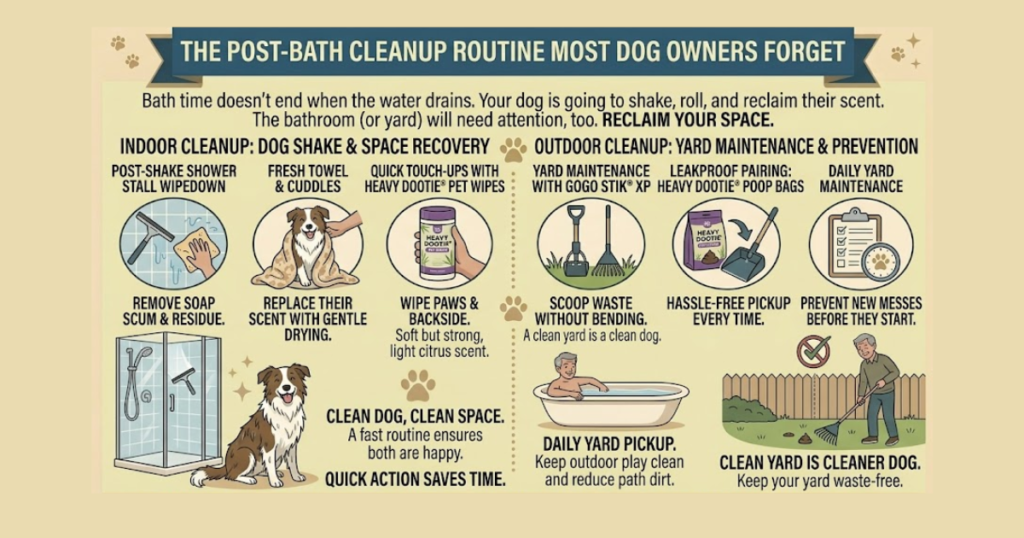
The Post-Bath Cleanup Routine Most Dog Owners Forget
Here’s the thing—bath time doesn’t end when the water drains. After a bath, your dog is going to shake, roll, and do everything possible to dry off and reclaim their scent. That means your bathroom (or yard) will need attention, too.
And then there’s the outdoor reality. A freshly bathed dog often heads straight for the yard to roll around. Within minutes, you might be dealing with a whole new mess. This is where having the right cleanup tools makes a huge difference.
For quick touch-ups between baths, Heavy Dootie Pet Wipes work great for wiping down dirty paws and your dog’s backside after outdoor play. They’re made with bamboo, so they’re soft but strong, and the light citrus scent isn’t overpowering for sensitive noses.
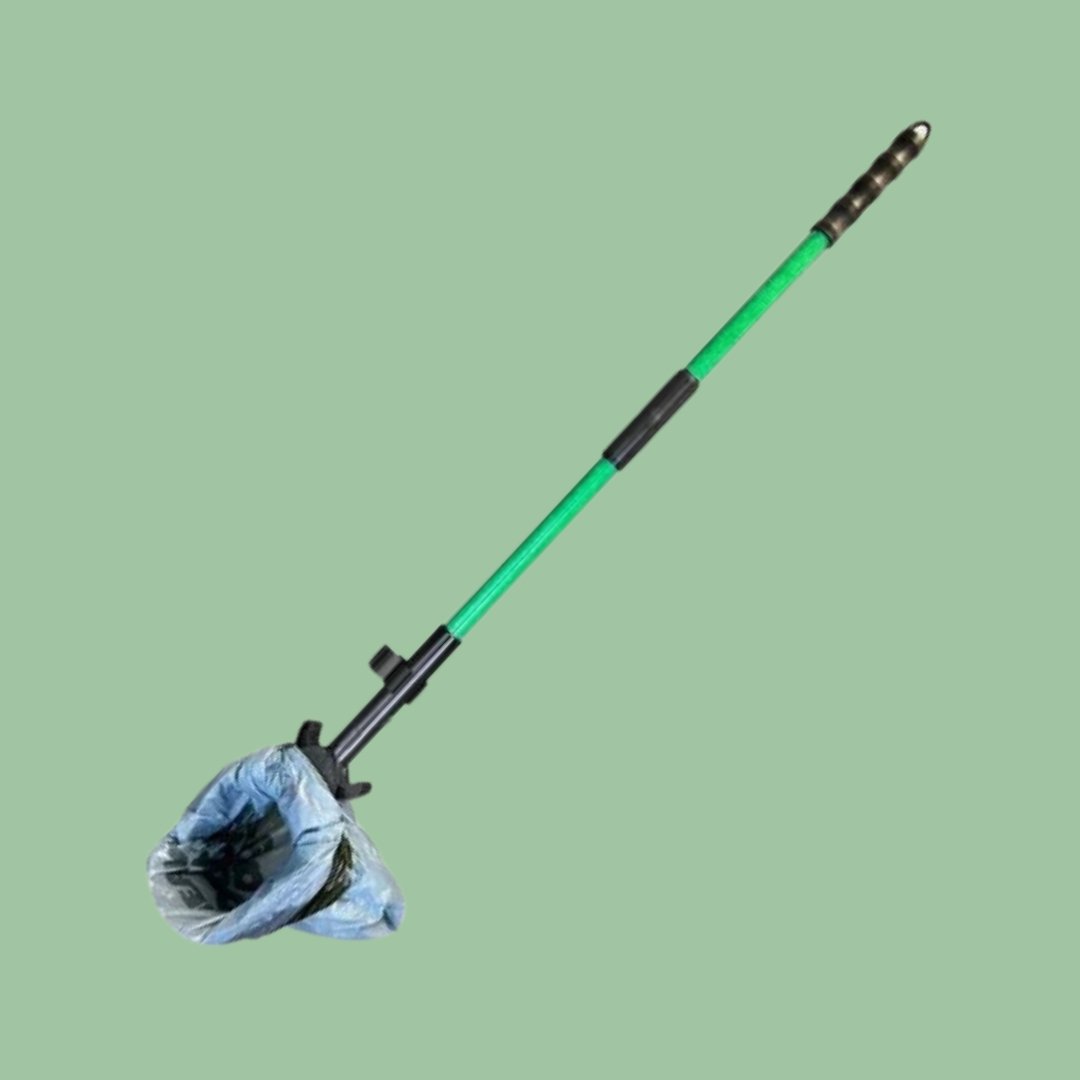
And for daily yard cleanup—because a clean yard is part of keeping your dog clean—the GOGO Stik XP Pooper Scooper and Hybrid Rake Set lets you scoop waste without bending over or getting your hands dirty. Pair it with Heavy Dootie Poop Bags for a leakproof, hassle-free pickup every time.
How to Keep Your Dog Clean Between Baths
If your dog is afraid of baths, the best strategy is to reduce how often they actually need one. Here are a few ways to keep your dog fresh without turning on the faucet.
Brush regularly. Daily brushing removes loose fur, dirt, and dander. For long-haired breeds, it also prevents mats that trap odor and moisture.
Use pet wipes after walks. A quick wipe-down of paws, belly, and rear end after each outing goes a long way. Heavy Dootie Pet Wipes are designed for exactly this purpose—gentle on skin, tough on dirt.
Keep your yard clean. A dirty yard means a dirty dog. Picking up waste daily with a pooper scooper and reliable dog poop bags prevents your dog from stepping in or rolling through old waste.
Try waterless shampoo. Dry shampoo sprays made for dogs can freshen up their coat without any water at all. These are a great option for dogs who are extremely bath-averse.
Don’t Forget About Nighttime Walks
Dirty dogs aren’t just a bath-time problem. They’re an everyday problem—especially if you walk your dog after dark. When you can’t see where your dog steps, they’re more likely to track waste and mud back into the house, which means more baths.
The answer depends on your dog’s breed, coat type, and lifestyle. However, here are some general guidelines to follow.
Short-haired breeds (Beagles, Boxers, Bulldogs): Once every 1 to 3 months, or as needed.
Medium to long-haired breeds (Golden Retrievers, Collies, Huskies): Every 4 to 6 weeks to prevent matting.
Hairless breeds (Chinese Crested, Xoloitzcuintli): Weekly baths to protect their skin.
Oily-skinned breeds (Cocker Spaniels, Basset Hounds): More frequent baths to prevent oil buildup.
Active outdoor dogs: As often as needed, depending on how dirty they get.
Between baths, use pet wipes and regular brushing to keep things manageable. And always keep your yard clean with the right poop bags and a solid scooping setup so your dog isn’t rolling through waste right after you’ve cleaned them up.
When to Talk to Your Vet About Bath-Time Anxiety
Most dogs can learn to tolerate baths with the strategies above. But in some cases, bath-time fear runs deeper than a simple dislike. If your dog shows any of these signs, it’s worth having a conversation with your veterinarian.
Extreme panic, shaking, or attempts to bite when near water
Loss of bladder or bowel control during bath time
Prolonged hiding or refusal to eat after a bath
Skin irritation, redness, or excessive scratching after bathing
Your vet can rule out any underlying medical issues, such as skin conditions or pain, that might be making baths worse. They can also recommend anxiety-reducing techniques or, in severe cases, a mild sedative for bath time.
A Clean Dog Starts With a Clean Yard
One of the easiest ways to reduce how often your dog needs a bath is to keep your outdoor space clean. Dogs that walk through or roll in waste are going to need more frequent bathing—and for a dog that already hates baths, that’s a recipe for ongoing stress.
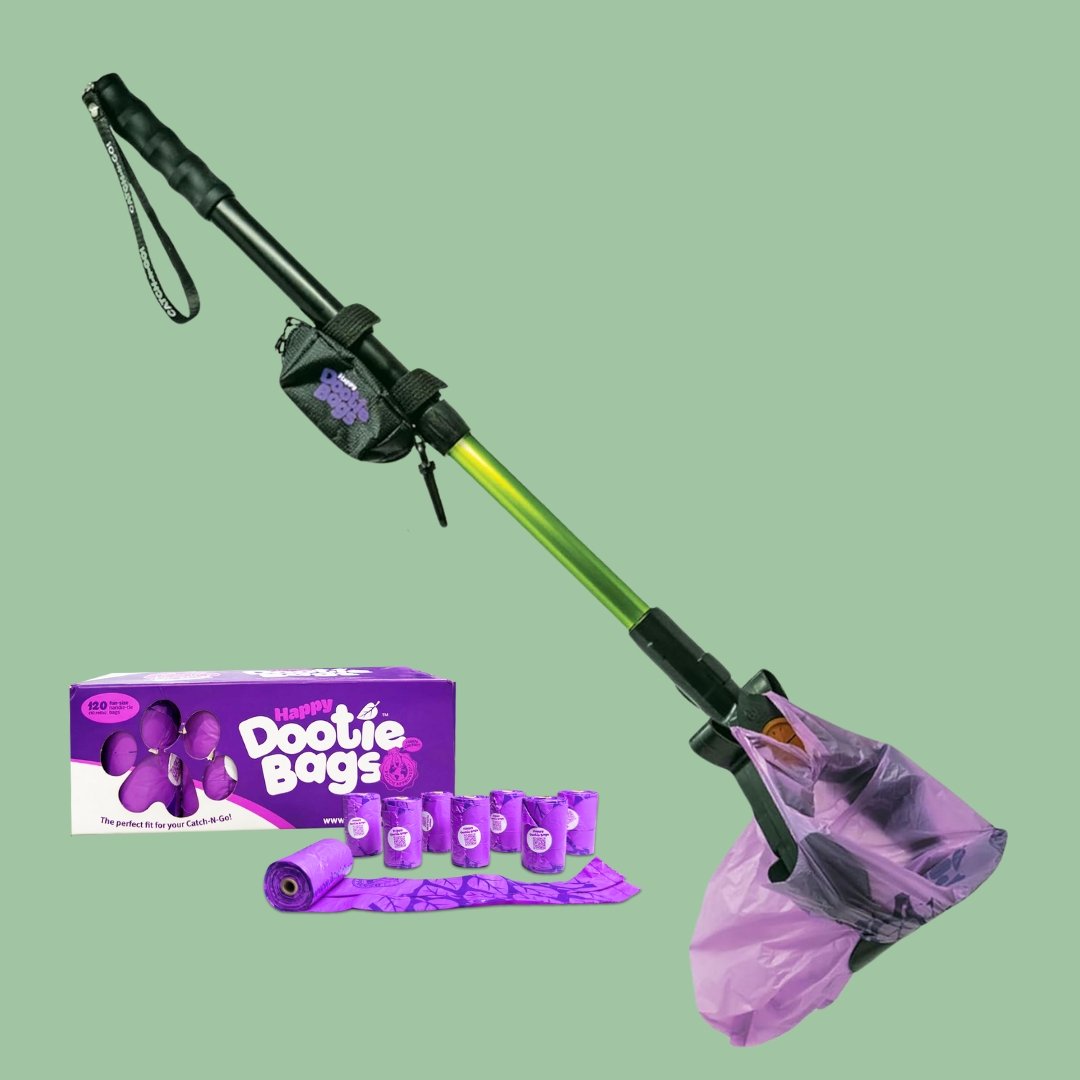
The GOGO Stik Catch-N-Go Hybrid Catcher and Scooper is built for dog owners who want a fast, hands-free cleanup on walks and in the yard. Its telescopic handle extends up to 33 inches, so there’s no bending or kneeling involved. Pair it with Happy Dootie Bags for a quick and clean pickup.
For bigger yard jobs, the XP Pooper Scooper Scoop Set combined with the EZ Dootie Rake handles everything from grass to gravel. And if you prefer an eco-friendly option, Bio-Blu Dootie Bags offer a biodegradable choice without sacrificing strength.
If your dog hates baths, know that you’re dealing with a totally normal behavior. Dogs aren’t being stubborn or difficult—they’re responding to real sensory and emotional triggers that make the experience genuinely unpleasant for them.
The fix isn’t to force your way through it. Instead, take a patient approach: use desensitization, keep the water comfortable, choose gentle products, and always end with a reward. Between baths, keep your dog clean with regular brushing, pet wipes, and a clean yard maintained with the right cleanup tools.
With time and consistency, bath time doesn’t have to be a battle. It can become just another part of your routine—one that keeps your dog healthy, happy, and smelling great.Check out the full lineup of GOGO Stik pooper scoopers, poop bags, and pet wipes at gogostik.com to keep your dog’s world clean from yard to bath time.
Bringing a new puppy home is one of the most exciting days you’ll have as a pet owner. It’s also one of the most chaotic if you’re not prepared. Between the tail wags, the zoomies, and the inevitable accidents, that first day can feel overwhelming fast. That’s why a solid
You call out “bath time,” and suddenly your dog vanishes behind the couch. Sound familiar? You’re not alone. Most dog owners deal with a pup who treats the bathtub like a torture chamber, even though that same dog will happily launch into a muddy puddle at the park. So why
Dog toys can get expensive fast, especially if your pup chews through them in minutes. On top of that, many store-bought options are made with questionable materials that may not be safe for your furry friend. The good news? You don’t need to spend a fortune to keep your dog