Home/Blogs/The Best Way to Use Pee Pads for Big Dogs
The Best Way to Use Pee Pads for Big Dogs
Pee pads aren’t just for puppies or small breeds. If you have a large dog recovering from surgery, a senior struggling with mobility, or you live in a high-rise apartment, pee pads can make daily life much easier. They’re practical, they work, and they solve real problems for big dog owners.
However, using pee pads for large breeds requires a different approach than what works for smaller dogs. The right size, proper placement, and consistent training all play a role in success. This guide covers everything you need to know about making pee pads work for your big dog.
A quick note: If your house-trained dog suddenly starts having accidents, schedule a vet visit first. Sudden incontinence can indicate urinary tract infections, kidney disease, diabetes, or other health conditions that need medical attention.
Why Big Dogs Need Bigger Pads
Standard puppy pads won’t work for a 70-pound Labrador or a 100-pound German Shepherd. The math simply doesn’t add up—larger dogs produce more urine and need more space to position themselves comfortably.
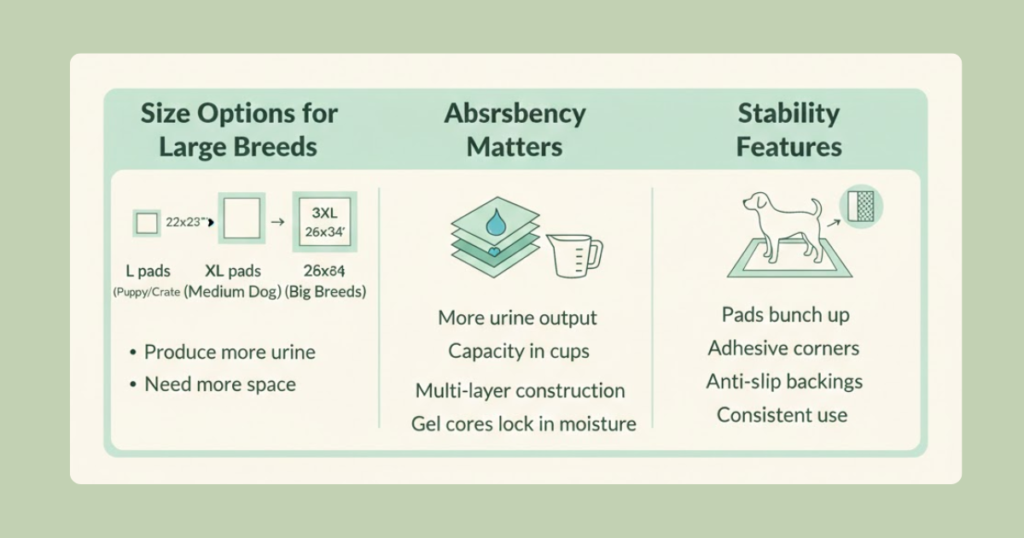
Size Options for Large Breeds
L pads (22×23 inches): These work for puppies during house training, inside crates, or in tight spaces. For adult large dogs, though, they’re too small.
XL pads (28×34 inches): Medium-sized dogs do well with these, and they can work for larger breeds during short indoor stretches between walks.
3XL pads (36×36 inches): This size works best for big breeds, multi-dog households, senior pets, and situations requiring all-day coverage.
Absorbency Matters Just as Much
Size alone isn’t enough. Large dogs produce significantly more urine than small breeds, so absorbency capacity becomes critical. Some pads list their liquid capacity in cups, which helps you determine whether they can handle your dog’s output. Look for pads with multi-layer construction and gel cores that lock in moisture quickly.
Stability Features to Look For
Big dogs often shuffle, spin, or paw at the ground before eliminating. As a result, pads without secure backing bunch up and create messes. Adhesive corners and anti-slip backings keep pads in place and encourage your dog to use them consistently.
Both types have their advantages, and the best choice depends on your situation.
Disposable Pads
Pros:
Quick and convenient cleanup—just roll up and toss
Gel cores provide excellent absorbency
No laundry required
Ideal for temporary situations like post-surgery recovery or travel
Cons:
Higher ongoing cost over time
Creates more waste
For large dogs with heavy incontinence, many owners prefer disposable pads because of the volume and frequency of changes required.
Washable Pads
Pros:
Lower long-term cost
Reduced environmental impact
Good for permanent indoor setups
Cons:
Requires regular laundry
Needs enzyme cleaners for proper odor control
Higher initial investment
You’ll need multiple pads to rotate during washing
Laundry tips for washable pads: Rinse in hot water immediately after use, then pre-treat with enzyme cleaners designed for pet odors. Wash in hot water separately from other laundry, and air dry when possible to extend pad life.
Setting Up Pee Pads for Success
Proper setup determines whether your big dog will actually use the pads. Location, coverage, and anchoring all matter.
Choosing the Right Location
Place pads in a quiet, low-traffic area away from food and water bowls. Your dog needs easy access—this is especially important for seniors with mobility issues. Hard flooring works better than carpet because it’s easier to clean if your dog misses the pad. For multi-level homes, consider placing pads on each floor.
How Many Pads to Use
For large dogs, overlapping two or three standard pads often works better than trying to find one massive pad. This approach gives your dog adequate coverage and reduces missed targets. Because of this, you’ll have better success with multiple overlapping pads than with a single undersized one.
Anchoring Pads for Big Dogs
Large dogs can easily shift or bunch up pads. To prevent this, use furniture or baby gates to create boundaries around the pad area. Secure adhesive tabs firmly to the floor. Some owners place pads inside low-sided plastic trays or on rubber mats for extra stability and floor protection.
Training Your Big Dog to Use Pee Pads
Adult dogs accustomed to outdoor elimination need time and patience to learn indoor alternatives. Here’s how to make the transition smoother.
Start small: Confine your dog to a smaller area with the pad initially. Then gradually expand their space as they learn where to go.
Use positive reinforcement: Give treats and calm praise every time they use the pad correctly. This builds a positive association with the behavior.
Try the stepping-stone approach: For dogs with strong outdoor preferences, place pads near doors first. This maintains their outdoor preference while providing an indoor backup. Over time, you can move the pad to a more convenient location.
Be consistent: Take your dog to the pad area at regular intervals—after meals, after naps, and first thing in the morning. Consistency helps establish the routine faster.
Stay patient: Adult dogs may take longer to adapt than puppies. Expect some accidents during the learning period, and avoid punishment, which can create anxiety around elimination.
When to Change Pads
Timing matters for both hygiene and training success.
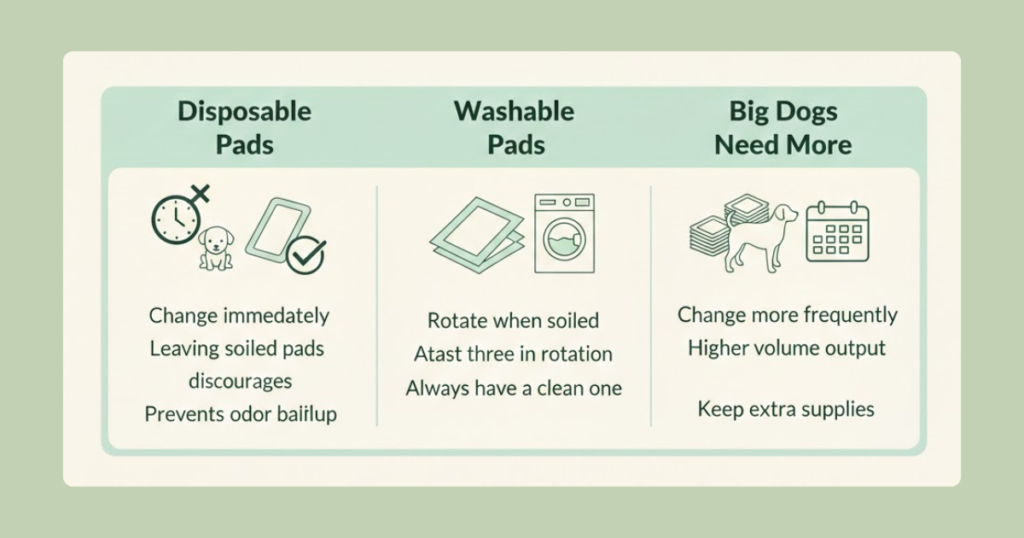
Disposable pads: Change immediately after use for best results. Leaving soiled pads too long discourages your dog from using that spot again and allows odors to build up.
Washable pads: Rotate them out as soon as they’re soiled. Have at least three pads in rotation so you always have a clean one available while others are in the wash.
Big dogs need fresh pads more frequently than small breeds because of the higher volume. Plan accordingly and keep extra supplies on hand.
Cleaning and Odor Control
Proper cleanup prevents re-marking behavior and keeps your home smelling fresh.
Effective Cleaning Practices
Use enzyme cleaners specifically designed for pet urine. These products break down odor-causing compounds that regular cleaners miss. Standard household cleaners may mask the smell to you, but dogs can still detect residual odors and may continue marking the same spots.
Wear gloves when handling soiled pads. Keep pets away from cleaned areas until they’re completely dry. Wash your hands thoroughly after handling pads or cleaning accidents.
For quick cleanups around the pad area, pet wipes gently remove residue from paws and floors without harsh chemicals.
Proper Disposal
Roll up disposable pads with the soiled side inward, place them in a plastic bag to contain odors, and dispose of them in outdoor trash when possible. Never flush pee pads—they cause serious plumbing blockages.
For outdoor waste, a reliable pooper scooper keeps your yard clean between indoor pad sessions.
Alternatives to Pee Pads
Pee pads work well for many situations, but they’re not the only option. Depending on your circumstances, these alternatives might suit you better.
Indoor Turf or Sod Trays
These mimic outdoor elimination more closely. Dogs with strong outdoor preferences often adapt to artificial grass more easily than to pads. Turf systems work particularly well on balconies or patios.
More Frequent Outdoor Breaks
Sometimes the simplest solution is adjusting your schedule. If your dog is healthy but having accidents, shorter intervals between bathroom breaks may solve the problem without indoor alternatives.
Dog Walkers or Pet Sitters
Professional help during long work days can eliminate the need for indoor options entirely. A midday walk provides both a bathroom break and exercise.
When to Talk to Your Vet
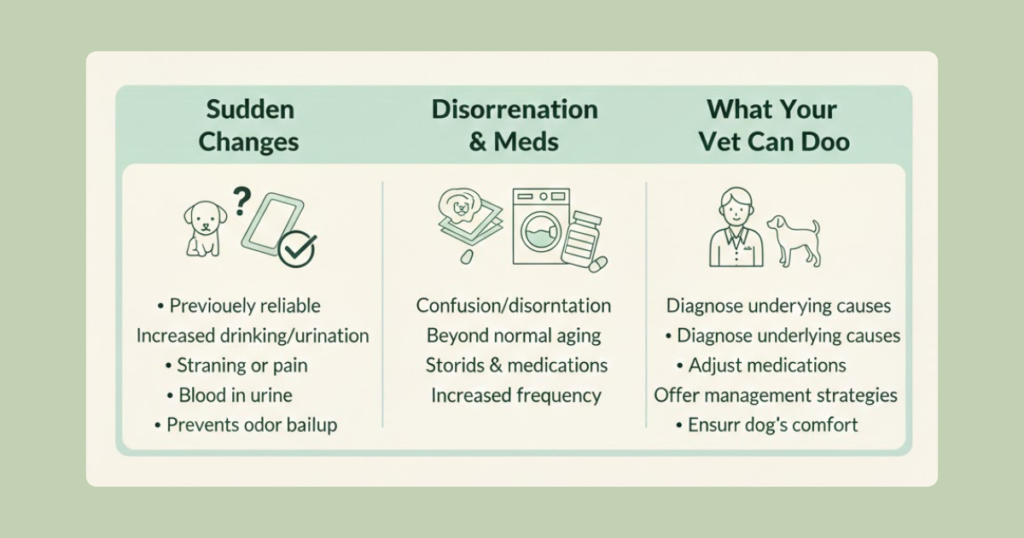
Some situations require medical attention rather than pee pad solutions. Contact your veterinarian if you notice:
Sudden house-training changes in a previously reliable dog
Increased water drinking paired with more frequent urination
Straining, pain, or blood during urination
Disorientation or confusion beyond normal aging
Some medications—particularly steroids—increase urination frequency. If your dog is on medication and having more accidents than usual, discuss alternatives with your vet.
Essential Supplies for Big Dog Owners
Managing a large dog’s bathroom needs—indoors and outdoors—requires the right tools. Here are some items that make the job easier:
For early morning or evening walks: An LED flashlight attachment helps you spot and clean up waste in low light.
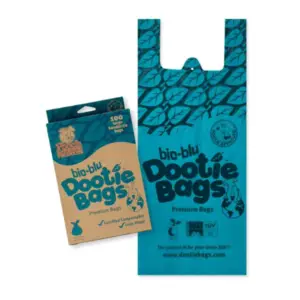
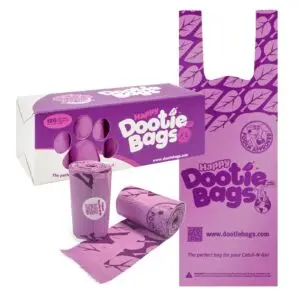
For heavy-duty messes: Heavy Dootie bags provide the strength and leak protection that large breed owners need.
FAQs About Pee Pads for Big Dogs
Do pee pads work for big dogs?
Yes, pee pads can work well for large dogs when you choose the right size and place them properly. Select pads that measure 36×36 inches or larger for most big breeds, ensure high absorbency, and train consistently. Pads work especially well for seniors with mobility issues, dogs recovering from surgery, or temporary indoor needs during extreme weather.
What size pee pad does a large dog need?
Most large dogs need 3XL pads (36×36 inches) for adequate coverage. You can also overlap two or three smaller pads to create a larger target area. The key is giving your dog enough space to position comfortably without missing the edges.
How often should you change pee pads for a large dog?
Change disposable pads immediately after each use. Large dogs produce more urine than small breeds, so pads become saturated faster. For washable pads, swap them out as soon as they’re soiled and keep at least three in rotation.
Can you train an adult dog to use pee pads?
Yes, adult dogs can learn to use pee pads, though the process may take longer than with puppies. Start by confining your dog to a smaller area with the pad, use positive reinforcement for correct behavior, and be patient. Dogs with strong outdoor preferences may adapt more easily if you place pads near doors initially.
What can I use instead of pee pads for my dog?
Alternatives include indoor turf or sod trays that mimic outdoor elimination, artificial grass systems for balconies or patios, more frequent outdoor breaks, or hiring dog walkers for midday relief. The best choice depends on your living situation, your dog’s preferences, and whether your needs are temporary or long-term.
Are washable pee pads better than disposable ones?
It depends on your situation. Washable pads cost less over time and reduce environmental impact, making them better for long-term or permanent indoor setups. However, they require regular laundry and multiple pads in rotation. Disposable pads are more practical for temporary needs like post-surgery recovery, travel, or heavy incontinence that requires frequent changes.
How do I stop my dog from moving pee pads around?
Secure pads with adhesive corners pressed firmly to hard flooring. Create boundaries using furniture or baby gates around the pad area. Some owners place pads inside low-sided plastic trays or on rubber mats for extra stability. These methods prevent bunching and sliding, especially important for big dogs that shuffle before eliminating.
Why won’t my dog use the pee pad?
Several factors can cause pad avoidance. The pad may be too small, too close to food and water, or in a high-traffic area. Lingering odors from previous accidents nearby can also confuse your dog. Try moving the pad to a quieter location, ensure it’s large enough for your dog to position comfortably, and clean surrounding areas thoroughly with enzyme cleaners.
Making Pee Pads Work for Your Big Dog
Pee pads can absolutely work for large dogs when you choose the right size, place them strategically, and maintain them properly. Whether you’re helping a senior dog maintain comfort, supporting post-surgical recovery, or providing backup during extreme weather, pads offer a practical solution.
The key is matching the pad to your dog’s needs. Adequate size, high absorbency, and secure placement make all the difference. With patience and consistency, even big dogs can adapt to indoor pottying when circumstances require it.
The snoot challenge has taken social media by storm, and for good reason. It’s one of the cutest tricks your dog can learn, and the best part is that it’s surprisingly simple to teach. If you’ve been scrolling through Instagram or TikTok and wondering how those dogs gently rest their
Every dog owner has seen it — that bizarre, hilarious ritual your pup performs before doing their business. From dramatic spins to the classic “walk and drop,” dogs have some truly ridiculous pooping habits. Whether you own a tiny Chihuahua or a massive Great Dane, one thing is universal: dogs
Taking your dog on a camping trip is one of the best ways to bond, burn energy, and make memories that last. But if you’ve ever shown up at a trailhead without the right gear, you know how quickly things can go sideways muddy paws, no waste bags, forgotten water