Home/Blogs/Large Breed Dogs: Special Considerations for Waste Management
Large Breed Dogs: Special Considerations for Waste Management
Owning a large breed dog brings immense joy, loyal companionship, and plenty of outdoor adventures. However, it also comes with unique responsibilities that smaller dog owners may not face. One of the most significant challenges is waste management.
Large dogs produce substantially more waste than their smaller counterparts. Consequently, standard pet waste tools often fall short. Regular poop bags tear easily under the weight and size of large breed waste. Meanwhile, flimsy scoopers bend or break after just a few uses.
This guide covers everything you need to know about managing waste from large breed dogs. You’ll learn which tools work best, why quality matters, and how to make the cleanup process efficient and sanitary.
Why Large Breed Dogs Need Special Waste Management Tools
The difference between managing waste from a Chihuahua versus a Great Dane is substantial. Large breed dogs typically weigh between 50 to 200 pounds, and their waste reflects their size.
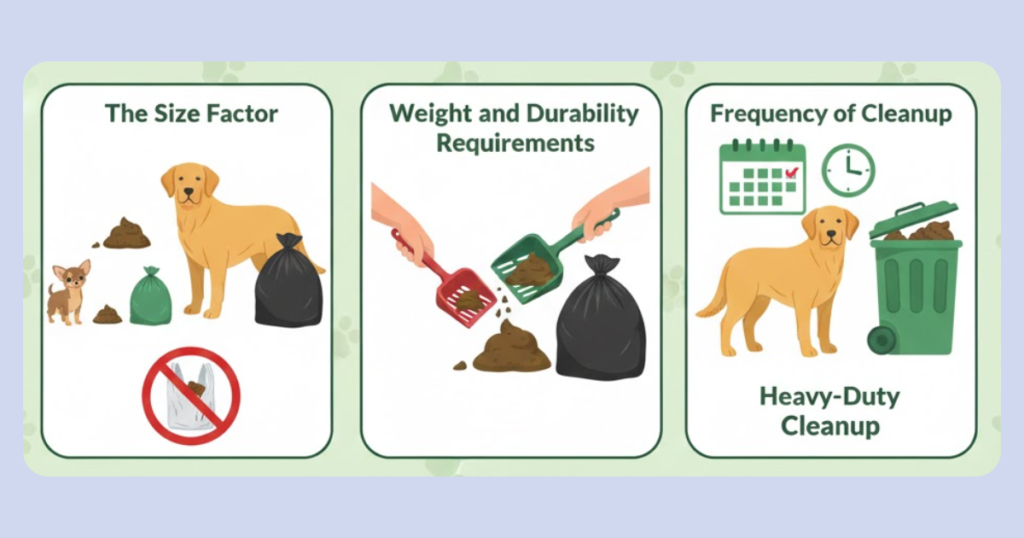
The Size Factor
A Golden Retriever or German Shepherd produces waste that can be 3-5 times larger than a small breed dog. Therefore, standard-sized bags simply cannot accommodate this volume. Trying to use regular bags often leads to tears, leaks, and unsanitary situations.
Weight and Durability Requirements
The weight of large breed waste puts significant stress on collection tools. Standard plastic bags stretch and break. Similarly, lightweight scoopers crack under pressure. A heavy duty pooper scooper designed specifically for larger volumes ensures reliable performance.
Frequency of Cleanup
Large dogs eat more, which naturally means more frequent bathroom breaks. Most large breed dogs need to relieve themselves 3-5 times daily. This frequency demands tools that can withstand repeated use without degradation.
Choosing the Right Heavy Duty Dog Bags
Not all waste bags are created equal. For large breed owners, selecting the right bags is crucial for maintaining hygiene and preventing messy accidents.
Material Thickness Matters
Look for bags with at least 15-20 micron thickness. Thicker materials resist punctures and tears. Heavy duty dog bags provide the strength needed to handle larger volumes safely.
Many standard bags measure only 10-12 microns. These work fine for small dogs but fail under the demands of large breed waste. Investing in quality bags saves you from potential cleanup disasters.
Size Specifications
Check the bag dimensions before purchasing. For large breed dogs, aim for bags measuring at least 9 x 13 inches. Extra-large breeds like Mastiffs or Saint Bernards may require even bigger bags, around 10 x 15 inches.
A properly sized bag allows you to pick up waste completely and tie the bag securely. Too-small bags leave you struggling to contain everything, which defeats the purpose entirely.
Additional Features to Consider
Several features enhance the usability of waste bags for large dogs:
Scented options help mask odors during transport to disposal. However, some dogs have sensitive noses, so unscented versions work better in those cases.
Tie handles make securing bags easier and keep your hands farther from the waste. These built-in handles also simplify carrying multiple bags during long walks.
Leak-proof design prevents seepage, which is particularly important for softer waste. Quality bags include reinforced seams that won’t split open unexpectedly.
Biodegradable materials offer an environmentally responsible choice. Just ensure these eco-friendly options still maintain adequate thickness for large breed needs.
Selecting the Best Pooper Scooper for Large Dogs
A reliable scooper transforms the cleanup process from a dreaded chore into a quick, manageable task. The best pooper scooper for large breeds combines durability, ease of use, and ergonomic design.
Types of Scoopers
Different scooper styles suit various situations and preferences:
Jaw-style scoopers feature two handles that operate claw-like jaws. These work exceptionally well on grass and uneven terrain. The scooping action is intuitive, and the long handles keep you at a comfortable distance.
Rake and pan combinations excel in yards where you need to cover large areas quickly. The rake gathers waste while the pan collects it. This scooper and rake set efficiently handles multiple cleanup spots.
Hybrid catchers combine features of both styles. These versatile tools adapt to different surfaces and waste consistencies. A hybrid catcher scooper offers flexibility for various cleanup scenarios.
Material Quality
Metal scoopers generally outlast plastic alternatives. Look for rust-resistant materials like coated steel or aluminum. These materials handle repeated use and cleaning without degrading.
The joints and moving parts deserve special attention. Reinforced connections prevent wobbling and breaking. Cheap scoopers often fail at these stress points after minimal use.
Handle Length and Ergonomics
For large breed owners, handle length significantly impacts comfort. Longer handles (30-40 inches) reduce bending and strain on your back. This becomes particularly important if you’re cleaning multiple times daily.
Padded grips improve comfort during extended use. They also provide better control in wet or cold conditions when hands might slip on bare plastic or metal.
Special Features for Enhanced Functionality
Modern scoopers include helpful features that simplify waste management:
Built-in bag dispensers keep bags readily accessible. You won’t need to fumble with separate containers while managing your dog. Some models like the LED flashlight scooper include convenient storage solutions.
LED lights prove invaluable for early morning or evening walks. A rechargeable LED flashlight attachment illuminates dark areas where waste might be difficult to spot.
Easy-clean designs feature smooth surfaces without crevices where waste can accumulate. This hygiene-focused design allows thorough sanitization between uses.
Yard Management for Large Breed Dogs
Maintaining a clean yard requires more than just reactive cleanup. Proactive strategies keep your outdoor space sanitary and pleasant.
Establishing a Cleanup Routine
Consistency is key for yard maintenance. Set a schedule that works for your lifestyle:
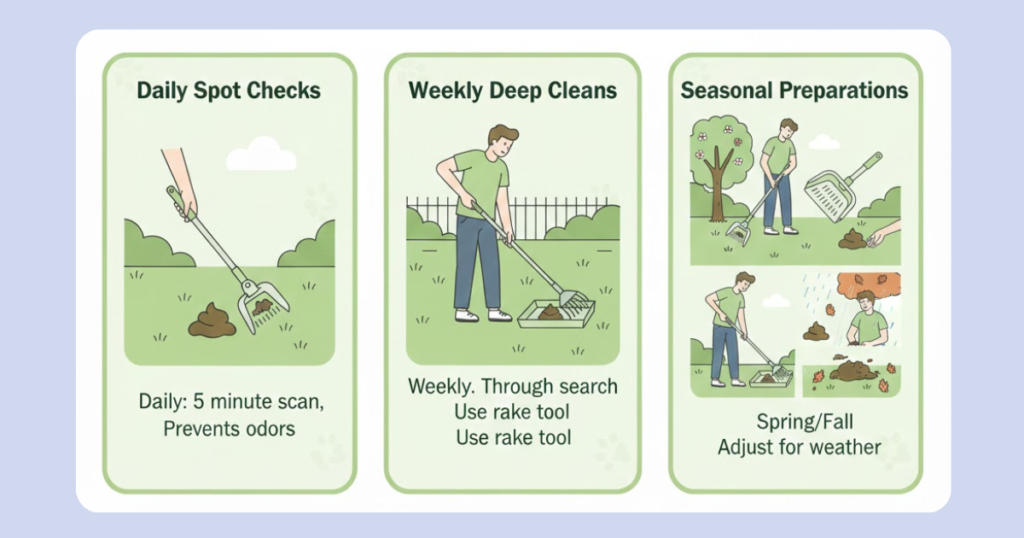
Daily spot checks prevent buildup and keep odors under control. A quick 5-minute scan each evening catches fresh waste before it becomes problematic.
Weekly deep cleans involve thoroughly searching the entire yard. Use a rake tool to cover ground quickly and efficiently.
Seasonal preparations address changing conditions. Spring rains may reveal hidden waste, while fall leaves can camouflage it. Adjust your routine accordingly.
Designated Potty Areas
Training your large breed dog to use a specific yard section concentrates cleanup efforts. Choose an area that’s:
Away from high-traffic zones
Easy to access in all weather
Well-drained to prevent muddy conditions
Far from vegetable gardens or play areas
Mark boundaries clearly so your dog understands the designated space. Consistent reinforcement helps establish this habit quickly.
Weather Considerations
Different weather conditions affect waste management strategies:
Rain softens waste, making it harder to pick up cleanly. Schedule cleanup before storms when possible. For unavoidable wet pickups, heavy duty bags with reinforced construction prevent breakage.
Snow camouflages waste, leading to spring surprises. Mark spots immediately after your dog goes, or clean up right away despite the cold.
Heat accelerates decomposition and intensifies odors. Increase cleanup frequency during summer months to maintain a pleasant yard environment.
Frozen ground makes scooping difficult. A sturdy metal scooper with a sharp edge cuts through frost better than plastic alternatives.
Health and Hygiene Practices
Proper waste management protects both human and canine health. Following best practices minimizes disease transmission and environmental contamination.
Hand Hygiene
Always wash hands thoroughly after handling waste, even when using bags and scoopers. Germs can transfer through microscopic tears or during the disposal process.
Keep hand sanitizer readily available for immediate use after outdoor cleanup. However, soap and water remain the gold standard for removing bacteria.
Tool Sanitization
Clean your scooper regularly to prevent bacterial growth. A simple rinse with a hose removes visible debris. For deeper cleaning, use:
Mild dish soap and warm water weekly
Diluted bleach solution monthly (1:10 ratio)
Full air-drying between uses
Store cleaned tools in a dry location away from food prep areas and children’s toys.
Proper Disposal Methods
Never flush dog waste down toilets unless specifically instructed by local regulations. The bacteria in dog waste differ from human waste and can contaminate water treatment systems.
Double-bagging provides extra protection against leaks during transport to trash bins. Extra-strength waste bags offer peace of mind for this purpose.
Some municipalities offer pet waste composting programs. Research local options that might provide environmentally responsible disposal alternatives.
Protecting Your Lawn
Dog waste damages grass through nitrogen burns and pH imbalance. Prompt removal prevents these issues. If brown spots appear:
Water the affected area thoroughly
Apply a lawn repair product designed for pet damage
Consider redirecting your dog to different spots
Rotating potty areas distributes the impact across your yard rather than concentrating damage in one location.
Special Situations and Solutions
Large breed owners face unique scenarios that require adapted approaches.
Multi-Dog Households
Managing waste from multiple large dogs multiplies the challenge. Efficiency becomes paramount:
Invest in commercial-grade tools built for heavy use. A professional scooper set handles increased volume without breaking down.
Stock bags in bulk to ensure you never run short. Variety packs let you test different options to find what works best.
Create multiple disposal stations around your yard so you’re never far from supplies.
Senior Dogs with Health Issues
Older large breed dogs may experience digestive issues leading to softer, more frequent stools. These situations demand:
Extra absorbent bags that contain liquids
More frequent cleanup schedules
Gentler scooper techniques for sensitive areas
Work closely with your veterinarian to address underlying health concerns causing changes in stool consistency.
Traveling with Large Breed Dogs
Road trips and vacations don’t pause waste management responsibilities. Pack a travel kit including:
Research pet relief areas along your route. Many rest stops now offer designated dog walking sections with waste disposal stations.
Apartment and Urban Living
Large breed dogs in urban settings face additional constraints. Without private yards, owners must manage waste during walks:
Carry adequate supplies for the entire walk. A bag dispenser with strap attaches to leashes for convenient access.
Know public disposal locations along your regular routes. Some cities provide waste bins specifically for pet waste.
Consider timing to avoid peak pedestrian hours when carrying waste bags through crowded areas.
Cost-Effective Waste Management
Quality tools require initial investment, but they save money long-term through durability and efficiency.
Buying in Bulk
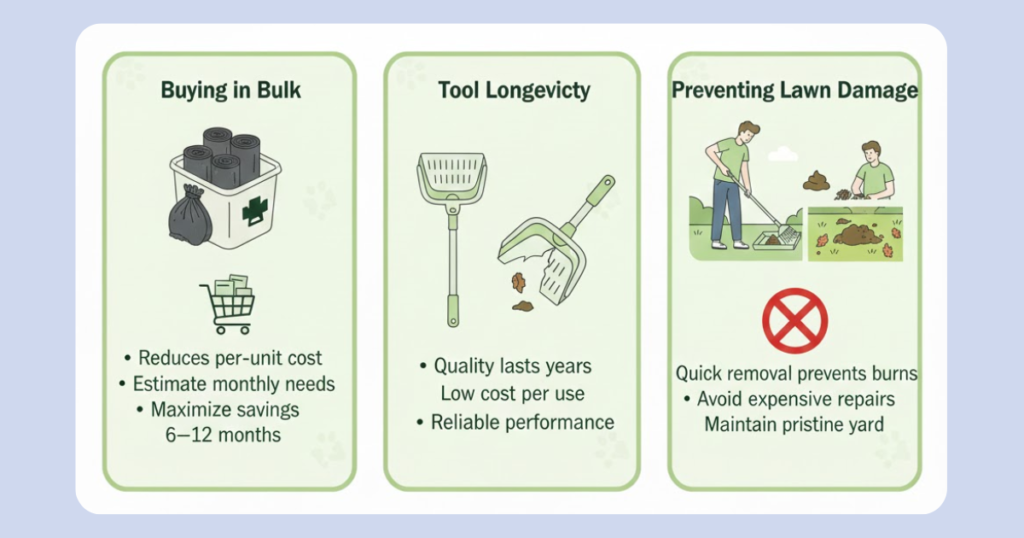
Purchasing large quantities of bags reduces per-unit costs significantly. Calculate monthly usage and buy accordingly:
1 large dog: approximately 90-150 bags monthly
2 large dogs: approximately 180-300 bags monthly
3+ large dogs: 300+ bags monthly
Storage space permitting, buying 6-12 months of supplies at once maximizes savings.
Tool Longevity
A quality heavy-duty scooper lasts years with proper care. Calculate cost per use rather than initial price:
$30 scooper used twice daily for 3 years = $0.01 per use
$10 scooper breaking after 3 months = $0.11 per use
The premium option clearly offers better value despite higher upfront costs.
Preventing Lawn Damage
Quick waste removal prevents expensive lawn repairs. Professional services to fix nitrogen burns and dead spots cost $200-500 or more. Preventive cleanup saves these repair expenses entirely.
Environmental Responsibility
Large breed owners have heightened environmental impact through waste volume. Responsible practices minimize this footprint.
Biodegradable Bag Options
Eco-conscious owners can choose bags made from plant-based materials. These decompose faster than traditional plastic. However, verify claims carefully:
Look for ASTM D6400 certification for true biodegradability
Understand that “degradable” differs from “biodegradable”
Check if your local waste system accepts these materials
Standard heavy-duty bags remain necessary when biodegradable options lack sufficient strength for large breed waste.
Waste Composting
Some areas permit pet waste composting in designated systems separate from food compost. This requires:
Specialized composting equipment
Proper temperature maintenance (140°F minimum)
Separate processing from garden compost
Time and commitment to manage correctly
Research local regulations before attempting pet waste composting, as many municipalities prohibit this practice.
Reducing Plastic Consumption
While bags are necessary for sanitary waste collection, minimize excess plastic use:
Choose bags without unnecessary packaging
Avoid individual wrapping when bulk options exist
Reuse scooper handles rather than replacing entire units
Small changes accumulate into meaningful environmental benefits over time.
Training Your Large Breed Dog
Proper training simplifies waste management significantly. Teaching your dog good bathroom habits creates long-term benefits.
Command Training
Establish a specific word or phrase signaling bathroom time. Common options include “go potty,” “do your business,” or “hurry up.” Consistency helps your dog associate the command with the action.
Timing matters too. Take your dog out:
First thing in the morning
After meals (typically 20-30 minutes)
Following play sessions
Before bedtime
This schedule prevents accidents and allows predictable cleanup times.
Location Consistency
Dogs naturally prefer returning to the same spots. Use this instinct to your advantage by:
Guiding your dog to designated areas
Rewarding bathroom use in correct locations
Redirecting attempts to use inappropriate spots
Over time, your dog will automatically head to the preferred area, concentrating cleanup efforts.
Walking Etiquette
Train your dog to pause after eliminating, giving you time to clean up immediately. This prevents you from losing track of the spot or having to backtrack.
Practice commands like “wait” or “hold” until you’ve finished collecting waste. This courtesy makes the process smoother for everyone involved.
Dealing with Behavioral Issues
Sometimes waste management challenges stem from behavioral problems requiring specific interventions.
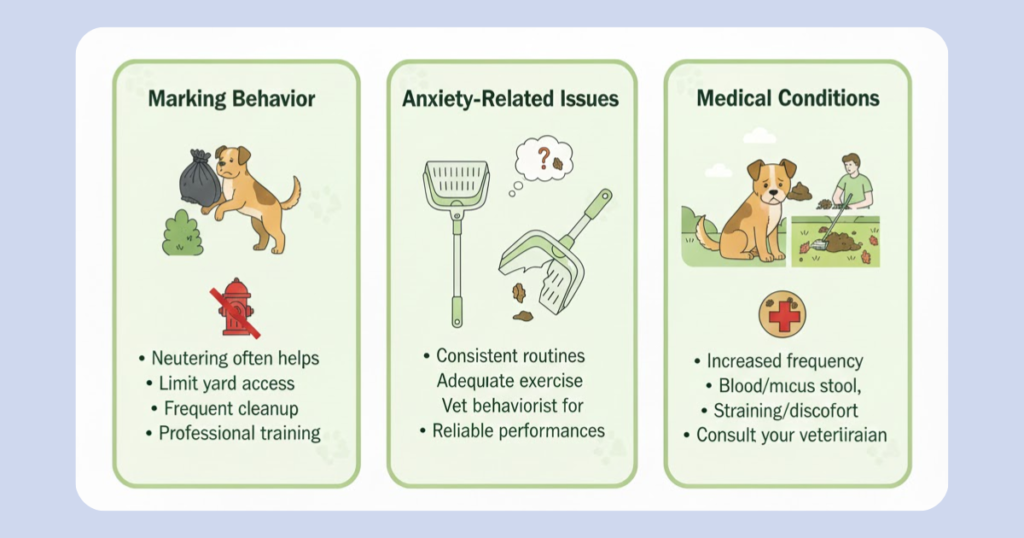
Marking Behavior
Intact male dogs often mark territory extensively. This habit complicates yard management as waste appears in numerous small amounts throughout the space.
Solutions include:
Neutering, which often reduces marking significantly
Limiting yard access to smaller sections
More frequent cleanup to remove scent triggers
Professional training if behavior persists
Anxiety-Related Issues
Stressed dogs may have irregular bathroom habits. Signs include:
Accidents despite house training
Loose or frequent stools
Reluctance to eliminate during walks
Address underlying anxiety through:
Consistent routines that provide security
Adequate exercise reducing nervous energy
Consultation with veterinary behaviorists for severe cases
Medical Conditions
Changes in waste frequency, consistency, or location often indicate health problems. Contact your veterinarian if you notice:
Sudden increase in elimination frequency
Blood or mucus in stool
Straining or discomfort during elimination
Complete loss of house training
Early intervention prevents minor issues from becoming serious health crises.
Seasonal Considerations
Each season brings unique waste management challenges for large breed owners.
Spring Cleanup
Winter’s accumulation reveals itself as snow melts. Prepare for intensive spring cleanup:
Schedule dedicated cleanup days early in the season
Use rakes to cover ground quickly
Expect larger waste volumes than typical
Consider professional services for severe buildup
Summer Heat Management
Hot weather accelerates decomposition and intensifies odors. Combat these issues by:
Cleaning twice daily during peak heat
Rinsing yard surfaces weekly
Using odor-neutralizing products in problem areas
Scheduling cleanup during cooler morning or evening hours
Fall Preparations
Falling leaves hide waste and complicate cleanup. Strategies include:
Raking leaves away from potty areas regularly
Marking waste spots immediately
Increasing cleanup frequency to prevent camouflaged buildup
Winter Challenges
Cold weather and snow create special difficulties. Successful winter management involves:
Shoveling paths to potty areas
Using bright-colored markers to identify waste under snow
Keeping tools indoors to prevent freezing
Wearing appropriate gloves for cold-weather cleanup
Professional Services and Alternatives
For owners unable to manage waste independently, professional options exist.
Pet Waste Removal Services
Companies specializing in yard cleanup visit regularly to remove waste. Services typically include:
Weekly or bi-weekly visits
Complete yard scanning and waste removal
Sanitizing high-use areas
Seasonal deep cleaning
Costs range from $15-30 per visit for single dogs, with discounts for regular service agreements.
Dog Walking Services
Professional dog walkers handle waste during outings. This option suits busy owners or those with physical limitations preventing regular cleanup.
Pet Care Facilities
Doggy daycare and boarding facilities manage waste professionally. These services provide relief during vacations or busy work periods.
Technology and Innovation
New products continue improving waste management efficiency.
Smart Dispensers
Automated bag dispensers attach to leashes and release bags with one-handed operation. This convenience helps during walks when managing an excited large breed dog.
Odor Control Technology
Advanced bags incorporate odor-blocking materials that trap smells until disposal. These products prove particularly valuable in warm weather or for urban owners carrying waste longer distances.
Tracking Apps
Some pet care apps include bathroom tracking features. While seemingly excessive, these tools help:
Identify health pattern changes
Coordinate schedules in multi-person households
Maintain consistency in training programs
Building Good Habits
Long-term success requires establishing consistent routines that become automatic over time.
Creating Checklists
Develop personal systems ensuring you never forget supplies:
Morning walk checklist (leash, bags, treats)
Evening yard check routine
Weekly deep clean reminders
Monthly supply inventory
Involving Family Members
Distribute responsibilities among household members. Even children can help by:
Reminding adults about cleanup times
Checking supply levels
Marking waste locations during play
Learning responsible pet ownership
Staying Motivated
Yard cleanup ranks low on most people’s preferred activity lists. Maintain motivation by:
Setting a timer to limit cleanup duration
Playing music or podcasts during the task
Rewarding yourself after completion
Visualizing the clean, enjoyable yard result
Making Peace with the Process
Waste management is an unavoidable aspect of large breed dog ownership. Accepting this reality rather than resenting it improves your overall experience.
Your dog provides countless moments of joy, comfort, and companionship. Managing their waste is a small price for these benefits. Quality tools transform this chore from a dreaded task into a quick, manageable routine.
The right equipment makes all the difference. A reliable heavy duty pooper scooper and strong bags ensure clean, sanitary waste removal every time. These tools protect your health, preserve your yard, and demonstrate responsible pet ownership to your community.
Conclusion
Managing waste from large breed dogs requires specialized tools and thoughtful strategies. Standard equipment designed for small dogs simply cannot handle the volume and weight that large breeds produce. Investing in quality heavy duty dog bags and the best pooper scooper for your situation transforms cleanup from a frustrating chore into an efficient routine.
The strategies outlined in this guide address common challenges large breed owners face. From selecting durable tools to establishing effective yard management routines, each element contributes to a cleaner, healthier environment for both you and your dog. Proper waste management protects public spaces, prevents disease transmission, and maintains your property’s condition.
Your large breed dog depends on you for care, including responsible waste management. By implementing these practices and using appropriate tools, you fulfill this responsibility while minimizing time and effort. The result is more quality time enjoying your dog’s companionship rather than struggling with inadequate cleanup equipment.
FAQs
How often should I clean up after my large breed dog?
Clean up immediately after your dog eliminates during walks to maintain public space hygiene and comply with local regulations. In your yard, perform spot checks at least once daily, preferably twice during warm weather. Weekly deep cleans ensure nothing gets missed. More frequent cleanup prevents odor buildup, protects your lawn from damage, and reduces pest attraction. If you have multiple large dogs, increase cleanup frequency proportionally to handle the additional waste volume.
What makes a pooper scooper suitable for large breed dogs?
A quality scooper for large breeds features durable construction from metal or reinforced plastic that won’t bend or break under weight. Look for handles at least 30-40 inches long to reduce back strain during repeated use. The scoop opening should measure at least 8-10 inches wide to accommodate larger waste volumes. Reinforced joints prevent wobbling and failure at stress points. Consider models with ergonomic grips, easy-clean surfaces, and features like built-in bag storage or LED lights for added convenience during early morning or evening cleanup sessions.
Can regular plastic bags handle large breed dog waste?
Standard thin plastic bags typically cannot reliably contain large breed waste. They tear easily under the weight and volume, leading to unsanitary situations. Large breed owners need bags with at least 15-20 micron thickness and dimensions of 9×13 inches minimum. Heavy duty options provide reinforced seams and leak-proof construction specifically designed for bigger volumes. While regular bags might work occasionally, the risk of breakthrough isn’t worth the savings. Quality bags prevent messy accidents and protect your hands during the collection and disposal process.
How do I maintain my yard when I have a large breed dog?
Establish a consistent cleanup routine including daily spot checks and weekly comprehensive yard scans. Train your dog to use a designated potty area rather than spreading waste throughout your entire yard. This concentrates cleanup efforts and protects high-traffic zones. Remove waste promptly to prevent lawn damage from nitrogen burns and pH imbalance. Water affected areas thoroughly if brown spots appear. Rotate potty areas seasonally to distribute impact. During spring, perform intensive cleanup to address winter accumulation. In summer, increase frequency due to faster decomposition and odor issues.
What disposal method is best for large breed dog waste?
Double-bag waste before placing it in your regular trash bins to prevent leaks and odor. Never flush dog waste down toilets unless your municipality specifically permits it, as dog waste bacteria differ from human waste and can contaminate water treatment systems. Some areas offer pet waste composting programs through specialized facilities – research local options. If you attempt home composting, use only systems specifically designed for pet waste, maintain proper temperatures above 140°F, and never use resulting compost on food gardens. Check local regulations as many areas prohibit home pet waste composting.
How can I make winter waste cleanup easier?
Shovel clear paths to your dog’s potty area immediately after snowfall so waste remains visible and accessible. Mark waste spots with bright flags or markers as soon as your dog eliminates. Clean up immediately rather than waiting, as snow quickly covers waste making it difficult to locate. Store your scooper indoors to prevent metal parts from freezing. Wear insulated waterproof gloves designed for winter outdoor work. Consider shorter, more frequent potty breaks rather than extended sessions. A scooper with a sharp metal edge cuts through frozen ground better than plastic alternatives when waste freezes to the surface.
Do I need different cleanup tools for different seasons?
While you can use the same basic tools year-round, seasonal adaptations improve efficiency. Summer heat works best with odor-control bags and more frequent cleaning. Winter requires tools with sharp edges that cut through frost and indoor storage to prevent freezing. Spring cleanup after snow melt benefits from rake-style tools covering large areas quickly. Fall demands more frequent cleaning as leaves camouflage waste. Rather than buying multiple complete sets, invest in one high-quality versatile system and supplement with seasonal accessories like odor-neutralizing sprays or marking flags.
What should I do if my large breed dog has digestive issues?
Consult your veterinarian immediately if you notice persistent changes in stool consistency, frequency, or if blood or mucus appears. Digestive issues require medical evaluation to identify underlying causes. Meanwhile, increase cleanup frequency as softer stools need prompt removal. Use extra-absorbent bags designed to contain liquids. Keep enzyme-based cleaners on hand for accidents. Monitor your dog’s water intake and diet carefully, as these factors significantly impact digestive health. Document symptoms including timing, appearance, and frequency to help your veterinarian diagnose the problem accurately. Don’t attempt home remedies without professional guidance.
Summer is the perfect season to hit the road with your four-legged companion. Whether you’re heading to the beach, the mountains, or a dog-friendly city, a well-planned trip makes all the difference. Since dogs thrive on routine, a little preparation goes a long way toward keeping both of you relaxed
Bringing home your first dog is one of life’s most exciting milestones. However, the responsibility can feel overwhelming without proper guidance. This comprehensive guide will help you navigate the early days of dog ownership with confidence and ease. Essential Supplies Every New Dog Owner Needs Before your furry friend arrives,
Watching a puppy take its first wobbly steps is one of the most heartwarming moments for any pet parent. Those tiny legs, the stumbles, and the determined little faces — it all marks a major turning point in your pup’s growth. But exactly when do puppies start walking, and what