Home/Blogs/How to Wash Dog Toys: A Complete Cleaning Guide
How to Wash Dog Toys: A Complete Cleaning Guide
Your dog’s toys collect dirt, bacteria, and slobber every single day. Cleaning them regularly keeps your pet healthy and extends the life of their favorite playthings. This guide walks you through simple, effective methods for washing all types of dog toys safely.
Whether your pup prefers plush squeakers or durable rubber chews, you’ll learn exactly how to sanitize each toy type. Along the way, we’ll share tips for maintaining a clean play environment using the right dog waste cleanup tools and supplies.
Why Regular Toy Cleaning Matters for Your Dog’s Health
Dogs put their toys in their mouths constantly, which means bacteria transfers directly to their system. Studies show that pet toys rank among the top germ-carrying items in most households. Because of this, regular cleaning prevents illness and keeps your home smelling fresh.
Dirty toys can harbor harmful organisms like salmonella, E. coli, and yeast. These pathogens cause digestive problems, skin irritations, and infections in dogs. On top of that, if you have children at home, contaminated toys pose health risks to your entire family.
Clean toys also last longer since built-up grime weakens materials over time. Therefore, a simple washing routine saves you money on replacements. Just like using quality poop bags keeps outdoor cleanup hygienic, clean toys maintain indoor hygiene standards.
How Often Should You Wash Dog Toys?
The cleaning frequency depends on how much your dog uses each toy. Toys used daily need weekly washing at minimum. In contrast, toys used occasionally can go two to three weeks between cleanings.
Outdoor toys require more frequent attention since they contact grass, dirt, and potentially animal waste. For this reason, clean these after every outdoor play session. If your dog takes toys into the yard, pair toy cleanup with regular waste removal using a pooper scooper to maintain a sanitary environment.
Watch for signs that a toy needs immediate cleaning: visible dirt, strong odors, sticky residue, or discoloration. Similarly, always wash new toys before giving them to your pet since store inventory may carry dust or manufacturing residues.
Washing Plush and Fabric Dog Toys
Stuffed toys and fabric playthings need gentle but thorough cleaning. Most plush toys survive machine washing when you take proper precautions. However, you should always check the tag for care instructions first.
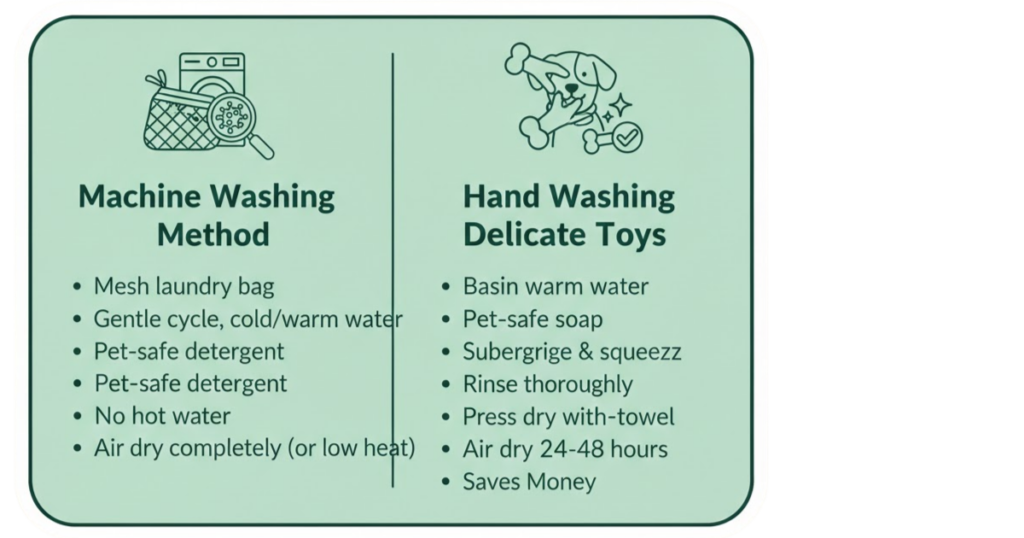
Machine Washing Method
Place plush toys in a mesh laundry bag or pillowcase to protect them during the wash cycle. Use a gentle or delicate cycle with cold or warm water, and select pet-safe or fragrance-free detergent. Hot water can shrink fabrics and damage squeakers, so avoid high temperatures.
After washing, squeeze out excess water gently without wringing. Air dry toys completely before returning them to your dog because damp toys grow mold quickly. If you use a dryer, choose the lowest heat setting and check frequently.
Hand Washing Delicate Toys
For toys with electronic parts, crinkle materials, or fragile construction, hand washing works best. Fill a basin with warm water and add a small amount of pet-safe soap. Submerge the toy and gently squeeze it several times to work the solution through the fabric.
Rinse thoroughly under running water until no soap remains. Then, press between clean towels to remove moisture. Allow twenty-four to forty-eight hours for complete drying, rotating the toy occasionally. Proper drying prevents musty odors from developing inside the stuffing.
Cleaning Rubber and Plastic Dog Toys
Rubber and plastic toys tolerate stronger cleaning methods than fabric ones. These durable materials handle heat and scrubbing without damage. As a result, you have several effective options to choose from.
Dishwasher Method
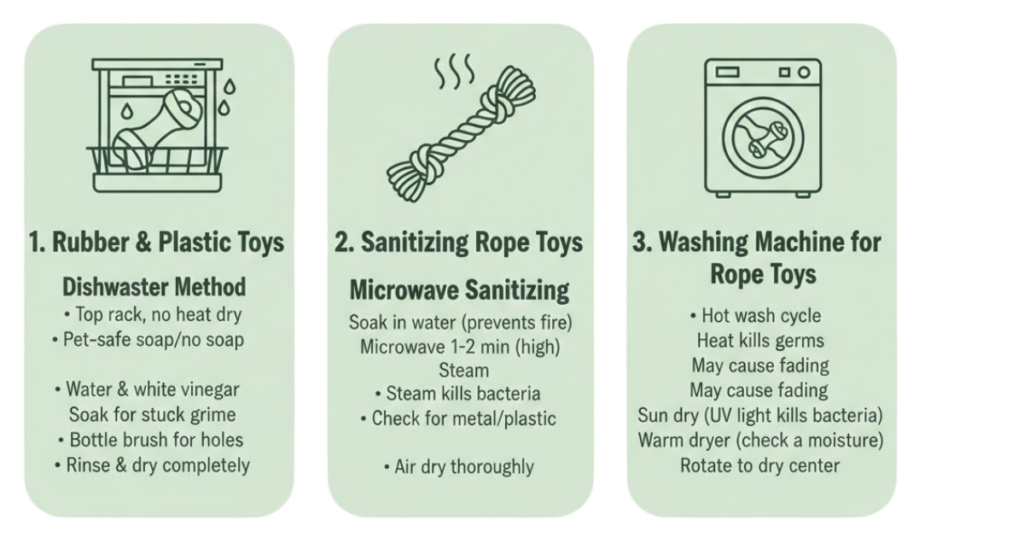
Hard rubber toys like Kongs and nylon chews wash safely in the dishwasher. Place them on the top rack away from heating elements. Run a normal cycle without detergent or use a small amount of pet-safe soap. The hot water sanitizes effectively while the pressure removes stuck-on grime.
Skip the heated dry cycle and let toys air dry instead. This prevents warping and extends toy life. Just as biodegradable waste bags offer an eco-friendly cleanup option, dishwasher cleaning provides a water-efficient toy sanitizing method.
Hand Scrubbing Method
Mix equal parts warm water and white vinegar in a bowl for a natural cleaning solution. Alternatively, use dish soap with water for heavily soiled toys. Scrub all surfaces with a brush, paying attention to grooves, holes, and textured areas where bacteria hide.
For treat-dispensing toys with residue buildup, soak them in the cleaning solution for fifteen minutes first. Then use a bottle brush or pipe cleaner to reach inside cavities. Rinse completely and dry before refilling with treats.
Sanitizing Rope Toys Properly
Rope toys trap moisture deep within their fibers, making them breeding grounds for bacteria and mold. Standard washing often fails to reach the center of thick ropes. Therefore, these toys need special sanitizing methods.
Microwave Sanitizing
Soak the rope toy completely in water first since dry ropes can catch fire. Then microwave on high for one to two minutes depending on rope thickness. The steam penetrates deep into the fibers and kills bacteria throughout. Let the toy cool completely before giving it back to your dog.
Check rope toys for any metal clips or plastic attachments before microwaving. Remove these parts or choose an alternative cleaning method. After sanitizing, squeeze out excess water and hang to dry in a well-ventilated area.
Washing Machine Method for Rope Toys
Run rope toys through a hot wash cycle to sanitize them thoroughly. The heat and agitation clean better than cold water methods. However, hot water may cause some color fading in dyed ropes over time. This trade-off usually proves worthwhile given the improved sanitation.
Dry rope toys completely in the sun when possible since UV light provides additional antibacterial benefits. If indoor drying is necessary, use a warm dryer setting and check that no moisture remains in the center before returning toys to play rotation.
Natural and DIY Cleaning Solutions for Dog Toys
Many pet owners prefer natural cleaning solutions to avoid harsh chemicals near their dogs. Homemade cleaners work effectively on most toy types while remaining gentle and safe. Best of all, you probably have these ingredients in your kitchen already.
Vinegar Solution
White vinegar serves as an excellent natural disinfectant for pet toys. Mix one part vinegar with two parts water for general cleaning. This solution cuts through grease, eliminates odors, and kills many common bacteria. The vinegar smell dissipates quickly once toys dry completely.
For stubborn odors, increase the vinegar concentration or soak toys longer. You can also add a few drops of pet-safe essential oils like lavender for extra freshness. Always ensure oils are safe for dogs before using them since some essential oils are toxic to pets.
Baking Soda Paste
Combine baking soda with a small amount of water to create a cleaning paste. Apply this mixture to rubber and plastic toys, then scrub with a brush. Baking soda absorbs odors while providing gentle abrasive action against stuck-on grime. Rinse thoroughly afterward to remove all residue.
This method works particularly well on smelly chew toys that hold onto food odors. The gentle abrasion cleans without scratching surfaces. Similarly, using citrus-scented pet wipes provides quick spot-cleaning between thorough washes.
Creating a Toy Cleaning Routine That Works
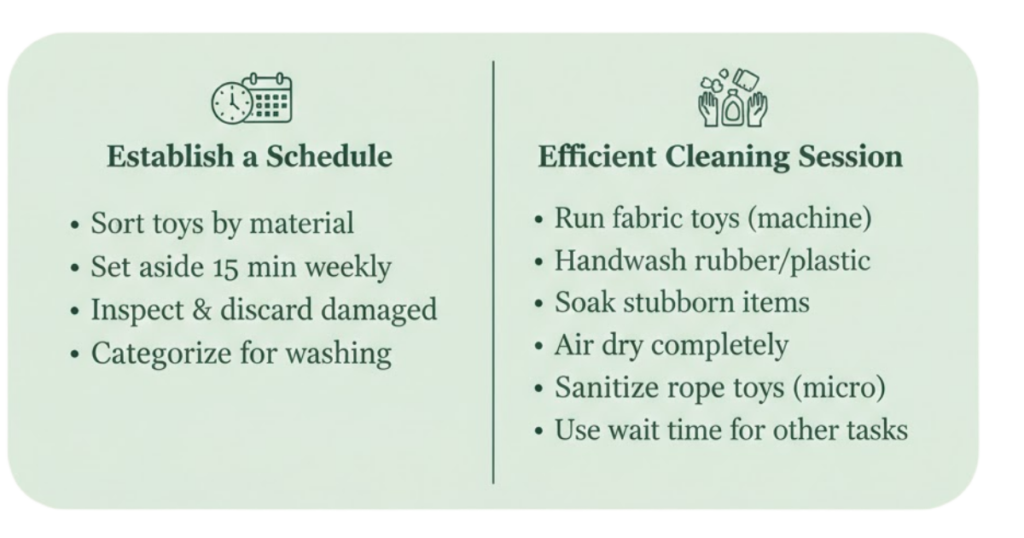
Establishing a consistent cleaning schedule prevents bacteria buildup and keeps toys in rotation. Sort your dog’s toys into groups based on material type and washing method. This organization makes weekly cleaning sessions faster and more efficient.
Set aside fifteen minutes each week for toy maintenance. Start by collecting all toys and inspecting them for damage. Discard any toys with holes, loose parts, or exposed stuffing that could harm your dog. Separate the remaining toys into washing categories.
Run fabric toys through the washing machine while hand washing rubber items simultaneously. This parallel approach saves time. Use the wait time to wipe down other pet supplies and check outdoor areas for waste using your hybrid catcher scooper.
When to Replace Dog Toys Instead of Cleaning
Not every toy can be saved through cleaning. Knowing when to retire old toys protects your dog from potential hazards. Watch for specific warning signs that indicate a toy has reached the end of its useful life.
Replace toys immediately if stuffing becomes exposed or accessible. Dogs can swallow filling materials, leading to intestinal blockages. Torn seams, broken squeakers sticking out, and cracked plastic also pose choking risks. When in doubt, throw it out.
Persistent odors that survive multiple washings suggest deep bacterial contamination. These toys should be discarded even if they look fine otherwise. Discoloration, especially black spots indicating mold, means the toy cannot be safely sanitized. Replacing worn toys promptly prevents health issues and saves veterinary bills.
Special Cleaning Tips for Different Dog Types
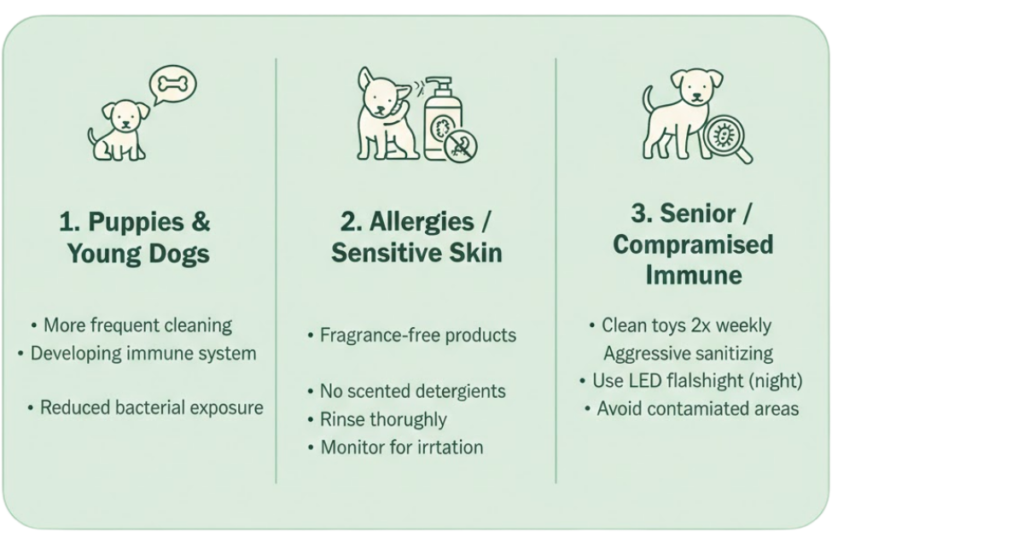
Different dogs have different cleaning needs based on their size, habits, and health conditions. Puppies require more frequent toy cleaning since they explore everything with their mouths. Their developing immune systems benefit from reduced bacterial exposure.
Dogs with allergies or sensitive skin need fragrance-free cleaning products. Avoid fabric softeners and scented detergents that might cause reactions. Rinse toys extra thoroughly to remove all soap residue. Monitor your dog after returning cleaned toys and watch for scratching or skin irritation.
Senior dogs and those with compromised immune systems need the cleanest environment possible. Clean their toys twice weekly and sanitize more aggressively. Consider keeping a LED flashlight for evening walks so you can spot and avoid contaminated areas in the yard during nighttime potty breaks.
Maintaining Clean Outdoor Play Areas
Clean toys mean little if your dog plays in a contaminated yard. Regular waste removal prevents toys from picking up harmful bacteria during outdoor play. Make waste cleanup part of your daily routine to maintain a healthy environment for both toys and pets.
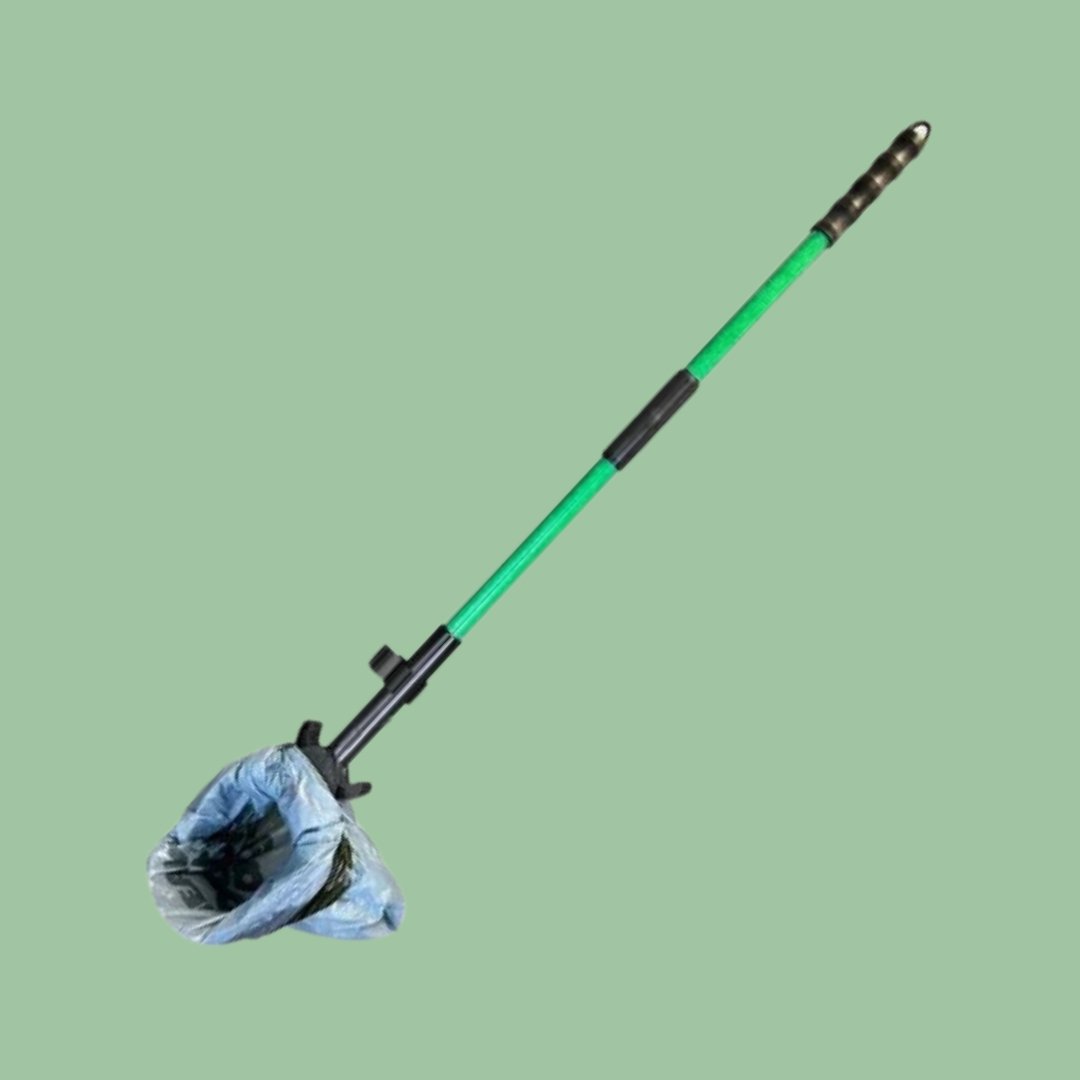
An EZ dootie rake makes daily yard cleanup quick and easy. Scoop waste promptly after your dog goes to prevent toys from contacting it during play. Store outdoor toys in a covered container between uses to keep them cleaner longer and reduce washing frequency.
Designate specific play zones in your yard away from bathroom areas. Train your dog to use one area for elimination and another for play. This separation keeps toys cleaner and makes yard maintenance simpler. For nighttime cleanup, a scooper with LED flashlights helps you find and remove waste thoroughly.
Quick Cleaning Solutions Between Deep Washes
Sometimes you need to freshen toys between regular washing sessions. Quick cleaning methods keep toys usable without full sanitizing procedures. These methods work well for light soil and minor odors.
Freeze rubber toys overnight to kill surface bacteria and refresh them. The cold temperature slows bacterial growth and reduces odors temporarily. Simply rinse the toy with water, shake off excess, and place in a plastic bag in the freezer. This method works especially well in hot weather when bacteria multiply faster.
Pet-safe surface wipes offer another quick option for daily touch-ups. These wipes remove slobber and light dirt from rubber and plastic toys effectively. Keep a pack near your dog’s toy basket for convenient access. However, wipes should supplement rather than replace thorough washing since they cannot sanitize deeply.
Essential Supplies for Dog Toy Cleaning
Stock these items to handle any toy cleaning situation: mesh laundry bags for machine washing, pet-safe detergent, white vinegar, baking soda, bottle brushes in various sizes, and a dedicated scrub brush. Having supplies ready makes maintaining a cleaning routine easier.
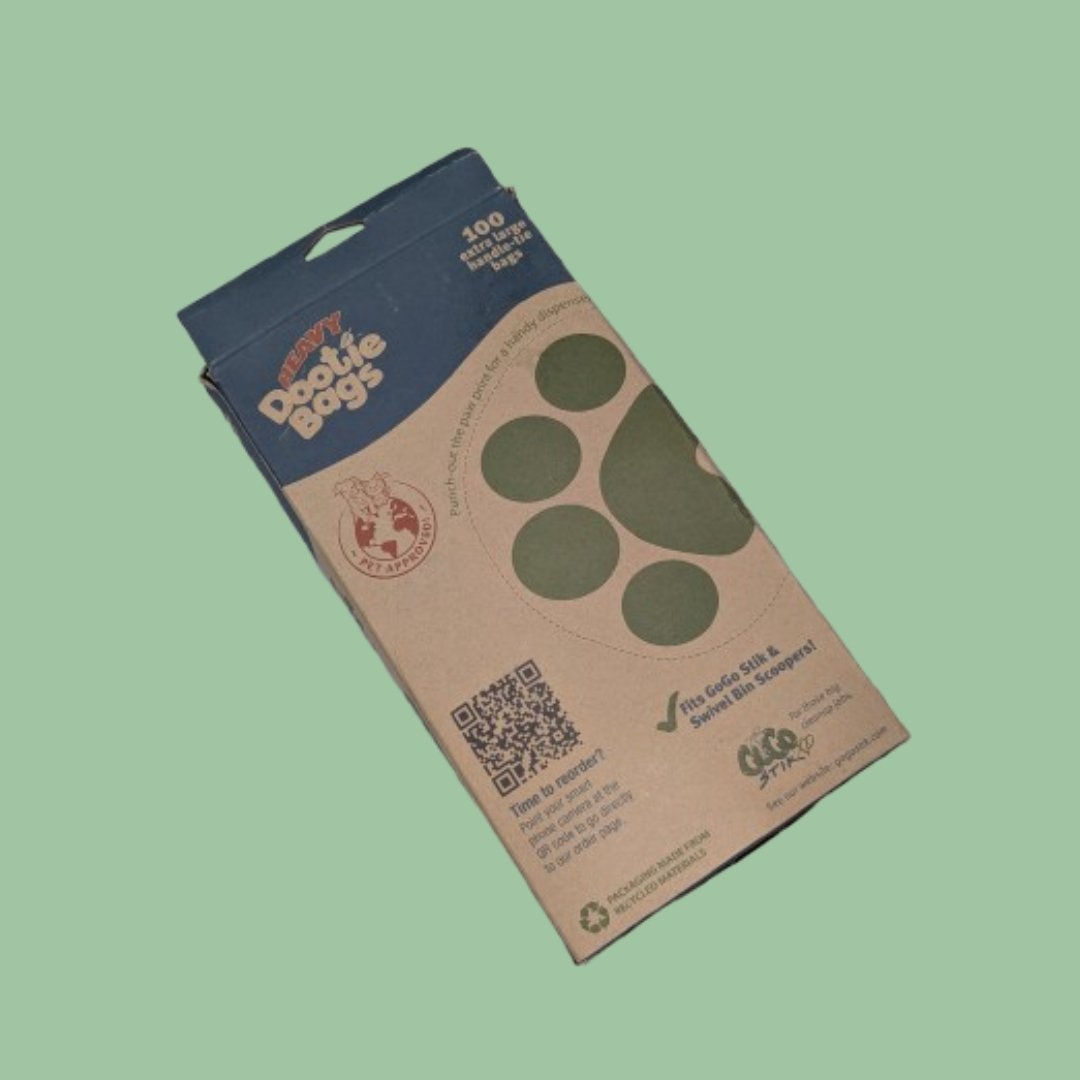
Keep your overall pet care kit organized with quality supplies. Stock up on durable waste bags for outdoor cleanup alongside toy cleaning supplies. A variety pack of waste bags ensures you always have the right size available.
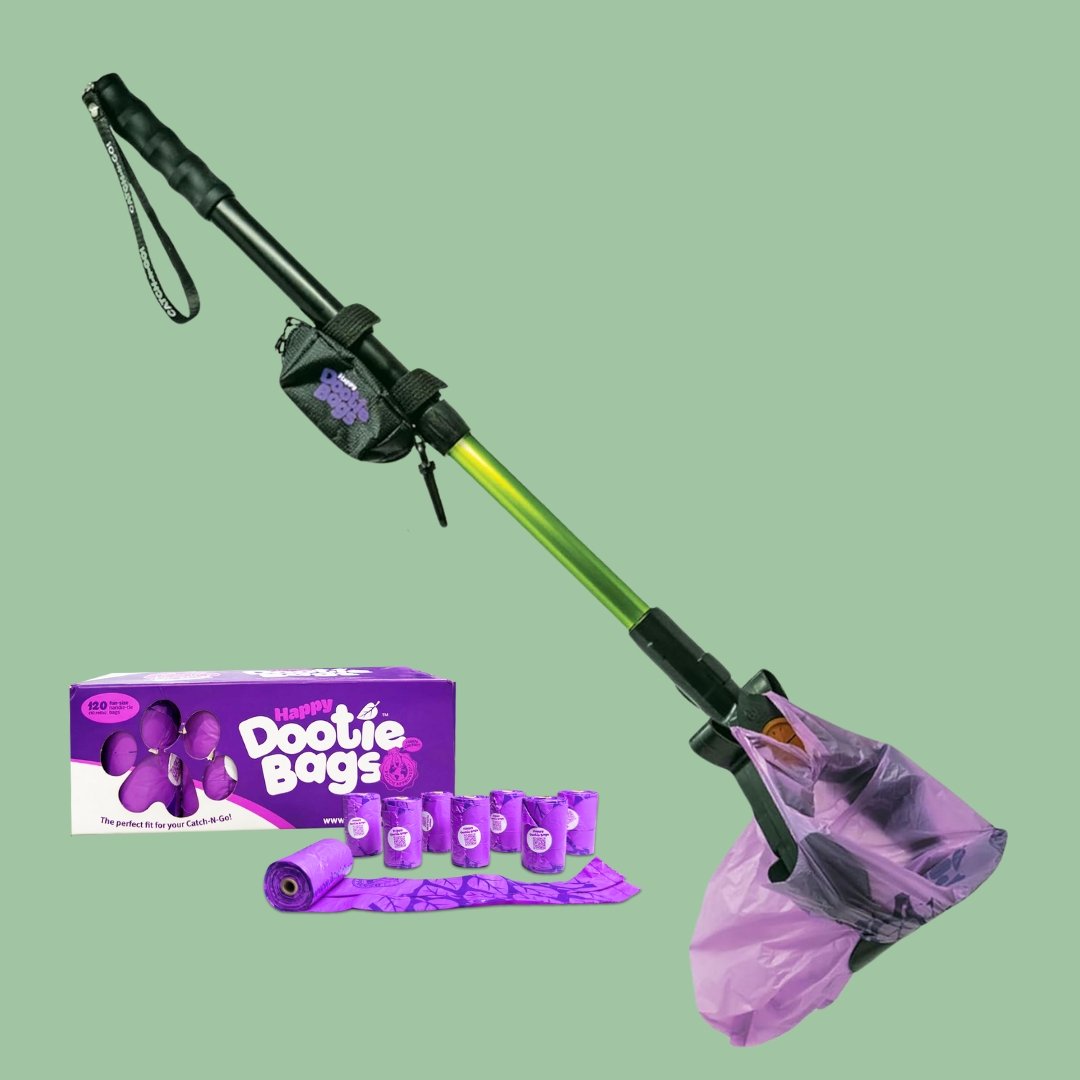
Invest in a quality poop catcher for hands-free waste removal during walks and yard cleanup. Combined with scented waste bags, these tools make maintaining a clean environment simple and pleasant. The right equipment turns pet hygiene from a chore into a quick, easy task.
Keep Your Dog’s Toys Clean and Safe
Regular toy cleaning protects your dog’s health while extending the life of their favorite playthings. By following these methods and establishing a consistent routine, you’ll maintain a hygienic environment that benefits your entire family.
Start small if you’re new to toy maintenance. Choose one cleaning method that fits your schedule and build from there. Over time, these habits become second nature, and you’ll notice cleaner toys, a fresher-smelling home, and a healthier pet. Your dog depends on you for their wellbeing, and clean toys play an important role in keeping them happy and healthy.
For complete pet hygiene solutions, explore GOGO Stik’s range of waste cleanup products and convenient tie-handle bags. Pair clean toys with clean yards for the healthiest possible environment for your furry friend.
Taking your dog on a camping trip is one of the best ways to bond, burn energy, and make memories that last. But if you’ve ever shown up at a trailhead without the right gear, you know how quickly things can go sideways muddy paws, no waste bags, forgotten water
Most dog owners have been there — you say the word “bath,” and your dog bolts in the other direction. The dramatic whining, the scrambling paws on tile, the look of pure betrayal. But why do so many dogs act like bath time is the worst thing that ever happened
If you’ve ever been dragged down the sidewalk by your dog, you know how stressful a simple walk can become. The good news is that leash pulling is one of the most fixable dog behaviors out there. With the right approach and a bit of patience, you can turn chaotic