Home/Blogs/How to Wash a Dog: Complete Step-by-Step Bathing Guide
How to Wash a Dog: Complete Step-by-Step Bathing Guide
Giving your dog a bath might seem straightforward, but doing it correctly makes all the difference in keeping your pet clean, comfortable, and healthy. Whether you’re bathing your first puppy or you’re a seasoned pet parent looking to refine your technique, this guide will walk you through everything you need to know about how to bathe dog safely and effectively.
Why Regular Dog Baths Matter
Before we get into the how-to, let’s talk about why bathing your dog is an essential part of their dog hygiene routine. Regular baths help remove dirt, dead skin cells, and allergens from your dog’s coat. They also give you a chance to check for any skin issues, lumps, or parasites that might need attention.
However, bathing too frequently can strip natural oils from your dog’s skin, leading to dryness and irritation. Most dogs need a bath every 4-6 weeks, but this varies based on breed, coat type, activity level, and lifestyle. Dogs who spend lots of time outdoors or have skin conditions may need more frequent baths, while some breeds with water-resistant coats need less frequent washing.
What You’ll Need Before You Start
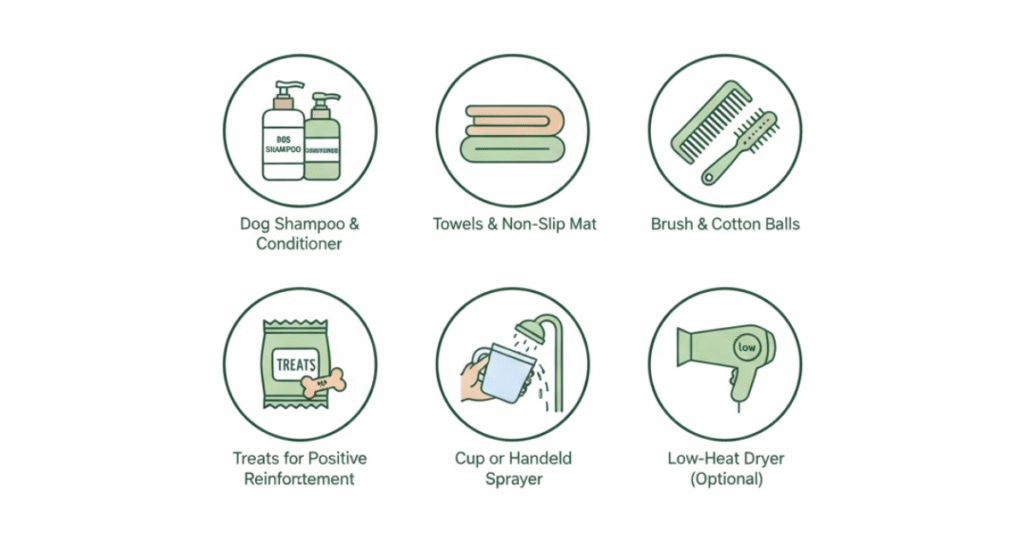
Gathering your supplies before bath time makes the process smoother and less stressful for both you and your dog. Here’s your essential checklist:
Dog-specific shampoo (never use human shampoo, as the pH levels are wrong for dogs)
Conditioner (optional, but helpful for dogs with longer coats)
Several towels (at least 2-3 for drying)
Non-slip mat for the tub or shower floor
Brush or comb to remove tangles before bathing
Cotton balls to protect ears from water
Treats for positive reinforcement
A cup or handheld showerhead for rinsing
Blow dryer (optional, but use only on cool or low settings)
Having everything within arm’s reach means you won’t need to leave your dog unattended during the bath, which keeps them safe and helps maintain their calm.
Pre-Bath Preparation: Setting Up for Success
Brush Your Dog Thoroughly
One of the most important dog bathing tips is to always brush before bathing. Wet fur tends to mat more easily, and any existing tangles will only tighten when wet. Spend 5-10 minutes brushing through your dog’s entire coat, paying special attention to areas where mats commonly form: behind the ears, under the legs, and around the tail.
For dogs with thick or double coats, use a slicker brush or undercoat rake to remove loose fur. This step reduces shedding during the bath and helps water and shampoo reach the skin more effectively.
Trim Nails (Optional but Recommended)
If your dog’s nails are long, consider trimming them before the bath. Long nails can scratch you during bath time and are easier to trim when dry. This also prevents your dog from scratching themselves if they shake vigorously after their bath.
Choose Your Bathing Location
The right location depends on your dog’s size and your available space:
Small dogs: Kitchen sink or laundry tub works well
Medium dogs: Bathtub with a non-slip mat
Large dogs: Walk-in shower, bathtub, or outdoor area (if weather permits)
Very large or anxious dogs: Professional grooming facilities have walk-in tubs that reduce lifting
For outdoor baths, make sure the temperature is warm enough (at least 70°F) and that your dog won’t get chilled.
Step-by-Step: How to Bathe Your Dog
Step 1: Get Your Dog Comfortable
Start by leading your dog to the bathing area calmly and positively. Use treats and praise to create positive associations. If your dog is nervous, spend a few minutes letting them sniff around and get comfortable with the space before turning on any water.
Place the non-slip mat in the tub or shower to give your dog secure footing. Dogs are more likely to panic if they feel like they’re slipping.
Step 2: Wet Your Dog Thoroughly
Temperature matters significantly—use lukewarm water, never hot or cold. Test the water on the inside of your wrist, just as you would for a baby’s bath. Water that’s too hot can burn sensitive skin, while cold water will make your dog uncomfortable and resistant to future baths.
Start wetting from the neck down, working backward toward the tail. Save the head for last, as most dogs find this the most stressful part. Use a handheld showerhead or cup to pour water gently, keeping the stream lower pressure to avoid startling your dog.
Make sure you soak the coat completely down to the skin—many thick-coated dogs have water-resistant fur that takes time to wet through.
Step 3: Apply Shampoo
Squeeze a line of dog shampoo along your dog’s back, then work it into a lather with your hands. Use gentle, circular motions to massage the shampoo through the coat and down to the skin. This pet washing guide technique ensures you’re actually cleaning the skin, not just the surface fur.
Pay attention to these commonly dirty areas:
Paws and legs (especially between toes)
Belly and chest
Under the tail and around the rear end
Neck and collar area
Avoid getting shampoo in your dog’s eyes, ears, or mouth. For the face, use a damp washcloth with a small amount of shampoo rather than pouring it directly.
Step 4: Let the Shampoo Sit
For medicated shampoos or flea treatments, read the label for specific wait times—usually 5-10 minutes. For regular shampoos, a brief contact time of 2-3 minutes allows the cleaning agents to work effectively. Use this time to give your dog a gentle massage, which most dogs find relaxing.
Step 5: Rinse Thoroughly
This is the most critical step that many people rush through. Inadequate rinsing leaves shampoo residue that can cause skin irritation, itching, and dull coat appearance. The rinsing should take longer than the washing.
Start at the head (being careful around eyes and ears) and work your way back. Rinse until the water runs completely clear with no suds or slippery feeling. Run your hands through the coat—if you feel any slickness, keep rinsing. For thick-coated breeds, part the fur and rinse different layers to ensure all soap is removed.
Step 6: Apply Conditioner (If Using)
For dogs with long, dry, or tangled coats, conditioner helps restore moisture and makes brushing easier. Apply conditioner the same way as shampoo, focusing on the coat rather than the skin. Most conditioners work best if left on for 2-3 minutes before rinsing.
Rinse the conditioner out thoroughly, though it doesn’t need to be quite as exhaustive as the shampoo rinse. A slight amount of conditioner left in the coat can actually help with detangling.
Step 7: Final Head and Face Cleaning
Now tackle the head and face. Use a damp washcloth with a tiny amount of diluted shampoo. Gently wipe around the eyes, muzzle, and ears. Be extremely careful not to get water or soap in the ear canals. If your dog has facial wrinkles (like bulldogs or pugs), clean between the folds carefully and dry them completely afterward.
Drying Your Dog: The Right Way
Towel Drying Technique
Before your dog exits the tub, squeeze excess water from their coat with your hands, working from the neck toward the tail. This prevents a soaking wet dog from shaking water everywhere.
Wrap your dog in a large, absorbent towel and gently squeeze and pat—don’t rub vigorously, as this can create tangles. Use multiple towels, switching to dry ones as they become saturated. For long-haired breeds, press and squeeze the coat between towel layers rather than rubbing.
Most dogs will naturally shake multiple times during the drying process, which actually helps remove a significant amount of water. Let them shake it out!
Air Drying vs. Blow Drying
Air drying works well for:
Short-coated breeds
Warm weather situations
Dogs afraid of blow dryers
Keep your dog in a warm, draft-free area if air drying. Never let them outside while damp in cold weather.
Blow drying is better for:
Long-haired or thick-coated breeds
Cold weather
Dogs prone to skin infections (moisture trapped in the coat can cause issues)
Use the lowest heat setting (cool or warm, never hot)
Keep the dryer at least 6-12 inches from the skin
Keep the dryer moving constantly
Brush through the coat as you dry
Never point the dryer at your dog’s face
Watch for signs of overheating (excessive panting, trying to escape)
Many pet stores sell specialized dog dryers that work on lower temperatures with higher airflow, which is safer and more effective than human hair dryers.
Post-Bath Care
Brush Again
Once your dog is completely dry, brush through the coat again. This removes any loose fur that came free during the bath and prevents mats from forming as the coat dries.
Clean the Ears
Check your dog’s ears for any water that might have gotten in during the bath. Use a clean, dry cotton ball to gently wipe out the visible part of the ear canal. If your dog is prone to ear infections, your vet might recommend a special ear-drying solution.
Reward Your Dog
End every bath on a positive note with treats, praise, and maybe their favorite toy. This positive reinforcement helps reduce bath-time anxiety for future sessions.
Clean Your Bathing Area
Remove all the dog hair from the tub or shower immediately—it’s much harder to clean once it dries. Wipe down surfaces and wash your towels promptly to prevent musty odors.
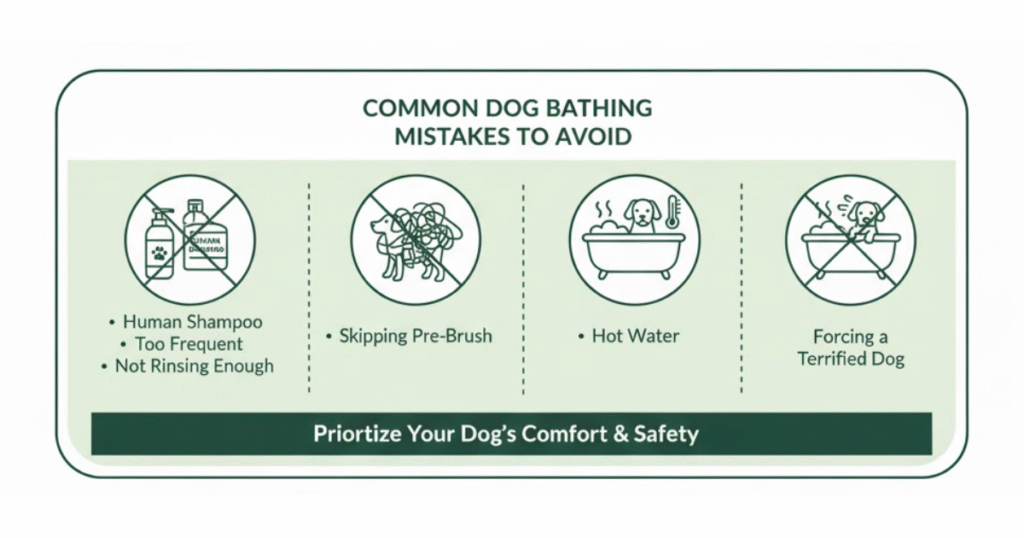
Common Dog Bathing Mistakes to Avoid
Using Human Shampoo: Human skin has a pH of around 5.5, while dog skin is more neutral at 6.5-7.5. Human shampoos can disrupt this balance and cause irritation.
Bathing Too Frequently: Over-bathing strips protective oils, leading to dry, itchy skin and a dull coat.
Not Rinsing Enough: Soap residue is a leading cause of post-bath itching and hot spots.
Using Hot Water: Water that feels comfortable to you may be too hot for your dog’s sensitive skin.
Skipping the Pre-Bath Brush: Wetting matted fur makes tangles worse and nearly impossible to remove.
Forcing a Terrified Dog: If your dog is truly panicked, consider professional grooming or working with a trainer to reduce bath anxiety gradually.
Special Considerations for Different Dogs
Puppies
Puppies can start having baths around 8 weeks old, once they’ve had their first vaccinations. Make their first baths very positive experiences with lots of treats and gentle handling. Keep early baths short and sweet—just 5-10 minutes is plenty for a puppy.
Senior Dogs
Older dogs may have arthritis or mobility issues that make standing in a tub difficult. Consider these adjustments:
Use a non-slip mat for better stability
Support their body with one arm while washing
Keep baths shorter
Use warm (not just lukewarm) water for comfort
Consider a professional groomer with a walk-in tub
Dogs with Skin Conditions
If your dog has allergies, hot spots, or other skin conditions, your vet may prescribe medicated shampoo. Follow the instructions carefully regarding:
How long to leave the shampoo on
How often to bathe
Water temperature
Any areas to avoid or focus on
Anxious Dogs
For dogs with bath anxiety:
Start with just getting them comfortable in the empty tub with treats
Practice turning the water on without bathing them
Use a calm, quiet voice throughout
Consider anxiety-reducing products like calming sprays or treats
Break the bath into shorter sessions if needed
Never punish or force a terrified dog
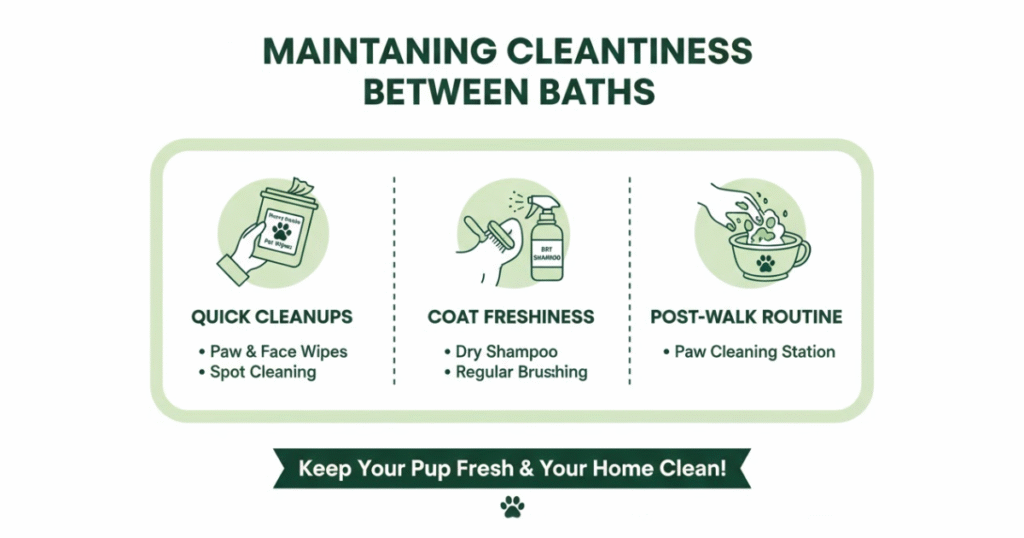
Maintaining Cleanliness Between Baths
You don’t need a full bath every time your dog gets a little dirty. Here are ways to keep your dog fresh between full baths:
Heavy Dootie Pet Wipes: Perfect for quick cleanups of paws, faces, and rear ends. Keep wipes by your door for post-walk paw cleaning.
Spot Cleaning: Use a damp cloth with a tiny amount of shampoo for muddy paws or dirty bellies.
Dry Shampoo: Powder formulas absorb oils and odors without water. Brush through the coat after application.
Regular Brushing: Daily brushing removes dirt, distributes natural oils, and keeps the coat healthy.
Paw Cleaning Station: After walks, especially in wet or muddy conditions, usepet wipes or a paw washer to prevent dirt from spreading through your house.
When to Seek Professional Help
Some situations call for professional grooming rather than home bathing:
Your dog requires extensive coat trimming or styling
You have a large breed that’s difficult to lift or manage
Your dog becomes aggressive during baths
Your dog has severe matting that needs careful removal
You’re physically unable to bathe your dog safely
Your dog has a medical condition requiring specialized handling
Professional groomers have specialized equipment, training, and experience managing difficult dogs. There’s no shame in getting help—it’s often safer and less stressful for everyone involved.
Conclusion
Learninghow to bathe dog properly is an essential skill for every pet owner. With the right preparation, technique, and patience, bath time can transform from a dreaded chore into a bonding experience that keeps your dog healthy and comfortable.
Remember that every dog is unique—what works for one might not work for another. Pay attention to your dog’s signals, adjust your approach as needed, and always prioritize their comfort and safety. The more positive you make the experience, the easier future baths will become.
By following thispet washing guide, you’ll keep your dog’s coat clean and healthy while maintaining their skin’s natural balance. Regular bathing as part of yourdog hygiene routine helps you monitor your pet’s health, strengthens your bond, and keeps your home fresher too.
With practice, thesebath time tips will become second nature, and you might even find that both you and your dog start looking forward to this special grooming time together.
FAQs
How often should I bathe my dog?
Most dogs need a bath every 4-6 weeks, but this varies significantly based on several factors. Dogs with oily coats (like Basset Hounds) may need bathing every week, while breeds with water-resistant coats (like Huskies) might only need baths every 2-3 months. Consider your dog’s lifestyle too—active outdoor dogs who roll in dirt will need more frequent baths than indoor dogs. If your dog has a skin condition, follow your veterinarian’s specific bathing recommendations. Over-bathing can strip natural oils and cause dry, itchy skin, so err on the side of less frequent rather than more frequent bathing unless your dog is visibly dirty or smelly.
Can I use human shampoo on my dog in an emergency?
While using human shampoo once in a true emergency won’t cause serious harm, it’s not recommended even as a temporary solution. Dogs have different skin pH levels than humans (6.5-7.5 versus 5.5), and human shampoos can disrupt this balance, leading to irritation, dryness, and increased susceptibility to bacteria and parasites. If you’re truly in a pinch, baby shampoo is the least harsh option, but purchase dog-specific shampoo as soon as possible. The right products are formulated for your dog’s skin chemistry and will help maintain a healthy coat and skin barrier. Dog shampoos are also designed to address specific needs like flea control, skin allergies, or odor that human products can’t handle.
What temperature should the bath water be?
Bath water should be lukewarm—comfortable to your touch when you test it on the inside of your wrist or elbow, similar to testing baby bath water. The ideal temperature is around 98-100°F (37-38°C), close to your dog’s natural body temperature. Water that feels pleasantly warm to you might be too hot for your dog’s sensitive skin and could cause burns or extreme discomfort. Cold water is equally problematic, as it can cause your dog to shiver and develop negative associations with bath time. In warmer weather, slightly cooler water is acceptable, but never use cold water directly from the tap. Always test the temperature throughout the bath, as it can fluctuate, especially if you’re using a handheld sprayer connected to your shower.
Why does my dog shake during and after baths?
Shaking is a completely natural and instinctive behavior that helps dogs remove excess water from their coats. The shaking motion can remove about 70% of water from their fur, making it one of the most effective drying methods nature has provided. Dogs may also shake during the bath due to stress or anxiety—this is a self-soothing behavior similar to how humans might fidget when nervous. If your dog shakes excessively before the bath even starts, this indicates anxiety, and you should work on creating more positive associations with bath time. The post-bath shake is inevitable and beneficial, so give your dog space to do this before towel drying. Some dogs will shake multiple times as they dry, which is perfectly normal and helps prevent skin issues that can develop from prolonged moisture.
How do I keep water out of my dog’s ears during a bath?
Preventing water from entering your dog’s ear canals is important because trapped moisture can lead to painful ear infections, especially in breeds with floppy ears or those prone to ear problems. Place a cotton ball gently in each ear before starting the bath—this creates a barrier that absorbs any water that gets near the ear canal. Don’t push the cotton deep into the ear; it should sit just inside the opening where you can easily remove it afterward. Avoid spraying water directly at your dog’s head, and instead use a damp washcloth to clean the face and outer ears. Tilt your dog’s head slightly downward when rinsing near the ears so water naturally runs away from rather than into the ear canals. After the bath, remove the cotton balls and use a fresh, dry cotton ball to gently wipe the visible part of the ear, absorbing any moisture that may have gotten inside.
What should I do if my dog is terrified of baths?
Bath anxiety is common and requires patience and positive reinforcement to overcome. Start by desensitizing your dog to the bathing area without actually giving a bath—simply bring them to the tub and offer treats and praise. Over several sessions, gradually introduce elements of the bath: turn on the water while your dog is nearby (but not in the tub), let them investigate the empty tub, practice lifting them in and out without water. Use high-value treats throughout the process and keep sessions short and positive. Consider using a non-slip mat to give them better footing, which reduces anxiety. Some dogs respond well to having a trusted person simply sit with them during the bath. If your dog’s fear is severe or they become aggressive, consult a professional dog trainer or veterinary behaviorist. In the meantime, usepet wipes and dry shampoo for basic hygiene, and consider professional grooming services where staff are trained to handle anxious dogs safely.
Giving your dog a proper bath is one of the most important parts of pet care. A clean dog is a healthy dog — and with the right approach, bath time does not have to be stressful for you or your pup. This guide from GOGO Stik walks you through
Giving your dog a proper bath is one of the most important parts of pet care. A clean dog is a healthy dog — and wiKeeping your dog clean and well-groomed is one of the most important parts of responsible pet ownership. Regular grooming does more than make your dog
If your dog keeps scratching, chewing, or biting at his skin, you are not alone. This is one of the most common concerns among dog owners, and it can have several different causes. The good news is that most cases are treatable oIf your dog keeps scratching, chewing, or biting