Home/Blogs/How to Teach Your Dog to Not Pull on a Leash Walk, and More!
How to Teach Your Dog to Not Pull on a Leash Walk, and More!
Walking your dog should be one of the best parts of your day — fresh air, bonding time, and a little exercise for both of you. But if your dog is constantly yanking, zigzagging, or dragging you down the street, it stops being fun fast.
The good news? Leash pulling is one of the most fixable dog behaviors out there. With the right technique and some consistency, most dogs can learn to walk calmly beside you within a few weeks.
Here’s how to make it happen.
Why Dogs Pull on the Leash in the First Place
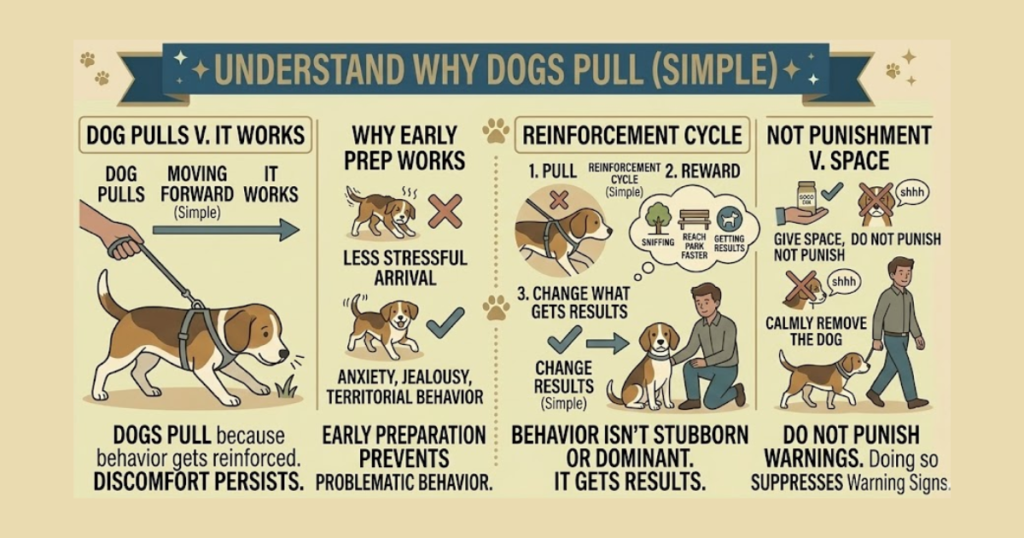
Before fixing the problem, it helps to understand it. Dogs pull because it works. They move forward, they get to sniff things, they reach the park faster — so the behavior gets reinforced over and over again.
They’re not being stubborn or dominant. They’re just doing what has always gotten results. That means your job is to change what gets results.
What You’ll Need Before You Start
The right gear makes a real difference. A standard flat collar can make pulling worse because dogs naturally push against pressure. Instead, consider:
A front-clip harness — the leash attaches at the chest, which naturally redirects your dog when they pull forward
A standard 4–6 foot leash — avoid retractable leashes during training, since they actually reward pulling by giving more slack
High-value treats — small, soft, smelly treats your dog goes crazy for
Step 1: Start in a Low-Distraction Area
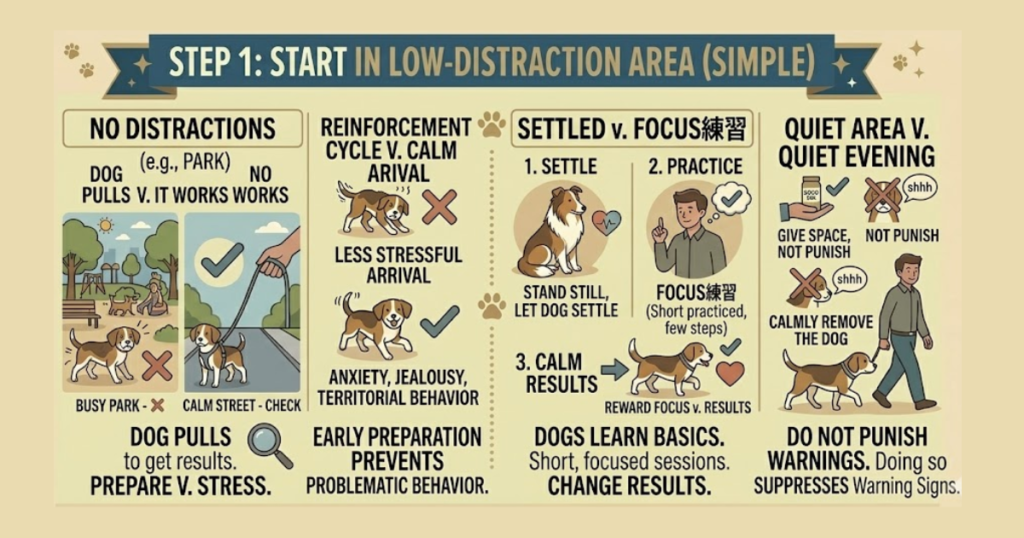
Don’t head straight to a busy park or sidewalk. Start training in your backyard or a quiet street first. Your dog needs to learn the basics before distractions are added into the mix.
Stand still, let your dog settle, then take a few steps. The goal in these early sessions is short, focused practice — not a long walk.
Step 2: Use the “Stop and Wait” Method
This is the foundation of loose-leash walking. The rule is simple:
When the leash goes tight, you stop.
The moment your dog pulls, stop walking. Stand completely still. Don’t jerk the leash, don’t say anything — just stop.
Wait for your dog to release the tension by stepping back toward you, sitting, or just looking back at you. The second that leash goes loose, mark it with a “yes!” or a clicker, reward with a treat, and start walking again.
Your dog will quickly figure out that pulling = the walk stops, and a loose leash = the walk continues.
Step 3: Reward Position, Not Just Behavior
You want your dog to understand that walking beside you is the best place to be. So, reward them heavily when they’re in the right spot — right next to your leg, leash slack.
As a result, you create a positive association with that position. They’ll start choosing it on their own because that’s where the treats and praise come from.
Use a consistent cue like “heel” or “with me” so they learn the command as well as the position.
Step 4: Change Direction When They Pull
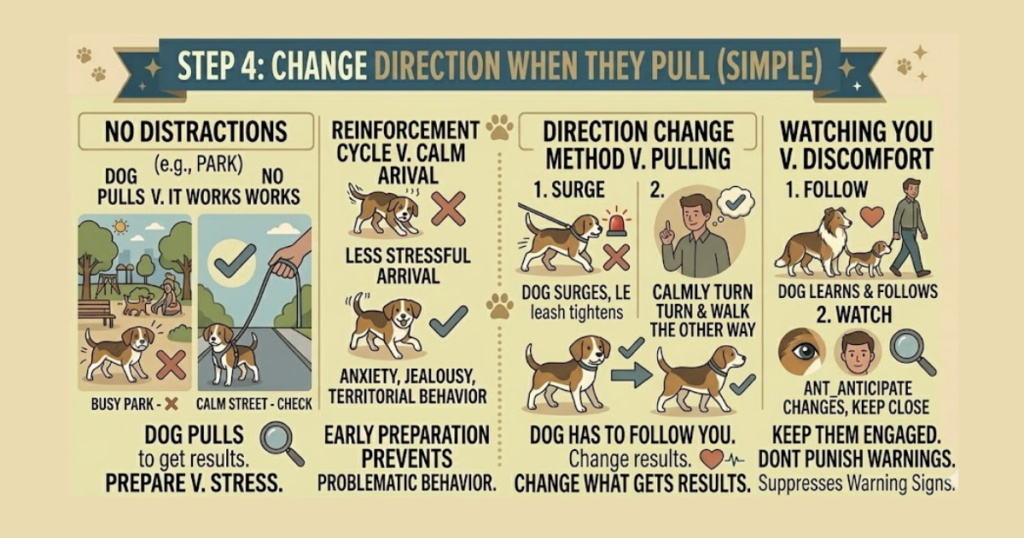
Another effective approach is the direction change method. When your dog surges ahead and the leash tightens, calmly turn and walk the other way. Don’t make it dramatic — just turn and go.
Your dog has to follow you, and they quickly learn that you’re the one deciding where the walk goes. In turn, they start watching you more closely to anticipate direction changes, which keeps them engaged and close to your side.
Step 5: Build Duration Gradually
Once your dog is walking nicely for a few minutes in a quiet area, start adding challenge:
Move to a busier street
Walk past dogs or people at a distance
Introduce different surfaces or smells
Each new environment will be a small test. Expect some regression — that’s normal. Go back to basics briefly, then build back up.
Step 6: Stay Consistent on Every Walk
This is where most people struggle. Training sessions are great, but if you let pulling slide during the “real” walk because you’re in a hurry, you’re undoing your progress.
Everyone who walks your dog needs to follow the same rules. Otherwise, your dog learns that pulling works sometimes — and they’ll keep trying.
Common Mistakes That Slow Down Progress
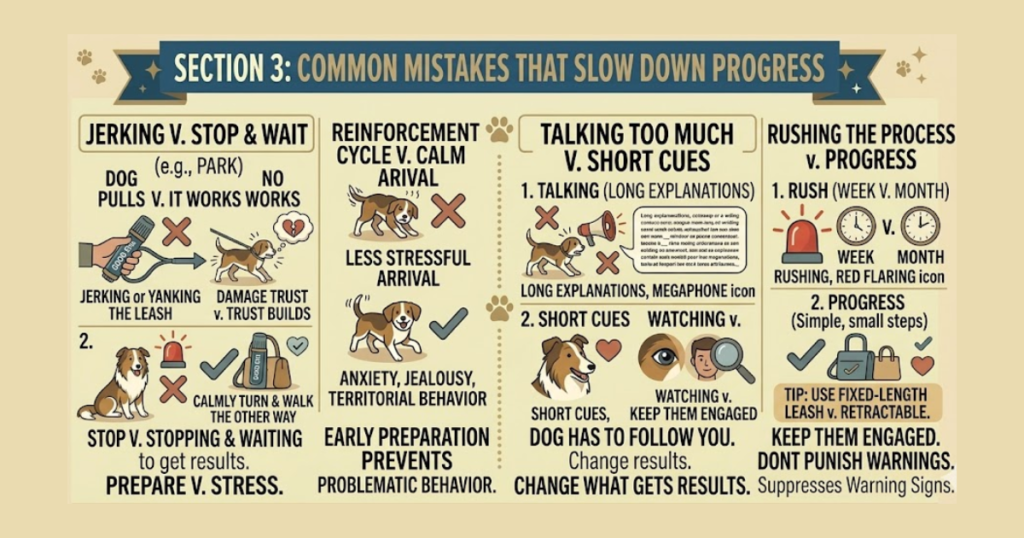
Jerking or yanking the leash — this doesn’t teach anything and can damage trust. Stick to stopping and waiting.
Talking too much — dogs don’t process long explanations. Keep your cues short and consistent.
Rushing the process — some dogs get it in a week, others take a month. Progress, not perfection, is what you’re after.
Using a retractable leash during training — these teach your dog that pulling gets them more freedom. Switch to a fixed-length leash until the behavior is solid.
What to Do After a Walk
Once you’re back from your walk, give your dog a chance to decompress — water, rest, and a little calm time. That’s also when cleanup becomes part of the routine.
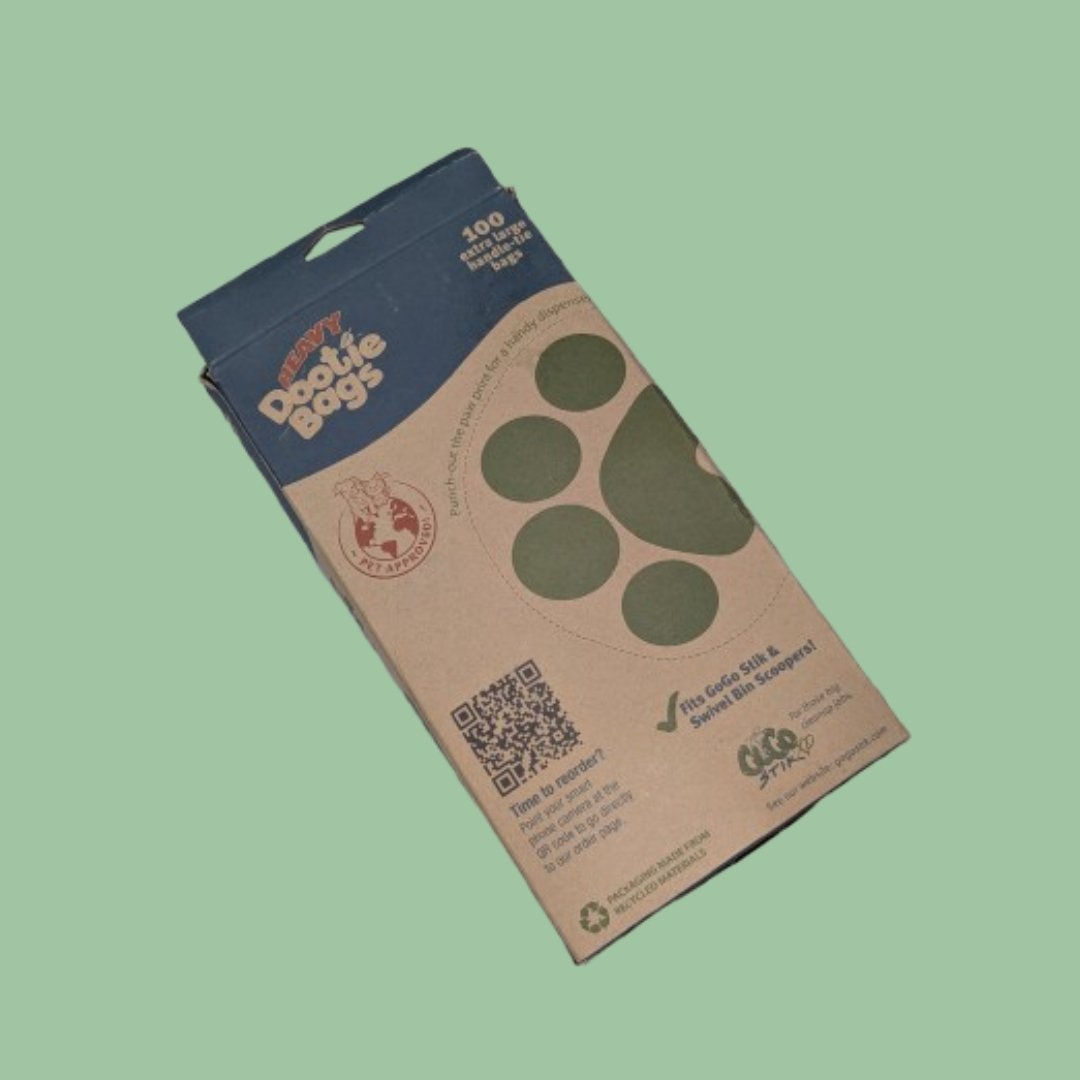
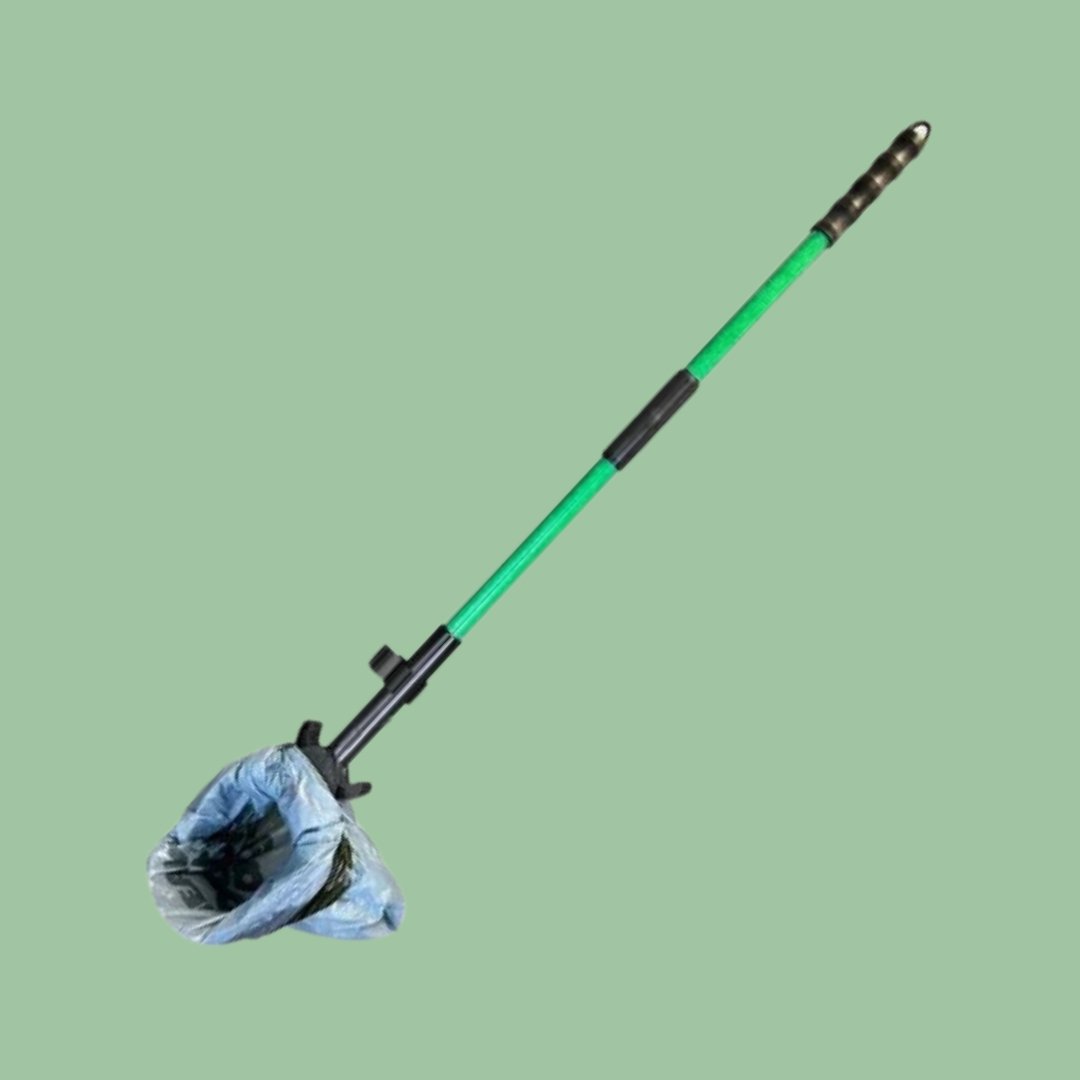
Picking up after your dog is easier when you’re carrying the right gear. GOGO Stik’s pooper scoopers and XP Pooper Scooper Set are designed to make post-walk cleanup fast and hands-free — so you can focus on the walk, not the mess.
If you have a yard, staying on top of cleanup is just as important. The Scooper and Hybrid Rake Set is built for large dog owners who need to clear a yard fast.
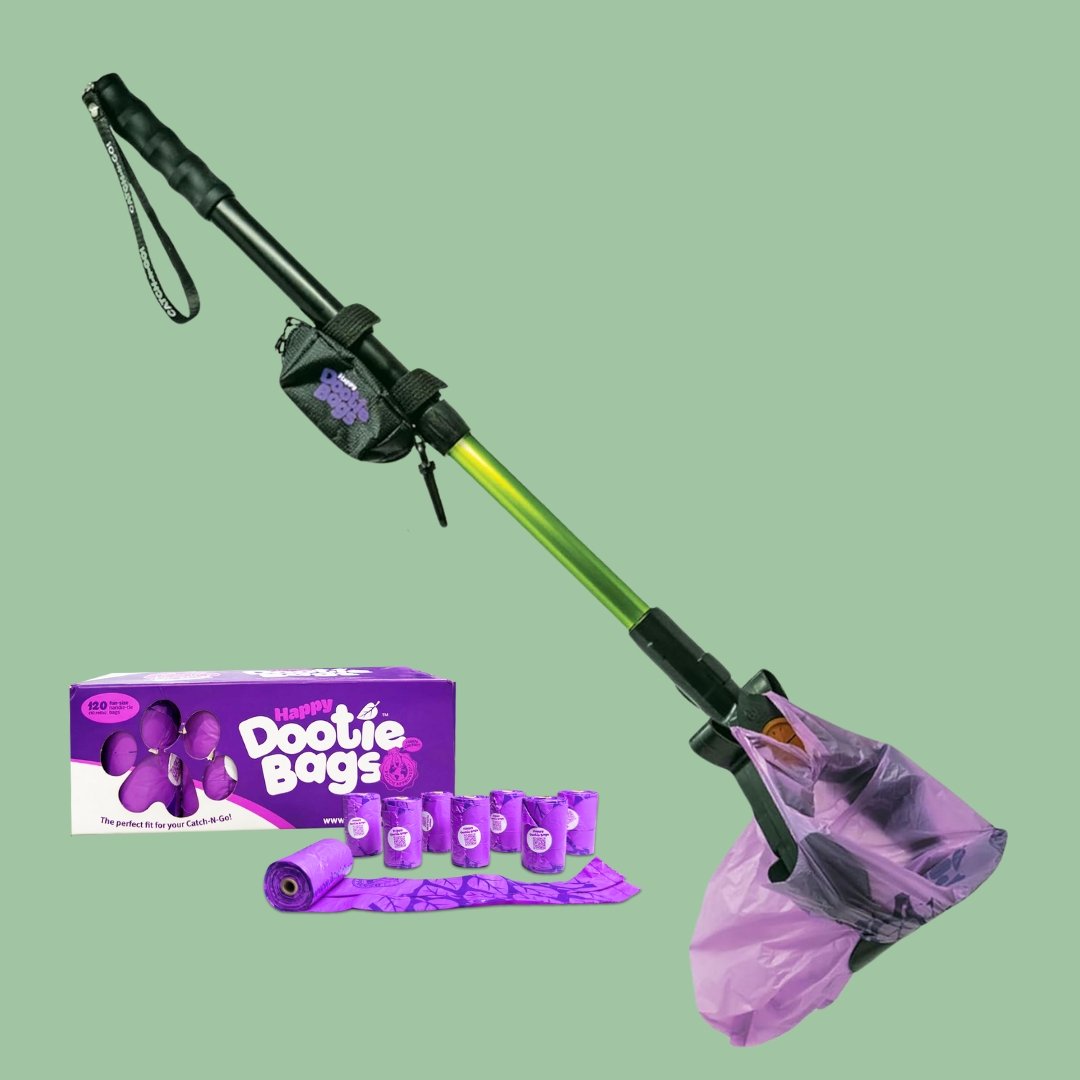
For walks, the Catch N Go Hybrid Catcher Scooper clips right onto your leash handle, keeping your hands free until you need it. The EZ Dootie Rake is another solid option for lighter, quicker cleanups.
After the walk, Heavy Dootie Pet Wipes help you clean paws and your dog’s backside before they come inside — especially useful after rainy or muddy walks.
Teaching your dog to walk without pulling takes patience, but it pays off quickly. Stick to the method, reward the right behavior, and stay consistent across every walk — no exceptions.Before long, your dog will be walking beside you like a pro. And with the right gear from GOGO Stik, the cleanup side of the walk stays just as smooth.
The snoot challenge has taken social media by storm, and for good reason. It’s one of the cutest tricks your dog can learn, and the best part is that it’s surprisingly simple to teach. If you’ve been scrolling through Instagram or TikTok and wondering how those dogs gently rest their
Every dog owner has seen it — that bizarre, hilarious ritual your pup performs before doing their business. From dramatic spins to the classic “walk and drop,” dogs have some truly ridiculous pooping habits. Whether you own a tiny Chihuahua or a massive Great Dane, one thing is universal: dogs
Taking your dog on a camping trip is one of the best ways to bond, burn energy, and make memories that last. But if you’ve ever shown up at a trailhead without the right gear, you know how quickly things can go sideways muddy paws, no waste bags, forgotten water