Home/Blogs/How to Cut Dog Nails: Tips for a Safe and Easy Trimming
How to Cut Dog Nails: Tips for a Safe and Easy Trimming
Trimming your dog’s nails is one of the most important parts of routine pet care. Yet, for many dog owners, it can feel stressful — both for you and your pup. The good news is that with the right tools, a calm approach, and a little practice, nail trimming becomes a simple habit rather than a struggle. This guide walks you through everything you need to know, from choosing the right clippers to handling a nervous dog.
At GOGO Stik, we believe clean and healthy pets start with good grooming habits. So let’s get started.
Why Regular Nail Trimming Matters for Your Dog
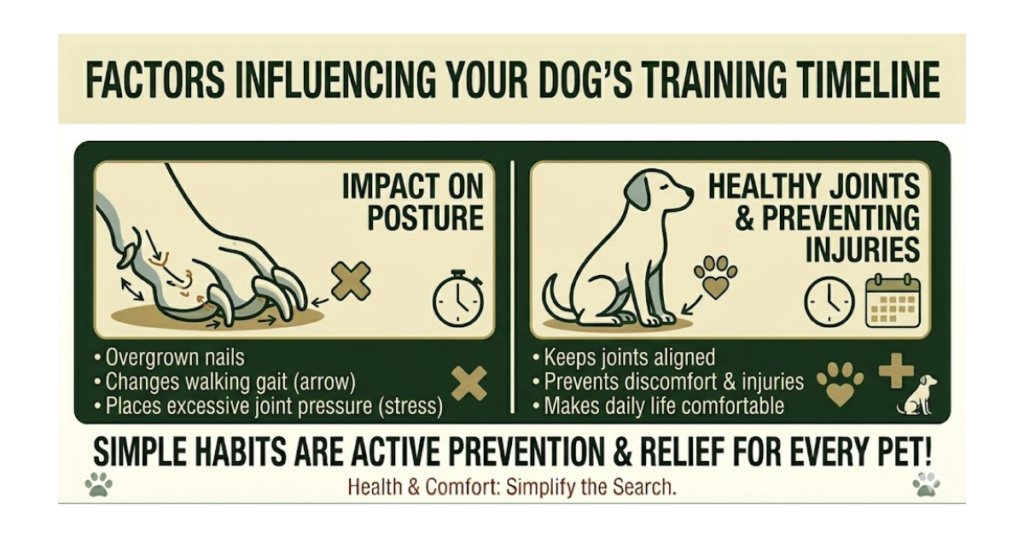
Many dog owners overlook nail care until there’s a problem. In reality, overgrown nails cause a range of issues. Long nails can change how your dog walks, placing extra pressure on their joints and leading to discomfort or even injury over time. They can also snag on carpets, scratch floors, or curl back into the paw pad — which is painful and may require a vet visit.
As a result, keeping nails trimmed at the right length protects your dog’s posture, prevents injuries, and makes daily life more comfortable for them. Most dogs need a trim every 3 to 4 weeks, though active dogs who walk on hard surfaces may need less frequent trimming because the pavement naturally wears the nails down.
How to Know When Your Dog’s Nails Are Too Long
A good rule of thumb: if you can hear your dog’s nails clicking on a hard floor as they walk, it’s time for a trim. Ideally, nails should just barely clear the ground when your dog is standing.
Other signs include:
Nails visibly curling or extending past the paw pad
Your dog limping or favoring a paw
Difficulty gripping smooth surfaces
Visible discomfort when the paw is touched
If you notice any of these signs, it’s time to get those clippers out.
Tools You Need Before You Start
Having the right tools makes a big difference. Here’s what to gather before your trimming session:
Dog Nail Clippers
There are three main types: guillotine clippers, scissor-style clippers, and plier-style clippers. Scissor and plier-style clippers work well for most dogs. Guillotine clippers are easier to use for smaller breeds. Choose a size appropriate for your dog — using clippers that are too small for a large breed can crush the nail rather than cut it cleanly.
Styptic Powder
Accidents happen. Styptic powder stops bleeding quickly if you accidentally cut the quick (the blood vessel inside the nail). Keep it within reach every time you trim.
Dog Treats
Positive reinforcement goes a long way. Treats help your dog associate nail trimming with something good, which makes future sessions much easier.
Before you even pick up the clippers, spend a few minutes helping your dog relax. Pet them, talk calmly, and let them sniff the clippers if they seem nervous. For very anxious dogs, try handling their paws regularly during calm moments — not just at trimming time — so they get used to the sensation.
Step 2 – Choose the Right Position
You can trim your dog’s nails while they’re sitting, lying down, or standing — whichever position keeps them most calm. Smaller dogs can be placed on a table or in your lap. For larger dogs, having a second person hold them gently is often helpful.
Step 3 – Identify the Quick
The quick is the pink section inside the nail that contains blood vessels and nerves. On dogs with light-colored nails, you can see it clearly. On dark nails, look at the underside of the nail — you’ll notice a chalky white ring that transitions to a darker core. Cut just before that darker area to avoid the quick.
Step 4 – Make the Cut
Hold the paw firmly but gently. Position the clippers at a slight angle (about 45 degrees) and make a clean, swift cut. Avoid cutting too close to the quick — trim a little at a time if you’re unsure. It’s better to take multiple small cuts than one large one that goes too deep.
Step 5 – Reward and Repeat
After each nail, offer praise and a treat. This builds a positive connection with the experience. Take breaks if your dog gets too anxious — it’s completely fine to do one paw at a time across different sessions when you’re first starting out.
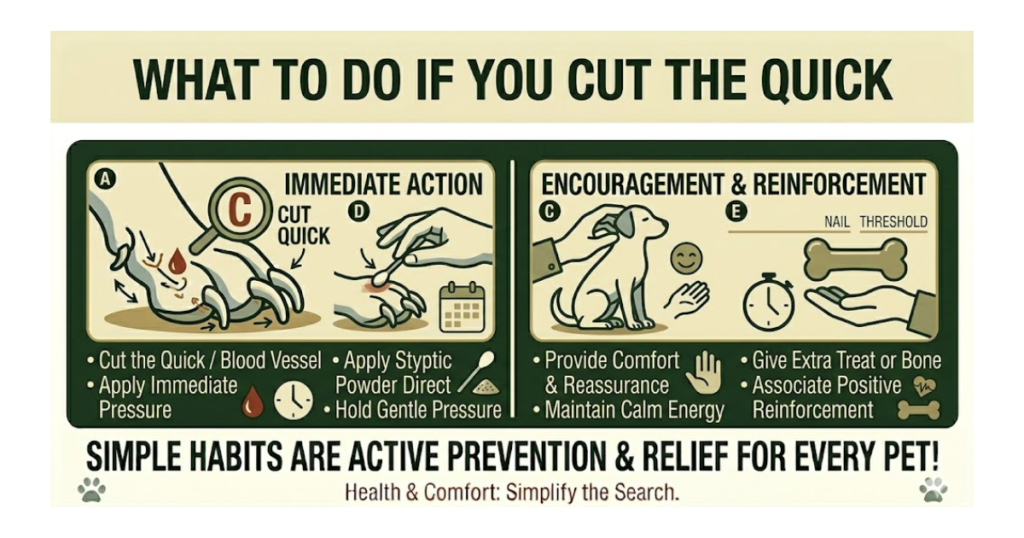
What to Do If You Cut the Quick
Even experienced dog owners cut the quick occasionally. Stay calm — your dog will pick up on your energy. Apply styptic powder directly to the nail tip and hold gentle pressure for a few seconds. The bleeding typically stops within a minute or two.
After that, give your dog extra comfort and a treat. The goal is to end the session on a positive note so they don’t build a negative association with future trimmings.
Tips for Trimming Nails on Anxious or Reactive Dogs
Some dogs simply don’t enjoy having their paws touched. That’s normal. The key is gradual desensitization over time. Here’s a practical approach:
Start by touching your dog’s paws daily without any trimming. Build positive associations through treats and calm praise.
Introduce the clippers without using them — let your dog sniff them, then reward.
Over several sessions, practice placing the clippers near the nails without cutting.
Once your dog stays calm, do one nail. Stop, reward, and walk away.
Slowly build up to a full paw over multiple sessions.
Patience matters more than speed here. Rushing creates a negative experience that’s harder to undo later. In contrast, slow and steady progress builds lasting trust.
How Often Should You Trim Your Dog’s Nails?
Most dogs benefit from a trim every 3 to 4 weeks. However, the exact frequency depends on your dog’s breed, size, activity level, and the surfaces they walk on regularly.
Dogs who spend a lot of time outdoors on concrete or asphalt will naturally wear their nails down faster. Indoor dogs, or those who mainly walk on grass and soft surfaces, tend to need more frequent trimming. The best habit is to check the nails every 2 weeks and trim as needed rather than waiting for an obvious problem.
Front Paws vs. Back Paws: Is There a Difference?
Yes — front paws generally grow faster than back paws and often need trimming more frequently. Back nails also tend to be slightly shorter because they bear more weight during walking and naturally file down a bit more.
Don’t forget the dewclaw, which is the small nail located higher on the inner leg. Because it doesn’t touch the ground, it never wears down naturally and can grow into a curve, sometimes cutting into the skin if ignored. Always include the dewclaw in your trimming routine.
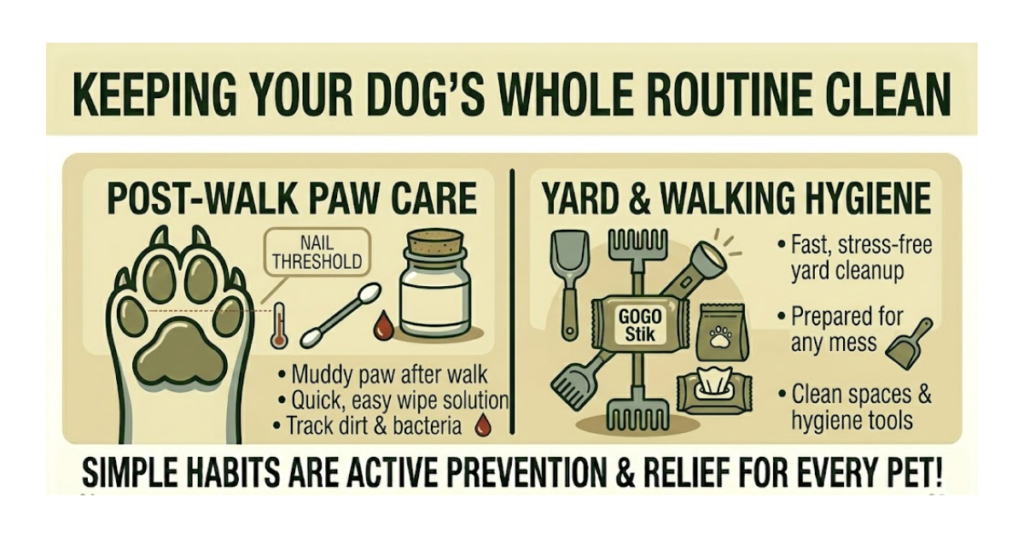
Keeping Your Dog’s Whole Routine Clean
Nail trimming is just one piece of overall dog hygiene. After a walk, muddy paws can track dirt and bacteria into your home. A pack of Heavy Dootie Pet Wipes for Paws and Butt is a quick and easy solution for wiping down paws after outdoor adventures — no bath required.
Keeping your yard clean is equally important for your dog’s health. GOGO Stik offers a full range of tools to make yard cleanup fast and stress-free, including the Scooper and Hybrid Rake Set with 100-Count Heavy Dootie Bags, perfect for large yards and big dogs.
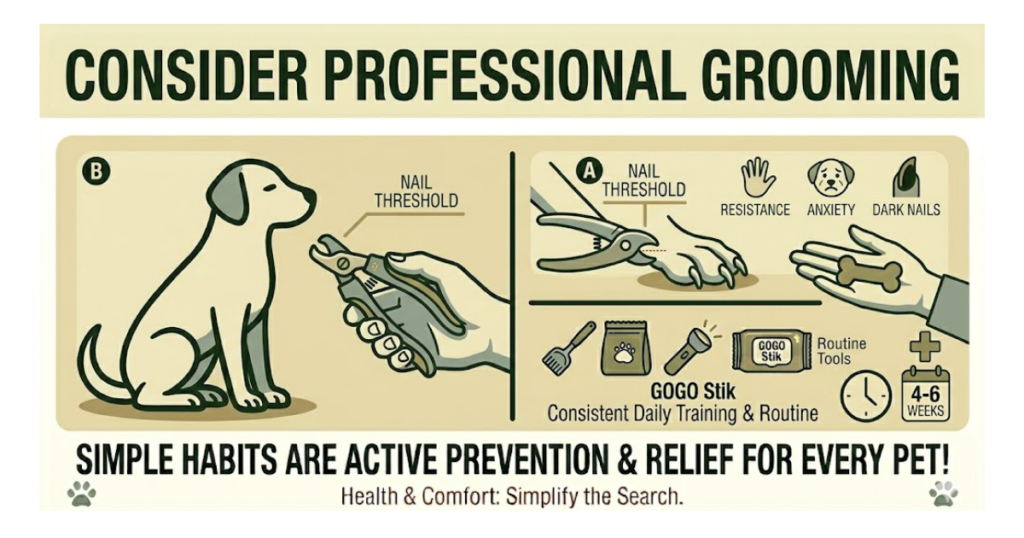
Some dogs truly resist home nail trims despite your best efforts. In those cases, a professional groomer or vet tech can handle it safely and quickly. This is especially useful for dogs with very dark nails where the quick is hard to see, dogs with past negative experiences, or large or strong breeds that are difficult to restrain alone.
Professional grooming visits every 4 to 6 weeks can also serve as a check-in for overall coat health, ear cleaning, and other routine care — making them a worthwhile investment even if you handle most grooming at home.
Common Nail Trimming Mistakes to Avoid
Cutting too much at once. Take small, gradual cuts rather than one large cut to reduce the risk of hitting the quick.
Using dull clippers. Dull blades crush the nail instead of cutting cleanly, which causes pain and cracking. Replace or sharpen clippers regularly.
Skipping the dewclaw. It’s easy to forget, but overgrown dewclaws can curl and become embedded in the skin.
Trimming while your dog is agitated. Always wait for a calm moment. Trimming an anxious dog increases the chance of accidental cuts and makes future sessions harder.
Not rewarding your dog. Positive reinforcement is one of the most effective ways to make grooming a routine your dog tolerates — or even enjoys.
Frequently Asked Questions
How do I know where the quick starts in dark nails?
Look at the cut surface after each small trim. When you see a small dark circle in the center, that’s the start of the quick. Stop trimming at that point.
My dog yelps even when I haven’t cut the quick. Why?
Some dogs are simply sensitive about their paws. The pressure of the clippers can feel uncomfortable even without cutting the quick. Try a grinder or file instead, which applies less pressure and may feel less threatening.
Can I use human nail clippers on my dog?
Human nail clippers work on very small puppies in a pinch, but they’re not designed for dog nails and can cause splitting or cracking. Always use proper dog nail clippers for the best results.
Cutting your dog’s nails doesn’t have to be a struggle. With patience, the right tools, and a consistent routine, most dogs learn to tolerate — and even accept — regular nail trims without much fuss. Start slow, stay calm, and always end on a positive note with plenty of treats and praise.
Taking care of your dog’s nails is part of caring for their whole wellbeing. And at GOGO Stik, we’re here to make every part of dog ownership — from yard cleanup to on-the-go walks — cleaner and easier for you both.Check out our full range of pooper scoopers, dootie bags, and pet care accessories to keep your pup happy, healthy, and clean every day.
Summer is the perfect season to hit the road with your four-legged companion. Whether you’re heading to the beach, the mountains, or a dog-friendly city, a well-planned trip makes all the difference. Since dogs thrive on routine, a little preparation goes a long way toward keeping both of you relaxed
Bringing home your first dog is one of life’s most exciting milestones. However, the responsibility can feel overwhelming without proper guidance. This comprehensive guide will help you navigate the early days of dog ownership with confidence and ease. Essential Supplies Every New Dog Owner Needs Before your furry friend arrives,
Watching a puppy take its first wobbly steps is one of the most heartwarming moments for any pet parent. Those tiny legs, the stumbles, and the determined little faces — it all marks a major turning point in your pup’s growth. But exactly when do puppies start walking, and what