

Dog Life & Training
Dog Won’t Poop in Snow? 6 Easy Fixes
Dog won’t poop in snow? Learn why cold, salt and buried scent stop them, how to clear a potty patch, and when holding it means a vet visit.
 Skip to content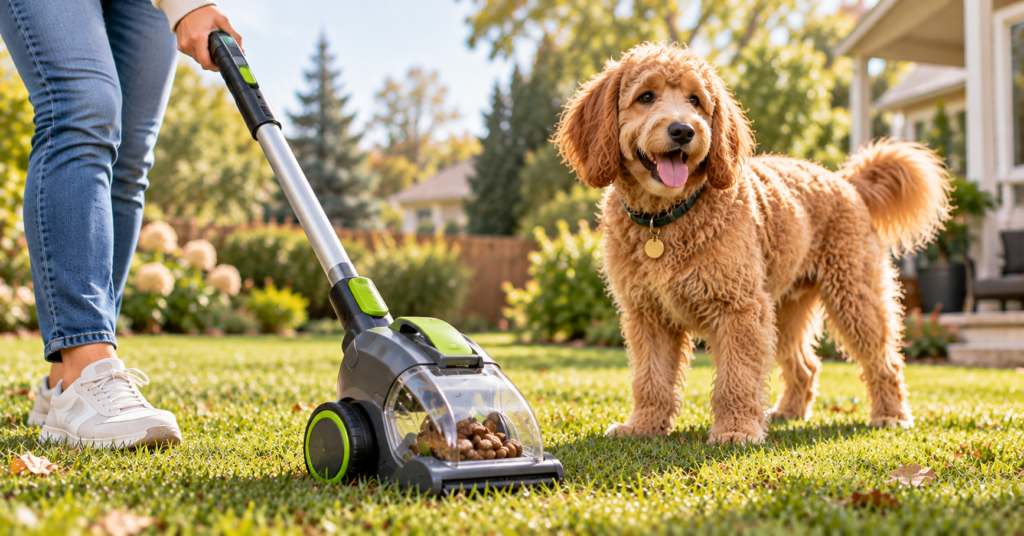
A dog poop vacuum is any powered tool that promises to suck or scoop waste so your hands and back stay out of it. The honest answer on whether it works: suction is the wrong physics for fresh stool, which is soft, wet and sticky rather than dry and loose like crumbs or leaves. Powered tools do have a narrow sweet spot, and this page explains exactly where that is, what the machine costs you in cleaning time, and when a simple long-handled tool beats a battery.
Searches for a dog poop picker upper machine usually land on one of three very different product shapes. This category changes quickly, so check current listings and recent buyer reviews before you commit to any one of them.
A battery motor pulls waste off the ground into a sealed chamber or a liner inside the body. Marketed for walks and small yards. The mechanics are the same as a cordless vacuum, with all the same limits.
An electric pooper scooper does not suck at all. A motor or trigger closes jaws or drives a claw into the ground so you do not squeeze a grip. Useful for weak hands, but it is still a scooper that you carry and empty.
A robot pooper scooper is a driving unit meant to patrol a lawn the way a mower robot does, locating waste and collecting it. Treat claims here with care and read recent owner feedback rather than product copy.
Vacuums move loose material through a tube on a cushion of air. Fresh stool is cohesive and damp, so instead of travelling it smears the intake, coats the hose wall and forms a plug. Firm, cold waste behaves better. Soft stool after a rich meal is the realistic worst case, and it is common.
On a lawn, blades wrap around the waste and hold it down while suction pulls the grass upright instead. That is the same reason it is slow by hand, as covered in picking up soft poop in wet grass.
Whatever the machine lifts is now inside the machine. That means a chamber, a seal and an intake to rinse after every single use, outdoors, with a brush you will never use for anything else. Dog faeces can carry roundworm and hookworm eggs, so residue in a tube is not a cosmetic issue (AVMA on parasites). Our notes on cleaning and disinfecting a scooper apply double to anything with a motor.
Flat, non-absorbent ground is where powered dog waste cleanup has its strongest argument. Nothing grips the waste, the intake sits flush, and a hose rinse finishes the job. Kennel operators and anyone cleaning a patio or concrete run daily have the volume to justify the upkeep. Artificial grass sits in between: the surface is flat, but infill and blades still hold residue and odour, which is why artificial grass poop smell needs rinsing as well as removal.
Thick fescue, leaf litter, mud, slopes and anything frozen or half-melted all defeat airflow. On a normal back yard, a tray or claw pressed into the grass still moves more waste per minute than a motor does. Pooper scooper types explained covers which of those designs suits which ground.
| Point that matters | Powered machine | Long-handled bag scooper |
|---|---|---|
| Upfront cost | Appliance-level | One-time tool purchase |
| Running cost | Charging, filters, liners, parts | Bags only |
| Cleaning after use | Chamber, intake and seals, every time | Rinse the head, or nothing if the bag caught it |
| What touches the waste | The machine’s interior | The bag, which you tie and bin |
| Soft or runny stool | Weakest point | Scoop wide and lift with the bag |
| Long or wet grass | Poor | Good with a rake or spade edge |
| Effort from you | Carry, guide, empty, wash | Walk out, scoop, tie |
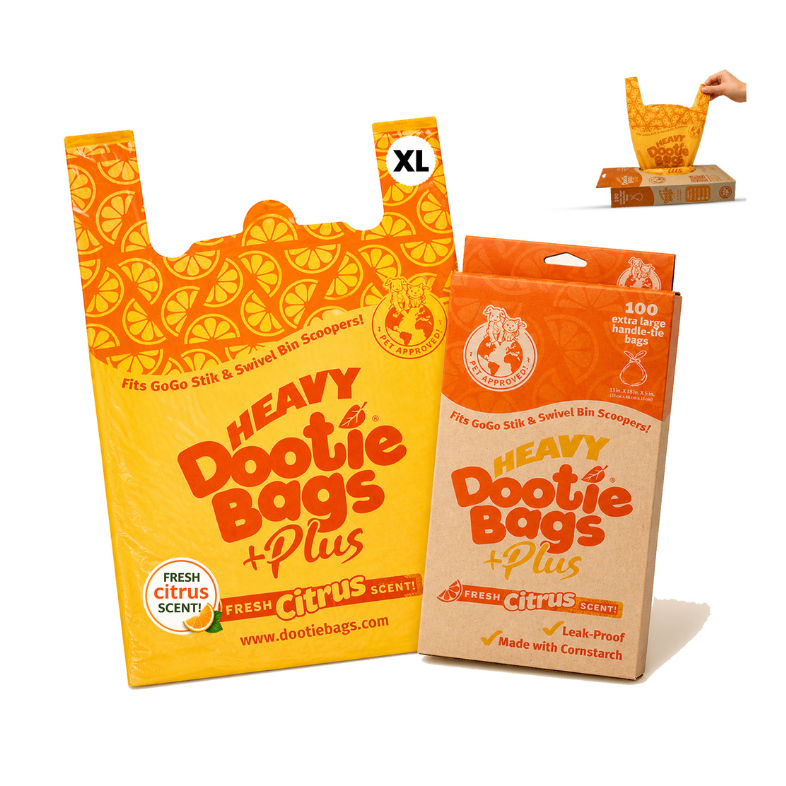
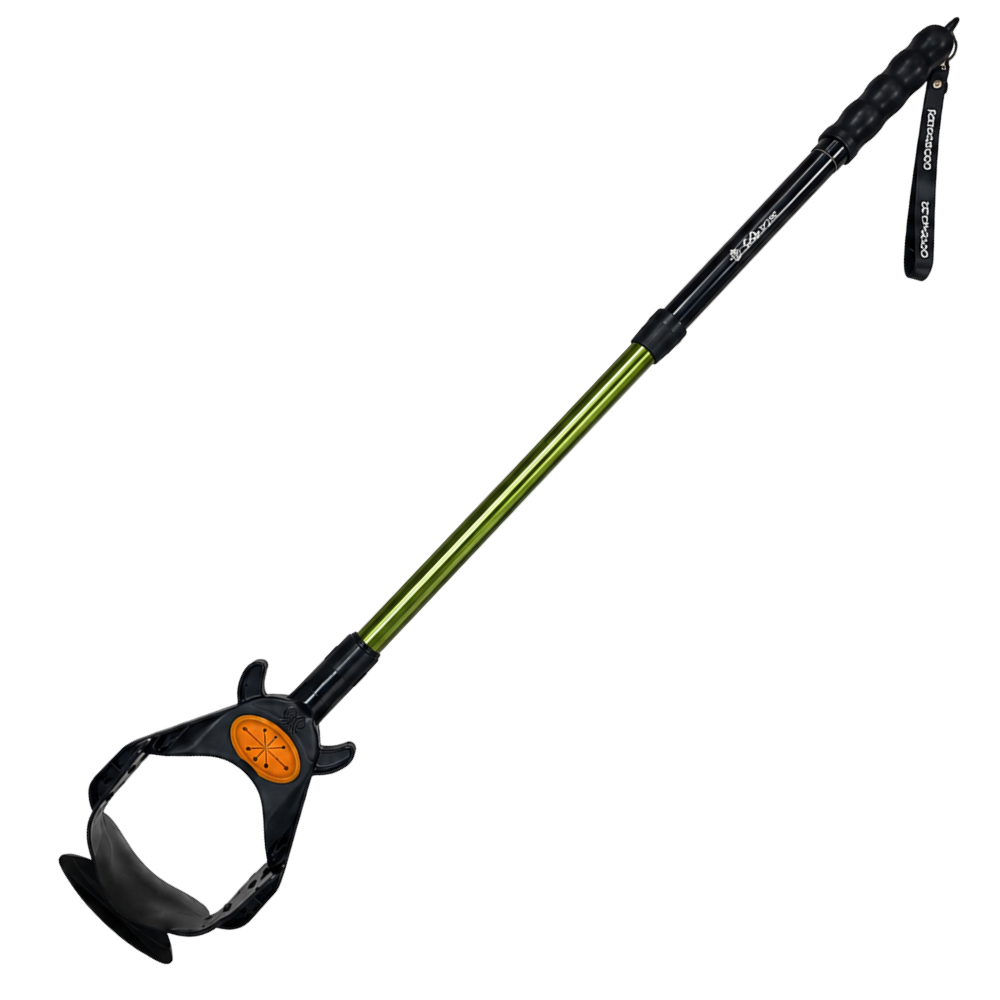
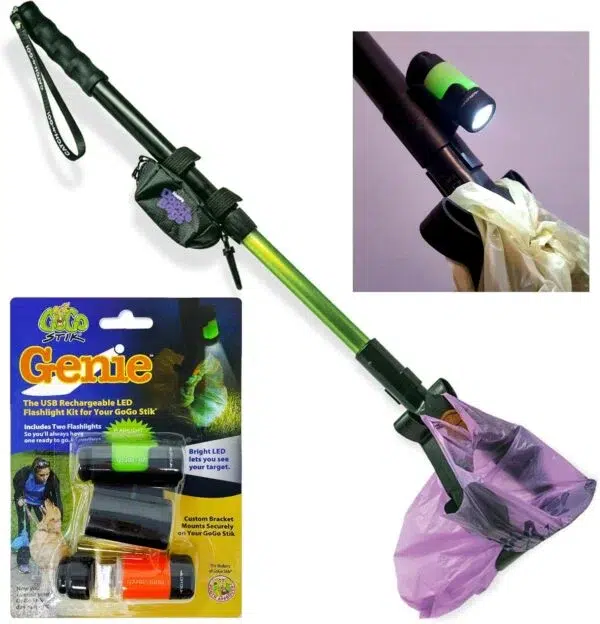
A scooper has no automation at all. It will not patrol the yard while you are at work, and if you wanted a machine precisely because you hate going outside in February, a stick does not fix that. What it does fix is bending and touching. A 37-inch XP Pro long-handle scooper holds the bag open at ground level, so the bag is the only thing contacting waste. On walks, the Catch-N-Go catcher scooper does the same job one-handed. Pair either with HEAVY Dootie leakproof bags and nothing needs washing afterwards.
On firm waste sitting on concrete or sealed decking, suction can lift it. On a lawn, or with soft stool, results fall off sharply because the waste sticks to the intake and the grass holds it down. If you buy one, buy it for hard surfaces and keep a manual scooper for the yard.
Products in this space come and go, and capabilities change fast, so check current listings and recent owner reviews rather than trusting marketing video. Judge any yard robot on the same points as a mower robot: how it handles obstacles, slopes, wet grass and leaves, plus how you empty and clean the collection chamber.
They can be if grip strength is your limiting factor, since a powered jaw removes the squeeze. If your problem is bending, reach and hygiene, a long handle with a bag held open at the bottom solves all three for far less, with nothing to charge and nothing to wash out.
It is a poor idea. The hose, canister and filter all end up contaminated, and most filters are not designed to be sanitised. You would spend longer cleaning the vacuum than the yard, and you risk spreading parasite eggs around a garage where tools and shoes are stored.
The problem a dog poop vacuum is trying to solve is not really suction. It is bending down and touching waste, and a bag held open at the end of a long handle solves both without a battery, a filter or a chamber to scrub. If you have a concrete run or kennel to clear daily, a powered unit may still earn its place, so check current reviews before buying. For a normal yard or daily walks, start with a long-handled scooper and strong bags, and keep the money.

Alec Beaton is the Founder & Inventor of Pooch Approved Products and GoGo Stik®. Inspired by real-life pet parenting, he turns everyday cleanup challenges into simple, innovative solutions that make life better for pets and their people.
Dog won’t poop in snow? Learn why cold, salt and buried scent stop them, how to clear a potty patch, and when holding it means a vet visit.
Dog butt wipes buyer’s guide: when your dog needs one, the 6 specs that matter, why baby wipes fail, and the signs that mean a vet visit, not more wiping.
Dog upset stomach? Use this vet-informed home-care checklist to soothe nausea, spot red flags, and know exactly when to call the clinic.