
Dog Health & Wellness
Yellow Dog Poop: 6 Best Clues to What It Means
Yellow dog poop is usually diet-related, but not always. 6 common causes, the exact signs that mean call the vet today, and how it differs from jaundice.

Picking it up takes four seconds. The next twenty minutes, swinging a warm bag in one hand with the leash in the other and no bin in sight, are the unpleasant part – and that is exactly what a dog poop bag carrier is for. Below are five fixes for the walk home, plus an honest note on when you do not need a carrier at all.
Two different jobs get confused constantly. A dispenser stores clean, unused bags. A carrier deals with the one that is now full.
If what you actually want is somewhere to keep the fresh roll, the poop bag dispenser types compared covers that, and the DIY vs store-bought bag holders answers the homemade question. Everything from here down is about the full bag.
Plenty of people do not need anything extra. Skip the whole category if:
The case for a carrier is distance. It is a long route, a big dog, a hot afternoon, or a neighbourhood that removed its bins.
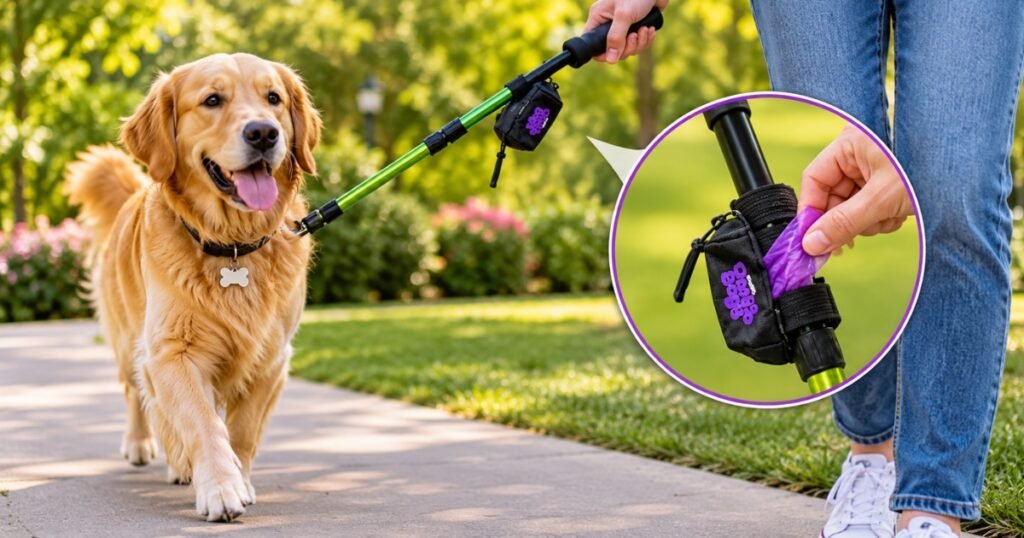
The most common fix is a small zip or snap pouch that clips to the leash handle or a belt loop. The full bag goes inside, your hand comes free.
The word that matters is sealed. A thin drawstring sack that simply hides the bag from view does nothing for odour – it just moves the smell six inches lower. Look for a closure that actually shuts: a zip with a flap, or a rigid clamshell lid.
The trade-off is honest and worth knowing up front. Anything that genuinely contains odour also contains it against the lining, so the pouch needs rinsing or wiping after use. A container you never clean will eventually smell worse than the bag did.
Waist packs, belt clips and harness-mounted holders all do the same thing: they take the weight off your fingers. A hands-free setup is not really about comfort, though.
The real reason is control. With a strong puller or a reactive dog, carrying a bag by hand means you have one hand on the leash and no spare hand for anything – a slip lead correction, a gate, a child, a sudden lunge. That is the situation where a swinging bag stops being annoying and starts being a safety problem.
If you are weighing up methods more broadly, the methods for carrying bags while walking covers the ground beyond carriers.
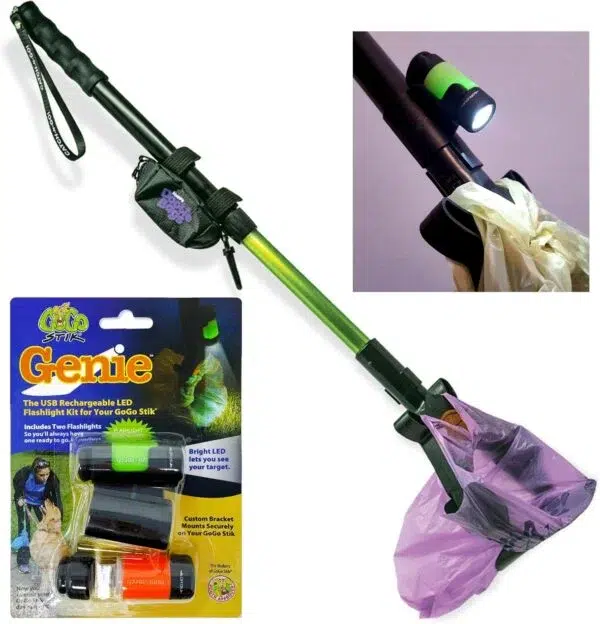
The neatest answer is for the full bag never to reach your hand. A long-handled catcher holds the open bag for you, so the waste goes straight in and the handle stays between you and it.
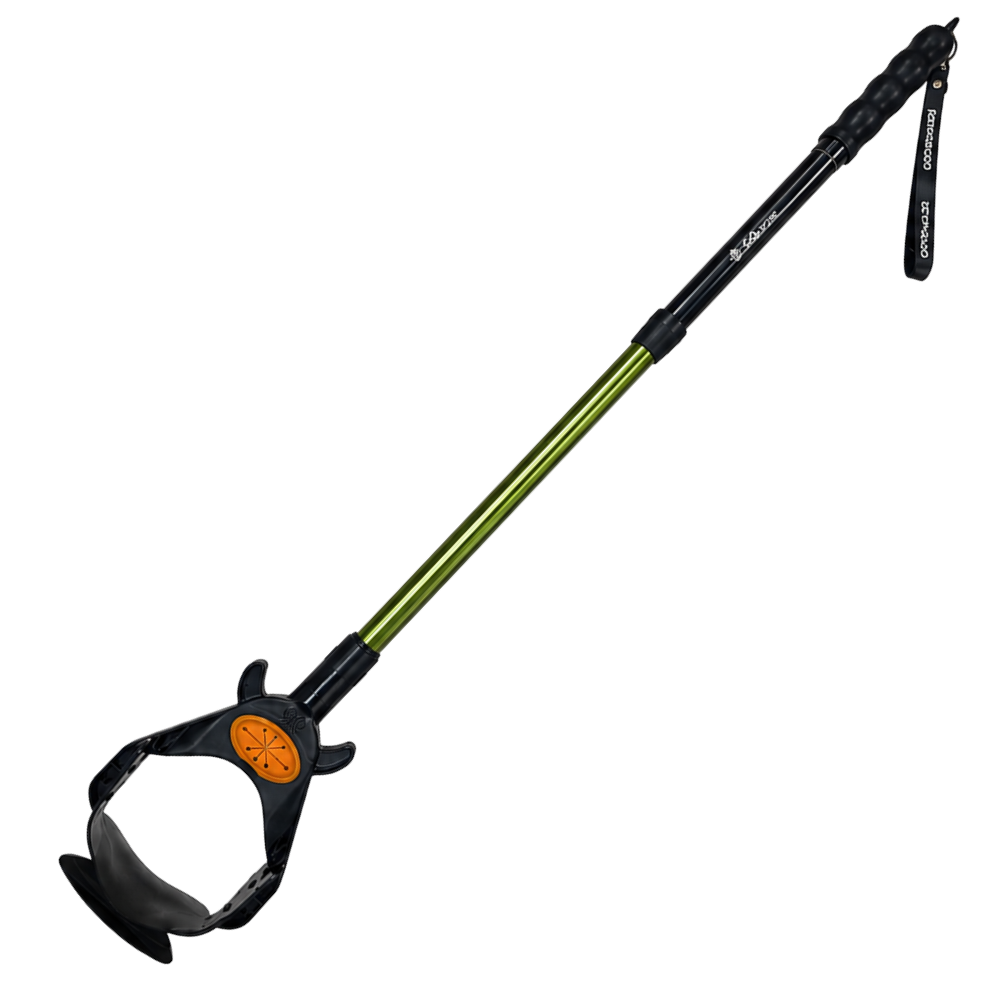
The Catch-N-Go catcher-scooper works this way, with a telescopic aluminium handle that extends from 23 to 33 inches and weighs about 8 ounces. For the full range of scoop designs, see the pooper scooper types explained.
The cheapest fix costs nothing: walk the loop so a bin falls near the midpoint rather than at the very end. Ten minutes of carrying beats forty.
Then there is the stash. Tying the bag and setting it beside the path, meaning to grab it on the way back, is extremely common – and a lot of those bags are still sitting there days later. Almost never out of malice. You take a different turn home, a neighbour stops you to chat, or you simply stop seeing it.
If you do stash, pick something you cannot miss: the base of your own driveway, a mailbox post, a spot you physically have to walk past. And if the route might change, carry it instead. For the disposal question itself, the guide to where poop bags should go has the detail.
How much you smell on the walk home is decided before the bag leaves your hand. A loose twist-and-tuck leaks air at every swing; a proper knot does not.
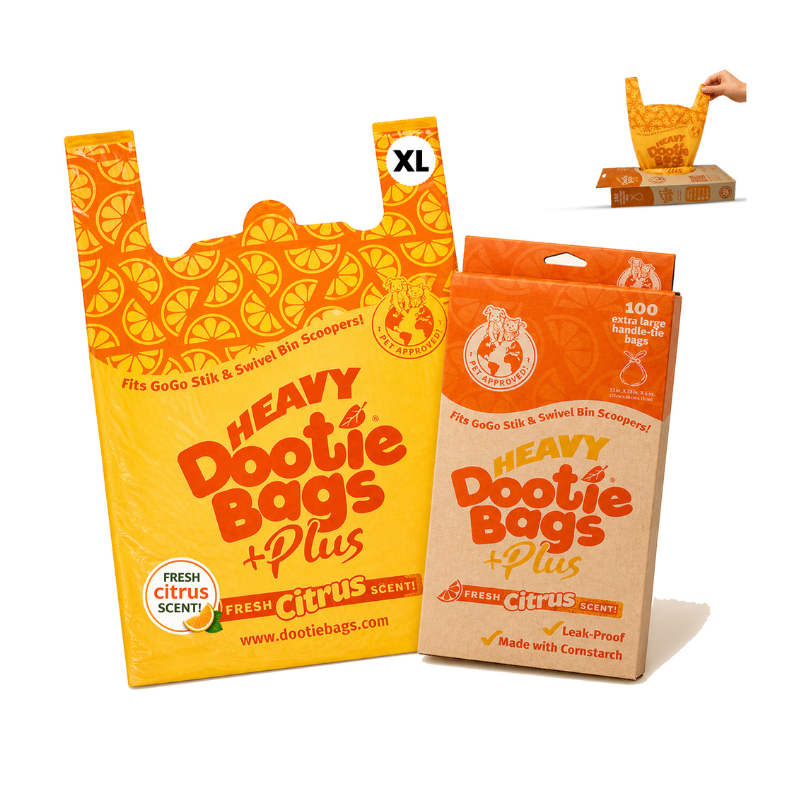
Bags with EZ-tie handles make this easier because you are pulling two handles into a square knot rather than wrestling a slippery bag mouth closed with cold fingers. The Original HEAVY Dootie Bags use that handle design and are sized for large dogs, which matters – an overfilled bag cannot be knotted tightly. Knot technique is covered in the EZ tie handle poop bags write-up.
Sometimes. A second bag adds another sealed layer and another chance to catch a pinhole tear, which is genuinely useful on a hot day or a long carry. It also doubles the plastic. A better first move is using one bag big enough to knot properly, then double only when the first one looks strained.
| Option | What it suits | Odour control | Hands free | What you clean after |
|---|---|---|---|---|
| Clip-on sealed pouch | Long routes with no bins | Good, if the closure truly shuts | Yes | Rinse or wipe the lining |
| Waist or belt carrier | Strong dogs, runners, multiple dogs | Depends on the closure | Yes, fully | Pouch interior, strap occasionally |
| Scooper-held bag | Yard cleanup and short street walks | Bag stays off your body | One hand on the tool | Rinse the scooper jaws |
| No carrier | Short loops, nearby bins | None needed | No | Nothing |
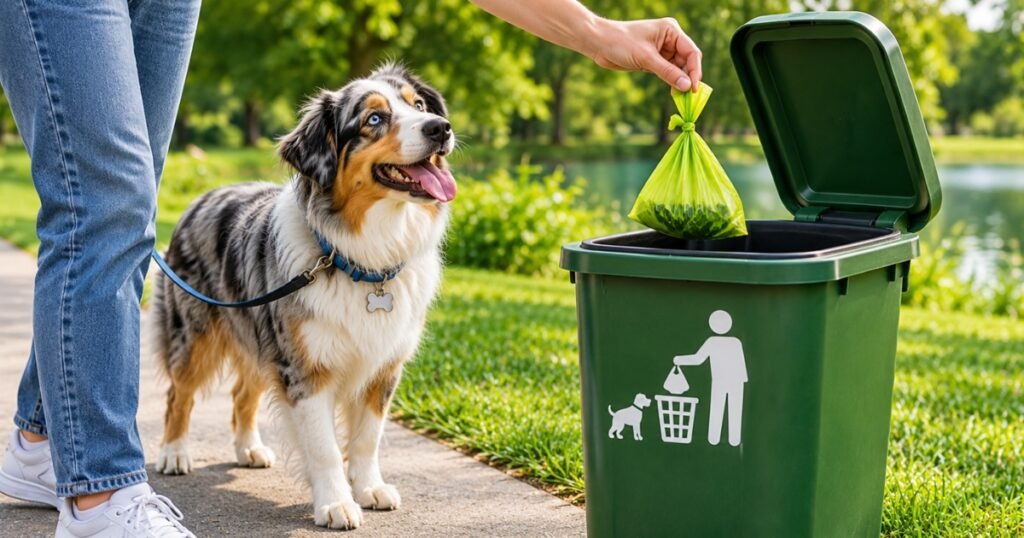
One factual note, not a lecture. The US EPA lists pet waste among the sources of nutrient pollution that rain can wash from yards and paths into storm drains and waterways – its page on what you can do in your yard covers this. A tied bag left on the ground stays a pollution source until someone bins it.
Whatever you choose, it only works if you still want to touch it in week six. Rinse the pouch when you rinse the dog bowls – same sink, same minute. Let it dry fully open rather than zipped shut.
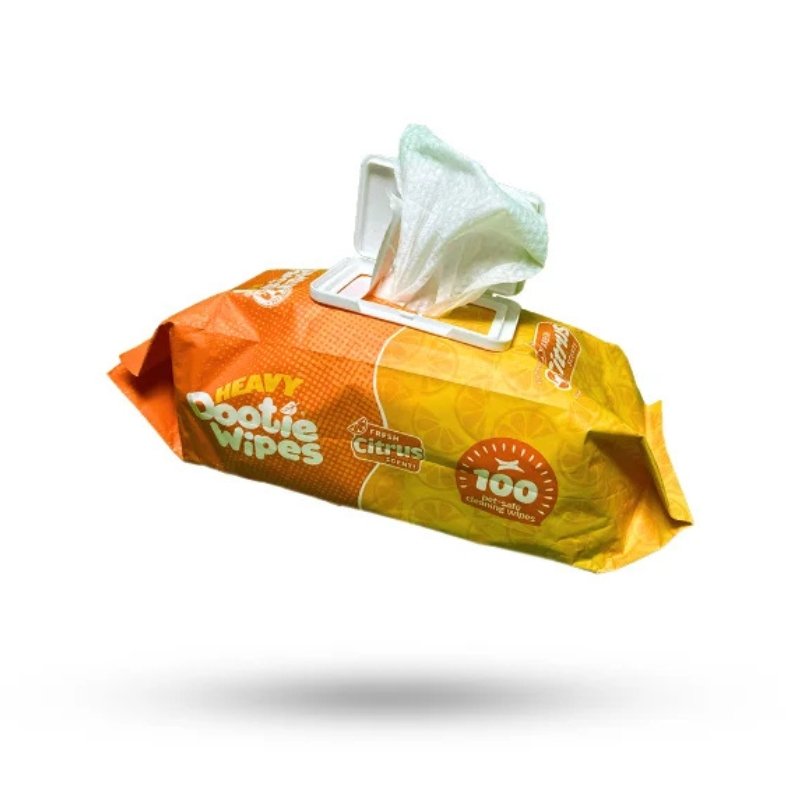
If the lining stains, a pet wipe handles it faster than washing. And replace a carrier whose zip has started sticking; a closure that half-shuts is the version of this that smells.
Tie it with a tight square knot, then put it somewhere other than your hand – a sealed clip-on pouch on the leash handle, or a waist pack if the walk is long. The closure does most of the work. A pouch that only covers the opening will not help much on a warm day, so look for a zip or a lid that genuinely shuts.
A properly sealed pouch reduces how much you notice on the walk, but nothing makes a full bag odourless. Two things matter more than the pouch itself: a tight knot on a bag that is not overfilled, and cleaning the pouch afterwards. Odour trapped against an uncleaned lining is the usual reason these stop working after a few weeks.
It is not dangerous, just unpleasant and awkward. A bag swinging from the leash handle knocks your hand on every stride and can shift your grip at the wrong moment with a strong dog. Clipping it into a closed pouch solves both problems. Never clip it to the dog’s harness, where it hangs within reach of their mouth.
A dog poop bag carrier is a distance problem, not a hygiene problem – if your route passes a bin early, you do not need one. If it does not, a sealed pouch or a waist carrier plus a knot that actually holds will fix the worst of the walk home. Start with the bag itself: one large enough to tie tightly with handles, and the rest gets easier.
Alec Beaton is the Founder & Inventor of Pooch Approved Products and GoGo Stik®. Inspired by real-life pet parenting, he turns everyday cleanup challenges into simple, innovative solutions that make life better for pets and their people.
Yellow dog poop is usually diet-related, but not always. 6 common causes, the exact signs that mean call the vet today, and how it differs from jaundice.
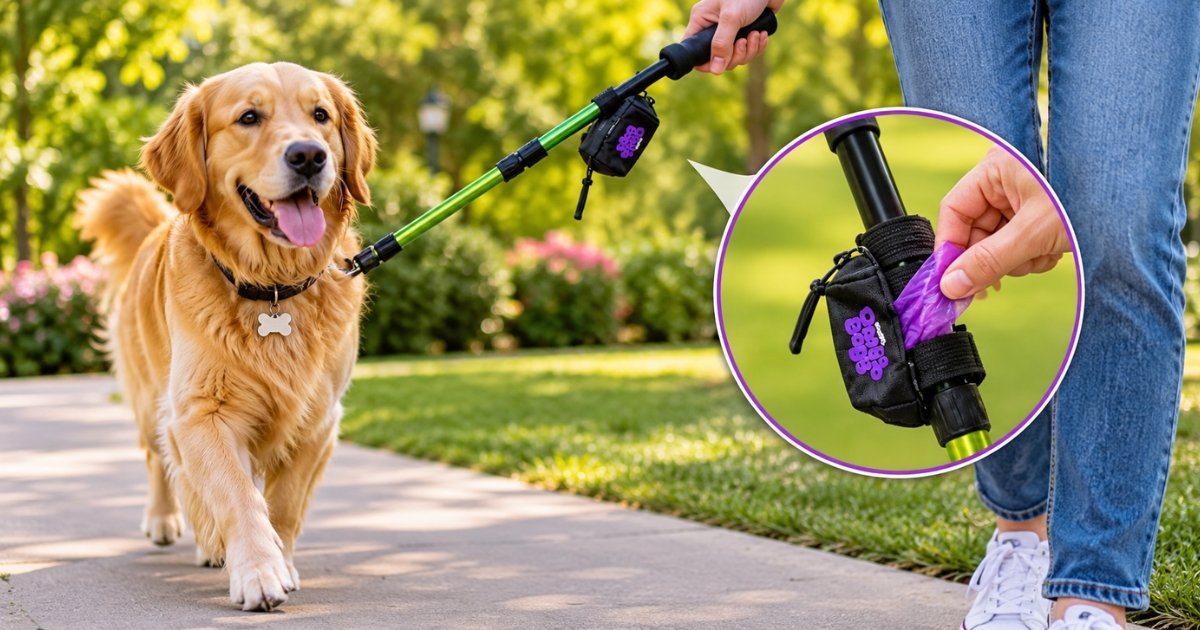
A dog poop bag carrier takes the full bag off your hand. Five practical fixes for odour, hands-free walking, tie-offs and the long walk back to a bin.
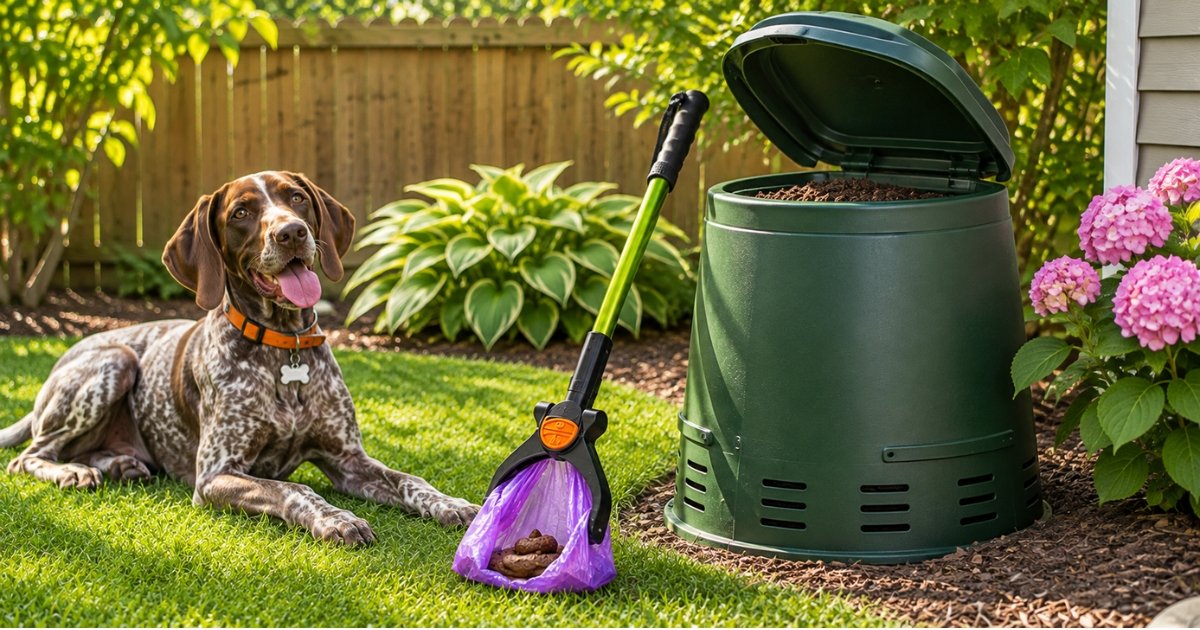
A dog waste digester only works if your soil drains and winters stay mild. Here are 6 honest things to check before you dig one into your yard.