Home/Blogs/Dog Grooming Tips for Bathing, Brushing, and More
Dog Grooming Tips for Bathing, Brushing, and More
Giving your dog a proper bath is one of the most important parts of pet care. A clean dog is a healthy dog — and wiKeeping your dog clean and well-groomed is one of the most important parts of responsible pet ownership. Regular grooming does more than make your dog look good — it supports their health, prevents skin issues, reduces shedding, and strengthens the bond between you and your pet. Whether you have a short-haired Beagle or a fluffy Golden Retriever, these dog grooming tips will help you build a routine that works for both of you.
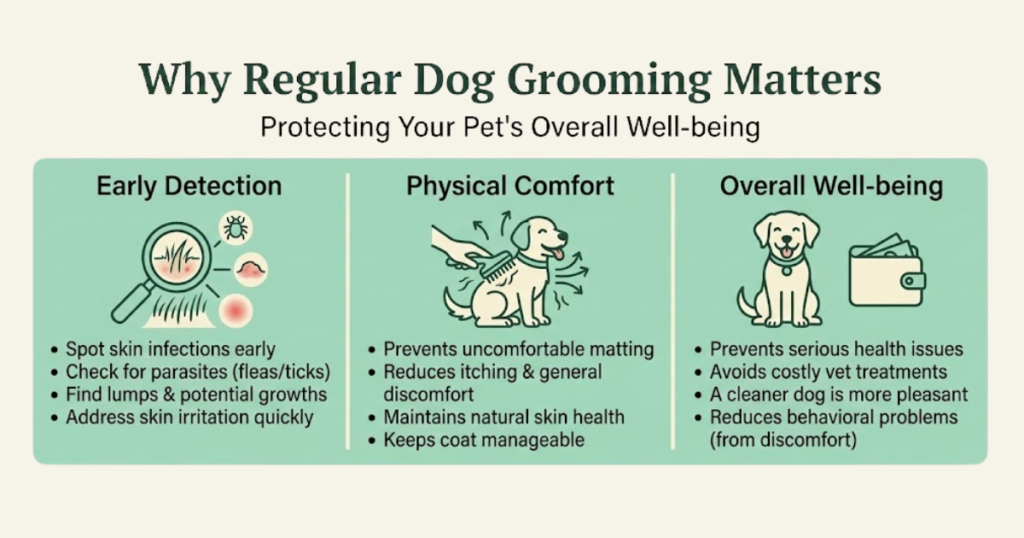
Why Regular Dog Grooming Matters
Many dog owners underestimate how much grooming affects their pet’s overall well-being. Beyond appearances, proper grooming helps you catch early signs of skin infections, parasites, lumps, or irritation before they become serious problems. So, making grooming a consistent habit pays off in the long run for both your dog’s health and your wallet.
In addition to health benefits, a clean dog is simply more pleasant to live with. Dogs that are bathed, brushed, and trimmed regularly tend to be more comfortable and less prone to behavioral issues caused by discomfort or itching.
Bathing Your Dog the Right Way
Bathing is one of the core pillars of dog grooming. However, too many baths can strip your dog’s coat of natural oils, while too few leave your pet dirty and prone to skin problems. Most dogs do well with a bath every four to six weeks, though this varies by breed, activity level, and coat type.
Steps for a Stress-Free Bath
Brush your dog thoroughly before the bath to remove loose fur and tangles.
Use lukewarm water — not hot — to avoid discomfort.
Choose a dog-specific shampoo that matches your pet’s coat type and skin condition.
Lather gently from neck to tail, avoiding the eyes and ears.
Rinse completely, since leftover shampoo can cause itching and irritation.
Dry your dog with a towel or a pet-safe dryer on a low heat setting.
After each bath, reward your dog with praise or a treat. This way, your pet starts associating bath time with a positive outcome, which makes future grooming sessions much easier.
Brushing: The Foundation of a Healthy Coat
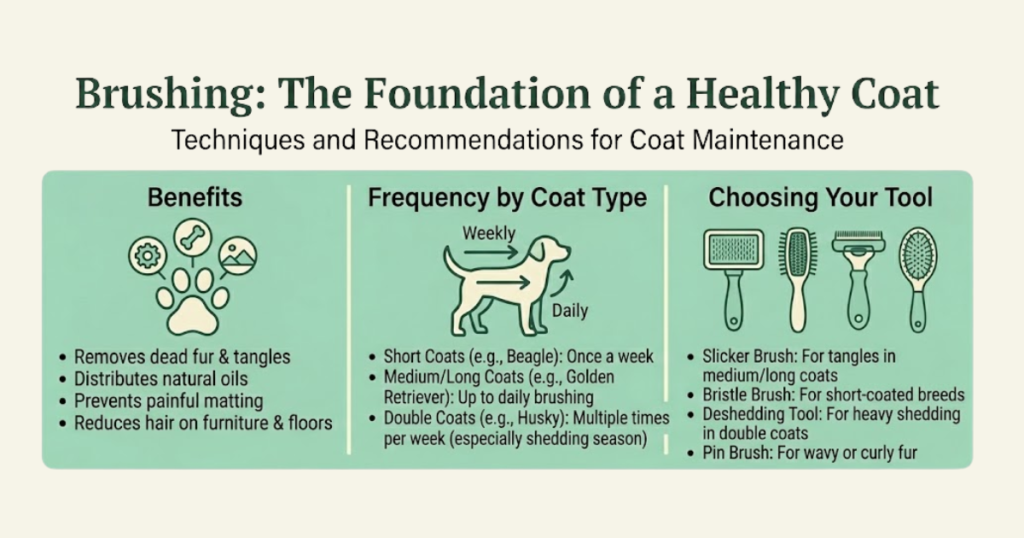
Brushing your dog regularly is just as important as bathing. It removes dead fur, distributes natural oils throughout the coat, prevents painful matting, and significantly reduces the amount of hair that ends up on your furniture and floors.
How Often Should You Brush?
The frequency depends on your dog’s coat type. Short-haired breeds generally need brushing once a week, while medium and long-haired breeds may need daily brushing. Dogs with double coats, such as Huskies or German Shepherds, benefit from brushing several times per week — especially during shedding seasons in spring and fall.
Choosing the Right Brush
Slicker brushes work well for removing tangles in medium and long coats.
Bristle brushes are ideal for short-coated breeds.
Deshedding tools help manage heavy shedding in double-coated breeds.
Pin brushes are great for dogs with wavy or curly fur.
Always brush in the direction of hair growth, and be gentle around sensitive areas like the belly, armpits, and behind the ears.
Nail Trimming: Small Task, Big Impact
Overgrown nails can cause your dog pain when walking and may even lead to joint problems over time. Trimming your dog’s nails every three to four weeks keeps them at a safe length. If you hear clicking sounds when your dog walks on hard floors, that is a clear sign it is time for a trim.
Use sharp, dog-specific nail clippers and cut small amounts at a time to avoid hitting the quick — the blood vessel inside the nail. If you accidentally cut too deep, styptic powder can stop the bleeding quickly. Many owners find it helpful to have a professional groomer or vet handle nail trimming until they feel confident doing it themselves.
Ear Cleaning and Dental Care
Ears and teeth are two areas that often get overlooked during home grooming routines. Yet, both are critical for your dog’s long-term health.
Cleaning Your Dog’s Ears
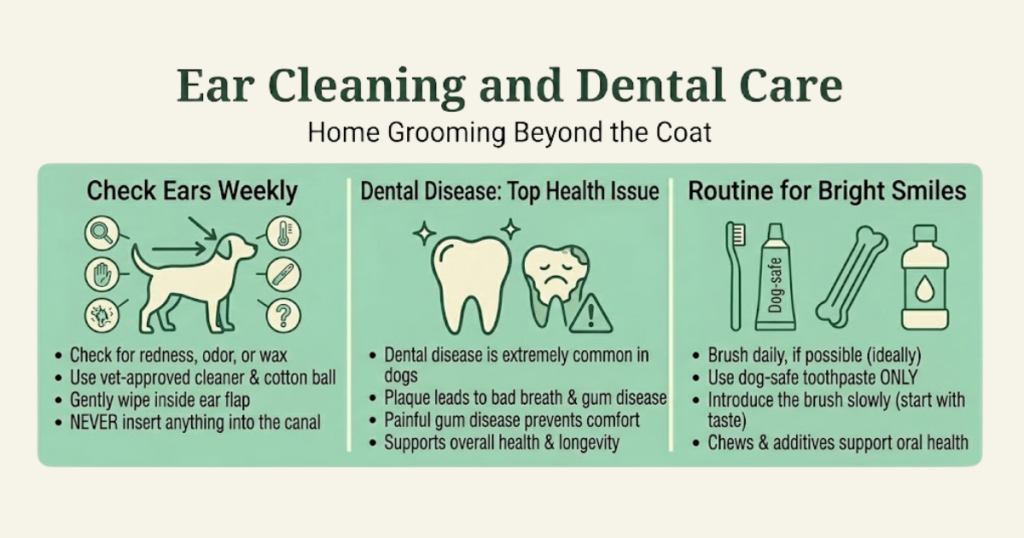
Check your dog’s ears weekly for redness, odor, or excess wax, as these can signal an infection. Use a vet-approved ear cleaning solution and a cotton ball to gently wipe the inside of the ear flap. Never insert anything deep into the ear canal, since this can cause injury or push debris further in.
Brushing Your Dog’s Teeth
Dental disease is one of the most common health issues in dogs. Brushing your dog’s teeth several times a week — ideally daily — with a dog-safe toothpaste can prevent plaque buildup, bad breath, and painful gum disease. Start slowly by letting your dog taste the toothpaste, then gradually introduce the brush. Dental chews and water additives can also support oral health between brushing sessions.
Eye Care and Coat Trimming
Some breeds accumulate tear stains or discharge around their eyes. Gently wipe the area with a damp, clean cloth to keep it clear. Avoid wiping directly on the eyeball, and consult your vet if you notice excessive discharge or redness.
For breeds with continuously growing hair — like Poodles or Shih Tzus — periodic trimming around the face, paws, and body is necessary to keep them comfortable and tidy. Many owners opt for professional grooming every six to eight weeks for these breeds.
Paw Care: Don’t Forget the Feet
Your dog’s paws take a lot of wear and tear, especially during walks on rough pavement, hot asphalt, or cold winter sidewalks. Check the paw pads regularly for cracks, cuts, or foreign objects. Trim the fur between the toes to prevent matting and ice ball buildup in winter.
After walks, wipe your dog’s paws with a damp cloth or pet-safe wipes to remove dirt, chemicals, and bacteria picked up outdoors. This simple step protects both your dog and your floors.
Keeping Your Yard Clean Is Part of Grooming Too
A clean yard is a safer, healthier space for your dog to play and exercise. Pet waste left on the ground attracts pests, spreads bacteria, and can contaminate soil and groundwater. That is why proper yard cleanup is an essential extension of your dog grooming routine.
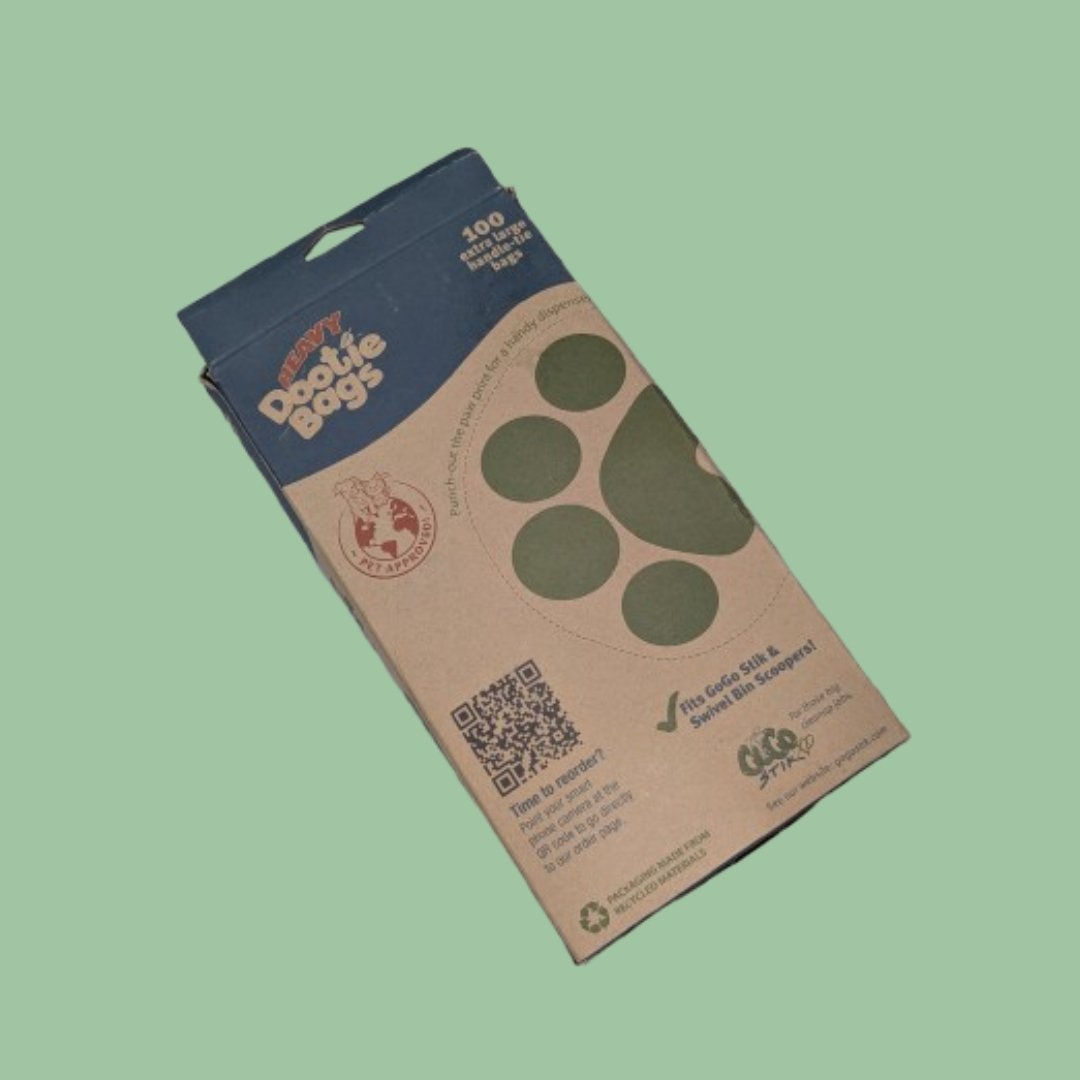
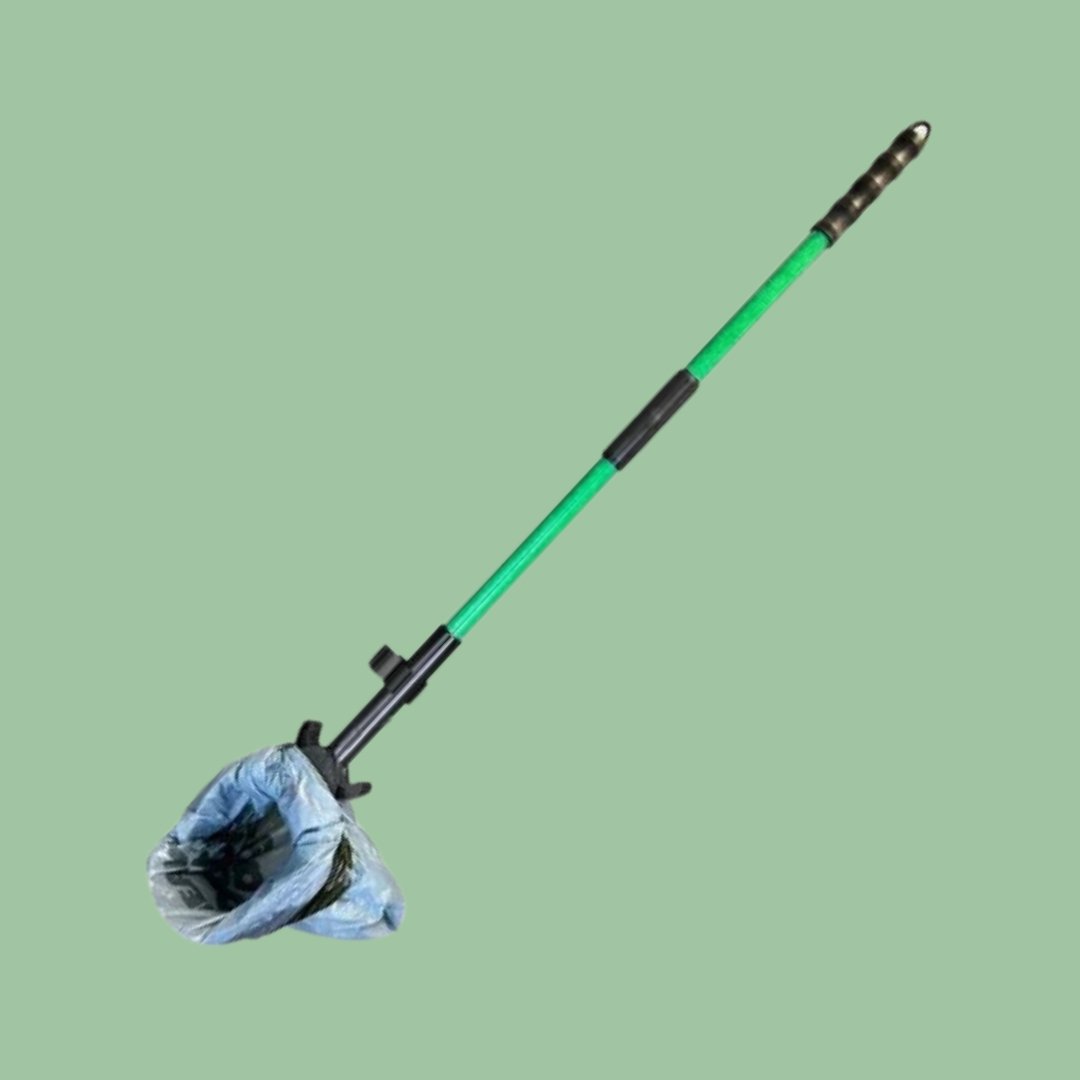
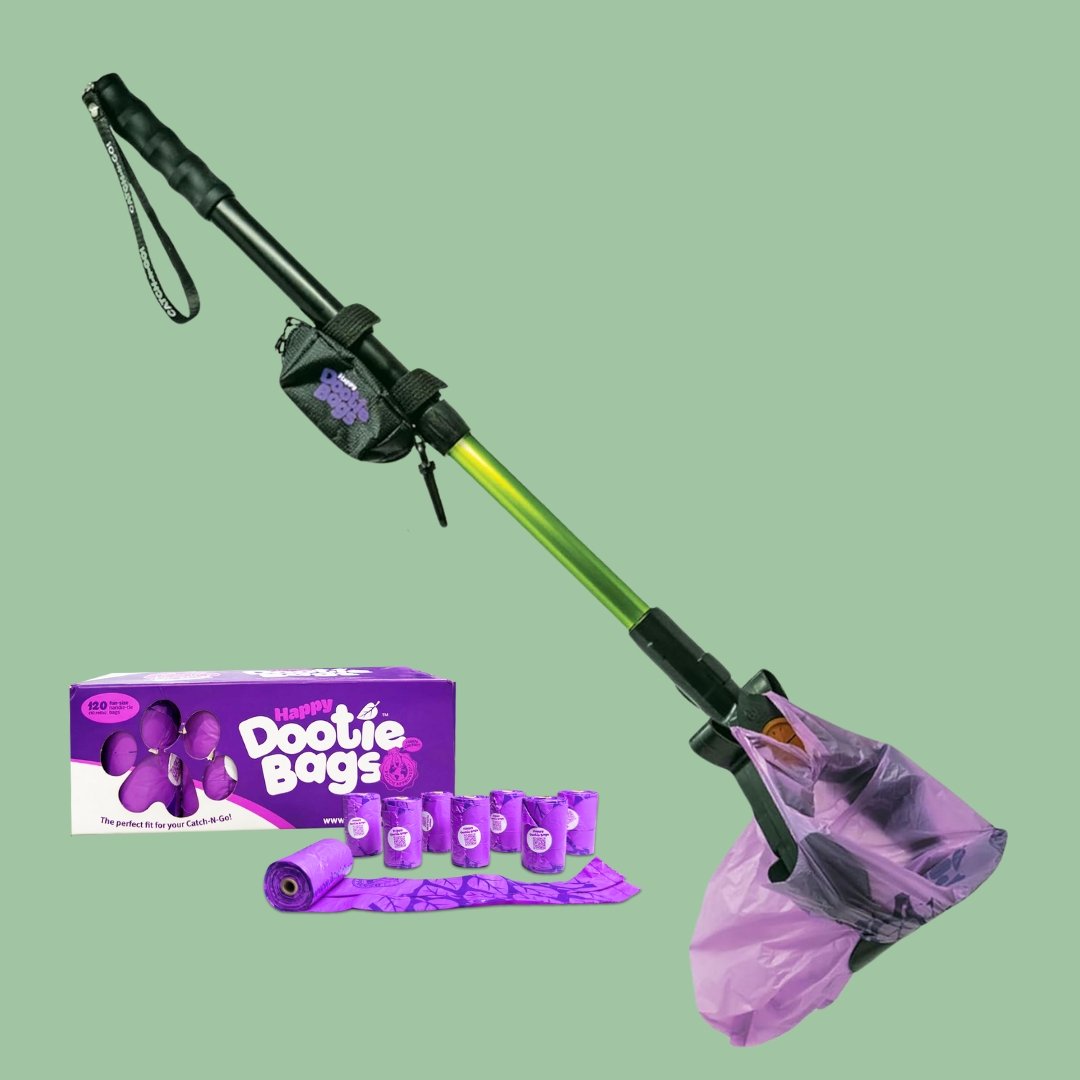
GOGO Stik makes yard cleanup fast and hygienic with a range of pooper scoopers and dog waste tools designed for large dogs, everyday use, and on-the-go cleanup. Their Catch-N-Go hybrid catcher and scooper includes a strap-on bag dispenser, making it simple to pick up waste without bending down or getting your hands dirty.
For larger yards, the EZ Dootie Rake makes sweeping up after multiple dogs quick and easy. You can also keep Heavy Dootie pet wipes for paws and butt on hand to give your dog a quick clean after outdoor time, bridging the gap between full baths.
The key to successful grooming is consistency. Rather than treating it as a chore you do occasionally, build it into your weekly schedule. Start with short sessions and gradually increase the time as your dog becomes more comfortable. Use positive reinforcement throughout — treats, praise, and patience go a long way in making your dog cooperative and calm during grooming.
Here is a simple weekly grooming checklist to get started:
Brush coat (daily for long-haired breeds, 1–2 times per week for short-haired breeds)
Check and wipe eyes and ears
Wipe paws after outdoor walks
Check nails (trim every 3–4 weeks)
Brush teeth (at least 3 times per week)
Clean up yard waste after each bathroom break
Full bath (every 4–6 weeks or as needed)
Final Thoughts
Dog grooming is not just about keeping your pet looking neat — it is a fundamental part of keeping them healthy and happy. With the right tools, a little patience, and a consistent schedule, grooming becomes a rewarding bonding activity rather than a stressful chore. Combine a solid grooming routine with proper yard cleanup using GOGO Stik’s leakproof, citrus-scented poop bags, and you will have a cleaner, healthier environment for your dog — and your whole family.
Dog toys can get expensive fast, especially if your pup chews through them in minutes. On top of that, many store-bought options are made with questionable materials that may not be safe for your furry friend. The good news? You don’t need to spend a fortune to keep your dog
Every dog owner knows the struggle of keeping treats organized. Bags rip open, treats go stale, and the kitchen counter turns into a mess. A DIY dog treat jar solves all of that — and it looks great sitting on your counter, too. In this guide, you will learn how
Dogs are more than pets — they’re stress relievers, mood boosters, and loyal companions who show up for us every single day. In fact, spending just a few minutes with your dog can lower cortisol levels and increase the feel-good hormone oxytocin. But here’s the thing: if your daily dog