General
How to Get Dog Poop Off Shoes (Fast, No Gagging)
Learn how to get dog poop off shoes fast without gagging. Step-by-step cleaning for treads, suede & canvas, plus odor-killing tips that actually work.

A claw pooper scooper is worth buying if your dog goes on flat, mown grass, passes firm stools, and you only need a pickup or two at a time. It is the wrong tool if you deal with soft stool, gravel, mulch or deep turf, or if you do not want to wash the scooper itself after every single use.
This guide is honest about both sides. The claw-style design is the one most American dog owners already own, and it did not get popular by accident.
A jaw pooper scooper is a spring-loaded set of tines on a handle. Squeeze the grip, the claws close, the waste lifts. That is the whole mechanism, and simplicity is its real advantage.
You can hold a leash in one hand and work the claw with the other. Nothing has to be loaded, clipped or opened first, so a single pickup on the way out the door takes about four seconds. Drop the waste straight into an outdoor bin and you never handled a bag at all.
Every pet aisle and hardware store carries a pooper scooper with claws, and it is usually the lowest-priced tool on the shelf. On short, dry lawn grass with a well-formed stool, the tines close around it and lift it clean. For an occasional single pickup, that is all most people need.
These are not preferences. They follow from how the tool is built.
The gripping surfaces make direct contact every time, so the tool needs rinsing after every use. Whatever is left on the tines travels back to your garage, your car trunk or your bag caddy. Dog faeces can carry roundworm and hookworm eggs, which is reason enough not to store a dirty scooper indoors. Our walkthrough on disinfecting a dirty scooper covers the fast version.
Claws grip; they do not contain. Loose or soft stool extrudes through the gaps instead of lifting, and you end up smearing more than you remove. If that is your week-to-week reality, read up on soft stool in wet grass before you spend money.
Tines need something to close against. On pea gravel, bark mulch, wood chips or long grass they either scoop up a load of landscaping or fail to meet at all. Most models are also short-handled, so you are still bending at the waist.
If a claw-style dog poop scooper still suits your setup, check these five things before you pay.
Wide gaps shed debris but let soft waste through. Narrow, closely set tines hold more but trap grass and are harder to rinse. Match the spacing to your dog’s typical stool, not to the picture on the package.
Measure from the floor to your wrist with your arm hanging straight. Anything much shorter than that puts you back into a stoop. If your back is the reason you are shopping at all, compare the no-bend pickup methods first.
Squeeze the grip in the store. Weak springs let the claws drift open mid-lift; very stiff ones punish arthritic hands over a full yard sweep. You want firm closure you can hold for ten seconds without cramping.
Be truthful. Lawn and concrete favour claws. Gravel runs, mulched beds and artificial turf do not, and no amount of handle length fixes that.
Look for an open frame with no hidden pivot pockets, and a handle that will not rust or swell. A claw you cannot blast clean in thirty seconds is a claw you will quietly stop using.
The honest trade-off, point by point:
| Claw / jaw scooper | Bag-based scooper | |
|---|---|---|
| What touches the waste | The tool’s tines | Only the bag |
| Cleanup after use | Rinse every time | None |
| Soft stool | Squeezes through | Contained in the bag |
| Gravel, mulch, long grass | Poor | Good |
| Bending required | Usually some | None with a long handle |
| Bag needed to operate | No | Yes, every pickup |
| Upfront cost | Lowest | Higher |
| Best for | Occasional single pickups on lawn | Daily walks and full yard sweeps |
If you want the wider landscape of designs, the overview of jaw, rake and tray scooper designs lays them all out.
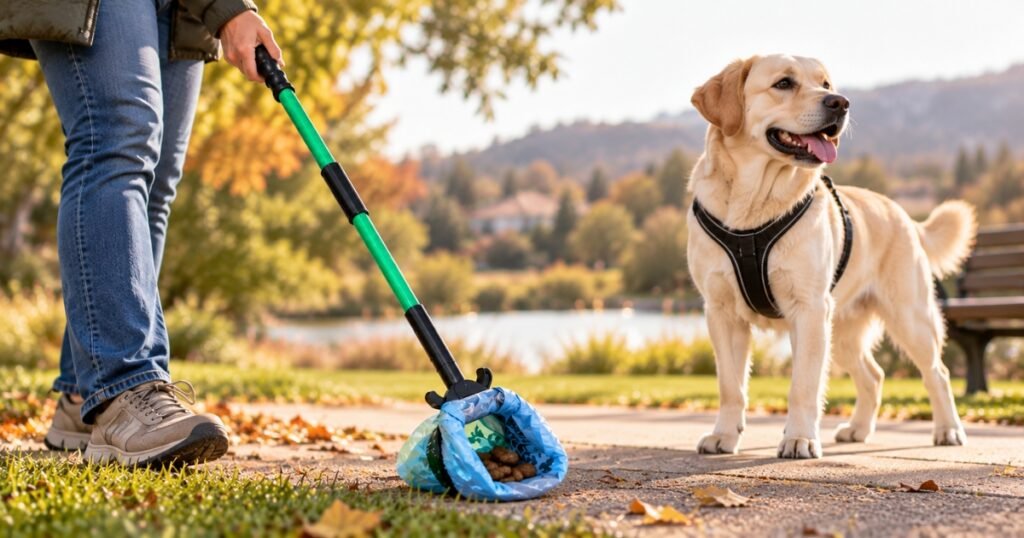
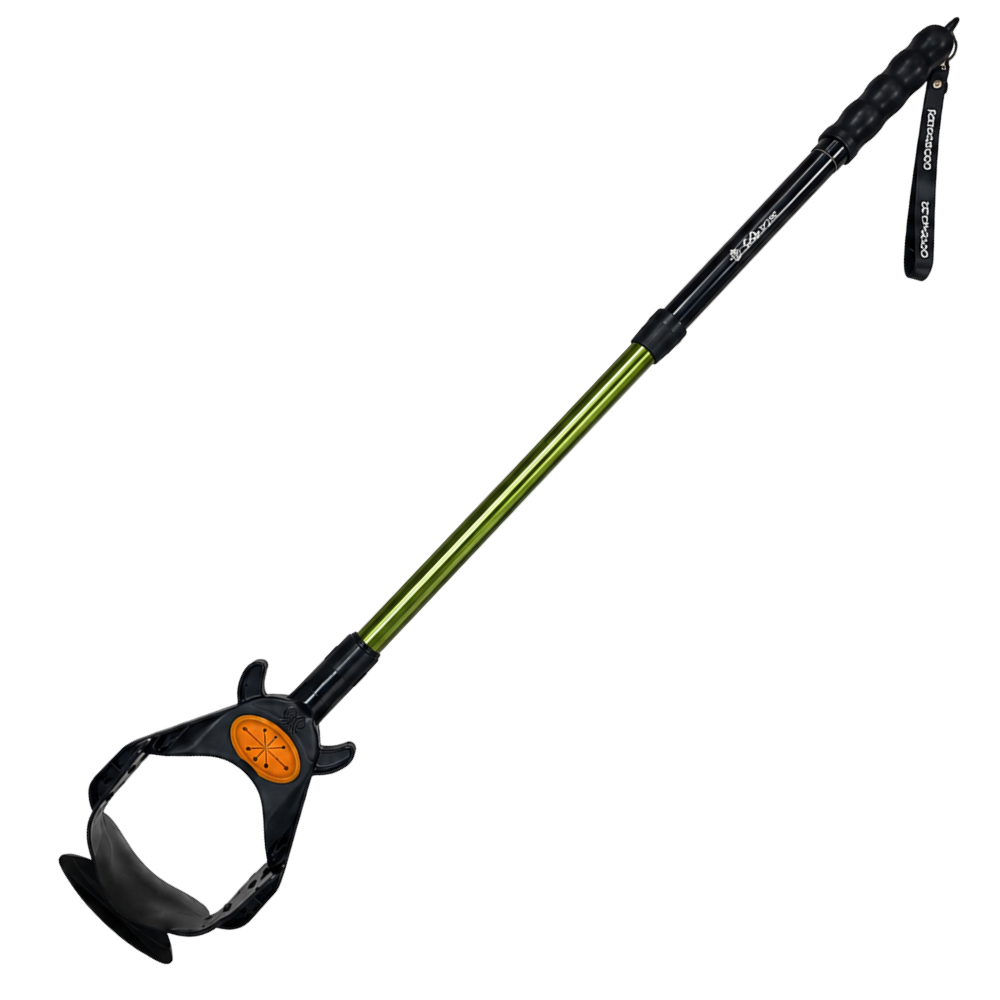
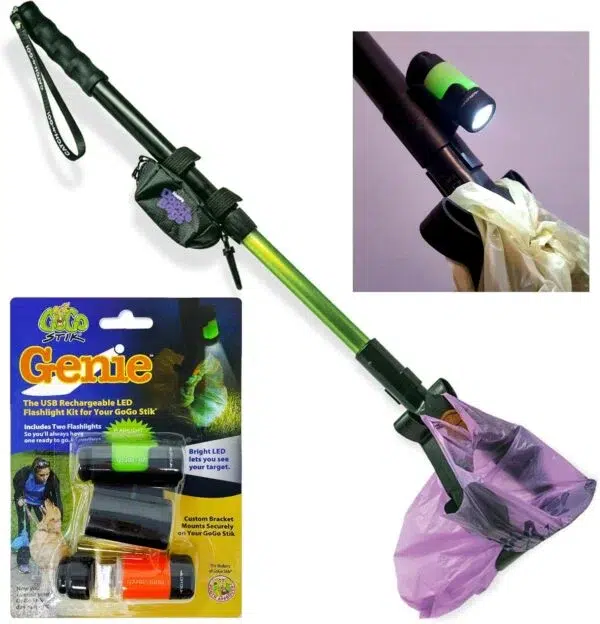
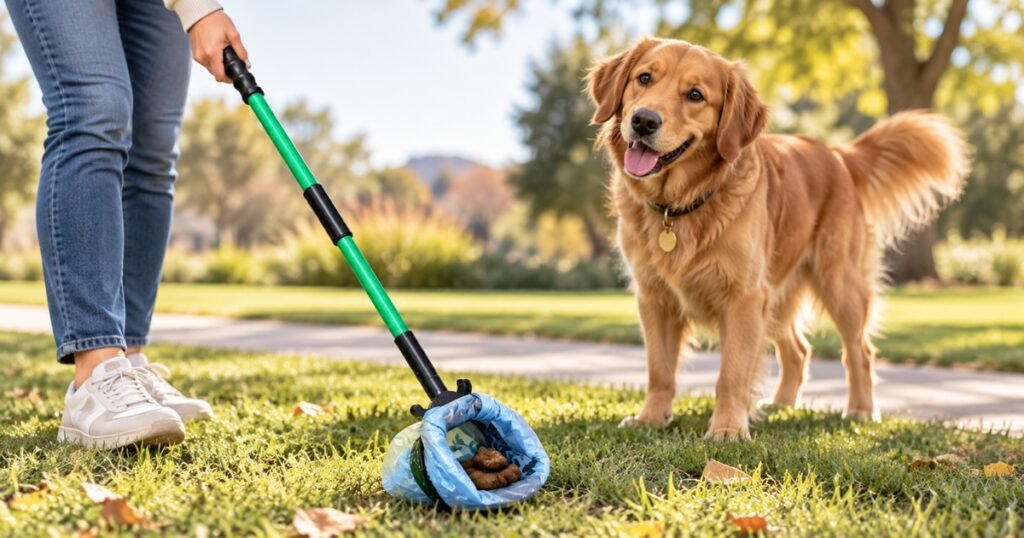
There is a different approach: hold the bag open at the end of a long handle, scoop the waste directly into it, then seal the bag and bin it. The waste never contacts the tool, so there is nothing to rinse and nothing dirty going back in the car.
For yards, the XP Pro 37-inch scooper keeps you upright through a full sweep. For walks, the Catch-N-Go catcher-scooper does the same thing one-handed on a leash.
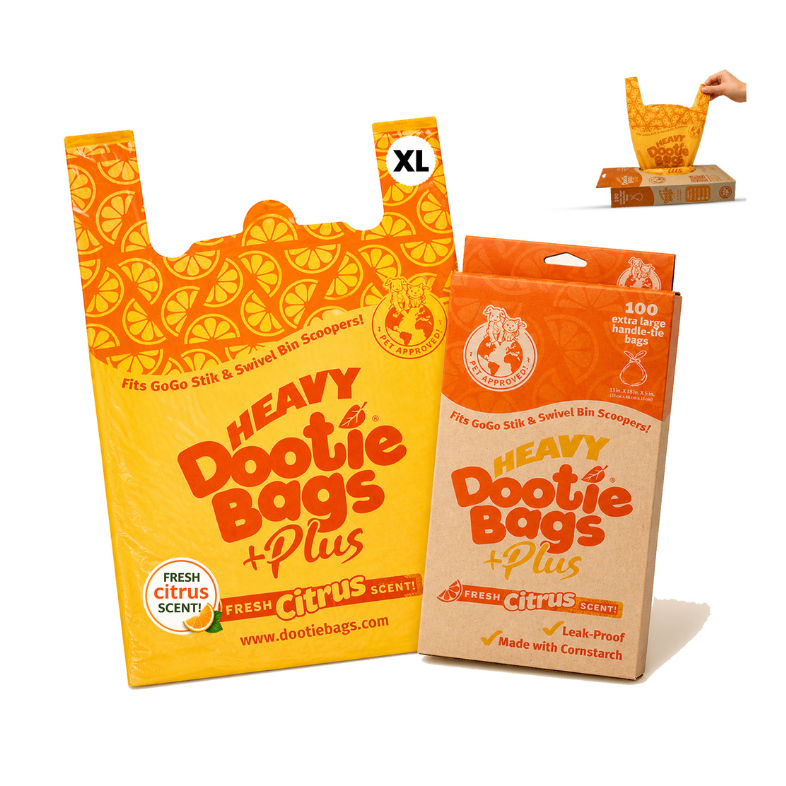
The trade-off is real: it costs more than a basic claw, and it needs a large EZ-tie waste bag loaded for every pickup. For one dog that goes once a day on grass, a simple claw may still be enough.
For firm stool on lawn, the claw is faster because it is one tool instead of two. For soft stool, leaves or a yard with several deposits, the rake-and-tray pairing wins, because the rake sweeps debris into a container rather than gripping it. A rake also handles mulch beds far better than tines that need to close on something solid.
There is no single answer, because the right one depends on your surface and your dog. Choose tine spacing that matches your dog’s stool firmness, a handle long enough that you stay upright, a spring you can squeeze repeatedly, and an open frame you can hose clean. A model that fails any one of those four will sit unused in the garage.
Not in the way most people hope. Robotic self-cleaning units are a cat litter box product, not a lawn product. Anything sold as an automatic pooper scooper for dogs is almost always a spring-loaded or lever-action hand tool, which still needs you to walk the yard, aim it and empty it. Treat the word “automatic” on a dog scooper as marketing.
Rinse the tines with a hose immediately, before anything dries on. Work a stiff brush into the gaps between the claws and around the pivot, then spray with a pet-safe disinfectant and leave it to air-dry in the sun, jaws open. Store it outdoors or in a garage, never in a hall closet or a car trunk.
The deciding question is not the price on the shelf, it is what the tool touches. Anything that closes on the waste has to be washed afterwards, every single time, and that is the cost nobody puts on the label. If you would rather the bag did that job, compare the XP Pro and Catch-N-Go options and match the handle to where your dog actually goes.
Alec Beaton is the Founder & Inventor of Pooch Approved Products and GoGo Stik®. Inspired by real-life pet parenting, he turns everyday cleanup challenges into simple, innovative solutions that make life better for pets and their people.
Learn how to get dog poop off shoes fast without gagging. Step-by-step cleaning for treads, suede & canvas, plus odor-killing tips that actually work.
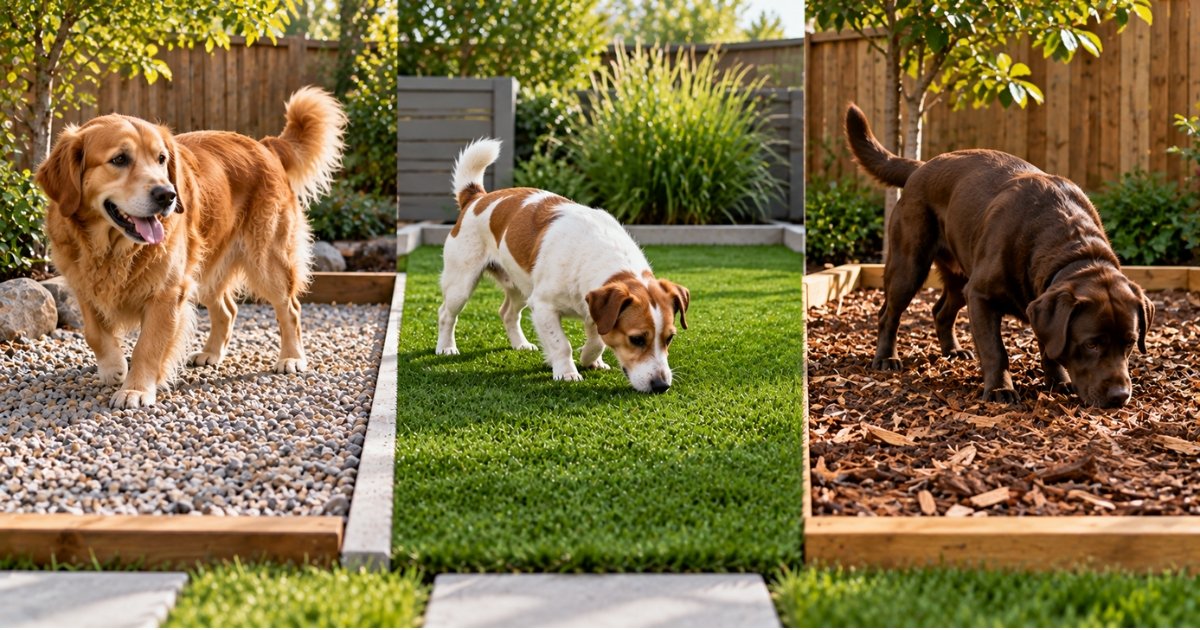
Compare the best dog potty area ideas—pea gravel, artificial turf, and mulch—for drainage, cleanup, and cost. Find the right pick for your yard in 2026.
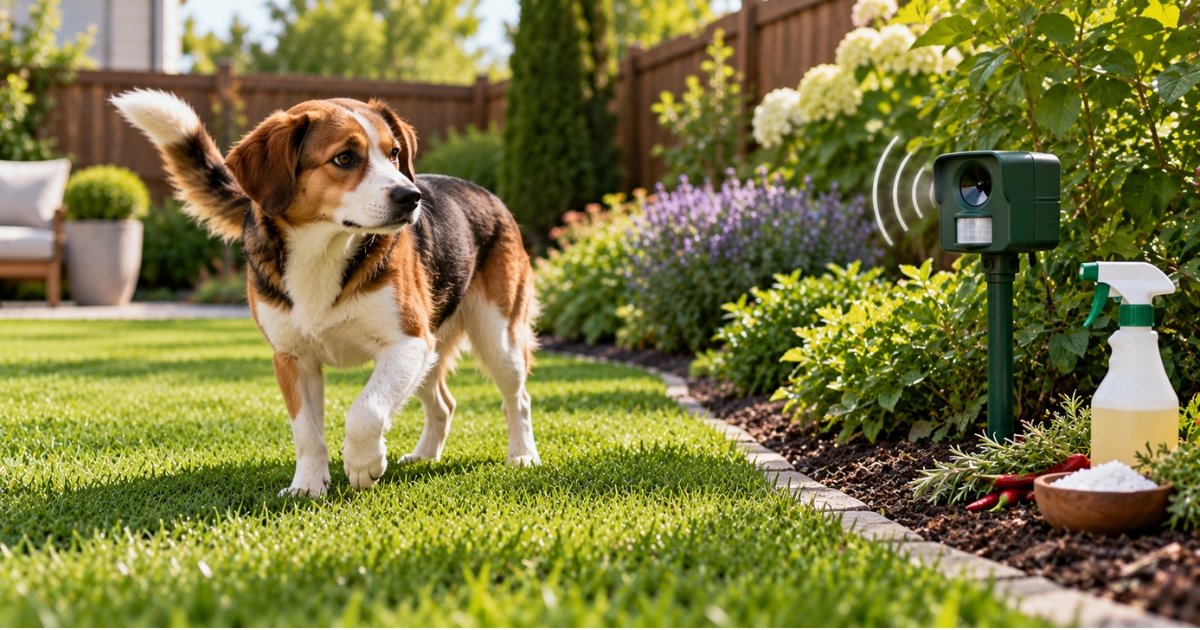
Looking for a dog repellent for lawn that’s safe and effective? See what actually works, what’s cruel to avoid, and humane fixes that keep grass green.