Home/Blogs/Are Hypoallergenic Dogs Real? The Truth About Allergy-Friendly Breeds
Are Hypoallergenic Dogs Real? The Truth About Allergy-Friendly Breeds
If you love dogs but suffer from allergies, you’ve probably searched for “hypoallergenic dog breeds” hoping to find a furry friend that won’t make you sneeze. The truth is, there are no 100% hypoallergenic dogs, dog breeds, or mixed-breeds. However, certain breeds produce fewer allergens, making them better suited for people with sensitivities.
Let’s separate fact from fiction and help you understand what really triggers pet allergies—and what you can do about it.
What Does “Hypoallergenic” Really Mean?
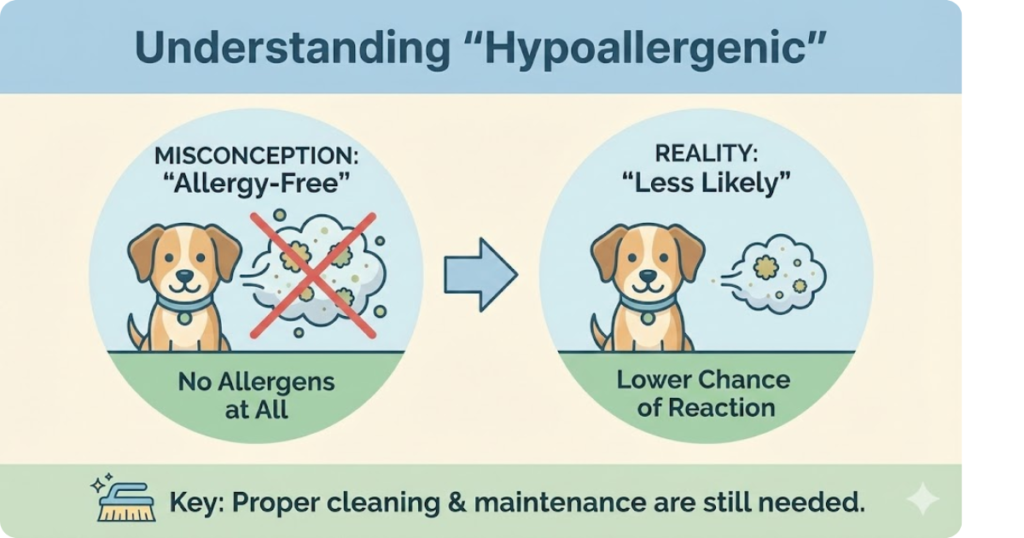
The term “hypoallergenic” refers to something having a small chance of triggering an allergic reaction. Many people assume this means completely allergen-free, but that’s not accurate.
An animal health technician named Myriam Doré notes that the biggest misconception about hypoallergenic dogs is that they are totally allergy-free. In reality, hypoallergenic simply means “less likely to cause an allergic reaction.”
This distinction matters because no matter which breed you choose, you’ll still need proper cleaning tools and maintenance routines to manage allergens in your home.
Why Dog Allergies Aren’t About Fur
Here’s something that surprises most people: pet allergies are triggered by proteins found in a dog’s saliva, urine, and dander—not just fur. These tiny particles become airborne and settle on surfaces throughout your home, including furniture, carpets, and clothing.
Most dog owners believe their allergies come from dog fur. This is false. Dander, pet saliva, and urine cause pet allergies.
The proteins responsible for allergic reactions include Can f 1, Can f 2, and Can f 5. They stick to fur and spread around your home on air currents and clothing. This explains why even dogs that don’t shed much can still trigger symptoms in sensitive individuals.
What Science Says About “Hypoallergenic” Breeds
According to one study, dust samples from homes with hypoallergenic dogs and those with other dog breeds contained the same amount of canine allergens. This finding challenges the common belief that certain breeds produce fewer allergens.
Another study evaluated fur allergens in various breeds, including poodles. While some poodles produced low amounts of allergens, others produced high levels—some up to 60 times more. This research shows that allergen production varies mostly by the individual dog, not by breed.
More recent studies point to an interesting factor—gender. Some people are sensitive to the allergens from one gender of dog but not another because both genders produce sex-specific proteins that might trigger reactions.
Dog Breeds That May Cause Fewer Allergic Reactions
Although no dog is completely allergen-free, certain breeds have non-shedding coats that produce less dander and are considered less allergenic for people with dog allergies.
Here are some breeds commonly recommended for allergy sufferers:
Poodles – Poodles are one of the most hypoallergenic breeds due to their dense, curly coats, which trap dander and allergens. They also come in different sizes, making them a great choice for various living environments.
Bichon Frise – These cheerful dogs have a double coat that catches loose hair before it falls. They’re affectionate and make excellent family pets, though they require regular grooming.
Portuguese Water Dog – This breed gained fame when the Obama family adopted one due to a family member’s allergies. Their coats don’t shed much, making them a fantastic choice for allergy sufferers.
Maltese – These elegant little dogs have been hypoallergenic companions for centuries. Their long, silky white coat lacks an undercoat entirely, dramatically reducing shedding.
Schnauzers – Schnauzers’ distinctive wiry coats shed very little, making them excellent for allergy sufferers. These spirited watchdogs combine loyalty with playfulness.
Yorkshire Terriers – Yorkies have hair instead of fur, making them one of the best dogs for people with allergies. Their fine, silky texture is similar to human hair.
Soft Coated Wheaten Terrier – This Irish breed features a gorgeous, silky coat that sheds minimally. Their single-layer coat produces significantly less dander than double-coated breeds.
Labradoodles and Goldendoodles – Many hypoallergenic mixed breeds inherit the Poodle’s curly, non-shedding coat, making them more allergy-friendly. F1B generations with 75% Poodle genetics are typically the most allergy-friendly.
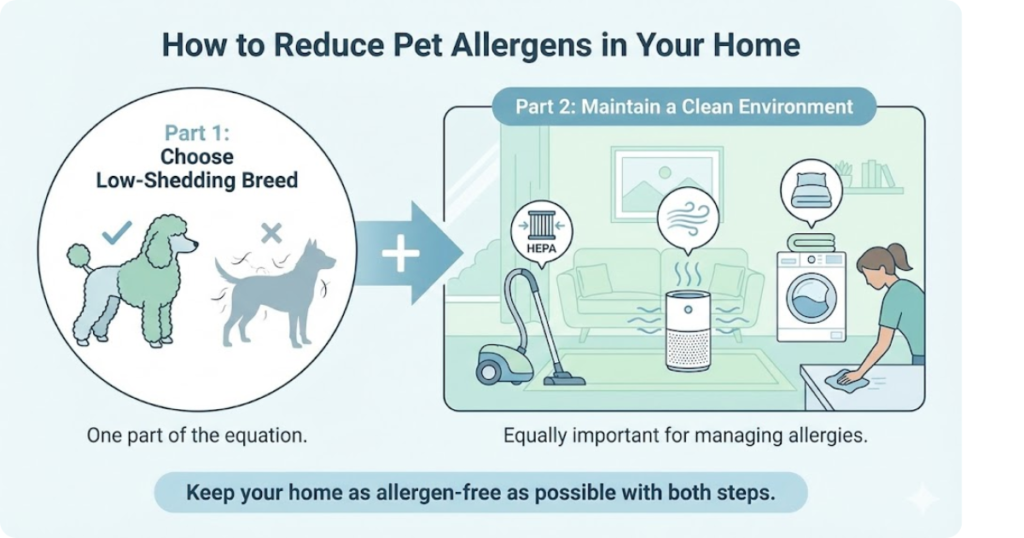
How to Reduce Pet Allergens in Your Home
Choosing a low-shedding breed is just one part of the equation. Maintaining a clean environment is equally important for managing allergies. Here’s how to keep your home as allergen-free as possible.
Groom Your Dog Regularly
Regular pet grooming significantly reduces dander by removing loose fur and dead skin cells before they spread throughout your home. Brushing pets outdoors daily and bathing them every 2-4 weeks can decrease airborne allergens by up to 84%.
When grooming outdoors, use a quality pooper scooper to handle any accidents during your grooming session. This keeps your yard clean and reduces allergen-carrying waste in your outdoor space.
Clean Pet Waste Promptly
Dog waste is a significant source of allergens because proteins in a dog’s urine cause allergic reactions. Promptly cleaning up after your dog—both indoors and outdoors—helps minimize allergen exposure.
Invest in reliable dog waste bags to clean up quickly during walks. For yard maintenance, a hybrid rake and scooper set makes daily cleanup fast and convenient. Keeping your yard free of waste reduces overall allergen load around your home.
Use HEPA Filtration
A High-Efficiency Particulate Air (HEPA) filter traps 99.97% of particles 0.3 microns or larger—which you cannot even see with your naked eye. These filters capture most pet dander so your HVAC system doesn’t circulate allergens throughout your home.
Replace the filter once every 60 days if you have one furry pet. A shorter replacement schedule may be necessary if you have multiple pets.
Create Pet-Free Zones
If you can’t find a new home for your dog, cat, or other furry pet, at least keep animals out of the bedroom. Designating certain rooms as pet-free zones gives allergy sufferers a space to breathe cleaner air.
Pet allergens can be reduced in certain spaces deemed pet-free zones. Most commonly a bedroom, this area provides a space for allergy sufferers to breathe dander-less air.
Choose Hard Flooring Over Carpet
Pet dander sticks more easily to soft surfaces than hard surfaces. In many homes, the carpet is the largest soft surface to which pet dander can stick.
If possible, replace wall-to-wall carpeting with tile, wood, linoleum, or vinyl flooring that won’t collect pet allergens as easily. If removing carpet isn’t an option, vacuum frequently using a HEPA-equipped vacuum cleaner.
Maintain a Consistent Cleaning Schedule
Regularity is the key—cleaning your home occasionally won’t be enough, but a regular cleaning schedule can keep pet dander under control.
Here’s a practical cleaning routine:
Vacuum carpets and upholstery at least twice weekly
Many people focus solely on indoor allergens, but outdoor waste management matters too. When you walk your dog or let them out in the yard, waste accumulates and can track allergens back inside on shoes and paws.
Use heavy-duty pet wipes to clean your dog’s paws before they come inside. This simple step prevents outdoor allergens from spreading throughout your home.
For quick yard cleanup, an EZ rake combined with scented poop bags makes the task faster and more pleasant. Regular waste removal keeps your outdoor spaces cleaner and reduces allergens near your home’s entry points.
Tips for Living with Dog Allergies
If you’ve decided to get a dog despite your allergies, these strategies can help you manage symptoms effectively:
Bathe your dog regularly – Studies have shown bathing your pet with an allergen-reducing shampoo can cut their dander levels by up to 85%. However, more frequent bathing can help reduce allergens but may also cause dry and itchy skin for your dog. Monthly baths are typically recommended.
Wash your hands after contact – After petting or playing with your dog, wash your hands thoroughly before touching your face. This prevents transferring allergens to your eyes and nose.
Keep your dog off furniture – Pets love to curl up on sofas and soft chairs, which unfortunately are excellent at trapping allergens. Providing pets with their designated beds helps contain dander to specific areas.
Consider air purifiers – An air purifier designed for pet-friendly households can suck up airborne allergens before they settle into furniture or carpeting. Use a purifier with a True HEPA filter, designed to capture 99.7% of particles as small as 0.3 microns.
Consult an allergist – If you’re considering adopting a dog, consult with an allergist to ensure the dog is the best fit for your health needs. They can help determine your specific allergen triggers and recommend appropriate treatments.
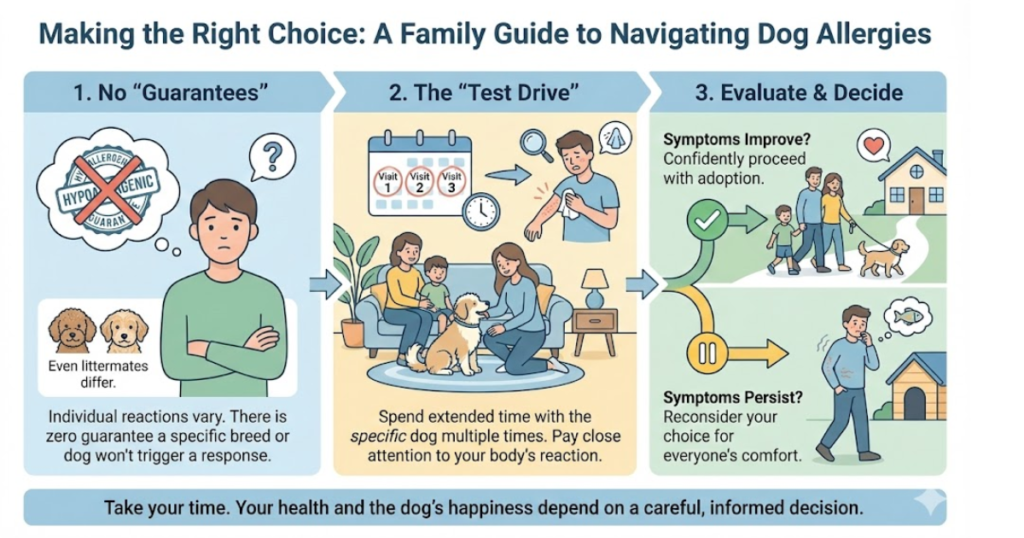
Making the Right Choice for Your Family
While it’s true that a specific breed or specific individuals of a specific breed might not trigger a response in one person, there is zero guarantee that it’ll work the same way for you.
Before committing to any dog, spend time with the breed you’re considering. Two pups from the same litter may have different coat types. Always spend time with a breed before committing to adoption if you’re allergy-prone.
If possible, visit the breeder or rescue organization multiple times. Pay attention to how your body reacts after extended exposure. Some people find their symptoms improve over time, while others may need to reconsider their choice.
Final Thoughts
The question “are hypoallergenic dogs real?” has a nuanced answer. There is no such thing as a truly hypoallergenic dog or hypoallergenic breed of dog. Allergists say any dog can trigger an attack in people with allergies to dogs.
However, this doesn’t mean dog ownership is impossible for allergy sufferers. Owning a dog as an allergy sufferer is possible with the right breed and proper management. Regular grooming, cleaning, and air filtration can help minimize allergen exposure.
By choosing a low-shedding breed, maintaining excellent hygiene practices, and investing in quality pet waste management tools, you can reduce allergens significantly. Combined with proper medical management, many allergy sufferers successfully share their lives with beloved canine companions.
The key is being proactive about allergen control. Keep your home clean, groom your dog regularly, and handle pet waste promptly with reliable cleanup equipment. These steps help create a healthier environment where both you and your four-legged friend can thrive.
Frequently Asked Questions
Q: Is there such a thing as a completely hypoallergenic dog?
A: No, all dogs produce allergenic proteins in their dander, saliva, and urine. However, some breeds produce fewer allergens or shed less, which may reduce allergic reactions.
Q: Which dog breeds are best for allergy sufferers?
A: Breeds like Poodles, Bichon Frise, Portuguese Water Dogs, Maltese, and Schnauzers are often recommended. These breeds have coats that shed less and may trap more dander.
Q: How can I reduce dog allergens in my home?
A: Regular grooming, HEPA air filters, frequent cleaning, removing carpets, creating pet-free zones, and promptly cleaning up pet waste all help reduce allergen levels.
Q: Does bathing my dog help with allergies?
A: Yes, bathing your dog every 2-4 weeks can significantly reduce dander. However, over-bathing may cause dry skin and potentially increase dander production.
Q: Can I develop a tolerance to dog allergies over time?
A: Some people report decreased symptoms with extended exposure, but this varies greatly between individuals. Consult an allergist for personalized advice.
Dog toys can get expensive fast, especially if your pup chews through them in minutes. On top of that, many store-bought options are made with questionable materials that may not be safe for your furry friend. The good news? You don’t need to spend a fortune to keep your dog
Every dog owner knows the struggle of keeping treats organized. Bags rip open, treats go stale, and the kitchen counter turns into a mess. A DIY dog treat jar solves all of that — and it looks great sitting on your counter, too. In this guide, you will learn how
Dogs are more than pets — they’re stress relievers, mood boosters, and loyal companions who show up for us every single day. In fact, spending just a few minutes with your dog can lower cortisol levels and increase the feel-good hormone oxytocin. But here’s the thing: if your daily dog