




Dog Health & Wellness
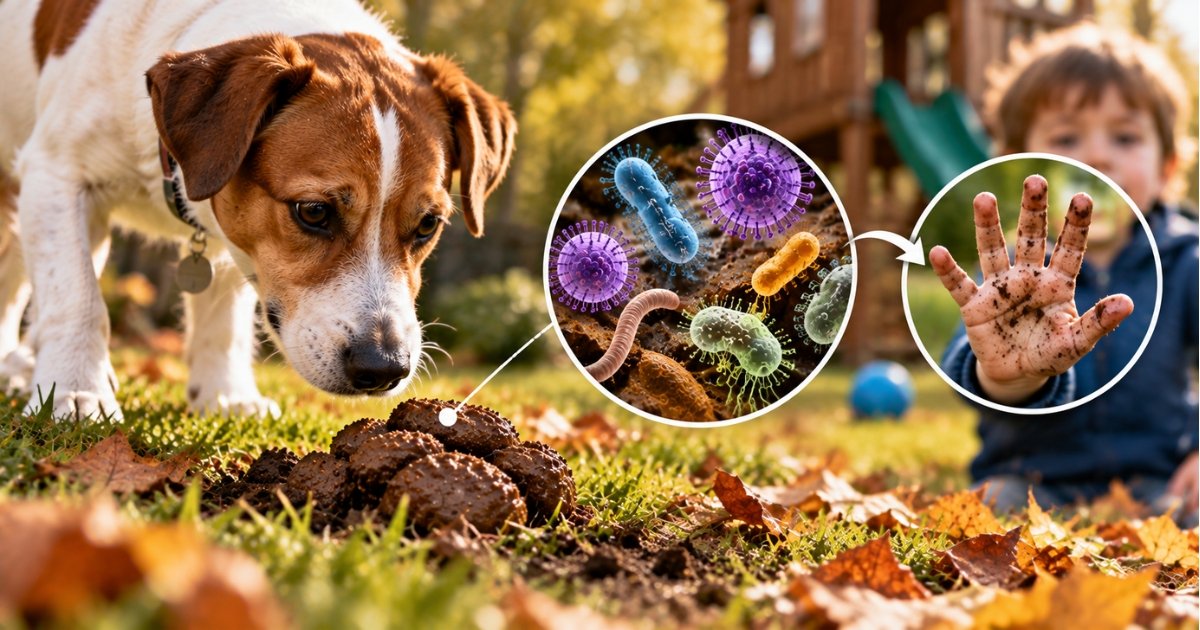
Is Dog Poop Dangerous to Humans? 6 Real Risks
Is dog poop dangerous to humans? It can carry parasites and bacteria. The 6 real risks, who is most at risk, and the routine that stops them.
 Skip to content
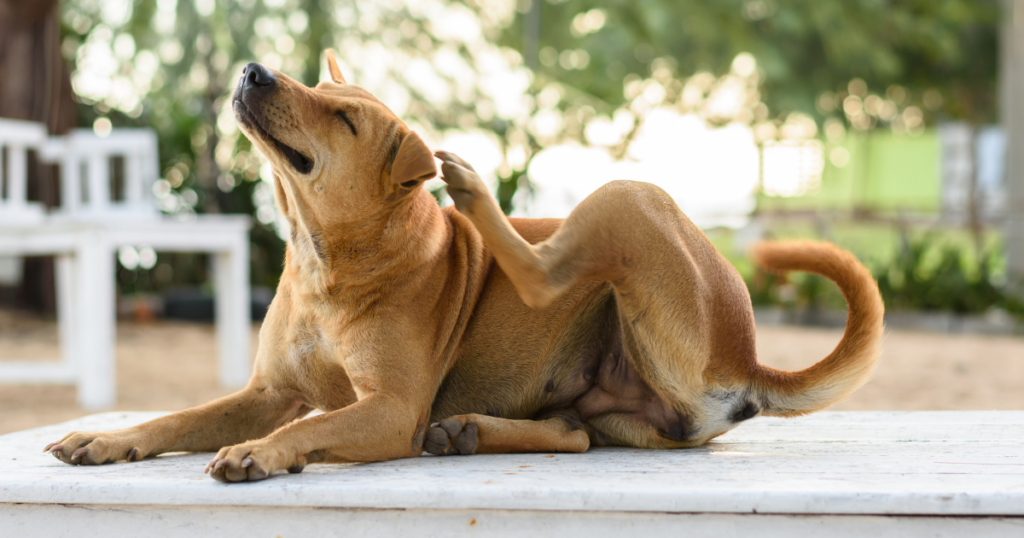
If your dog keeps scratching, chewing, or biting at his skin, you are not alone. This is one of the most common concerns among dog owners, and it can have several different causes. The good news is that most cases are treatable oIf your dog keeps scratching, chewing, or biting at his skin, you are not alone. This is one of the most common concerns among dog owners, and it can have several different causes. The good news is that most cases are treatable once you identify the root problem. So, before you panic, take a breath — this guide walks you through everything you need to know.
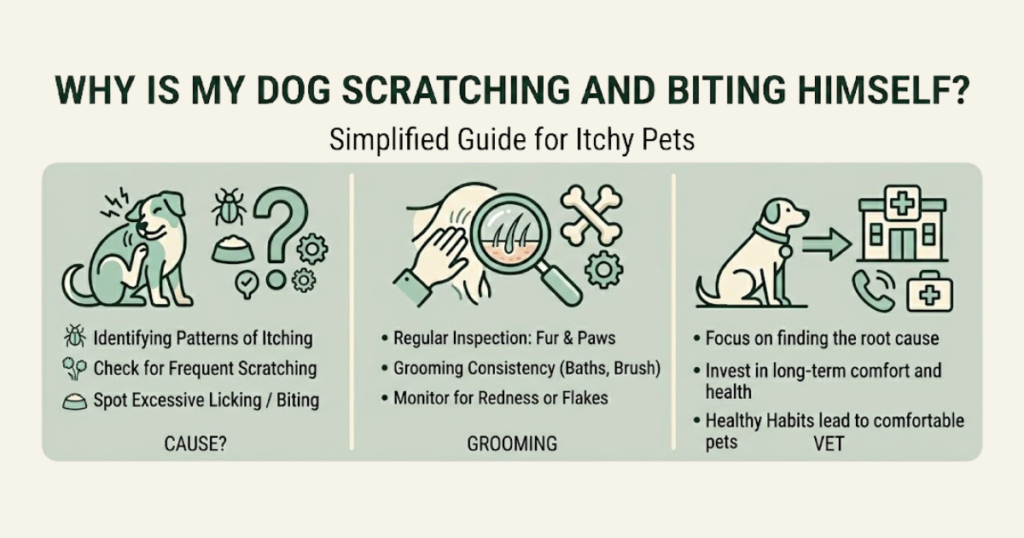
Dogs scratch for many reasons. Some are minor, while others need medical attention. To find the right solution, you first need to figure out what is causing the itch. Below are the most common reasons.
Fleas are the number one cause of scratching in dogs. Even a single flea bite can trigger intense itching, especially in dogs that are allergic to flea saliva. In addition to fleas, ticks and mites can also cause your dog to scratch, bite, and chew his skin.
Signs to look for:
Treatment: Use a vet-recommended flea treatment and wash all bedding immediately. Treat your home at the same time, since fleas live in carpets and furniture.
Allergies are another leading cause of chronic itching in dogs. Your dog may be reacting to something in his diet, the environment, or something he is touching.
Food allergies: Ingredients like chicken, beef, wheat, dairy, or soy can trigger skin reactions. If your dog scratches year-round and also has digestive issues, food allergies are a likely cause.
Environmental allergies: Pollen, dust mites, mold, and grass can cause seasonal or year-round itching. Dogs with environmental allergies often rub their face, lick their paws, and scratch their ears.
Contact allergies: Some dogs react to shampoos, cleaning products, synthetic fabrics, or certain plants. If scratching started after you changed something in your home routine, this could be the reason.
Treatment: An elimination diet under vet guidance can identify food triggers. For environmental allergies, antihistamines or prescription medications may help.
Just like humans, dogs can have dry, flaky skin — especially during winter months when indoor heating reduces humidity. Dry skin leads to itching, dandruff-like flakes, and sometimes cracking.
Treatment: Add omega-3 fatty acids to your dog’s diet through fish oil supplements. Use a moisturizing dog shampoo and avoid bathing too frequently, as this strips the skin’s natural oils.
When dogs scratch and chew repeatedly, they can break the skin and allow bacteria or yeast to grow. Hot spots — red, moist, inflamed patches — are a common result. Yeast infections often appear in skin folds, ears, and between the paw pads.
Signs to look for:
Treatment: A vet will prescribe antifungal or antibacterial shampoos and, in some cases, oral medication.
Not all scratching is physical. Some dogs develop compulsive behaviors — including scratching and chewing — due to stress, separation anxiety, or boredom. If your dog mainly scratches when left alone or in stressful situations, the cause may be behavioral rather than medical.
Treatment: Increase physical exercise and mental stimulation. Puzzle toys, training sessions, and consistent routines can reduce anxiety-related scratching.
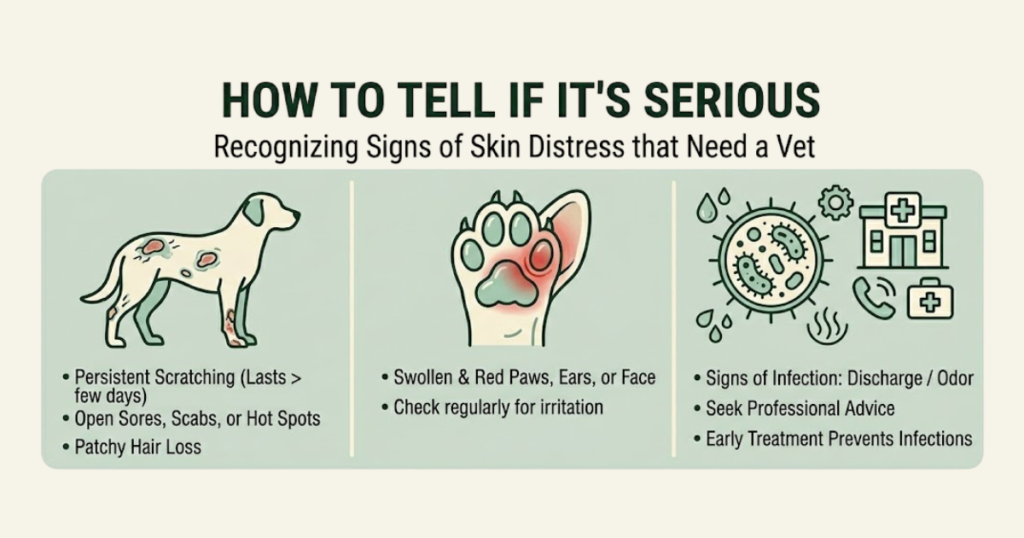
Some scratching is normal. However, you should take your dog to the vet if you notice:
Early treatment prevents minor skin problems from turning into serious infections. Therefore, do not wait too long before seeking professional advice.
While you should always consult a vet for persistent issues, there are a few safe home remedies that may provide temporary relief for mild itching:
Colloidal oatmeal has natural anti-inflammatory properties. A lukewarm oatmeal bath can soothe irritated skin and reduce itching. Use a pet-safe oatmeal shampoo or plain colloidal oatmeal mixed into warm water.
A 50/50 mix of apple cider vinegar and water can relieve itching caused by yeast or bacteria. However, never apply it to open wounds or broken skin, as it will cause pain.
Applied topically, coconut oil can moisturize dry skin and has mild antibacterial properties. Use sparingly and choose organic, unrefined varieties for best results.
Pure aloe vera gel can cool and calm inflamed skin. Make sure it does not contain added alcohols or artificial fragrances, and prevent your dog from licking it off.
You can reduce the risk of recurring skin problems by following a few consistent habits:
Brush your dog regularly to remove dead skin cells, distribute natural oils, and spot any early signs of irritation. Bathe your dog every four to six weeks with a gentle, pH-balanced dog shampoo.
A dirty yard can expose your dog to fleas, ticks, and other irritants that trigger scratching. Cleaning up waste promptly and keeping the lawn tidy makes a real difference. Products like the GOGO Stik Pooper Scooper make yard cleanup fast and hands-free, helping you keep your outdoor space clean and safe for your dog. For bigger yards or multiple dogs, the Scooper and Hybrid Rake Set with Heavy Dootie Bags handles the job efficiently.
Keeping your dog clean on walks matters too. Heavy Dootie Poop Bags are thick, leak-proof, and built to handle the job without mess. For walks at night, the Catch-N-Go Hybrid Catcher and Scooper with Genie Rechargeable LED Flashlights gives you everything you need — hands-free cleanup with a built-in light.
Nutrition plays a huge role in skin health. Feed your dog a complete diet rich in omega fatty acids, protein, and vitamins. Talk to your vet about adding fish oil or a skin-support supplement to his routine.
Use a year-round flea and tick prevention product recommended by your vet. Check your dog’s coat after outdoor walks, especially in wooded or grassy areas.
After outdoor play, wipe your dog’s paws and coat to remove pollen, dirt, and allergens. Heavy Dootie Pet Wipes for Paws and Butt are specially formulated for dogs and make post-walk cleanup simple and effective.
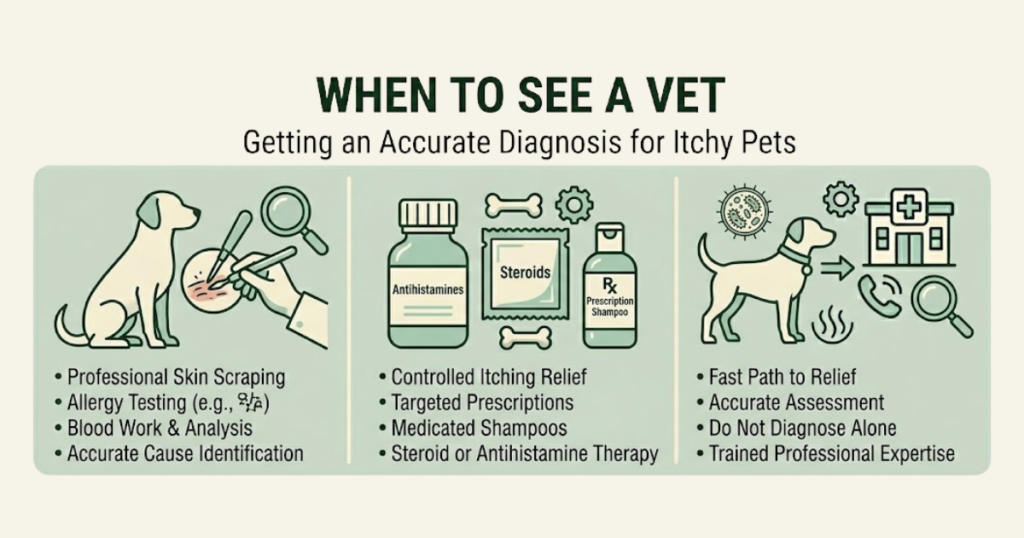
Home care can help with mild cases, but a vet visit is always the right choice if you are unsure about the cause. Your vet can run allergy tests, skin scrapings, or blood work to pinpoint the problem. In some cases, prescription shampoos, steroids, or antihistamines are needed to bring the itching under control.
Do not try to diagnose severe skin conditions on your own. A trained professional will give your dog the most accurate assessment and the fastest path to relief.
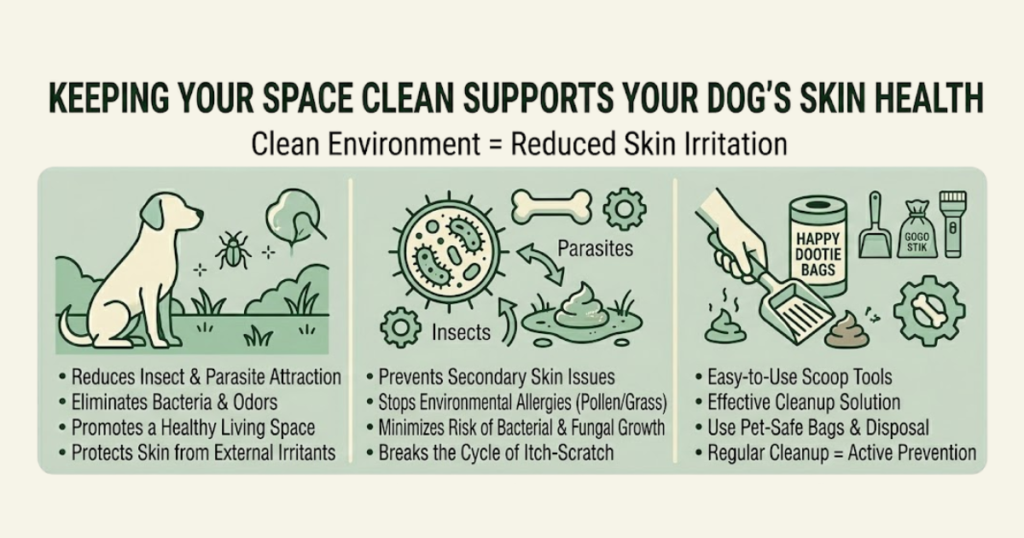
One thing many dog owners overlook is how much environment affects skin health. A yard full of old waste attracts insects and parasites that irritate your dog’s skin. As a result, regular cleanup is not just about aesthetics — it is an active part of keeping your dog healthy and itch-free.
GOGO Stik carries a full line of cleanup tools and bags to make the job easier for every dog owner:
• GOGO Stik XP Pooper Scooper Set — a reliable tool for everyday yard cleanup
• Catch-N-Go Hybrid Catcher Scooper with Strap-On Roll Bag Dispenser — perfect for on-the-go convenience
• Bio Blu Dootie Bags — an eco-friendly option for environmentally conscious pet owners
• Heavy Dootie Bags Variety Pack — great for stocking up on durable, leak-proof bags
• Happy Dootie Bags with Tie Handles — easy to seal and dispose of
• EZ Dootie Rake — a simple rake-style tool ideal for grass and gravel
• GOGO Stik Fido USB Rechargeable LED Flashlight — a must-have for early morning or nighttime walks
• XP Pooper Scooper with Heavy Dootie Bags — a clean-hands solution with extra-strong bags
• Heavy Dootie Dog Poop Bags Citrus Scent — leaves a fresh scent after every cleanup
• Heavy Dootie Poop Bags XP — Leakproof and Citrus Scented — built for the toughest messes
• Catch-N-Go Best Catcher Scooper Genie Kit with Happy Dootie Bags — a complete kit for any situation
• Dootie Bags — simple, reliable bags for everyday use
A dog that constantly scratches and bites himself is trying to tell you something. Whether the cause is fleas, allergies, dry skin, or anxiety, the answer starts with paying attention. Most skin problems in dogs are treatable — especially when caught early.
At the same time, keeping your dog’s living environment clean and parasite-free is just as important as any treatment. With the right grooming habits, diet, veterinary care, and yard hygiene, your dog can live comfortably and itch-free. GOGO Stik is here to make that last part easier for every dog owner out there.

Alec Beaton is the Founder & Inventor of Pooch Approved Products and GoGo Stik®. Inspired by real-life pet parenting, he turns everyday cleanup challenges into simple, innovative solutions that make life better for pets and their people.
Is dog poop dangerous to humans? It can carry parasites and bacteria. The 6 real risks, who is most at risk, and the routine that stops them.
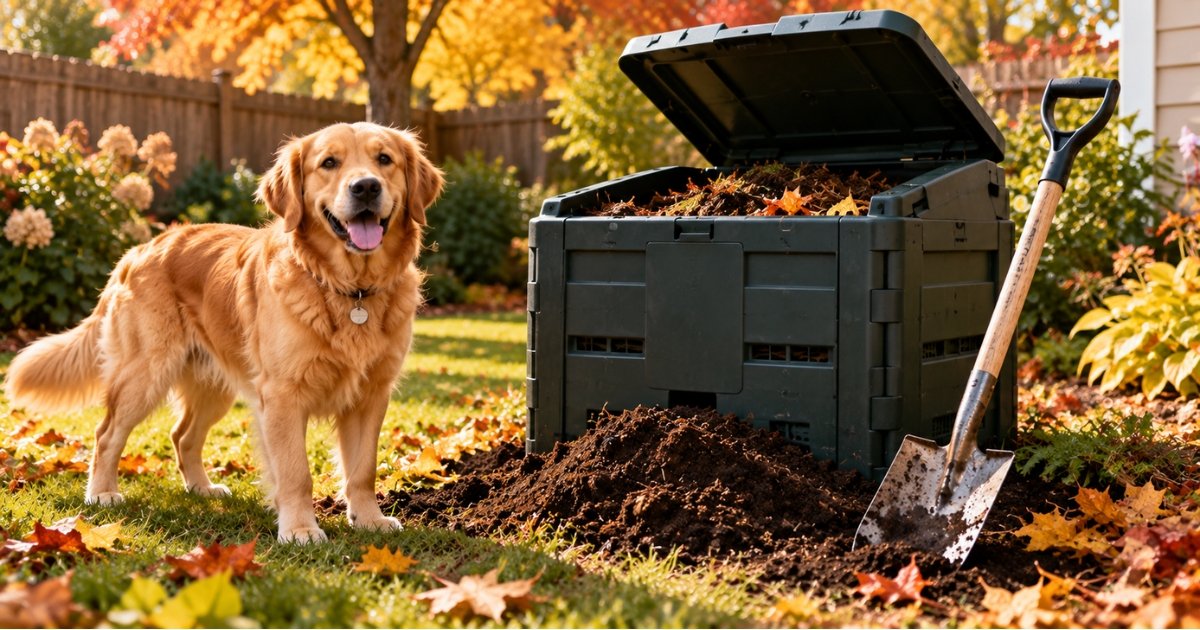
A dog poop composter turns waste into soil drainage instead of landfill. Learn siting rules, enzyme starters, DIY builds, winter fixes and safety limits.

Learn how to dispose of dog poop safely: bagging and binning, flushing, composting, digesters and no-bin walks. What is safe, what is not, and why.