
Pooper Scoopers
Dog Poop Vacuum: Worth It? 7 Real Questions to Ask
Can a dog poop vacuum really clean your yard? Here is how suction, powered scoopers and yard robots work, what they struggle with, and what to buy.
 Skip to content
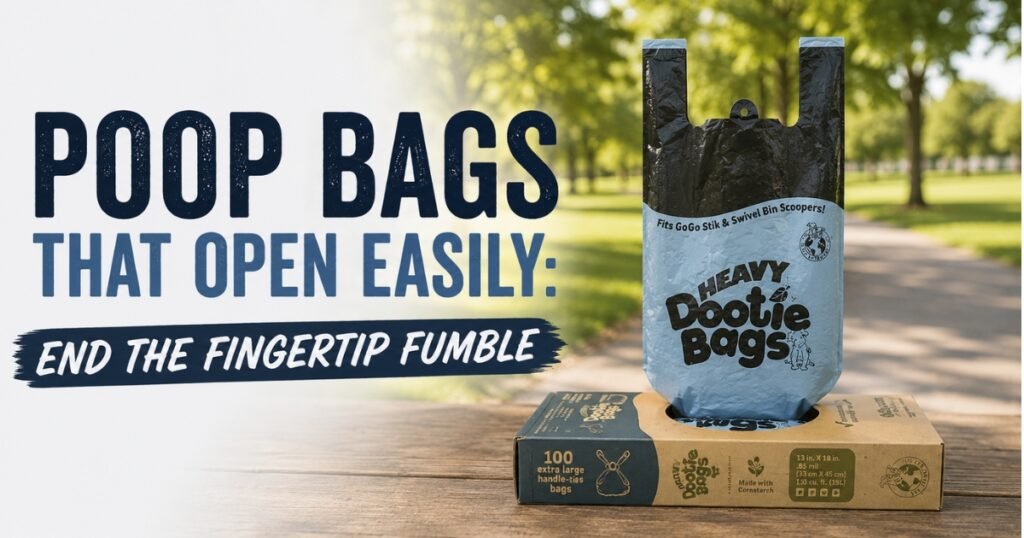
You’re standing in the wet grass, dog waiting, and you’re rubbing a sheet of plastic between two fingers like you’re counting cash. Nothing separates. You lick your thumb. You try again. If you’ve ever wondered whether poop bags easy to open actually exist — or whether every roll is destined to become a fingertip wrestling match — this guide is for you.
The short answer: yes, they exist, but “easy to open” is a manufacturing property, not a marketing claim. Below we break down what actually causes bags to stick, how to test a roll before you commit, and why the bag is only half the problem for most dog owners.
Bag sticking isn’t random. It comes down to four physical factors, and once you know them you can diagnose any roll in about ten seconds.
Here’s an original observation from years of field testing: the bags that open worst are almost always the ones that feel best in the store. That silky, slippery, expensive-feeling film is exactly the film that blocks. A slightly textured or matte-finish bag — the kind that feels a little “papery” — separates far more reliably. Texture creates micro air gaps between layers.
Polyethylene stiffens as temperature drops, and your fingertips lose tactile sensitivity below roughly 60°F (16°C). The CDC’s NIOSH cold stress guidance notes that manual dexterity degrades measurably in cold conditions well before any danger threshold. So a bag that opens fine in July becomes genuinely difficult in January — with gloves on, it’s near impossible. That’s why the “easy open” question matters far more to northern dog owners.
You can’t always test in advance, but you can read the signals. Use this checklist when comparing rolls online or in-store.
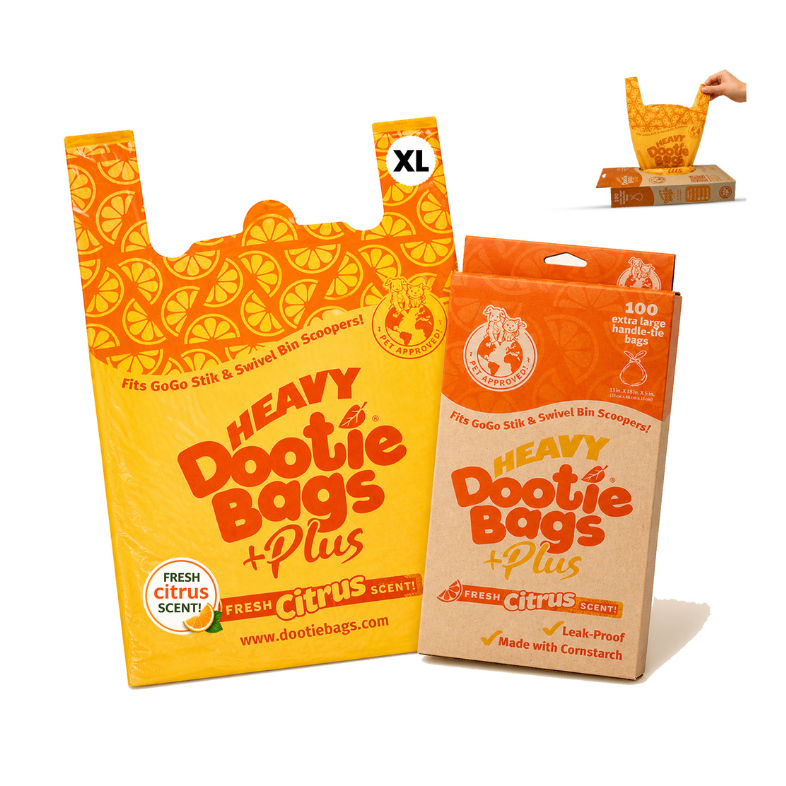
Our HEAVY Dootie Bags are built on that logic — thicker gauge film, a genuinely large mouth, and leakproof construction, because a bag you can open is worthless if it splits on the walk home.
Even a good bag needs technique. These are the methods that hold up in real conditions.
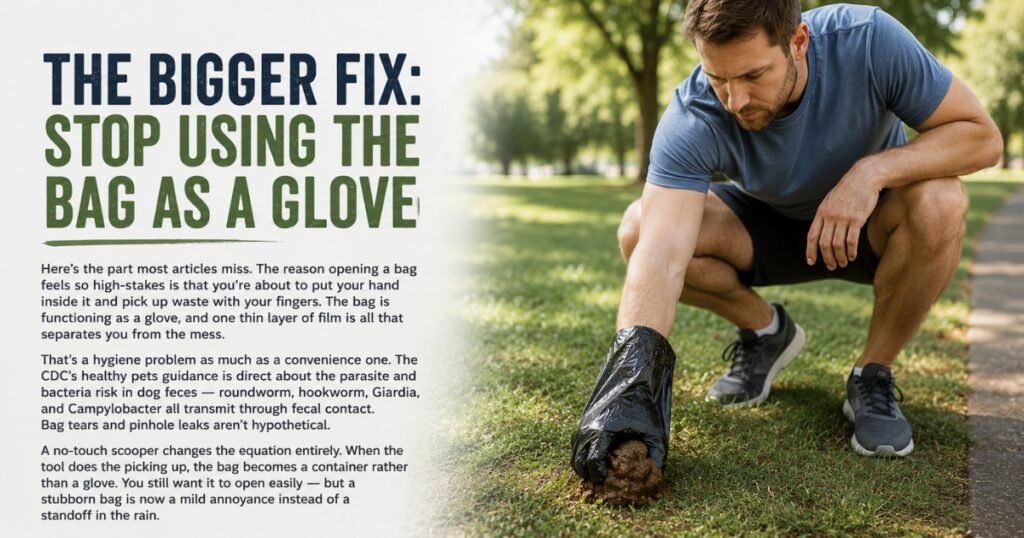
Here’s the part most articles miss. The reason opening a bag feels so high-stakes is that you’re about to put your hand inside it and pick up waste with your fingers. The bag is functioning as a glove, and one thin layer of film is all that separates you from the mess.
That’s a hygiene problem as much as a convenience one. The CDC’s healthy pets guidance is direct about the parasite and bacteria risk in dog feces — roundworm, hookworm, Giardia, and Campylobacter all transmit through fecal contact. Bag tears and pinhole leaks aren’t hypothetical.
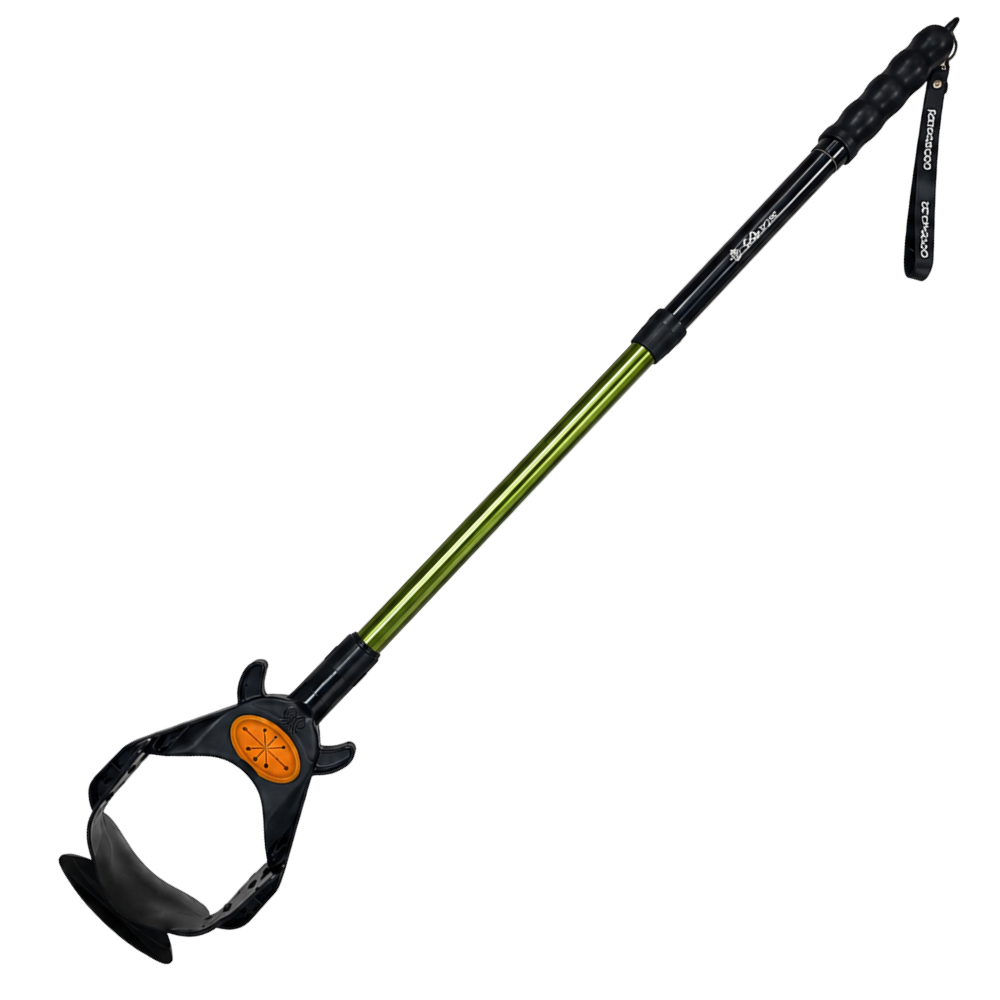
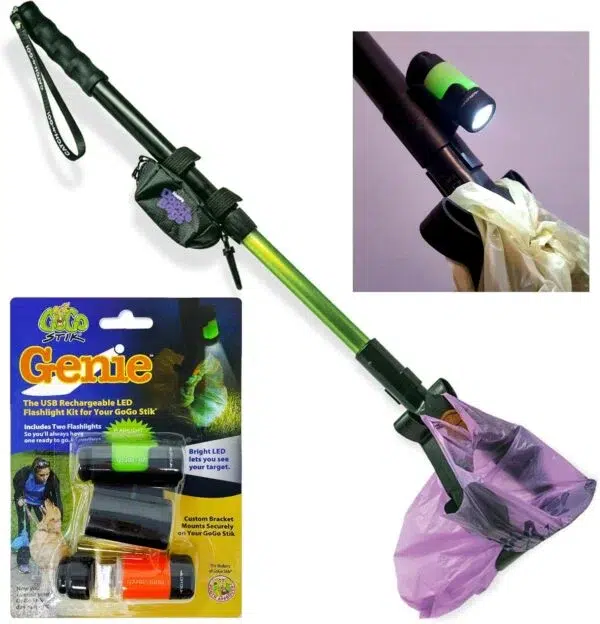
A no-touch scooper changes the equation entirely. When the tool does the picking up, the bag becomes a container rather than a glove. You still want it to open easily — but a stubborn bag is now a mild annoyance instead of a standoff in the rain.
The Catch-N-Go catcher-scooper takes this one step further — it catches waste before it hits the ground, which sidesteps the whole grass-and-gravel problem. For yard cleanup, where volume is the issue rather than portability, the scooper and rake-spade set pairs the tool with 100 heavy bags so you’re not mixing gauges mid-job.
There’s no single right answer here. Choose based on your real routine, not an idealized one.
Usually a combination of thin film, static cling, and insufficient anti-block agent during manufacturing. Cold weather makes all three worse. Switching to a thicker, unscented, slightly textured bag resolves it in most cases — and storing the roll away from heat helps too.
Generally yes. Thicker film has more stiffness, so the two walls don’t collapse together as readily and your fingers have something to grip. The tradeoff is bulk in your pocket. For most owners, 15–20 microns is the sweet spot between openability and packability.
It varies by formulation. Plant-starch blends can be slightly tackier than conventional polyethylene, which increases sticking. Look for certified compostable bags with a stated thickness rather than vague “eco” claims, and expect to use the snap technique more often.
It makes it far less stressful. With a no-touch scooper you open the bag calmly with both hands, load it before you leave, and never use the bag as a glove. Easy-open bags are still nicer — but they stop being the difference between a clean walk and a ruined one.
Finding poop bags easy to open comes down to three things: adequate film thickness, minimal fragrance oils, and a wide, clearly marked mouth. Add the snap technique and a dryer-sheet anti-static trick, and most of the fumbling disappears. But the deeper fix is removing your hand from the equation altogether — because the real cost of a stubborn bag is the thirty seconds you spend crouched over it with a leash in one hand and a dog pulling in the other.
Ready to stop fumbling? Browse the full range of no-touch scoopers and heavy-duty Dootie Bags at the GoGo Stik shop, or start at gogostik.com to see which setup fits your dog, your yard, and your winter.
Alec Beaton is the Founder & Inventor of Pooch Approved Products and GoGo Stik®. Inspired by real-life pet parenting, he turns everyday cleanup challenges into simple, innovative solutions that make life better for pets and their people.
Can a dog poop vacuum really clean your yard? Here is how suction, powered scoopers and yard robots work, what they struggle with, and what to buy.
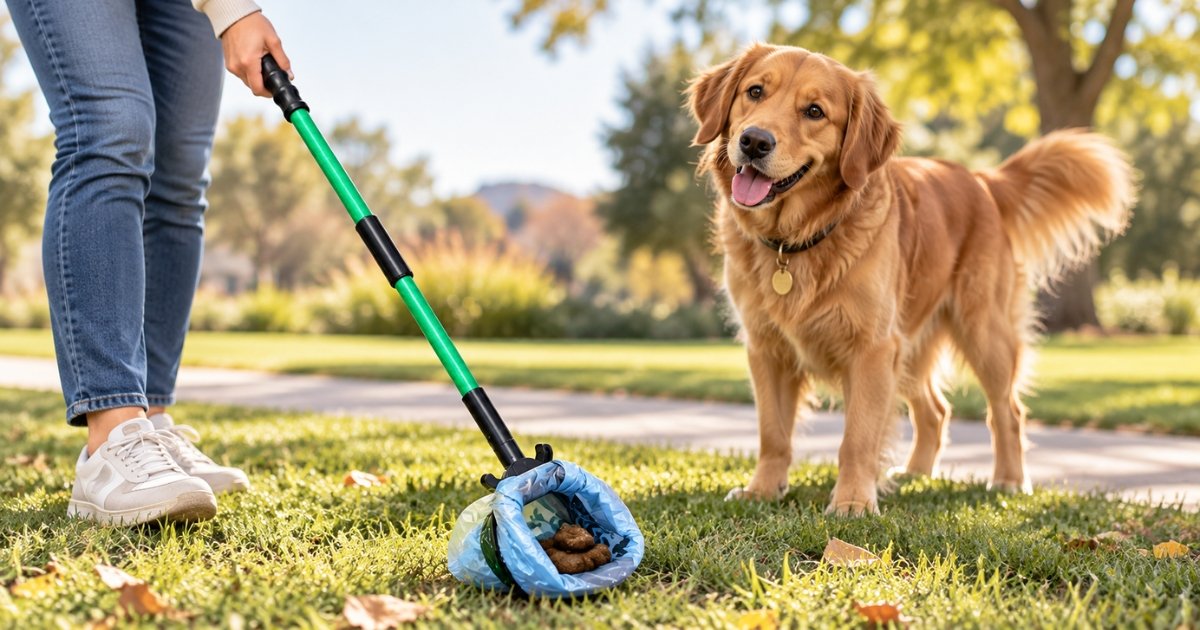
A claw pooper scooper is cheap and one-handed, but it fails on soft stool and gravel. Here are 5 checks before you buy, plus a cleaner alternative.
How long can a dog go without pooping? Learn normal timeframes, warning signs of constipation, and when to call the vet. Clear, vet-backed answers.