





Pooper Scoopers
5 Dog Poop Scooper Bundles: Which New One Fits You?
Comparing dog poop scooper bundles? Here is what is in all five GoGo Stik sets, who each one suits, and when a single tool is the smarter buy.

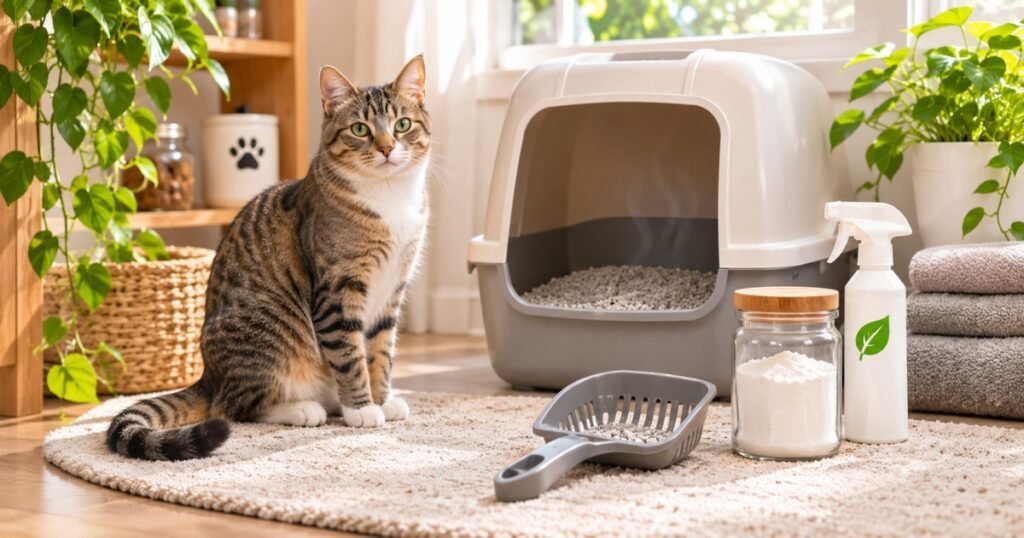
If your home smells and the scented litter and the plug-in did nothing, you are not doing anything wrong. Real litter box odor control is mostly about scooping frequency, airflow and sealing waste quickly, and the products you can buy come last because they matter least. Masking a smell is not removing it, and a room that smells like lavender over ammonia still smells like ammonia.
Below are eight fixes in order of how much they help per dollar spent. The first five cost nothing.
Before you change anything, notice whether the smell changed suddenly. A sharp ammonia odor that appeared out of nowhere, or a shift in how much your cat urinates, how often, or how it smells, is a reason to call your vet Cats and people share a home and some illnesses travel, so the CDC guidance on diseases that pass between pets and people is worth reading before you reach for a product. rather than buy a deodorizer.
The same goes for straining, going outside the box, or blood. None of that is something a product fixes. Make the call first, then work through the list below.
This is the single biggest factor and it is free. Clumping litter traps odor only while the clump is intact. Once a cat digs over it, buries fresh waste on top, or the clump crumbles, the smell is in the room.
Twice a day is the realistic target for most homes. Morning and evening, every box, every time. Many people scooping once daily and still smelling the box are simply a scoop behind.
Keep a scoop and a bag holder within arm’s reach of each box. Convenience decides whether this habit survives week two.
Common guidance is one box per cat plus one spare. It is not a law, but it works for a practical reason: a crowded box concentrates waste in one place, so odor builds faster than you can scoop it.
Spreading the same amount of waste over more boxes means each box stays cleaner between scoops. It also gives a cat somewhere acceptable to go when one box is temporarily dirty.
Two cats in a studio apartment usually need three boxes, even if that feels absurd. Smaller boxes in separate corners beat one giant box.
Airflow beats air freshener every time. A box inside a closed cabinet, a closet, or a windowless bathroom with the door shut will smell, no matter what litter is in it, because the odor has nowhere to go but back out at you.
Better spots share three traits:
If the only option is a bathroom, leave the door propped and run the fan.
Plastic holds odor. Claw scratches in the base create channels that trap urine, and once that happens no amount of fresh litter covers it. Wash each box with unscented soap and warm water on a regular schedule, dry it fully, then refill.
Do not use ammonia-based or bleach-based cleaners near a litter box. Ammonia smells like urine to a cat and can push them to go elsewhere, and harsh cleaner residue is a common reason a cat starts avoiding a box.
When a clean, dry, empty box still smells, it is finished. Replace it.
There is no honest universal number of days. How often to change cat litter depends on the litter type, how many cats use the box, and how many boxes you have. Judge it by evidence instead:
When two of those are true, dump it all, wash the box, and refill. Topping up clean litter over saturated litter is where most lingering odor hides.
An open container sitting next to the box cancels out all your scooping. Scooped clumps keep releasing odor into the room, just from a bucket instead of from the litter.
Tie off waste in a bag immediately, close the bag properly, and get it out of the living space. Where it goes next is its own decision – our comparison of cat litter disposal systems weighs sealed pails against a lidded bin and the rest. A thin bag that tears or lets air through defeats the point, so smell-proof bags help here, so use something with real thickness and a handle you can knot one-handed. Heavy Dootie bags for cat litter are large enough to hold several days of clumps and tie shut without fighting them.
A proper knot matters more than people expect. If yours keep slipping, the poop bag tying techniques carry straight over to litter.
This one is counterintuitive. Heavily perfumed litter is designed for the human nose, but cats have a far more sensitive one, and some will simply stop using a box that smells strongly of fragrance.
A cat quietly urinating behind the sofa is a dramatically worse odor problem than the litter ever was, and it is harder to find and harder to clean out of flooring and baseboards.
If you switched to scented litter around the time the house started smelling worse, try unscented clumping litter for two weeks and watch what your cat does.
A litter box deodorizer is a finishing touch on a system that already works. Plain baking soda mixed into the bottom layer of litter is the usual low-risk option. Carbon filters in covered boxes help a little and need replacing before they stop doing anything. A room air purifier moves and filters air, which is useful, but it does not clean a dirty box. Pet products are labelled rather than prescribed, so it helps to know what the FDA Center for Veterinary Medicine does and does not regulate before trusting a claim on a package.
Do not use essential oils in or near a litter box. Many essential oils are toxic to cats, and cats are more vulnerable to them than dogs are. Skip the homemade recipes, and do not use oils as a room scent in a cat household without talking to your vet first.
| Fix | Cost | Effort | How much it helps | How fast you notice |
|---|---|---|---|---|
| 1. Scoop twice daily | Free | Daily, small | Huge | Same day |
| 2. More boxes | Low, one-time | One-time setup | Large | Two to three days |
| 3. Move the box | Free | One afternoon | Large | Within a day |
| 4. Wash and replace box | Free to low | Monthly-ish | Moderate to large | Immediately after |
| 5. Full litter change | Cost of litter | 15 minutes | Large | Immediately |
| 6. Seal waste in bags | Low | Seconds each time | Moderate | Same day |
| 7. Drop scented litter | Neutral | One purchase swap | Varies, can be large | One to two weeks |
| 8. Deodorizers, filters | Ongoing | Low | Small | Barely |
The pattern is not an accident. The free habits outperform everything you can buy.
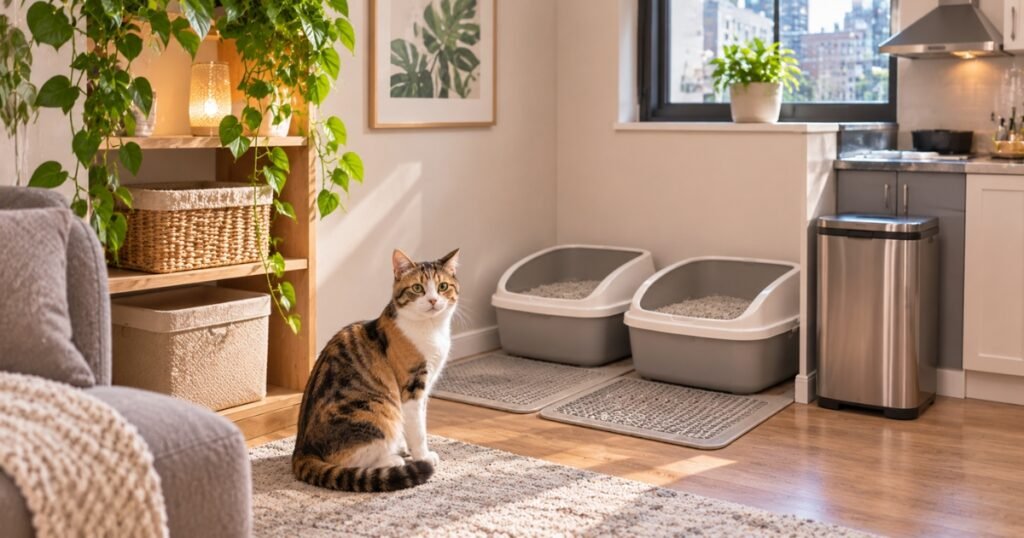
A litter box in a small apartment has no spare room to hide in, often no window near it, and nowhere discreet to put waste. If the bin itself has started holding the smell, stopping a trash can from smelling is a separate job worth doing first. Scooping frequency has to go up to compensate, because the same odor fills a much smaller volume of air.
Practical moves that work in tight spaces:
If your only spot is a closet, remove the door or leave it permanently open.
With two or more cats, box count is usually the real answer and everything else is secondary. Cats also guard resources quietly, so a timid cat may be waiting until a box is already soiled, or avoiding it entirely.
Put boxes in different rooms rather than lining them up in a row. Two boxes side by side read as one box to a cat who is being blocked from it.
Scoop every box at the same time so none quietly falls behind.
If you want the wider picture on waste handling, the environmental impact of pet waste explains why sealing matters beyond your own nose.
Usually because the clumps are gone but the base litter underneath is saturated, or the plastic box itself has absorbed urine through claw scratches. Try a full litter dump, wash the empty box with unscented soap and water, and dry it completely before refilling. If a clean, dry, empty box still smells, the box has reached the end of its life and needs replacing.
Not usually for you, and not at all for your cat. A hood keeps odor concentrated inside the box instead of removing it, which means your cat walks into a much stronger smell every visit. Some cats accept it; others start avoiding the box entirely, which is a far bigger odor problem. If you use a hood, scoop more often and change the carbon filter regularly.
No. Many essential oils are toxic to cats, and cats are more vulnerable to them than dogs are, so skip the homemade natural deodorizer recipes you find online. That includes diffusing oils as a room scent in a household with cats unless your vet has specifically cleared it. Plain baking soda mixed into the bottom layer of litter is the low-risk option.
Litter box odor control is a habit problem before it is a shopping problem. Scoop twice a day, add a box, open up the airflow, and seal scooped waste immediately, and most homes stop smelling within a week without buying anything beyond litter and bags. If the smell changed suddenly rather than building up slowly, call your vet before you change anything else.

Alec Beaton is the Founder & Inventor of Pooch Approved Products and GoGo Stik®. Inspired by real-life pet parenting, he turns everyday cleanup challenges into simple, innovative solutions that make life better for pets and their people.
Comparing dog poop scooper bundles? Here is what is in all five GoGo Stik sets, who each one suits, and when a single tool is the smarter buy.

A puppy potty training schedule that works as a daily rhythm: 7 practical rules for timing, night trips, accidents, pads and apartment living.
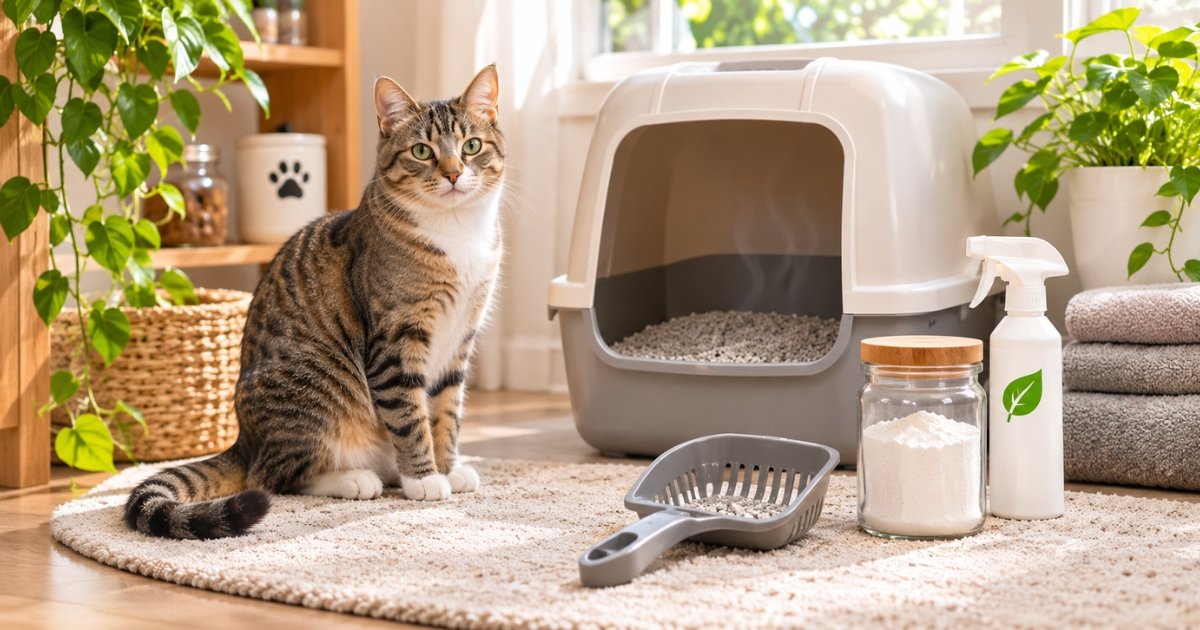
Litter box odor control starts with free fixes, not sprays. 8 ranked steps to stop litter box smell in apartments and multi-cat homes, cheapest first.