



Pooper Scoopers
Dog Poop Vacuum: Worth It? 7 Real Questions to Ask
Can a dog poop vacuum really clean your yard? Here is how suction, powered scoopers and yard robots work, what they struggle with, and what to buy.
 Skip to content
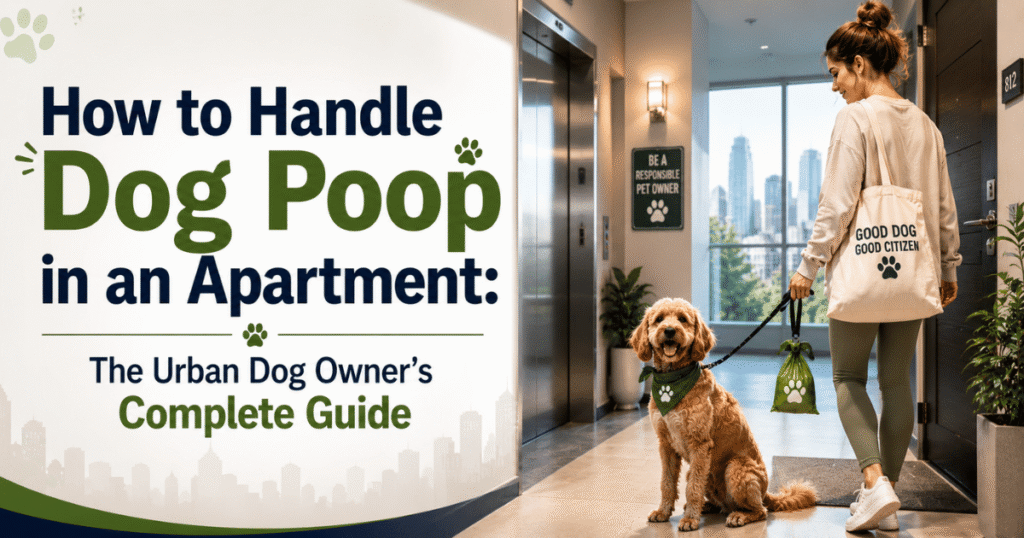
Dog Poop in an Apartment :Owning a dog in an apartment is one of the most rewarding things a city dweller can do. It is also, logistically speaking, one of the more challenging. No backyard. No quick dash outside. No hose. Every bathroom trip means a leash, an elevator, a lobby, and a walk to a patch of sidewalk or park in rain, snow, heat, and everything in between.
And then there is the waste management question that nobody tells you about before you get an apartment dog: how do you actually handle this every single day without making your apartment smell, annoying your neighbors, violating your lease, or falling foul of HOA rules?
This guide covers everything the right disposal methods, odor control in small spaces, elevator etiquette, leash-up routines for city walks, building rules, and the tools that make apartment dog ownership genuinely manageable.
Quick Answer: In an apartment, always bag waste immediately using thick leak-proof bags, tie tightly, and dispose in your building’s designated outdoor waste receptacle or nearest public bin. Never in indoor trash, elevator bins, or recycling. Use pet wipes for quick indoor cleanups and odor control between walks.
Dog waste management looks completely different in an apartment versus a house with a yard. Here is what you are actually dealing with as an urban dog owner:
No Immediate Outdoor Access: Every bathroom trip requires full prep leash, bags, shoes, elevator. There is no stepping outside quickly. This means planning, routine, and always being stocked with supplies.
Shared Spaces: Lobbies, elevators, hallways, and common areas mean any accident or poorly-managed waste affects neighbors, building management, and your standing in the building. A single incident can generate a formal complaint.
Limited Disposal Options: You cannot just leave a bag by the back door to deal with later. In apartments, every bag needs to go directly to an appropriate disposal point — and there may be rules about which bins are acceptable.
Odor in Enclosed Spaces: A bag sitting in a small apartment trash can smells very different from the same bag in an outdoor bin. Odor management is a genuine concern in studio and one-bedroom apartments especially.
Lease and HOA Rules: Most apartment leases and HOA agreements have specific pet waste clauses — and violations can result in fines, formal notices, and in extreme cases, eviction proceedings.
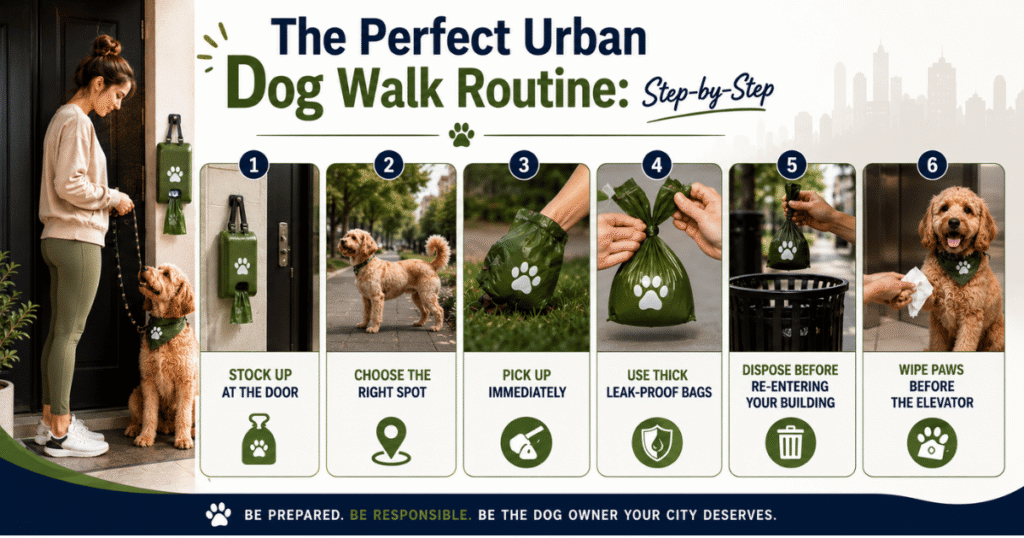
Building a consistent pre-walk and post-walk routine is the foundation of successful apartment dog ownership. Here is the system that works:
Keep a bag dispenser mounted near your front door or clipped to your leash permanently. Before leaving, confirm you have at least 3 bags per walk for a large dog, 2 for a medium dog. Never leave without bags — this is the urban dog owner’s cardinal rule.
Identify 2 to 3 consistent outdoor spots within easy walking distance where your dog can reliably go. Consistency helps your dog develop a bathroom routine and reduces the time you spend outside waiting. Building a reliable outdoor spot reduces accidents and emergency situations.
In a city environment, walking away from waste even briefly is socially unacceptable and legally risky. Pick up immediately after your dog goes. This is also the only way to stay compliant with virtually every urban ordinance.
In apartment settings, the bag you choose matters more than it does in a suburban yard. A thin bag that leaks in your hand, on the elevator floor, or in the lobby is a significant problem. Use heavy-duty, leak-proof bags with extended tie handles every single time.
Whenever possible, dispose of the sealed waste bag in an outdoor public bin before going back inside. Most city blocks and parks have receptacles along the route. This eliminates indoor odor entirely.
Use dog paw wipes before entering the elevator or lobby. This removes outdoor contaminants and shows respect for shared spaces — which matters enormously in apartment buildings where neighbors share every surface.
This is the question most new apartment dog owners get wrong. Here is the correct hierarchy of disposal options:
Best Options — In Order of Preference:
Acceptable But Not Ideal:
Never Acceptable:
Building Rule Tip: Check your lease agreement and building pet policy for specific disposal instructions. Some buildings designate exact bins for pet waste. Using the wrong bin can result in a formal notice even if the bag was properly sealed.
Odor is the number one concern for apartment dog owners — and the good news is it is entirely manageable with the right system. Here is what actually works:
Use Scented Heavy-Duty Bags: A citrus-scented bag neutralizes odor from the moment of pickup. This matters most when you are carrying a bag through a lobby, elevator, or hallway before disposal. Gogostik’s Heavy Dootie Plus bags with citrus scent are built exactly for this scenario.
Dispose Outdoors Immediately When Possible: The simplest odor solution is not bringing the bag inside at all. Plan your walks to pass a public bin before returning home. A 30-second detour on every walk eliminates indoor odor entirely.
Use a Carbon Filter Trash Bin for Indoor Disposal: If you must dispose indoors, invest in a trash can with an activated carbon filter lid. These are specifically designed to contain pet waste odor and make a dramatic difference compared to a standard open bin.
Empty Indoor Trash Daily or Every Other Day: Dog waste should never sit in indoor trash for more than 24 to 48 hours. Build daily trash emptying into your routine during warmer months especially.
Use Pet Wipes for Quick Cleanups: Gogostik’s Heavy Dootie Pet Wipes handle the secondary odor source that apartment owners often overlook — the dog themselves. A quick wipe-down of paws, rear end, and coat after outdoor trips significantly reduces indoor odor between baths.
Enzyme-Based Odor Sprays: For any indoor accidents, enzyme-based cleaners break down the waste compounds that cause lingering odor. Standard cleaning products mask the smell temporarily — enzyme cleaners eliminate it.
In apartment living, your neighbors notice everything. Good elevator and common area etiquette is not just polite — it protects your relationship with management and your building community. Here are the key rules:
Building Reputation Matters: In apartment buildings, your reputation as a responsible dog owner directly affects your lease renewal, your neighbor relationships, and your ability to keep pets in the building long-term. The small effort of consistently clean, considerate management pays significant dividends.
Before you bring a dog into an apartment, read your lease and building pet policy carefully. Here is what to look for:
Designated Waste Areas: Many buildings designate specific outdoor areas where dogs must go. Using non-designated areas — even outdoor ones — can result in a formal violation.
Required Disposal Bins: Some buildings require all pet waste to go in a specific bin. Using general trash receptacles when a pet-specific bin is provided may violate building rules.
Proof of Pickup: Some buildings with outdoor cameras actively monitor for owners who walk away without picking up. Footage can be used to issue formal notices.
DNA Registration Programs: As noted in our Dog Poop Laws by State guide, some buildings require DNA swabs from all resident dogs at move-in. Waste found in unauthorized areas is DNA tested and matched to the owner. Fines for confirmed violations typically run $200 to $500 per incident.
Lease Termination Clauses: Repeat pet waste violations can trigger lease termination provisions in many buildings. This is not theoretical — it does happen in buildings with strict pet policies.
If you are unclear on any building rule, contact your building management or HOA board in writing for clarification. Having the rules in writing protects you as much as it holds you accountable.
Many apartment buildings limit the size of dogs allowed on the premises. If you have a large breed in an apartment — or are planning to get one — here is what changes about waste management:
Volume: A large dog produces significantly more waste than a small apartment dog. This means more frequent walks, more bags per walk (plan for 3 minimum), and more frequent outdoor disposal runs to avoid indoor odor buildup.
Walk Frequency: Large breeds need at least 3 outdoor bathroom trips per day minimum — morning, midday if possible, and evening. Without adequate outdoor time, indoor accidents become more likely.
Bag Quality: In an apartment context, a bag that tears or leaks is not just inconvenient — it is a potentially serious situation in a lobby, elevator, or hallway. Heavy-duty, extra-large, 100% leak-proof bags are non-negotiable for large breeds in urban settings.
Paw Wipe Discipline: Large dogs cover more ground, step in more, and track in more on their bigger paws. A consistent post-walk paw wipe routine is even more important for large breeds in apartments than for small dogs.
Building Relationship: Large dog owners are subject to more scrutiny in apartment buildings. Being visibly responsible — always having bags, always wiping paws, always cleaning up immediately builds the goodwill that allows large breeds to stay in buildings long-term.
Gogostik for Apartment Life: Gogostik’s Heavy Dootie Bags and Pet Wipes are designed exactly for urban large-breed owners who cannot afford a torn bag in an elevator or a smelly indoor trash situation. Bulk packs mean you are always stocked. Shop at gogostik.com with free shipping on orders over $50.
Here is everything you need to handle dog waste cleanly and confidently in an apartment:
| Item | Recommendation | Why It Matters in an Apartment |
| Heavy-Duty Waste Bags | Gogostik Heavy Dootie Bags | Non-negotiable. Extra-large, extra-thick, 100% leak-proof with EZ-tie handles. For large breeds in apartments, bag quality is the single most important factor. |
| Bag Dispenser | Any quality clip-on dispenser | Mount near your front door and keep one clipped to your leash permanently. You should never leave your apartment without bags. |
| Pet Wipes | Gogostik Heavy Dootie Pet Wipes | For paw cleaning at the elevator, quick body wipe-downs, and any minor indoor cleanup. Citrus scent neutralizes odors. |
| Carbon Filter Trash Can | Any activated carbon lid bin | Essential if you dispose indoors. Eliminates the odor that standard bins cannot contain. |
| Enzyme Cleaner Spray | Nature’s Miracle or similar | For any indoor accidents. Standard cleaners mask odor temporarily — enzyme cleaners eliminate it at the molecular level. |
| Portable Poop Bags Holder | Small pouch or key clip holder | For walks, hiking, and travel when you don’t want a full dispenser. Always have a backup supply somewhere on your person. |
Handling dog waste in an apartment is one of those things that sounds harder than it is once you have a system. The right bags, a consistent walk schedule, the habit of outdoor disposal before re-entering the building, and a set of pet wipes by the door — these four things solve 95% of urban dog waste challenges.
The dog owners who struggle are the ones who treat it as an afterthought rather than a routine. Build the habits early, invest in quality tools, stay on the right side of your building’s rules, and apartment dog ownership becomes the joy it should be not a daily logistical headache.
Get the tools that make it easy. Gogostik’s Heavy Dootie Bags and Pet Wipes are built for exactly this kind of daily urban use. Shop at gogostik.com with free shipping on orders over $50.
The best option is outdoor public bins or your building’s designated pet waste station before re-entering. If you must dispose indoors, use a sealed, tight-lid trash can with a carbon filter and empty it every 24 to 48 hours.
Most jurisdictions advise against flushing dog waste due to its impact on sewage systems and water treatment facilities. The bag should never be flushed. Some areas allow flushing the waste itself without the bag, but check your local regulations first.
Use scented, sealed heavy-duty bags, dispose outdoors before re-entering whenever possible, use a carbon filter indoor bin if needed, wipe your dog’s paws and coat with pet wipes after walks, and use enzyme-based sprays for any indoor accidents.

Alec Beaton is the Founder & Inventor of Pooch Approved Products and GoGo Stik®. Inspired by real-life pet parenting, he turns everyday cleanup challenges into simple, innovative solutions that make life better for pets and their people.
Can a dog poop vacuum really clean your yard? Here is how suction, powered scoopers and yard robots work, what they struggle with, and what to buy.
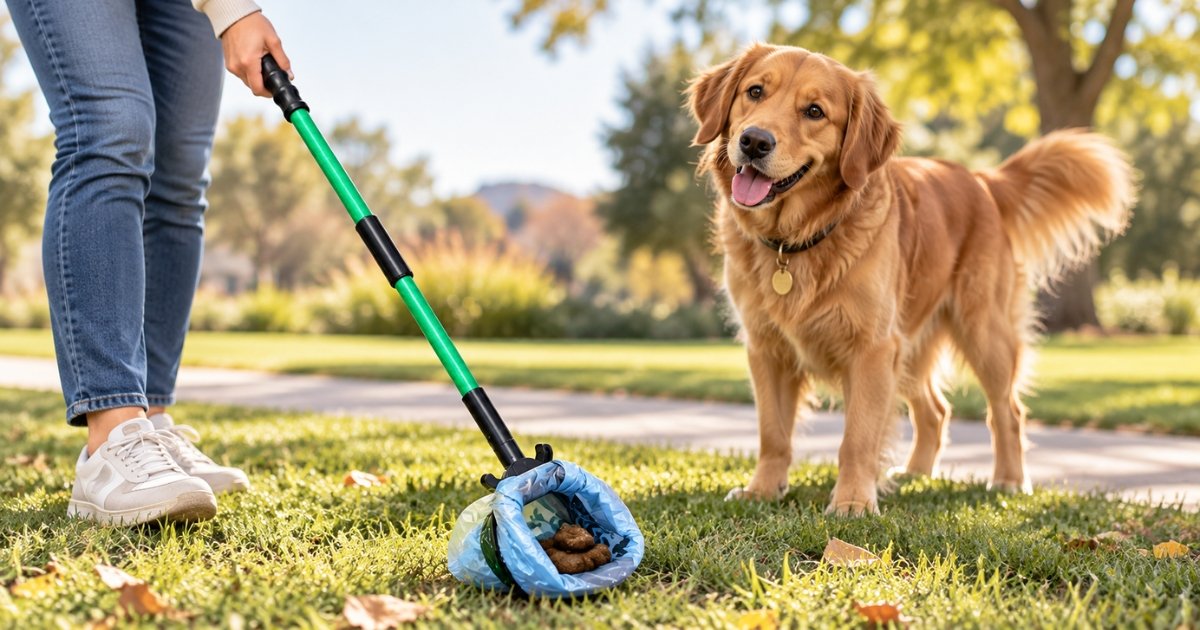
A claw pooper scooper is cheap and one-handed, but it fails on soft stool and gravel. Here are 5 checks before you buy, plus a cleaner alternative.
How long can a dog go without pooping? Learn normal timeframes, warning signs of constipation, and when to call the vet. Clear, vet-backed answers.