
General
How to Get Dog Poop Off Shoes (Fast, No Gagging)
Learn how to get dog poop off shoes fast without gagging. Step-by-step cleaning for treads, suede & canvas, plus odor-killing tips that actually work.
 Skip to content
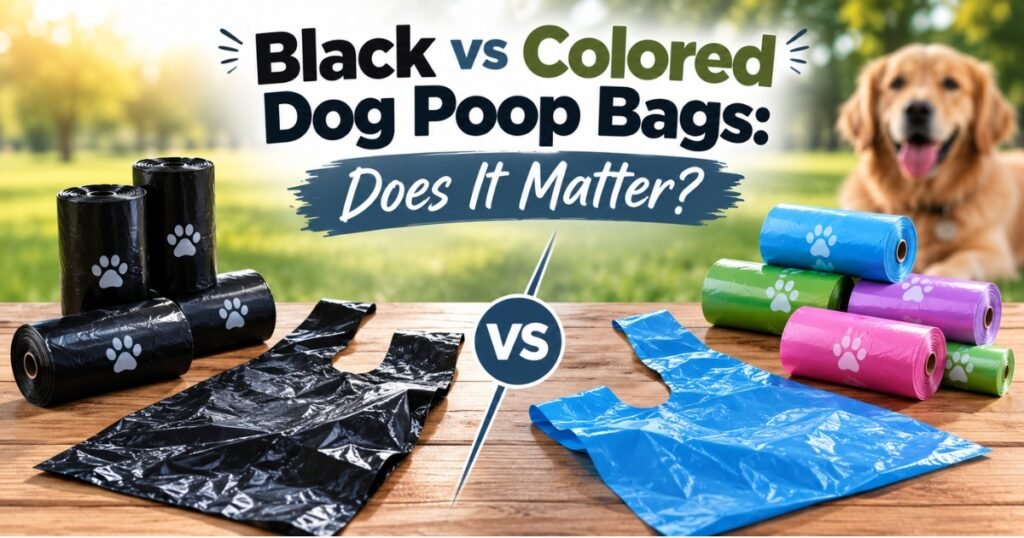
Stand in the pet aisle for two minutes and you’ll notice something: most dog waste bags are black. But there are also blue, green, pink, lavender, and clear-ish rolls sitting right next to them. So do black dog poop bags actually perform better, or is the color just marketing?
Short answer: color matters less than three other things — opacity, thickness, and how you get the waste into the bag. But it does matter a little, and in a few specific situations it matters a lot. Here’s the honest breakdown after years of daily yard cleanup and thousands of scoops.
Black became the default for practical and manufacturing reasons, not because someone decided it looked classier hanging off a leash.
Colored bags aren’t just decoration. Lighter or brighter colors are easier to see — which sounds trivial until you’re doing a nighttime sweep of a dark lawn and can’t find the bag you set down. Bright bags also help in multi-dog households where you’re color-coding by dog for health tracking, and they show up better in a cluttered garage or car trunk. Some owners deliberately use a bright bag so they’ll notice it and not leave it behind on the trail, which is the single most common form of “I picked it up” that doesn’t actually count.
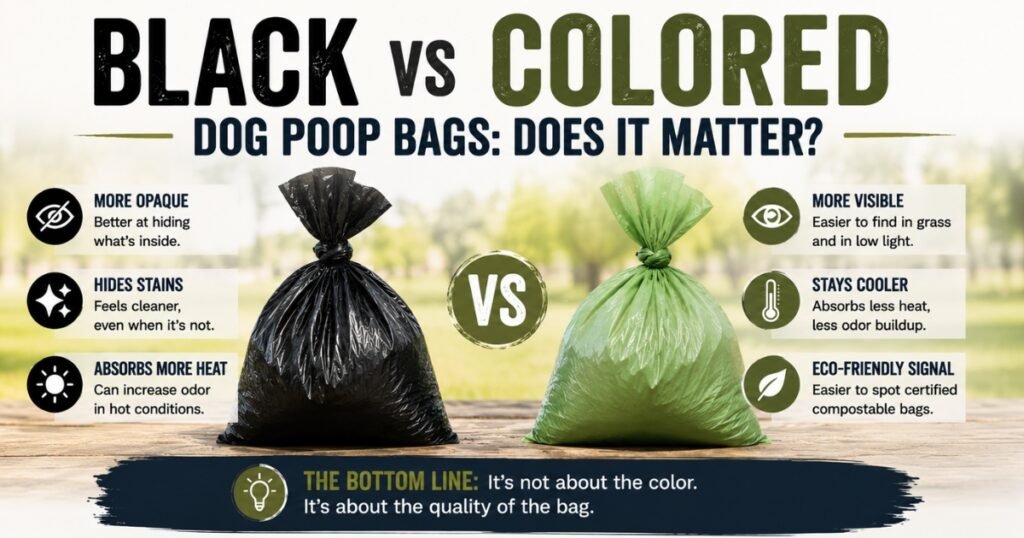
Here’s how the two stack up on the factors that affect real-world use. Notice that four of five come down to how the bag is manufactured, not what shade it is.
None of the above. Bag failures come down to mil thickness (gauge), seam quality, and size. A 0.5-mil bag will puncture on a stick or a frozen mass regardless of color. A well-made 0.7-to-1.0-mil bag with a heat-sealed gusseted bottom holds up to a large dog’s output and to being knotted and swung.
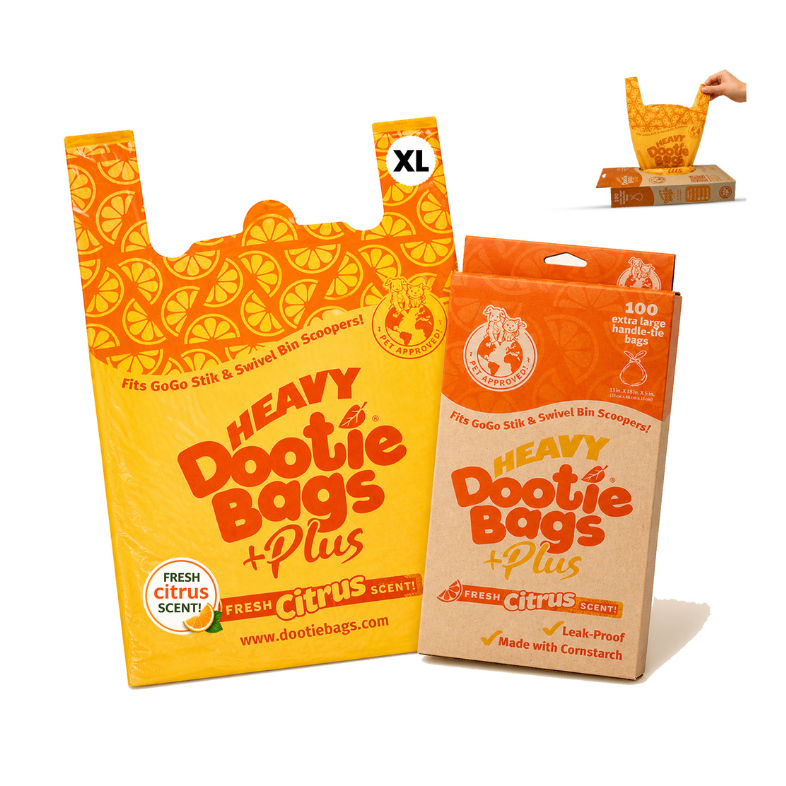
If you have a Great Dane, a Mastiff, or three dogs and one weekly yard sweep, prioritize thickness and dimensions over everything else. Our HEAVY Dootie Bags in the XP Pro 100-count kit were spec’d around large-breed volume for that exact reason.
Scented bags — usually lavender or baby powder — are a separate axis from color, but they get bundled into the same buying decision. Here’s the practical experience: scent masks nothing once a bag is warm. It combines. Most owners who switch to scented bags switch back within a roll or two.
The exceptions are worth naming. Scent helps if you’re carrying a tied bag for a long stretch before finding a bin, and it helps in an apartment where the bag rides an elevator with you. Otherwise, an unscented, thicker, fully knotted bag does more for odor control than any fragrance additive.
This is where the color conversation gets genuinely important, and where a lot of marketing gets slippery.
Black plastic is notoriously hard for automated recycling facilities to sort, because the optical scanners used at material recovery facilities rely on reflected near-infrared light — and carbon black absorbs it. That’s a well-documented problem across black plastic packaging generally. For poop bags it’s largely academic, since the EPA’s recycling guidance is clear that bags containing waste don’t belong in curbside recycling regardless of color. But it’s a fair reason to be skeptical of a black bag marketed as “recyclable.”
Watch the wording. “Biodegradable” is largely unregulated and, in a sealed landfill, close to meaningless — there isn’t enough oxygen for meaningful breakdown. “Certified compostable” means the bag met a standard like ASTM D6400 or was verified by a third party such as BPI. Even then, it only composts in a facility that accepts pet waste, and most municipal programs don’t.
The genuinely useful move isn’t chasing a label. It’s using fewer, better bags. One thick bag that holds a full yard’s worth beats four thin bags that each need doubling. That’s the quiet environmental case for a scooper: you’re not grabbing a fresh bag for every single pile.
Here’s the original insight from doing this a few thousand times. The most common bag failure isn’t the bag — it’s the hand-inversion method. When you turn a bag inside out over your hand, three things happen: the bag stretches thin over your knuckles, your grip concentrates force at one point, and you’re feeling for the pickup by touch, which is how sticks and gravel end up puncturing the film.
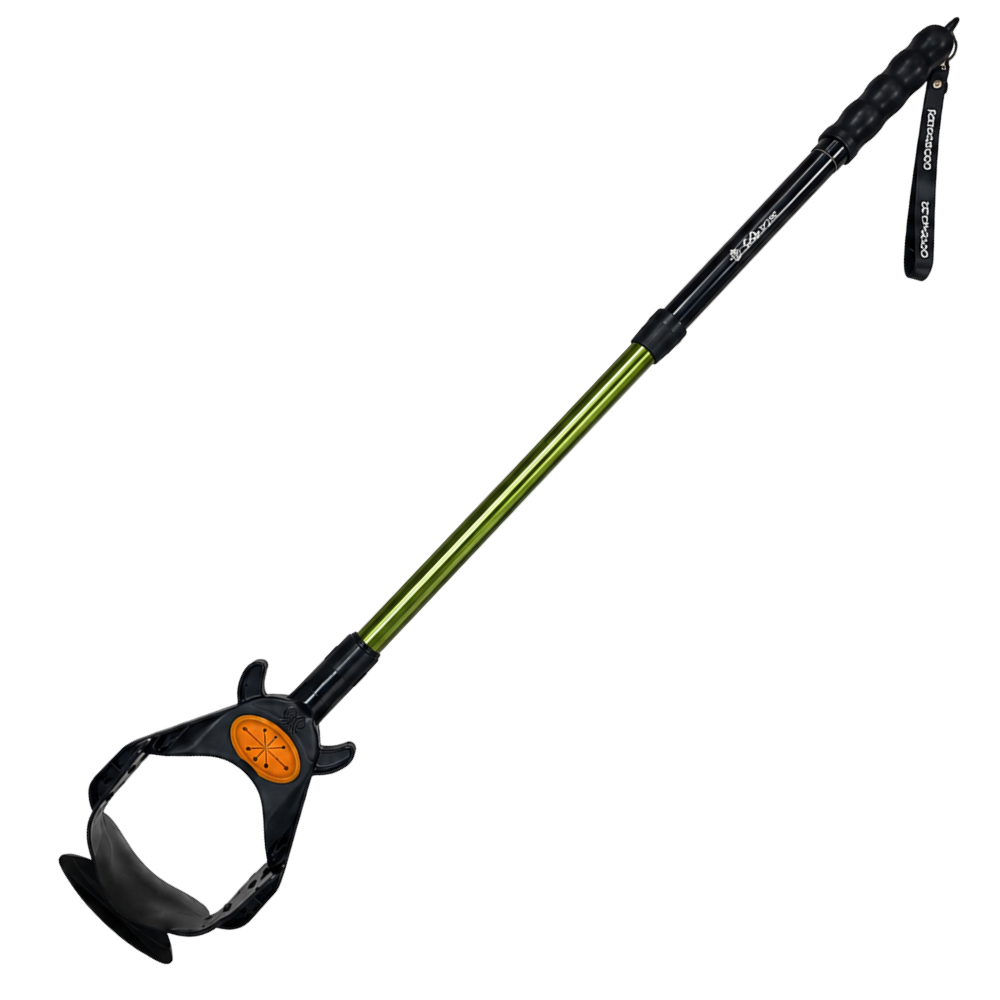
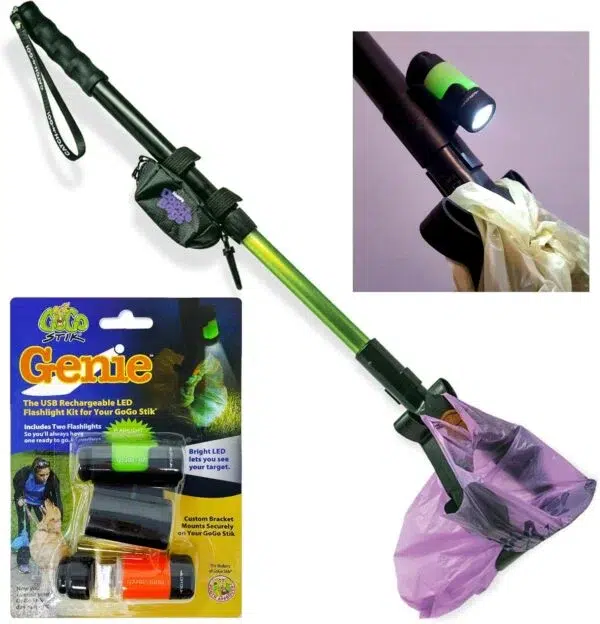
Take your hand out of the equation and even a mid-grade bag holds fine. That’s the whole design premise behind a no-touch scooper — the bag stays in its natural shape, gets loaded from above, and never bears your grip pressure.
A couple of specifics from real use:
No — color and thickness are independent. Black bags appear more substantial because they’re fully opaque, but a 0.5-mil black bag is just as puncture-prone as a 0.5-mil blue one. Check the stated mil rating or bag dimensions rather than judging by shade. If the listing doesn’t state a thickness, that’s usually a sign it’s thin.
Black absorbs more solar radiation, so a bag sitting in direct sun or a hot car heats up faster than a light-colored one. Warmer contents release more volatile odor compounds. It’s not the bag material — it’s temperature. Store your roll in the shade and bin tied bags promptly rather than letting them ride around in the trunk.
In most US municipalities on a sewer system, yes — unbagged, into a toilet. Never flush the bag itself, even a compostable one, and never flush pet waste if you’re on a septic system, which isn’t designed for it. Check your local water utility’s guidance first, because rules vary by district.
Yes, but far fewer. A no-touch scooper collects multiple piles per bag during a yard sweep, so a 100-count roll lasts most single-dog households months rather than weeks. The scooper also means the bag never bears your grip pressure, which is where most punctures start.
Black dog poop bags earn their popularity — better opacity at a lower gauge, better UV stability, and higher recycled content without the blotchiness. Colored bags win on visibility and on verifying a certified compostable product. But neither color choice will save you from a thin bag or a bad pickup technique.
Buy for thickness and size, keep your hand out of the bag, and double-knot. Ready to upgrade your setup? Browse the full range of no-touch scoopers and HEAVY Dootie Bags at the GoGo Stik shop, or start at the GoGo Stik homepage to see how the patented scoop-and-bag design works.

Alec Beaton is the Founder & Inventor of Pooch Approved Products and GoGo Stik®. Inspired by real-life pet parenting, he turns everyday cleanup challenges into simple, innovative solutions that make life better for pets and their people.
Learn how to get dog poop off shoes fast without gagging. Step-by-step cleaning for treads, suede & canvas, plus odor-killing tips that actually work.
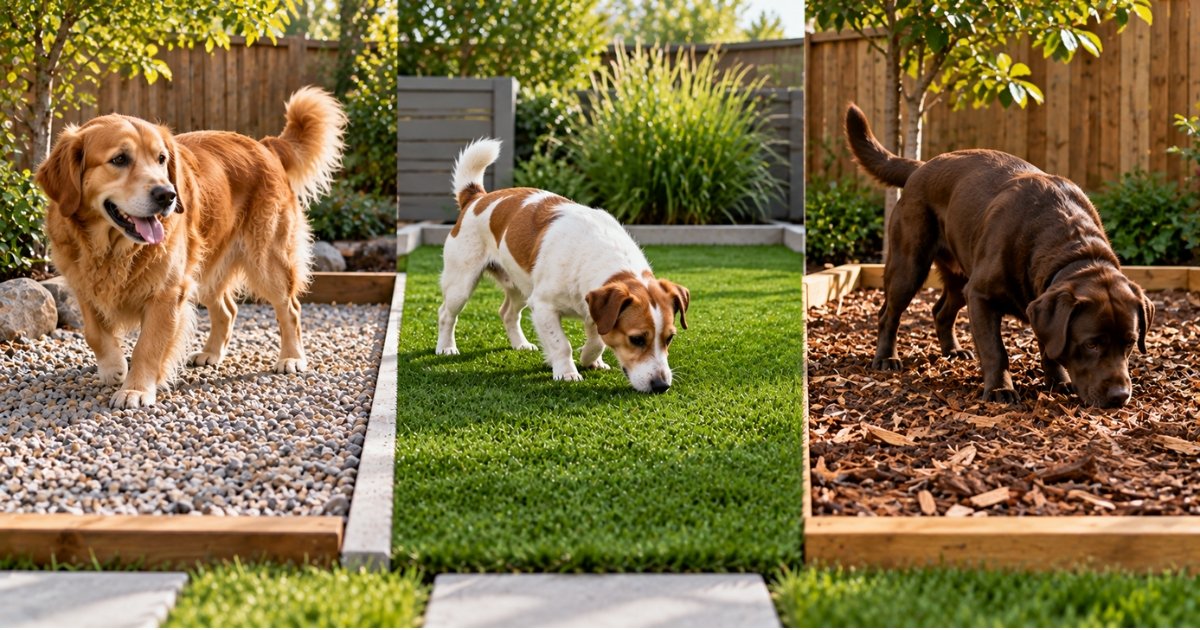
Compare the best dog potty area ideas—pea gravel, artificial turf, and mulch—for drainage, cleanup, and cost. Find the right pick for your yard in 2026.
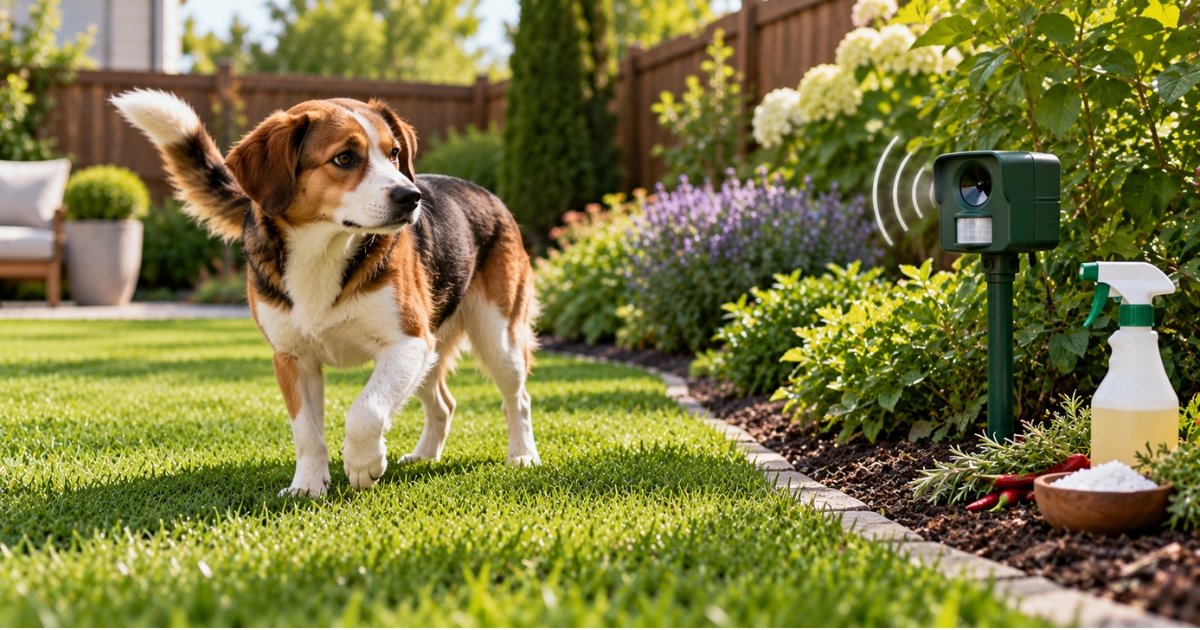
Looking for a dog repellent for lawn that’s safe and effective? See what actually works, what’s cruel to avoid, and humane fixes that keep grass green.