If your senior dog is struggling with mobility or having more frequent accidents, you might wonder if pee pad training is still possible. The good news? You can absolutely train an older dog to use pee pads. In fact, doing so is often one of the kindest things you can do for an aging companion.
Whether you’ve recently adopted a senior dog, your longtime friend faces mobility challenges, or you’re living in an apartment with an older pup, pee pads offer a practical solution. As a result, both you and your dog can enjoy a better quality of life.
Why Older Dogs May Need Pee Pads
There’s no shame in using pee pads for senior dogs. Instead, they’re a compassionate tool that addresses real challenges aging dogs face every day.
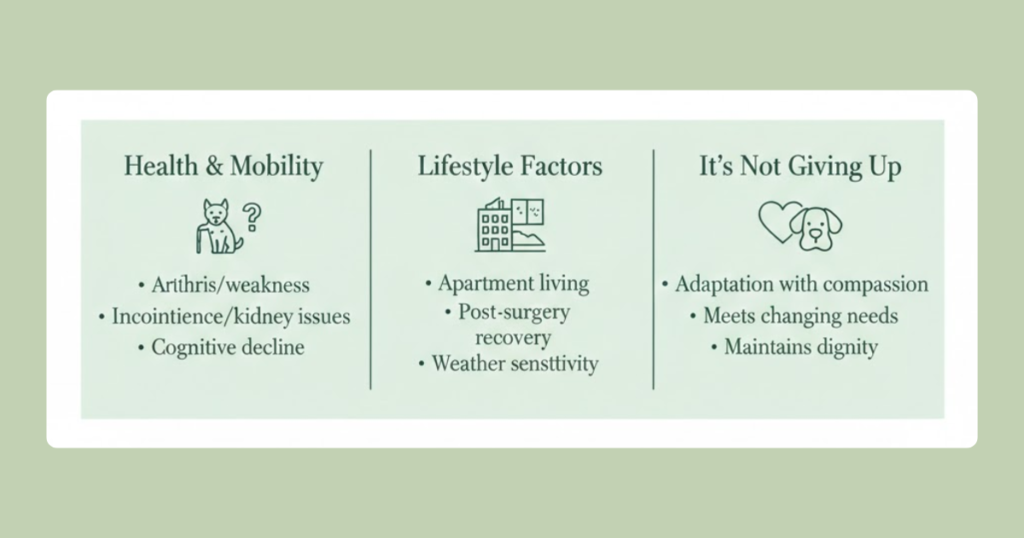
Common Reasons Senior Dogs Benefit from Pee Pads
Mobility issues stand out as a primary concern. Arthritis, hip dysplasia, or general weakness can make navigating stairs or getting outside difficult for older dogs.
Medical conditions also play a significant role. Incontinence, kidney disease, diabetes, and cognitive decline all affect bladder control in senior pets.
Recovery periods require indoor solutions too. After surgery or during illness, outdoor access often isn’t possible or safe.
Apartment living presents unique challenges. Limited outdoor access or long elevator rides become too demanding for aging dogs.
Weather sensitivity affects seniors more than younger dogs. Extreme temperatures can be dangerous for dogs with compromised health.
Pee pads aren’t a sign you’re giving up on your dog. On the contrary, they show you’re adapting to meet your dog’s changing needs with compassion.
Setting Up the Right Environment
Success starts with creating the perfect setup for your older dog. Therefore, you’ll want to pay attention to several key factors.
Choose the Right Location
First, pick a quiet spot that’s easily accessible and away from heavy foot traffic. Second, ensure good footing by avoiding slippery floors. Third, keep the location consistent since moving the pad around creates confusion.
If your dog has limited mobility, place pads near their favorite resting spots. For multi-level homes, consider adding pads on each floor so your dog doesn’t need to climb stairs.
Select Appropriate Pee Pads
When choosing pads for senior dogs, look for these features:
High absorbency for larger amounts
Non-slip backing with adhesive tabs
Odor control technology
Appropriate size for less-precise aim
Keep pads away from food and water bowls because dogs naturally avoid eliminating near where they eat. Good lighting helps too, so your senior dog can easily see the pad.
Step-by-Step Training Method
Training an older dog requires extra patience, but the process itself is straightforward. Here’s how to do it effectively.
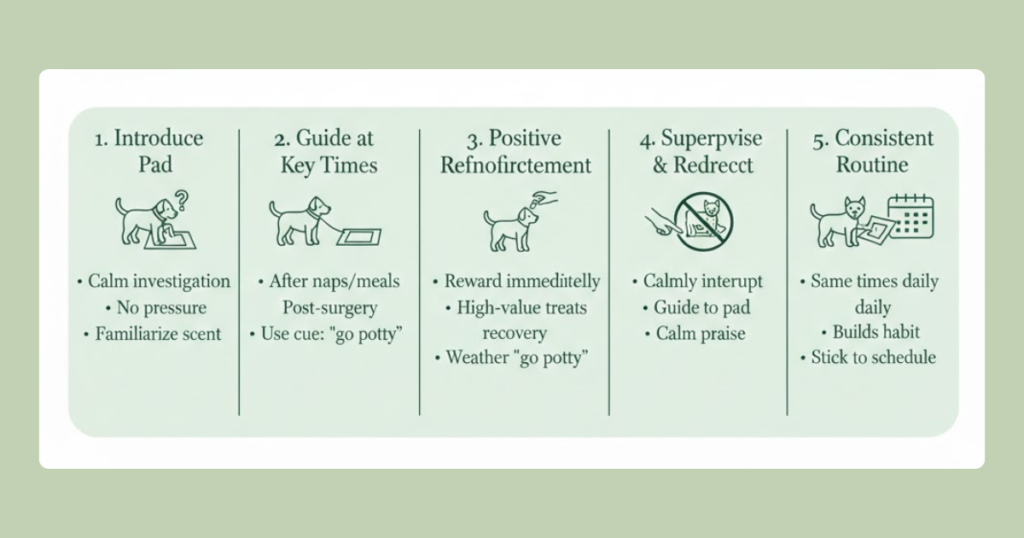
Step 1: Introduce the Pad Calmly
Place the pad in your chosen location and let your dog investigate without any pressure. Give them time to sniff and become familiar with it.
Step 2: Guide Your Dog to the Pad at Key Times
Take your senior dog to the pad during these moments:
First thing in the morning
After meals (about 15-30 minutes later)
After waking from naps
Before bedtime
When you notice sniffing, circling, or restlessness
Use a consistent verbal cue like “go potty” each time.
Step 3: Use Positive Reinforcement Immediately
The moment your dog uses the pad correctly, reward them with high-value treats and calm praise. Timing matters here—reward within seconds for the best results.
Step 4: Supervise and Redirect Gently
If you catch your dog starting to eliminate elsewhere, calmly interrupt and guide them to the pad. Never punish accidents because this creates anxiety and confusion in senior dogs.
Step 5: Establish a Consistent Routine
Take your dog to the pad at the same times each day. Consistency builds the habit faster than anything else, so stick to your schedule.
Troubleshooting Common Challenges
Even with the best preparation, you may encounter some obstacles. Here’s how to address the most common issues.
When Your Dog Avoids the Pad
If your dog won’t use the pad, try a different location that’s quieter and more private. You might also test different pad brands or textures. Some owners use attractant sprays, though some dogs dislike them. For dogs with severely limited mobility, placing multiple pads throughout your home can help.
When Use Is Inconsistent
Inconsistent use often improves when you increase the frequency of guided pad visits. Make sure you’re maintaining routine consistency too. Watch for medical issues that might cause sudden urgency, and consult your vet if problems persist.
When Your Dog Prefers Going Outside
Many senior dogs prefer outdoor elimination because that’s what they’ve always known. Continue outdoor breaks while introducing pads as a backup option. Start using pads during bad weather to build the association. You can also place urine-soaked material on the pad initially to transfer the scent.
When Marking Behavior Continues
Marking may require belly bands in addition to pads. If your dog is intact, consult your veterinarian about whether neutering might help.
Special Considerations for Senior Dogs
Senior dogs have unique needs that require special attention during pee pad training.
Dogs with Cognitive Decline
Dogs with canine cognitive dysfunction may forget where the pad is or what it’s for. For these dogs, place multiple pads in different locations throughout your home. Use nightlights to help them find pads at night. Most importantly, focus on comfort rather than perfect compliance.
Supporting Dogs with Mobility Issues
Use ramps if your dog needs help reaching certain areas. Place pads in multiple rooms to reduce walking distance. Ensure clear, obstacle-free paths between resting spots and pads. Non-slip mats provide better stability and prevent falls.
Medical vs. Behavioral Issues
Incontinent dogs often don’t realize they’re urinating. As a result, you’ll find wet spots where they were sleeping. Behavioral issues, on the other hand, involve intentional elimination in inappropriate places. If you’re unsure which you’re dealing with, a veterinary exam can provide answers.
When to Consult Your Veterinarian
Contact your vet if you notice any of these signs:
Sudden changes in urination frequency or volume
Straining to urinate or signs of pain
Blood in urine
Excessive water drinking
Confusion beyond normal aging
Keeping Things Clean and Comfortable
Regular maintenance keeps your home fresh and your dog comfortable. Here are some best practices.
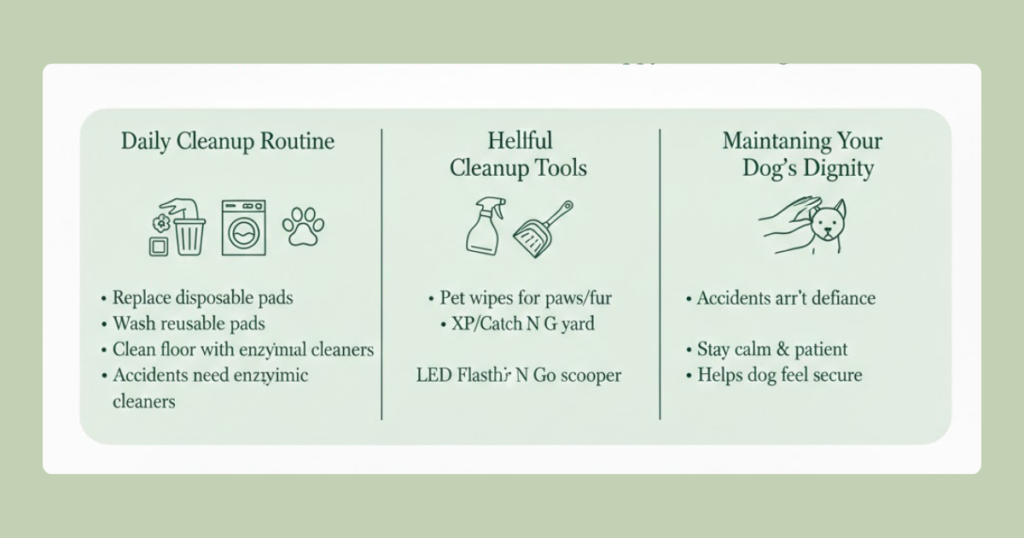
Daily Cleanup Routine
Replace disposable pads immediately after use to prevent odors. Wash reusable pads after each use with pet-safe detergent. Clean the floor beneath pads regularly with enzymatic cleaners. For accidents outside the pad area, enzymatic cleaners break down odor-causing compounds that regular cleaners miss.
Helpful Cleanup Tools
For quick cleanups around the pad area, pet wipes gently remove residue from paws or fur without harsh chemicals. This is especially helpful for aging skin that may be more sensitive.
For nighttime bathroom breaks, the LED Flashlight Scooper makes outdoor trips safer and easier.
Maintaining Your Dog’s Dignity
Accidents aren’t defiance—they’re often beyond your senior dog’s control. Approach cleanup calmly and without frustration. Your dog will sense your reaction, so staying patient helps them feel secure.
Alternatives to Pee Pads
Pee pads aren’t the only option for indoor potty solutions. Depending on your situation, you might consider these alternatives.
Indoor turf or sod trays mimic outdoor elimination more closely. They’re especially appealing to dogs with strong outdoor preferences who struggle to adapt to pads.
More frequent outdoor breaks sometimes solve the problem. If your schedule allows, adjusting walk times might help your senior dog hold it better.
Dog walkers or pet sitters provide professional help during long work days. This option works well if your dog still prefers going outside.
FAQs About Pee Pad Training Older Dogs
Can older dogs be trained to use potty pads?
Yes, older dogs can successfully learn to use pee pads with patience and consistency. While they may take longer than puppies, most senior dogs reliably use pads within 1-3 weeks of consistent training. The key is providing extra time, positive reinforcement, and accommodation for any physical or cognitive limitations.
How do I teach an adult dog to pee on a pad?
Start by placing the pad in a quiet, accessible location. Then, guide your dog to the pad at regular intervals—after meals, naps, and first thing in the morning. Use a verbal cue like “go potty” and immediately reward with treats and praise when they use it correctly. Never punish accidents; instead, calmly redirect to the pad.
What attracts dogs to pee pads?
Quality pee pads often contain attractant scents that encourage use. The absorbent texture also appeals to dogs’ natural preference for soft surfaces. Some owners enhance attraction by placing a small amount of their dog’s urine on the pad initially, though this isn’t always necessary with proper training.
Why is my old dog not using the pee pad anymore?
Several reasons could explain this change. Medical issues like urinary tract infections or worsening incontinence might be the cause. Cognitive decline can cause confusion about the pad’s purpose. Pain might prevent your dog from reaching the pad in time. Environmental changes could have disrupted their routine too. If a previously reliable dog stops using pads, consult your veterinarian first to rule out medical causes.
How long does it take to pee pad train a senior dog?
Most senior dogs learn to use pee pads consistently within 1-3 weeks. However, dogs with cognitive decline or severe mobility issues may take longer. Some dogs adapt within just a few days, while others need a month or more. Patience and consistency are your best tools for success.
Are pee pads better than taking my senior dog outside?
Neither option is universally better—it depends on your dog’s specific needs. Pee pads work best for dogs with severe mobility issues, incontinence, or those recovering from surgery. Many owners use both options together, with pee pads serving as a backup for outdoor elimination. This approach gives senior dogs flexibility while maintaining their outdoor routine when possible.
Supporting Your Senior Dog
Training an older dog to use pee pads is an act of love. It acknowledges your dog’s changing needs while maintaining their comfort and dignity. With patience, consistency, and the right tools, you can successfully help your senior companion transition to indoor pottying.
Every dog learns at their own pace, and senior dogs deserve extra grace. Celebrate small victories, stay consistent with your routine, and prioritize your dog’s comfort above perfection.
Your senior dog has given you years of loyalty and love. Now it’s your turn to support them through their changing needs with patience and practical solutions.
Your kitchen’s already loaded with safe, nutritious treats for your dog. Most owners don’t realize this. While you’re spending big money on commercial treats packed with preservatives, simple human foods for dogs sitting in your pantry cost less and offer way better nutrition. These wholesome options strengthen your bond with
The snoot challenge has taken social media by storm, and for good reason. It’s one of the cutest tricks your dog can learn, and the best part is that it’s surprisingly simple to teach. If you’ve been scrolling through Instagram or TikTok and wondering how those dogs gently rest their
Every dog owner has seen it — that bizarre, hilarious ritual your pup performs before doing their business. From dramatic spins to the classic “walk and drop,” dogs have some truly ridiculous pooping habits. Whether you own a tiny Chihuahua or a massive Great Dane, one thing is universal: dogs