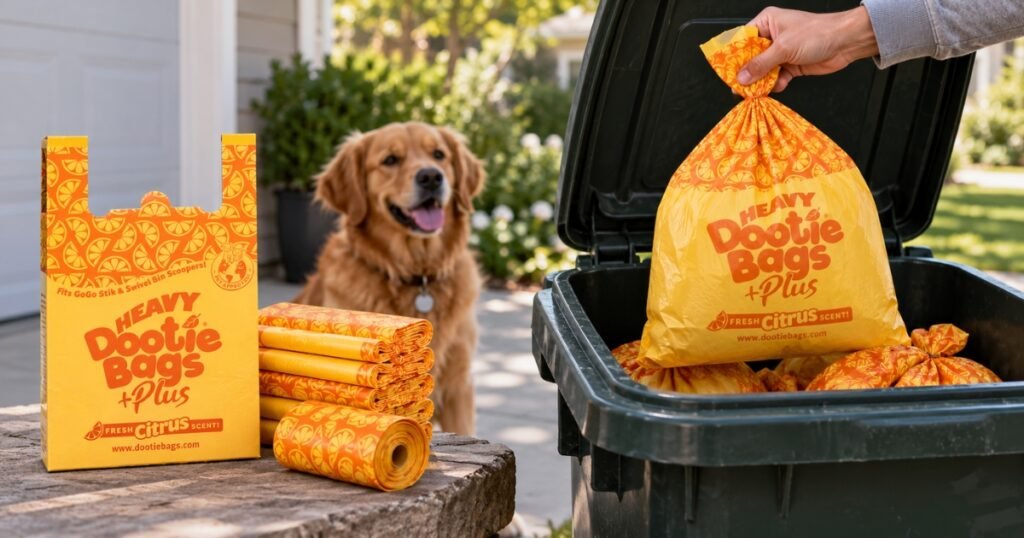
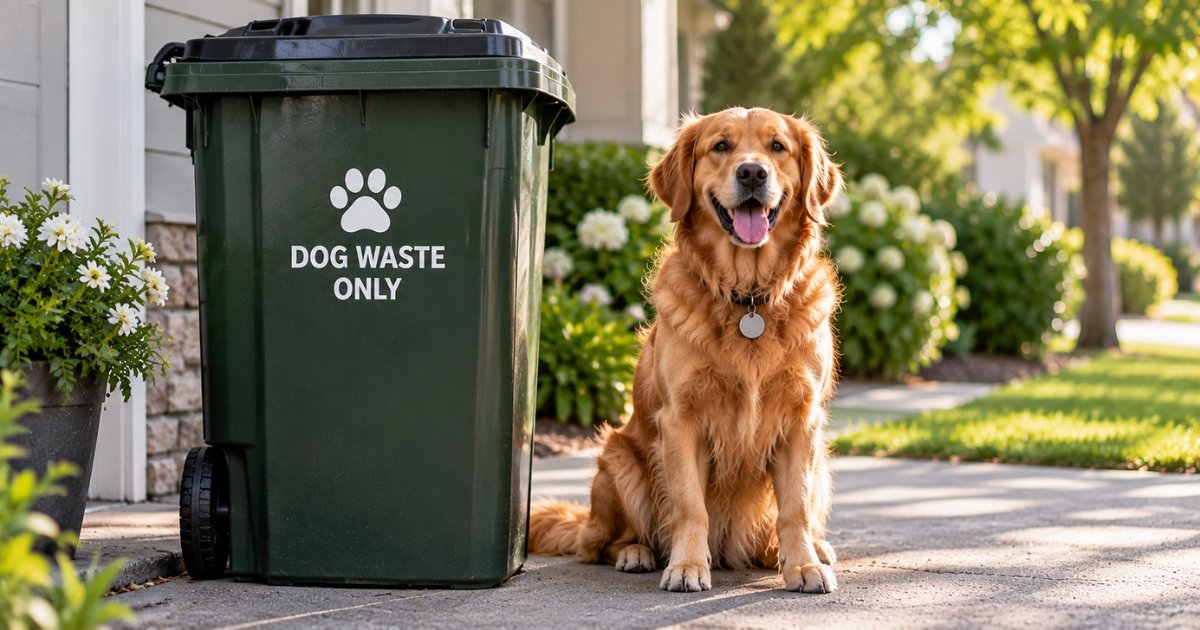
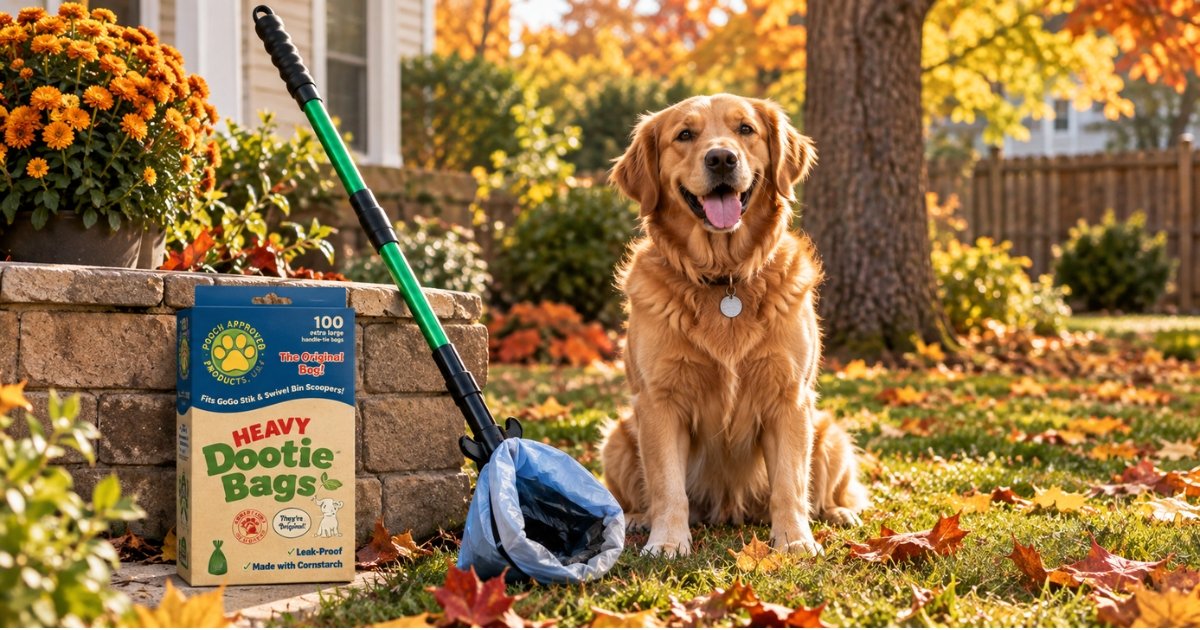
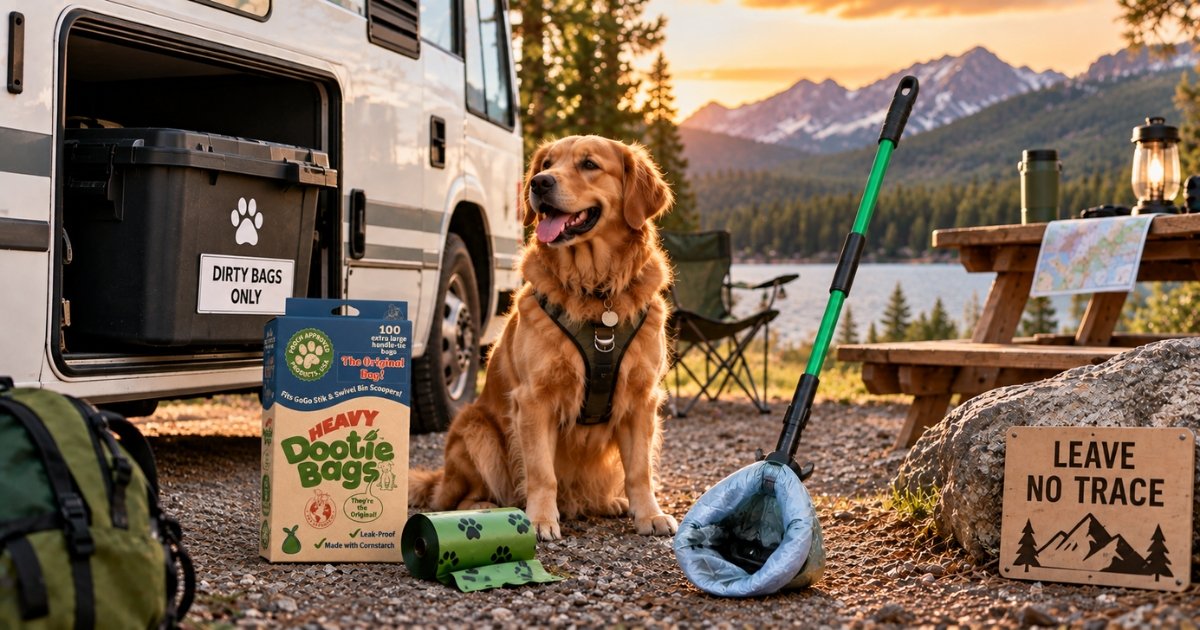
Bagged dog waste goes in a regular trash bin, the one headed for the landfill, not the recycling cart and not the green organics cart. Everything else is logistics: choosing a bag strong enough to survive the trip, and putting bins where you will actually use them instead of walking a warm bag through the house.
Here is how to set up dog poop bags and bins so cleanup takes seconds and trash day never smells like a crime scene.
Dog Poop Bags and Bins: How the Two Work Together
Most cleanup complaints trace back to a mismatch between the bag and the bin. A thin bag that tears on the way to the can turns a 10-second job into a mop job. A bin parked 40 feet from where your dog actually goes means the bag sits on the porch step for three days.
Think of it as one system with three stops:
Pickup – the bag you carry on a walk or use in the yard.
Holding – where bagged waste waits until trash day.
Disposal – the curbside cart your city collects.
If any stop is inconvenient, the whole system breaks down.
Choosing a Bag That Survives the Bin
Size and strength
A bag has to hold up twice: once when you pick up, and again when it lands on top of other trash or gets compacted in a truck. Thin bags are where leaks start.
Look for:
18 micron or thicker film rather than the flimsiest budget rolls
Real capacity – a 2.8 gallon bag gives big-dog owners room to tie off without smearing
Opaque color so nobody sees the contents in a shared bin
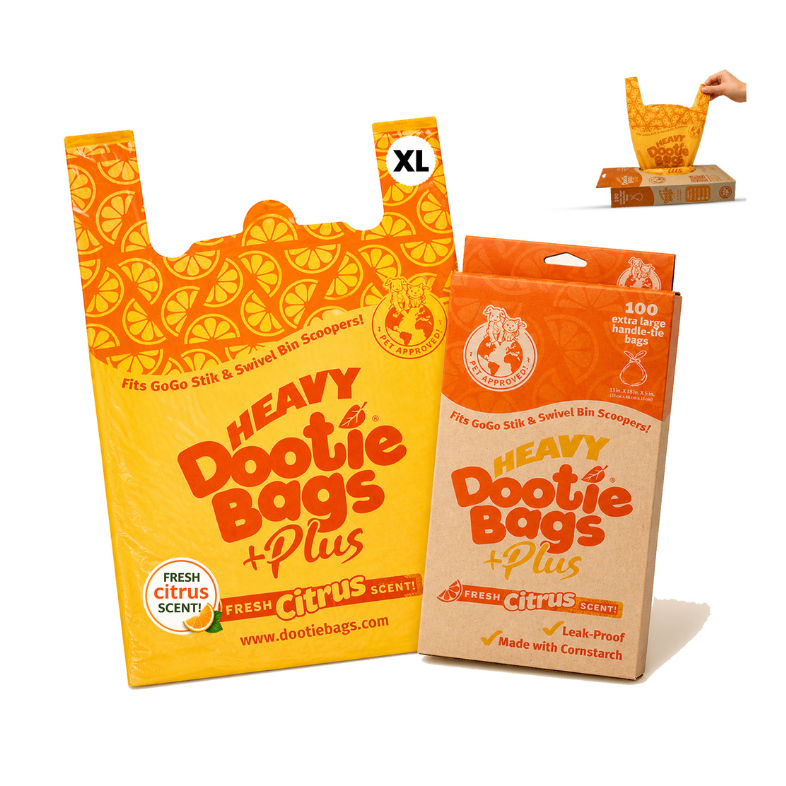
For large breeds, very large heavy duty poop bags are worth the small extra cost, because one blowout in a garage bin costs more time than a whole box saves in pennies.
Tie handles beat knots
A knotted roll bag is fine until your hands are cold. Handle-tie bags close with two loops and stay closed in a bin that gets jostled. If you carry bags on walks, easy tie handle bags on rolls fit a leash dispenser and still knot fast.
Which Bin Does Bagged Dog Waste Go In?
Bin type
Bagged dog waste?
Notes
Curbside household trash
Yes
The standard, accepted route in most US cities
Public park or street waste bin
Usually yes
Use marked pet waste stations first if available
Green organics / yard waste cart
No
Most programs ban pet waste; check your city’s rules
Curbside recycling
No
Contaminates the whole load
A neighbor’s bin
Ask first
The fastest way to start a dispute
Rules vary by city and county, so check your waste hauler’s website once and you are set for good. If you compost or your area has an organics program, read up on whether poop bags belong in the green bin before you assume.
Public bins on walks
Drop the bag in, do not set it beside the can, and do not stuff a dripping bag into an already overflowing bin. If every can on your route is full, carry it home. A tied handle-bag can hang from a carabiner or ride in a pouch without touching your hand.
Setting Up Bins at Home
The two-bin system
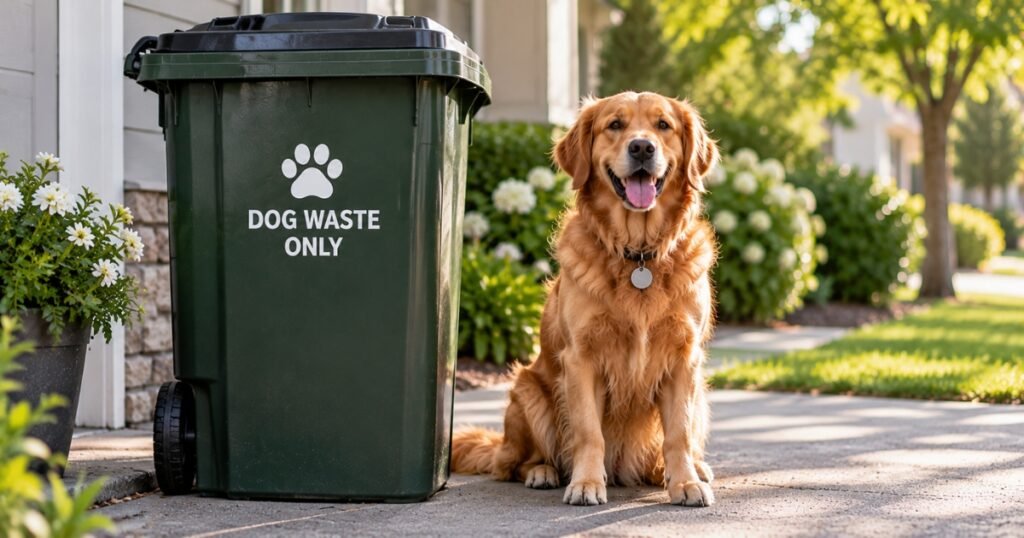
One bin near the yard, one at the curb. The yard bin is a lidded can with a liner that holds tied bags between scoops. On trash day, the liner goes straight into the curbside cart.
A few placement rules that make it stick:
Put the holding bin within 20 feet of where your dog goes
Keep it in shade if you can – heat multiplies odor
Use a lid that latches so raccoons and wind do not get involved
Line it with a heavy contractor-style bag, not a kitchen bag
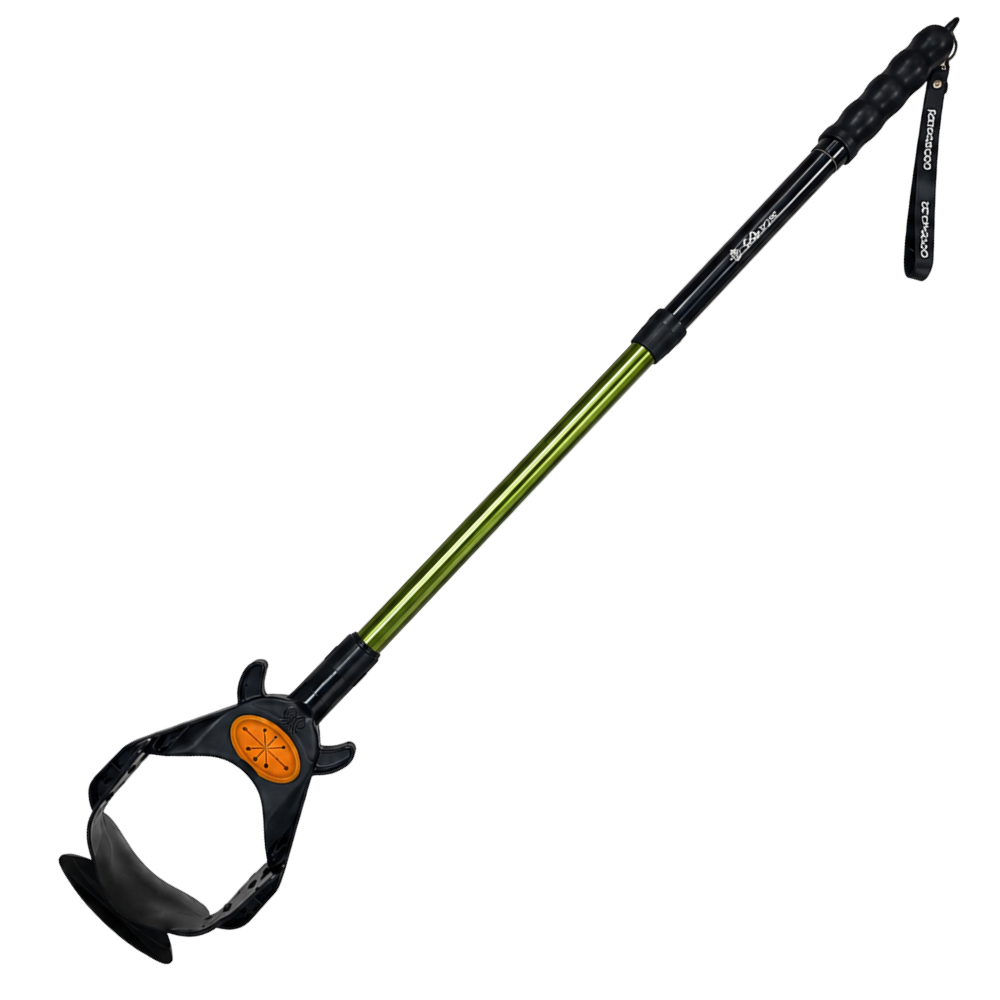
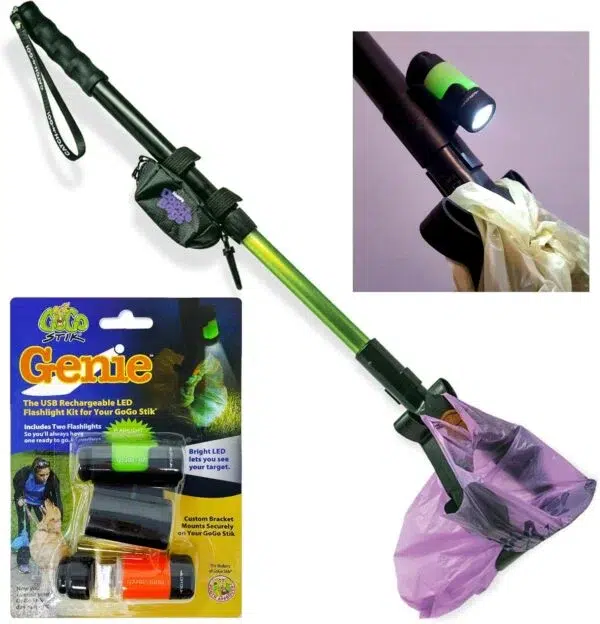
For the yard side of the job, a long-handle tool spares your back entirely. An XP Pro long-handle pooper scooper holds the bag open while you scoop, so waste never touches the tool or your hands.
Apartments and balconies
No yard bin? Use a small lidded container with a sealed liner on a balcony or in a utility closet, and empty it into the building dumpster daily, not weekly. Never store bagged waste in an indoor trash can with food scraps. There is a full walkthrough for handling dog poop in an apartment if you are in a high rise.
Odor Control Between Pickups
Smell comes from two places: the bag itself and the bin walls.
Rinse the bin monthly with a water and white vinegar mix, then dry it in the sun
Sprinkle baking soda in the bottom under the liner
Double-bag in summer, when heat speeds up odor fast
Empty every trash day without exception, even if the bin is half full
Try a light citrus-scented bag if the bin lives near a door or patio
A hands-free catcher like the Catch-N-Go scooper with bag dispenser keeps the whole chain clean, because the bag is loaded before you scoop and tied before it ever reaches the bin.
Frequently Asked Questions
Can I put dog poop bags in a public trash can?
In most US cities, yes. Tied bags of dog waste belong in regular public trash receptacles, and many parks provide dedicated pet waste stations. Use those first when they exist. Do not leave a bag on the ground next to a full bin, and do not drop bagged waste in recycling containers or compost bins in public spaces.
What kind of bin should I use for dog poop at home?
A galvanized or heavy plastic can with a latching lid works best. Size it to about 10 to 20 gallons so it is easy to move, line it with a heavy duty liner, and keep it in shade near the yard. Skip open buckets and thin kitchen cans, which leak, tip over and attract flies and rodents.
How often should I empty a dog poop bin?
Empty it into your curbside cart every trash day, at minimum. In hot weather or with multiple dogs, twice a week keeps odor and flies down. The liner is doing the heavy lifting, so pull and replace it rather than letting bagged waste pile up on bare plastic where residue builds and smells linger.
Can dog poop bags go in the recycling bin?
No. Even bags labeled biodegradable or compostable are not recyclable, and the waste inside contaminates an entire recycling load. Bagged dog waste goes in the landfill trash stream. Compostable bags only break down in specific industrial facilities, and most municipal programs do not accept pet waste at all, so check your local rules before assuming.
The Bottom Line
Dog poop bags and bins only work as a pair: a bag strong enough to make the trip, and a lidded bin placed where you actually walk. Get both right and cleanup stops being a chore you put off. Start with a heavier bag and a shaded, lidded holding can near the yard, then set one recurring reminder to empty it on trash day.
Bagged dog waste goes in a regular trash bin, the one headed for the landfill, not the recycling cart and not the green organics cart. Everything else is logistics: choosing a bag strong enough to survive the trip, and putting bins where you will actually use them instead of walking
 Skip to content