Home/Blogs/Why Dogs Are Scared of Thunder & How to Help
Why Dogs Are Scared of Thunder & How to Help
Every pet owner has witnessed it: the distant rumble of thunder sends your dog into a panic. They pace, whine, hide under furniture, or cling to you desperately. If you’ve ever wondered why thunderstorms trigger such intense fear in your canine companion, you’re not alone. Understanding dog thunder phobia is the first step toward helping your four-legged friend feel safe during storms.
Understanding Why Thunder Terrifies Dogs
The Science Behind Storm Anxiety
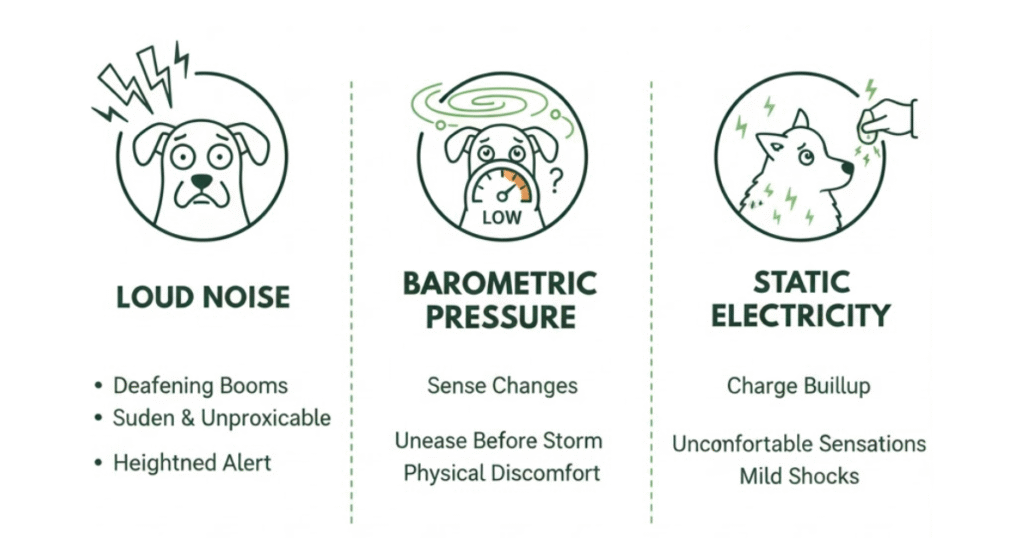
Dogs experience storm anxiety dogs react to for several complex reasons. Their acute hearing allows them to detect thunder from much greater distances than humans can. What sounds like a moderate rumble to us registers as a deafening boom to our pets. The sudden, unpredictable nature of thunder makes it impossible for dogs to anticipate or prepare for the noise, creating a constant state of heightened alert.
But sound isn’t the only culprit. Dogs can sense changes in barometric pressure before a storm arrives. This ability, while useful for their wild ancestors, can leave modern dogs feeling uneasy hours before the first raindrop falls. The shifting atmospheric pressure may cause physical discomfort in some dogs, contributing to their anxiety.
Static electricity buildup during storms presents another challenge. As storms approach, static charges accumulate in your dog’s coat, creating uncomfortable sensations or even mild shocks. This physical discomfort becomes associated with the storm, reinforcing their fear response.
Pet noise sensitivity varies significantly among individual dogs. Several factors influence how severely your dog responds to thunderstorms:
Genetics and Breed: Certain breeds, including German Shepherds, Border Collies, and herding dogs, show higher rates of noise sensitivity. These working breeds were developed to be hyper-aware of their environment, making them more reactive to unusual sounds and sensations.
Past Experiences: A traumatic event during a storm can create lasting fear associations. If your dog was alone, injured, or otherwise distressed during a severe thunderstorm, they may develop an intense phobia that worsens over time.
Age Factors: Older dogs sometimes develop new anxieties due to cognitive changes or declining senses that make familiar experiences feel threatening. Puppies who aren’t properly socialized to various sounds during their critical development period (before 14 weeks) may struggle with noise phobias later.
Overall Anxiety Levels: Dogs who already experience general anxiety, separation issues, or other phobias are more likely to develop dog fear remedies requiring careful management during storms.
Recognizing Storm Anxiety in Your Dog
Physical Signs
Your dog’s body language reveals their emotional state during thunderstorms. Watch for these telltale signs:
Trembling or shaking throughout their body
Excessive panting even when the temperature is comfortable
Dilated pupils indicating heightened stress
Drooling beyond normal levels
Pinned ears flat against their head
Tucked tail between their legs
Rigid posture or hunched body position
Behavioral Changes
Weather anxiety pets display often manifests through specific behaviors:
Pacing or restlessness throughout your home
Hiding in closets, bathrooms, or under furniture
Destructive behavior like scratching at doors or windows
Excessive barking or whining for extended periods
Clingy behavior refusing to leave your side
Attempting to escape through doors or windows
Loss of appetite or refusal to eat during storms
House soiling despite being fully housetrained
Some dogs exhibit these symptoms hours before a storm arrives, thanks to their ability to sense atmospheric changes.
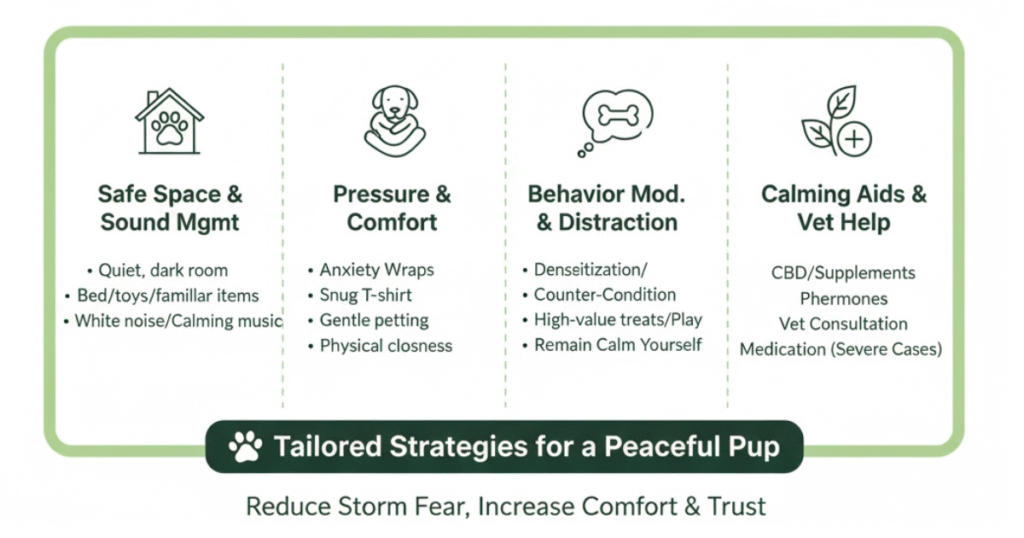
Designate a quiet, interior room where your dog can retreat during storms. This sanctuary should be:
Away from windows to minimize visual and auditory storm stimuli
Comfortable with their favorite bed, blankets, and toys
Familiar introduced during calm weather so they associate it with safety
Accessible available whenever they need it without barriers
Many dogs instinctively seek enclosed spaces during storms. A covered crate (if your dog is crate-trained) or a small bathroom can provide the den-like environment they crave. Never force your dog into their safe space—let them choose to use it.
Sound Management Strategies
Reducing the impact of thunder sounds helps many anxious dogs:
White Noise: Running fans, air purifiers, or white noise machines masks the sound of thunder. Start these devices before the storm arrives for maximum effectiveness.
Calming Music: Studies show that classical music and specially designed pet relaxation soundtracks reduce canine stress responses. Streaming services offer playlists specifically created for anxious pets.
Television or Radio: Background noise from familiar sources can provide comfort and distraction during storms.
Keep these sound sources at moderate volumes—too loud, and you risk overwhelming your already stressed pet.
Pressure Therapy Solutions
Applying gentle, constant pressure to your dog’s body activates their parasympathetic nervous system, promoting relaxation:
Anxiety Wraps: Commercial products like Thundershirts use maintained pressure similar to swaddling an infant. These snug-fitting garments can significantly reduce anxiety symptoms in many dogs. Put the wrap on before storm symptoms begin for best results.
DIY Alternatives: A snug t-shirt or ace bandage wrapped (not too tightly) around your dog’s torso can provide similar benefits at lower cost.
Physical Closeness: Gentle, firm petting and allowing your dog to lean against you provides both pressure and emotional comfort.
Behavior Modification Techniques
Desensitization: Gradually expose your dog to recorded thunder sounds at very low volumes during calm times. Pair the sounds with positive experiences like treats, play, or meals. Over weeks or months, slowly increase the volume as your dog remains calm. This process requires patience but can yield lasting results.
Counter-Conditioning: Change your dog’s emotional response to storms by creating positive associations. When you notice early storm signs, begin a high-value activity your dog loves—a special treat, their favorite game, or training exercises with rewards. The goal is to shift their focus from fear to anticipation of good things.
Remain Calm Yourself: Dogs read human emotions expertly. If you act anxious or overly concerned during storms, you confirm their fear is justified. Maintain normal behavior and a relaxed demeanor to show your dog there’s no real danger.
Natural Calming Aids
Several natural supplements may reduce anxiety without medication:
CBD Products: While research continues, many pet owners report success with CBD oils and treats formulated for dogs. Consult your veterinarian about appropriate products and dosing.
Calming Supplements: Products containing L-theanine, chamomile, valerian root, or melatonin may help some dogs. Always verify ingredients are safe for canine consumption.
Pheromone Diffusers: Synthetic versions of dog-appeasing pheromones (like Adaptil) can create a calming environment. Plug these diffusers into your dog’s safe space several days before storm season begins.
Start any supplement well before storm season to assess effectiveness and adjust dosing under veterinary guidance.
When to Consider Medication
For dogs with severe phobias, behavioral interventions alone may prove insufficient. Signs your dog might benefit from prescription anxiety medication include:
Inability to function during storms (complete shutdown)
Risk of injury from escape attempts
Self-harm through excessive licking or chewing
Symptoms lasting hours after the storm ends
Increasingly severe reactions over time
Veterinarians can prescribe medications ranging from fast-acting anti-anxiety drugs for acute situations to daily medications for dogs in regions with frequent storms. Never give your dog human medications without explicit veterinary approval—many common human drugs are toxic to pets.
Long-Term Management Strategies
Build Confidence Through Training
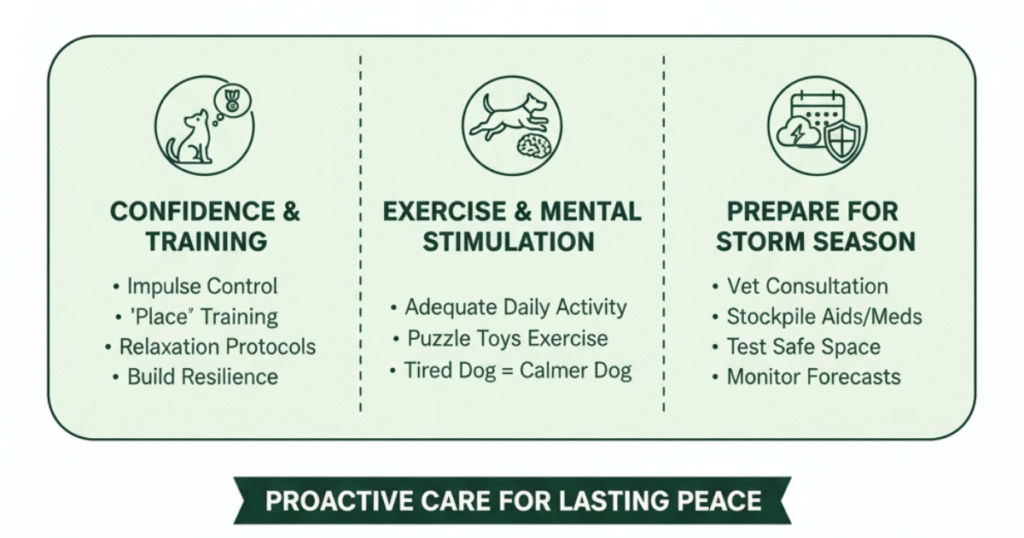
A well-trained, confident dog often handles stressful situations better than an anxious, uncertain one. Regular training sessions that challenge your dog mentally and reward calm behavior build resilience. Focus on:
Impulse control exercises teaching your dog to remain calm despite distractions
Place training giving them a specific spot to relax on command
Relaxation protocols rewarding naturally calm behavior throughout the day
Exercise and Mental Stimulation
A tired dog is generally a calmer dog. Adequate daily exercise reduces overall anxiety levels and helps your pet handle stress better. Before storm season, increase your dog’s physical activity and add puzzle toys or training games that tire their mind as well as their body.
During storm season, try to exercise your dog before predicted storms. A good run or play session several hours before the weather arrives can take the edge off their anxiety response.
Prepare for Storm Season
If you live in an area with predictable storm patterns, preparation makes a significant difference:
Schedule a veterinary consultation before storm season to establish a treatment plan
Stock up on calming aids, treats, and any medications you’ll need
Test and set up sound machines, anxiety wraps, and safe spaces during calm weather
Create a storm kit with your dog’s comfort items easily accessible
Monitor weather forecasts to anticipate storms rather than reacting suddenly
What NOT to Do
Certain well-intentioned responses can worsen storm anxiety:
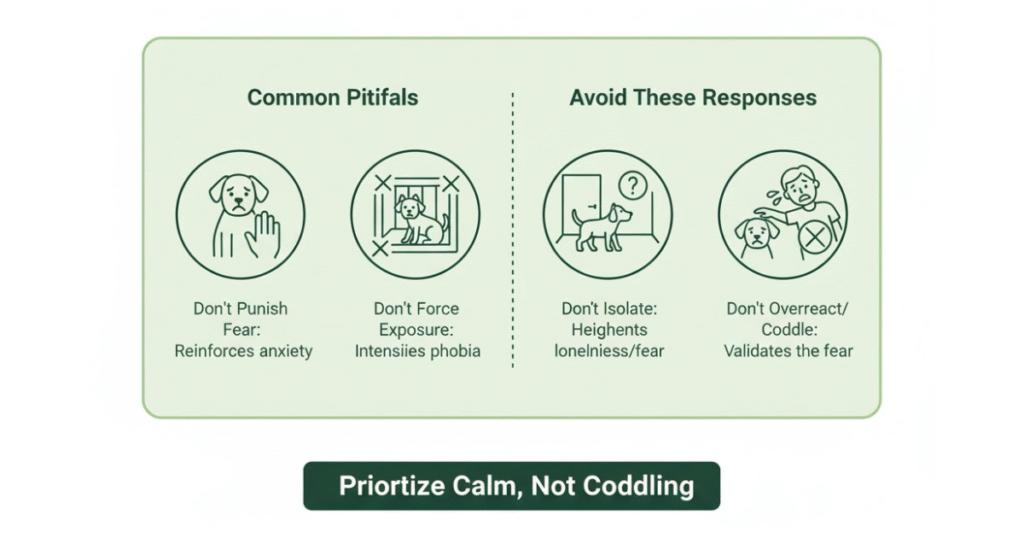
Don’t Punish Fear: Scolding or disciplining your anxious dog teaches them that storms bring punishment as well as scary sounds. Fear is not a behavior problem requiring correction.
Don’t Force Exposure: Flooding (forcing your dog to endure what they fear) typically intensifies phobias rather than resolving them. Gradual desensitization with professional guidance produces better outcomes.
Don’t Isolate Your Dog: Unless your dog specifically prefers solitude, leaving them alone during storms can heighten anxiety. Many dogs find comfort in human presence.
Don’t Overreact to Their Fear: Excessive coddling (“Oh, poor baby, it’s so scary!”) can validate and reinforce anxious behavior. Instead, stay matter-of-fact and calm.
Working with Professional Help
Some dogs require expert intervention for severe storm phobias. Consider consulting:
Veterinary Behaviorists: Board-certified specialists in animal behavior who can create comprehensive treatment plans combining behavior modification and appropriate medication.
Certified Dog Trainers: Professionals with credentials in fear and anxiety cases can guide you through desensitization protocols tailored to your dog’s specific needs.
Veterinarians: Your regular vet can rule out medical issues contributing to anxiety and prescribe medications when appropriate.
Professional help becomes essential when your dog’s quality of life suffers significantly or when their fear generalizes to other noises and situations.
Success Stories: Hope for Anxious Dogs
Many dogs show remarkable improvement with consistent, patient treatment. Bella, a five-year-old Labrador, once destroyed furniture and injured herself trying to escape during storms. After six months of desensitization training, anxiety medication, and a Thundershirt, she now rests calmly in her safe space during most storms.
Max, an adopted mixed breed with an unknown history, trembled uncontrollably at the first hint of rain. His owner created a cozy crate space, played calming music during storms, and worked through a desensitization program. Within a year, Max’s symptoms decreased by 80%, and he occasionally sleeps through mild storms.
These success stories highlight an important truth: while storm phobia rarely disappears completely, most dogs can learn to manage their fear and live comfortably despite unpredictable weather.
Regional Considerations
Your location influences how you approach storm anxiety:
Frequent Storm Areas: Regions with daily summer thunderstorms require proactive, year-round management strategies. Daily anti-anxiety medication might prove more practical than event-based treatment.
Seasonal Storm Patterns: Areas with distinct storm seasons allow you to prepare in advance and potentially use medication only during high-risk months.
Rare Storm Regions: If storms occur infrequently in your area, your dog might never habituate to them. Focus on acute management strategies for occasional events.
Tornado-Prone Areas: Severe weather that genuinely threatens safety requires a different approach. Your dog’s anxiety might include legitimate fear of dangerous situations, so emergency preparedness becomes paramount.
The Path Forward
Storm anxiety in dogs is manageable with understanding, patience, and the right combination of techniques. Each dog responds differently to various interventions, so finding what works for your pet requires experimentation and consistency.
Start with simple environmental modifications like creating a safe space and using white noise. If these basic steps don’t provide sufficient relief, gradually add other strategies—pressure wraps, calming supplements, or desensitization training. For severe cases, don’t hesitate to seek professional guidance and consider medication.
Your dog depends on you to recognize their distress and provide support during frightening weather. By taking proactive steps to address their storm anxiety, you strengthen your bond while improving their quality of life. The investment of time and effort pays dividends every time your dog faces a thunderstorm with less fear and more confidence.
Storm phobia doesn’t have to control your dog’s life—or yours. With proper management, even severely affected dogs can learn to weather the storms, both literally and figuratively.
Conclusion
Thunder phobia affects millions of dogs, causing genuine distress that impacts their well-being and quality of life. Understanding the multiple factors behind this fear—from their acute hearing to static electricity and atmospheric pressure changes—helps you respond effectively to your dog’s needs.
The good news? You have numerous tools at your disposal. Creating safe spaces, using sound management, applying pressure therapy, and implementing behavior modification techniques all contribute to reducing your dog’s storm anxiety. For severe cases, natural supplements or prescription medications can provide additional relief.
Success requires patience and consistency. What works for one dog might not work for another, so be prepared to try different combinations of strategies until you find the right fit. Track your dog’s progress, celebrate small victories, and don’t hesitate to seek professional help when needed.
Your calm, supportive presence during storms makes a significant difference. By taking action now, you’re giving your dog the tools they need to face thunderstorms with less fear and more resilience. Every storm becomes an opportunity to reinforce your bond and prove to your faithful companion that they’re safe with you, no matter what the weather brings.
FAQs
Why is my dog suddenly scared of thunder when they weren’t before?
Dogs can develop storm phobias at any age, even if they previously showed no fear. Several factors trigger this change: a particularly traumatic storm experience, age-related cognitive changes in senior dogs, underlying anxiety that worsens over time, or hearing loss that makes sudden sounds more startling. Medical issues causing pain or discomfort can also increase general anxiety levels, making dogs more reactive to stressful stimuli like thunderstorms. If your dog suddenly develops storm anxiety, schedule a veterinary checkup to rule out health problems that might contribute to their fear.
Can I comfort my dog during a storm, or does that reinforce their fear?
You absolutely can and should comfort your anxious dog during storms. The myth that comforting reinforces fear is outdated and incorrect. You cannot reinforce an emotion—you can only reinforce behaviors. Providing calm, reassuring presence helps your dog feel safer without encouraging anxious behaviors. The key is staying relaxed yourself and avoiding excessive, dramatic reactions that might validate their fear. If your dog seeks comfort from you during a storm, allow it. However, avoid forcing attention on a dog who prefers to hide or be alone.
How long does it take to help a dog overcome storm anxiety?
The timeline varies significantly depending on your dog’s fear severity, age, overall temperament, and the methods you use. Mild cases might show improvement within weeks using simple environmental modifications. Moderate to severe phobias typically require months of consistent behavior modification, with noticeable progress appearing after 3-6 months. Desensitization training works gradually—rushing the process often backfires. Some dogs never completely overcome storm phobia but learn to manage it successfully. Medication can provide faster relief for acute symptoms while you work on long-term behavioral solutions. Consistency matters more than speed in treating anxiety disorders.
Are certain dog breeds more prone to thunder phobia?
Yes, breed characteristics influence storm anxiety susceptibility. Herding breeds like German Shepherds, Australian Shepherds, and Border Collies show higher rates of noise sensitivity due to their naturally alert, reactive temperaments. Sporting breeds including Labrador Retrievers and Golden Retrievers also commonly experience storm anxiety. However, any dog regardless of breed can develop thunder phobia. Mixed breed dogs inherit traits from their parent breeds that may predispose them to anxiety. Individual personality often matters more than breed—a naturally anxious dog of any breed faces higher risk than a confident dog from a typically sensitive breed.
Will my puppy outgrow their fear of thunderstorms?
Puppies rarely outgrow storm anxiety without intervention—in fact, the opposite typically occurs. Storm phobias tend to worsen with each exposure if left untreated, a phenomenon called sensitization. Early intervention produces the best outcomes. If your puppy shows signs of storm anxiety, address it immediately through positive associations, gradual desensitization, and creating positive storm experiences. Puppies under 14 weeks are in their critical socialization period, making this ideal timing for preventing or treating emerging phobias. The earlier you start helping your puppy cope with storms, the better their long-term prognosis.
Should I medicate my dog for every thunderstorm?
Medication decisions depend on your dog’s anxiety severity and storm frequency in your area. For dogs with severe, debilitating storm phobia, medication for each storm may be necessary and appropriate. Fast-acting anti-anxiety medications work best when given 30-60 minutes before the storm begins. In regions with daily storms during certain seasons, daily maintenance medication might prove more practical than event-based dosing. For mild to moderate anxiety, try behavioral and environmental interventions first, reserving medication for particularly severe storms. Always follow your veterinarian’s recommendations regarding medication frequency and dosing. Never give your dog medication without veterinary approval—proper diagnosis and prescription ensure safety and effectiveness.
How Many Times Do Dogs Poop in a Day :Most dog owners ask this exact question but get conflicting answers from friends, forums, and even some pet care guides. Figuring out how many times dogs poop in a day becomes really important when you notice changes in your pet’s bathroom
Essential Supplies and Planning Tips How to Prepare Self-Isolation Pet Owner: Nobody expects to be stuck at home for weeks. But when it happens, pet owners face a real problem. Your furry friends don’t understand why routines change, and they’re going to need just as much care when you can’t
Your kitchen’s already loaded with safe, nutritious treats for your dog. Most owners don’t realize this. While you’re spending big money on commercial treats packed with preservatives, simple human foods for dogs sitting in your pantry cost less and offer way better nutrition. These wholesome options strengthen your bond with