Home/Blogs/Where to Put Dog Poop Bags: A Complete Guide to Responsible Disposal
Where to Put Dog Poop Bags: A Complete Guide to Responsible Disposal
You’ve done the right thing and picked up after your pup. Now what? Figuring out where to put dog poop bags might seem straightforward, but the choices you make add up, for your community and the environment.
This guide walks you through all your disposal options so you can find what works best for your lifestyle.
Why Proper Disposal Matters
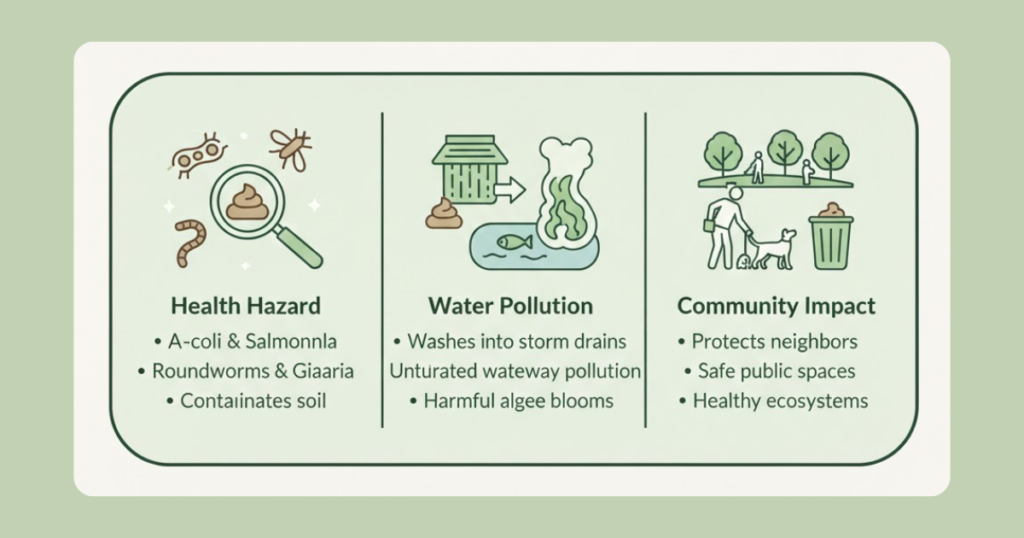
Dog waste isn’t just unpleasant, it’s a genuine health hazard. It contains bacteria like E. coli and Salmonella, along with parasites such as roundworms and Giardia. When left on the ground or improperly disposed of, rain washes these pathogens into storm drains that flow directly into local waterways without treatment.
The result? Contaminated water sources and algae blooms that damage aquatic ecosystems.
Responsible disposal protects your neighbors, your local environment, and the shared spaces we all enjoy.
Your Disposal Options
The Trash Can (Most Common)
For most people, the answer to “where do I put this?” is simple: the nearest trash bin.
What works: It’s convenient, universally accepted, and legal virtually everywhere.
The trade-off: Bags end up in landfills where even “biodegradable” options often fail to break down due to lack of oxygen. If this is your go-to method, use sturdy bags and seal them well.
Flushing the Waste
Some municipalities allow you to flush dog waste (never the bag) down the toilet. Since wastewater treatment plants are designed to handle waste, this can be the most sanitary option available.
Before you try this:
Check your local regulations
Confirm your plumbing can handle it
Skip this method if you have a septic system
Only flush the waste, never the bag
It’s not practical mid-walk, but it’s worth considering for waste collected at home.
Municipal Composting Programs
Some cities now offer pet waste composting programs with designated drop-off points. Check with your local waste management department to see if this option exists in your area. It combines convenience with environmental responsibility.
Home Composting
You can compost dog waste at home, but it requires a dedicated setup, never add it to your regular garden compost.
Requirements:
A separate pet waste composter
Temperatures above 140°F to kill pathogens
6–12 months of decomposition time
Use the resulting compost only on non-edible plants
Important: “Compostable” bags need specific conditions to break down. Most require commercial composting facilities or a well-maintained home system, they won’t decompose in a standard backyard pile.
Pet Waste Digesters
These underground systems work like mini septic tanks designed specifically for dog waste. You install one in your yard, add waste and enzymes regularly, and bacteria break everything down naturally.
Best for: Homeowners who want a permanent, low-maintenance solution
Not ideal for: Renters or those without yard space
Understanding “Eco-Friendly” Bags
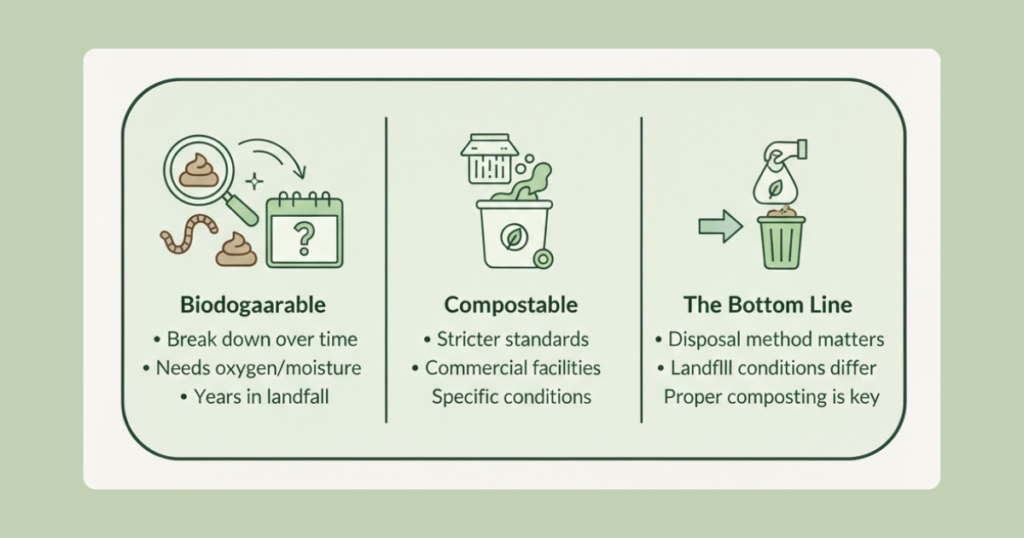
The terms “biodegradable” and “compostable” get thrown around a lot, but they mean different things:
Biodegradable bags break down over time but may still take years in landfill conditions. They need oxygen, moisture, and specific temperatures that compacted landfills don’t provide.
Compostable bags meet stricter standards and break down in commercial facilities within a defined timeframe, but they still need proper composting conditions.
The bottom line: Your disposal method matters more than the bag type. A compostable bag in a landfill won’t perform much differently than a standard one.
Know Your Local Rules
Regulations vary significantly by location. What’s perfectly acceptable in one city might earn you a fine in another.
Common regulations include:
Mandatory pickup in public spaces
Restrictions on certain disposal methods
Designated waste stations in parks
Fines ranging from $50 to $500+
Many parks now provide dog waste stations for convenient disposal, take advantage of them.
Tips for Hassle-Free Cleanup
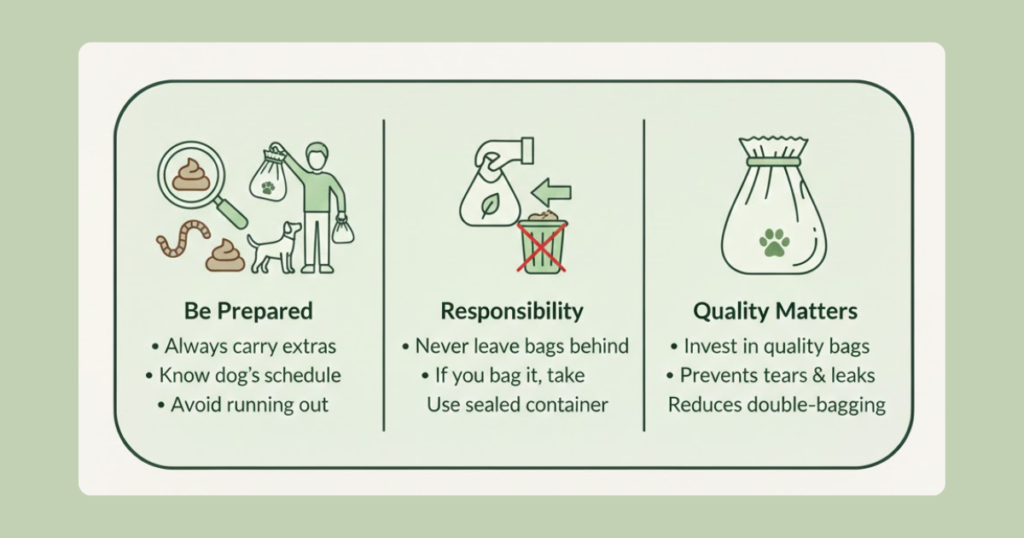
Always carry extras. Know your dog’s typical schedule and pack accordingly. Running out of bags mid-walk is no fun for anyone.
Never leave bags behind. It’s tempting to set a filled bag on a trail with plans to grab it later. Don’t. If you bag it, take it with you.
Use a sealed container. If you can’t dispose of waste immediately, a dedicated poop bag holder keeps things contained until you reach a trash can.
Invest in quality bags. Reliable bags prevent tears, leaks, and the need to double-bag, ultimately creating less waste.
Finding What Works for You
The “best” disposal method depends on where you live, whether you rent or own, and what options your community provides. Apartment dwellers face different constraints than homeowners with yards, and that’s okay.
The goal isn’t perfection, it’s making the most responsible choice available to you.
Ready to Upgrade Your Routine?
At GoGoStik, we’re committed to making dog waste cleanup easier and more convenient. Explore our collection of waste management solutions designed with both you and the environment in mind.
The snoot challenge has taken social media by storm, and for good reason. It’s one of the cutest tricks your dog can learn, and the best part is that it’s surprisingly simple to teach. If you’ve been scrolling through Instagram or TikTok and wondering how those dogs gently rest their
Every dog owner has seen it — that bizarre, hilarious ritual your pup performs before doing their business. From dramatic spins to the classic “walk and drop,” dogs have some truly ridiculous pooping habits. Whether you own a tiny Chihuahua or a massive Great Dane, one thing is universal: dogs
Taking your dog on a camping trip is one of the best ways to bond, burn energy, and make memories that last. But if you’ve ever shown up at a trailhead without the right gear, you know how quickly things can go sideways muddy paws, no waste bags, forgotten water