

Dog Health & Wellness
Dog Vomiting and Diarrhea: A Calm Owner’s Action Plan
Dog vomiting and diarrhea? Stay calm. Learn what’s normal, when to call the vet, and simple at-home steps to help your dog recover fast.
 Skip to content
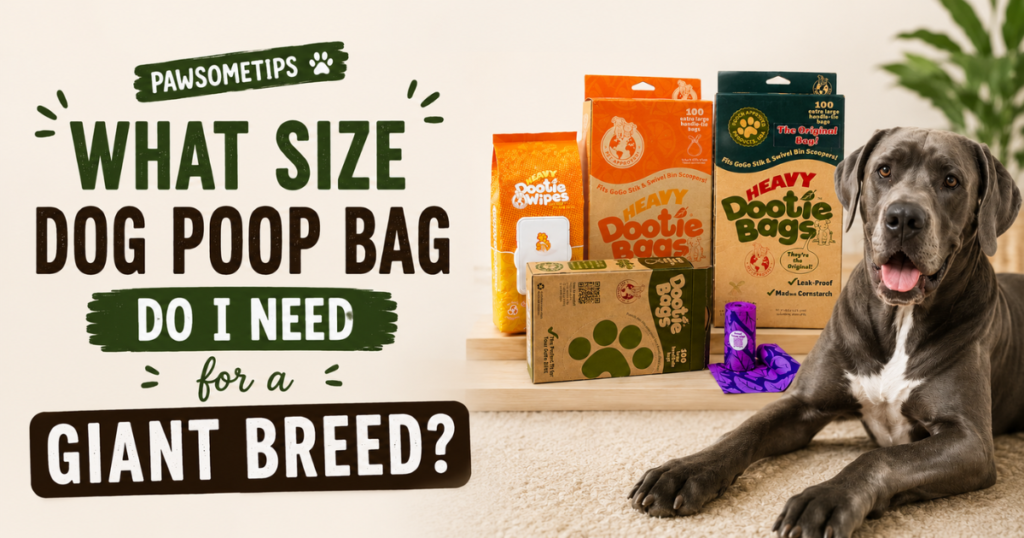
If you own a Great Dane, Saint Bernard, Mastiff, Newfoundland, Irish Wolfhound, or Bernese Mountain Dog, you have probably stood on a sidewalk holding a bag that is clearly not big enough for the job. Maybe it barely closed. Maybe it split. Maybe you ended up using two or three bags for a single cleanup — which is messy, wasteful, and completely avoidable.
The truth is simple: most dog poop bags are not designed for giant breeds. They are engineered around an average dog weight of 25 to 35 pounds. Your Great Dane weighs 130 pounds. Your Saint Bernard weighs 160. The math does not work, and the bags fail to reflect that reality.
This guide gives you the definitive answer on what size poop bag a giant breed actually needs, how to read product specs to make the right call, and which specific bags deliver for the biggest dogs on the block — every single time.
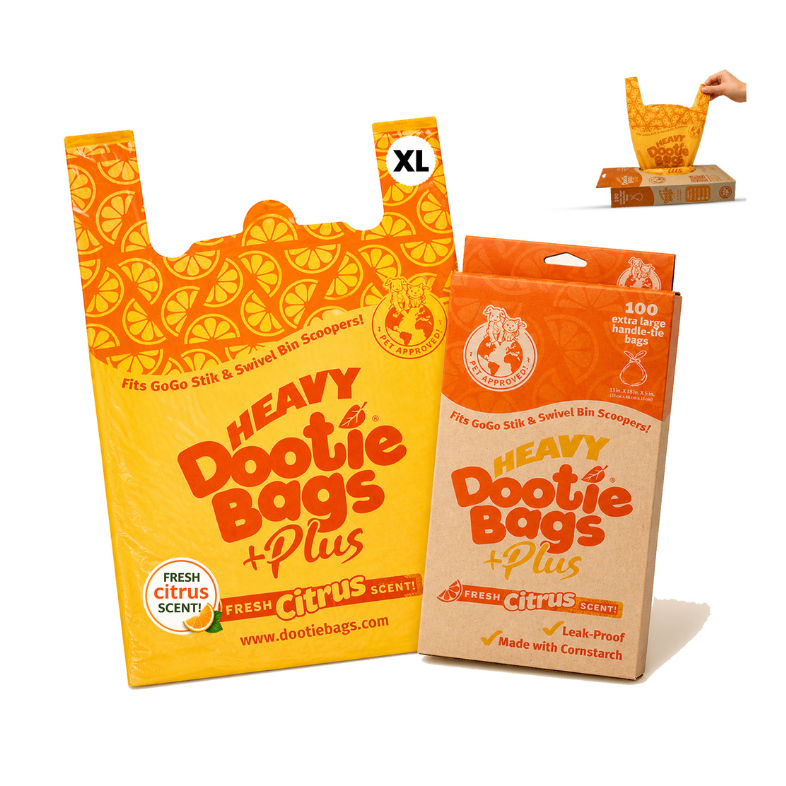
Gogostik’s Heavy Dootie Bags are 18 inches x 11 inches x 5 inches with a 2.8-gallon capacity — purpose-built for giant breeds. Join 7,600+ large-breed owners who stopped double-bagging. Shop at gogostik.com/dootie-bags/
When a poop bag is the wrong size for your dog, the consequences stack up fast:
It doesn’t contain the full cleanup: A bag that is too small for your giant breed’s output forces you to either cram everything in — stretching and stressing the plastic until it tears — or leave some behind, which defeats the entire purpose.
You can’t tie it closed: An overfilled bag cannot be knotted safely. The contents bulge toward the opening, the bag hangs awkwardly, and the risk of spillage is real from pickup to disposal bin. Extended handles only solve this problem when the bag has enough room to spare above the waste line.
You end up double-bagging: Thousands of giant-breed owners habitually use two bags per cleanup — placing one inside the other — because they have learned that one bag is not enough. This doubles cost, doubles plastic waste, and still does not guarantee a seal. The correct solution is one right-sized bag, not two wrong-sized ones.
Leaks become likely: Giant breeds — especially Newfoundlands and Saint Bernards — frequently produce high-volume, soft stool. An undersized or thin bag under that kind of pressure will leak at the seams. A bag built for the actual volume holds without issue.
The American Veterinary Medical Association notes that dog waste contains bacteria including E. coli, salmonella, and campylobacter — organisms that survive on surfaces for days. A bag failure is not just inconvenient. It is a genuine public health concern that proper sizing eliminates.
The average dog produces waste equal to roughly 1% to 2% of their body weight per day. For giant breeds, this creates a significant per-pickup volume that is completely unlike what standard bag manufacturers plan for. Here is a practical breakdown:
| Breed | Avg. Weight | Daily Waste (Est.) | Waste Per Pickup | Bag Needed |
| Great Dane | 110–175 lbs | 1.5–3.5 lbs | 0.5–1.2 lbs | Extra-Large (2.5+ gal) |
| Saint Bernard | 120–180 lbs | 1.5–3.5 lbs | 0.5–1.2 lbs | Extra-Large (2.5+ gal) |
| Mastiff | 120–230 lbs | 1.5–4.5 lbs | 0.5–1.5 lbs | Extra-Large (2.5+ gal) |
| Newfoundland | 100–150 lbs | 1.0–3.0 lbs | 0.4–1.0 lbs | Extra-Large (2.0+ gal) |
| Irish Wolfhound | 105–180 lbs | 1.0–3.5 lbs | 0.4–1.2 lbs | Extra-Large (2.0+ gal) |
| Bernese Mountain Dog | 70–115 lbs | 0.7–2.3 lbs | 0.3–0.8 lbs | Large-XL (1.5–2.5 gal) |
| Standard Bag Design | 20–35 lbs | 0.2–0.7 lbs | 0.1–0.3 lbs | Standard (1.0 gal) |
The highlighted row at the bottom shows what standard bag manufacturers design for. Every giant breed above it produces between 3 and 15 times the waste volume of the dog that bag was built for. This is why standard bags fail giant-breed owners they were never intended for this job.
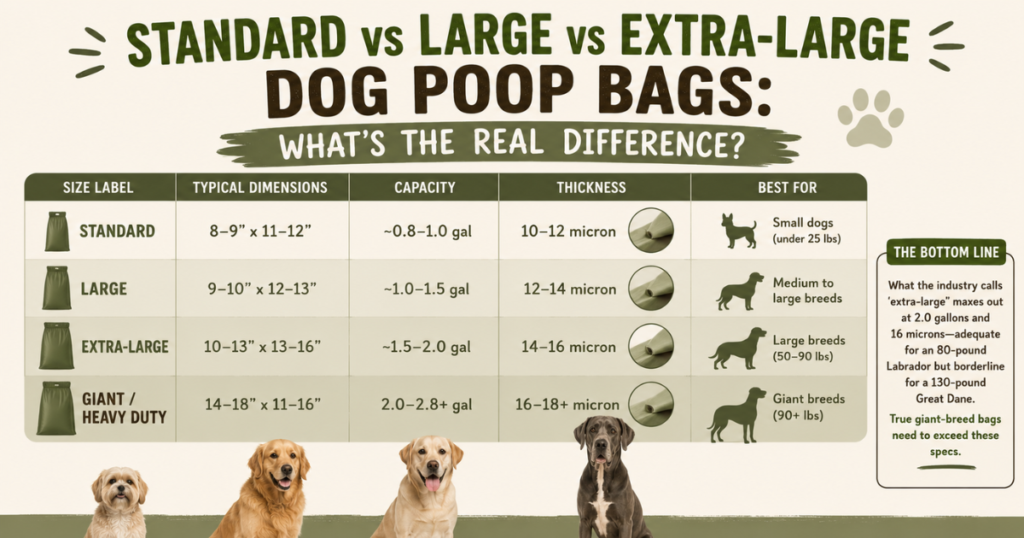
The dog bag industry uses size labels — ‘standard,’ ‘large,’ ‘extra-large’ — without any universal standard behind them. One brand’s ‘large’ is another brand’s ‘standard.’ Here is what the specs actually mean and what you should look for:
| Size Label | Typical Dimensions | Capacity | Thickness | Best For |
| Standard | 8–9″ x 11–12″ | ~0.8–1.0 gal | 10–12 micron | Small dogs (under 25 lbs) |
| Large | 9–10″ x 12–13″ | ~1.0–1.5 gal | 12–14 micron | Medium to large breeds |
| Extra-Large | 10–13″ x 13–16″ | ~1.5–2.0 gal | 14–16 micron | Large breeds (50–90 lbs) |
| Giant / Heavy Duty | 14–18″ x 11–16″ | 2.0–2.8+ gal | 16–18+ micron | Giant breeds (90+ lbs) |
Notice that what the industry calls ‘extra-large’ still maxes out at 2.0 gallons and 16 microns — adequate for an 80-pound Labrador but borderline for a 130-pound Great Dane. True giant-breed bags need to exceed these specs, which is why Gogostik’s Heavy Dootie Bags sit in a category of their own at 2.8 gallons and 18 microns.
Direct Answer: For giant breeds (90 lbs and above), you need a bag that measures at least 14 inches long x 10 inches wide with side gussets, a minimum capacity of 2.0 gallons (2.5+ gallons ideal), and 16 to 18 micron thickness. The industry standard ‘extra-large’ bag is NOT sufficient for most giant breeds. You need a purpose-built heavy-duty giant breed bag.
Here is the specific recommendation by breed weight:
The Gogostik Heavy Dootie Bag measures 18 inches long x 11 inches wide x 5 inches deep with side gussets — creating a total bag circumference of 29 inches and a 2.8-gallon capacity. This makes it one of the largest mainstream pet waste bags available and the top choice for every breed category above 90 pounds.
Once you know the right size, these five features determine whether a bag delivers reliably for giant breeds:
Capacity — measured in gallons — is the most meaningful size indicator. Length and width alone do not account for gussets, which expand the bag’s actual usable volume significantly. Gogostik’s Heavy Dootie Bags use side gussets that give a flat-listed 18 x 11 bag a full 2.8-gallon usable capacity — enough room to contain the full output of even the largest breeds in a single bag with room to spare for clean knotting.
Always check the gallon capacity in the product specs. If a manufacturer does not list gallon capacity, check the dimensions AND confirm the presence of side gussets before buying for a giant breed.
For giant breeds, 18-micron thickness is the benchmark. At this specification, the bag has adequate puncture resistance for dense, high-protein waste from large breeds — including the sharp corners of firm stool that routinely puncture thinner bags. The difference between a 12-micron bag and an 18-micron bag in giant-breed use is not marginal. It is the difference between a bag that works and one that doesn’t.
Gogostik’s Heavy Dootie Bags use 18-micron construction throughout — not just in the body of the bag but through the reinforced base seam where failures most commonly occur with lesser products.
Giant breeds fed high-protein, raw, or mixed diets frequently produce soft, high-moisture waste. Standard bags with glued seams fail under this kind of contents pressure — liquid finds the path of least resistance through any gap in the seam construction. Heat-sealed seams bond the plastic at the molecular level, creating a waterproof barrier that does not yield under the weight and moisture of giant-breed waste.
Look for bags that explicitly state ‘heat-sealed’ or ‘guaranteed leak-proof’ — not merely ‘leak-resistant,’ which is a weaker claim.
The handle design on standard bags assumes a modest bag weight. A fully loaded giant-breed bag weighs significantly more — and the shorter handles common on roll bags make knotting that weight a real challenge, especially one-handed while managing a large dog on a leash. Extended EZ-tie handles — as found on Gogostik’s Heavy Dootie Bags — give you the handle length needed to tie a secure double-knot at arm’s length, with your hands completely clear of the bag’s contents.
After pickup, you are carrying the bag through your neighborhood, park, or trail for the rest of your walk. A thin, unscented bag provides almost no odor barrier — and with giant-breed waste volume, the odor is proportionally significant. Thicker bags naturally reduce odor permeation. A citrus scent option — like Gogostik’s Heavy Dootie +Plus bags — actively neutralizes odor compounds rather than simply masking them, making the remainder of every walk odor-free for you and everyone you pass.
After reviewing every major bag brand available in the USA, one product stands alone for true giant-breed performance:
Gogostik’s Original Heavy Dootie Bags were designed by a team that understands large and giant breeds because they own them. No other mainstream bag brand has engineered a product around the specific requirements of 100+ pound dogs. Here is the complete spec:
| Specification | Heavy Dootie Bag Detail |
| Dimensions | 18″ L x 11″ W x 5″ D with side gussets — 29-inch total circumference |
| Capacity | 2.8 gallons — handles even the largest giant-breed output in one bag |
| Thickness | 18 micron — premium heavy-duty construction |
| Seam Construction | Reinforced heat-sealed base — guaranteed not to split or leak |
| Handle Design | Extended EZ-tie handles — secure one-hand knotting at arm’s length |
| Material | Made with corn starch, water-based inks, recycled dispenser box |
| Scent | Unscented (Original) or Fresh Citrus (Heavy Dootie +Plus) |
| Count | 100 bags per dispenser box with punch-out back panel |
| Compatibility | Designed to fit GoGo Stik XP Pro and Swivel-Bin scoopers |
| Certification | EPI certified for accelerated landfill degradation |
| Guarantee | 100% satisfaction — replace or full refund within 30 days |
Over 7,600 Amazon customers rate these bags 4.7 out of 5 stars. Reviews from giant-breed owners consistently highlight three things: they never tear, they are large enough for the full job, and the handles actually work. For owners of Great Danes, Mastiffs, Saint Bernards, and Newfoundlands — this is the bag that ends the frustration permanently.
Shop Heavy Dootie Bags: gogostik.com/product/the-original-heavy-dootie-bags-dog-cat-litter-very-large-strong-ez-tie-handle-poop-bags/
View all Dootie Bags: gogostik.com/dootie-bags/
Bundle with GoGo Stik scooper: gogostik.com/bundles/
Stop dealing with bags that are too small, too thin, or too weak. Gogostik’s Heavy Dootie Bags are the only bags designed from the ground up for giant breeds. Free shipping on orders over $50. Subscribe and Save up to 15%. Try them risk-free — gogostik.com/dootie-bags/
Giant-breed owners make the same handful of mistakes when shopping for pet waste bags. Here is what to avoid:
Trusting Size Labels Without Checking Specs: ‘Large’ and ‘extra-large’ are marketing terms with no industry standard. Always verify the actual gallon capacity and dimensions. A bag labeled large by one brand may be smaller than a standard bag from another. If the listing does not include dimensions and capacity, skip it.
Ignoring Thickness: Micron rating is the most reliable predictor of whether a bag will hold up for a giant breed. Any bag under 16 microns is a risk for 100+ pound dogs. If the brand doesn’t advertise their micron rating, there is usually a reason — it is below what they want buyers to notice.
Double-Bagging as a Long-Term Strategy: Using two standard bags together is more expensive per cleanup than one premium bag, creates more waste, and still does not guarantee the security of a properly engineered heavy-duty bag. It is a workaround, not a solution.
Buying in Small Quantities: Giant breeds typically go 2 to 3 times per walk and 3 to 4 times per day. That is 90 to 120 bags per month minimum. Buying 30 at a time means constant reordering. Gogostik’s 100-count dispenser box and Subscribe and Save option solve this completely — you always have bags without thinking about it.
Choosing Compostable Bags for Giant Breeds: Compostable bags are a great eco-choice for small dogs. For giant breeds, the thinner plastic typically used in compostable formulations does not hold up under heavy loads. EPI-certified bags — like Gogostik’s — offer environmental responsibility without sacrificing the structural integrity giant breeds demand.
It seems counterintuitive, but cheaper bags cost more for giant-breed owners. Here is the math:
| Scenario | Cost Per Bag | Bags Per Cleanup | Real Cost Per Cleanup |
| Standard bags — fail rate ~30% | $0.07–$0.10 | 1.5 avg (with failures) | $0.11–$0.15 |
| Double-bagging standard bags | $0.07–$0.10 | 2 always | $0.14–$0.20 |
| Heavy Dootie Bags — 0% fail rate | $0.17 | 1 always | $0.17 |
At the bottom line: if you are currently double-bagging or dealing with failures, you are spending 14 to 20 cents per cleanup — more than a premium Heavy Dootie Bag at 17 cents. And that does not include the cost of the mess, the time, and the embarrassment of a failure in public.
Gogostik’s Subscribe and Save option reduces the per-bag cost further — down to the range where premium bags are definitively cheaper than cheap ones. For giant-breed owners who go through 90 to 120 bags per month, the annual savings are meaningful.
Gogostik is not just a bag company — it is a complete waste management system built around the reality of owning large and giant dogs. Here is how the full product ecosystem works together:
Heavy Dootie Bags (Original): The flagship 18-micron, 2.8-gallon bag for daily use. Unscented, 100-count, dispenser box. Works as a standalone bag or with the GoGo Stik scooper system.
Heavy Dootie +Plus (Citrus Scent): Same specs as the Original with the addition of a fresh citrus scent for odor control during and after pickup. Ideal for walks in parks, apartment buildings, and shared outdoor spaces.
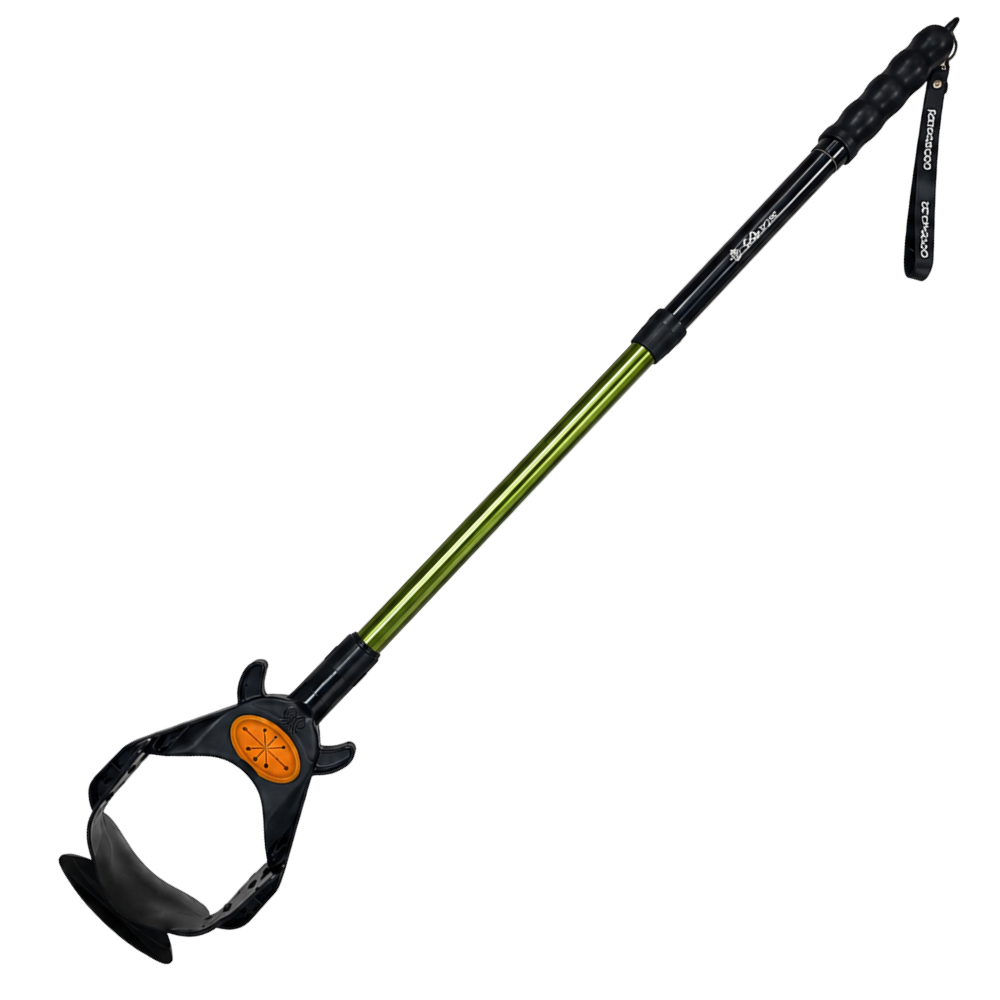
GoGo Stik XP Pro Pooper Scooper: A hands-free waste collection system that works with Heavy Dootie Bags for completely touchless giant-breed pickup. Rated Most Ergonomic by Consumer Reports. Especially valuable for owners with mobility concerns or for very large-volume pickups.
Heavy Dootie Pet Wipes: For post-walk paw and coat cleanup. Bamboo construction, citrus-scented, extra-large for giant breeds. Pairs naturally with the bag routine to create a complete post-walk hygiene system.
Bundles: Gogostik’s bag and scooper bundles offer the complete cleanup system at a reduced total cost — the preferred choice for giant-breed owners who want the ultimate solution.
Everything in the Gogostik product line was designed with the same guiding principle: giant breeds deserve products that are actually built for them. Not adapted from small-dog products, not scaled up versions of standard bags purpose-engineered from the start for the 100+ pound dogs that 30% of American households own.
GoGo Stik XP Pro Pooper Scooper
Key Takeaways
| Giant Breed Poop Bag Sizing — At a Glance Giant breeds (90+ lbs) need bags with at least 2.0–2.8 gallon capacity and 16–18 micron thickness. Standard and ‘extra-large’ bags are NOT designed for giant breeds — check gallon capacity, not just the label. Side gussets dramatically increase a bag’s actual capacity beyond its flat dimensions. 18 microns is the recommended minimum thickness for Great Dane, Mastiff, and Saint Bernard owners. Gogostik Heavy Dootie Bags — 18″ x 11″ x 5″, 2.8 gallon, 18 micron, EZ-tie handles — are purpose-built for giant breeds. Premium bags cost less per cleanup than double-bagging with cheap bags. |
Gogostik’s Heavy Dootie Bags are the only bags engineered specifically for giant breeds — 18-micron thick, 2.8-gallon capacity, guaranteed leak-proof and tear-proof. Over 7,600 large and giant-breed owners have made the switch and never looked back.
Free shipping on orders over $50 | Subscribe and Save up to 15% | 100% Satisfaction Guarantee
Shop now: gogostik.com/dootie-bags/
A Great Dane needs a bag with at least 2.5 to 2.8 gallon capacity, 18-micron thickness, and extended handles — Gogostik’s Heavy Dootie Bag is the purpose-built choice for this breed.
No standard extra-large bags max out at about 1.5 to 2.0 gallons and 14 to 16 microns, which is insufficient for most Mastiffs; you need a purpose-built giant-breed bag rated at 2.5+ gallons and 18 microns.
The bags are too small and too thin for your dog’s output — Saint Bernards produce waste that exceeds what standard and even ‘large’ bags are designed to hold; switch to a 2.8-gallon 18-micron bag

Alec Beaton is the Founder & Inventor of Pooch Approved Products and GoGo Stik®. Inspired by real-life pet parenting, he turns everyday cleanup challenges into simple, innovative solutions that make life better for pets and their people.
Dog vomiting and diarrhea? Stay calm. Learn what’s normal, when to call the vet, and simple at-home steps to help your dog recover fast.
Green dog poop can signal grass, bile, or illness. Learn the common causes, warning signs, and when to call your vet in this 2026 guide.
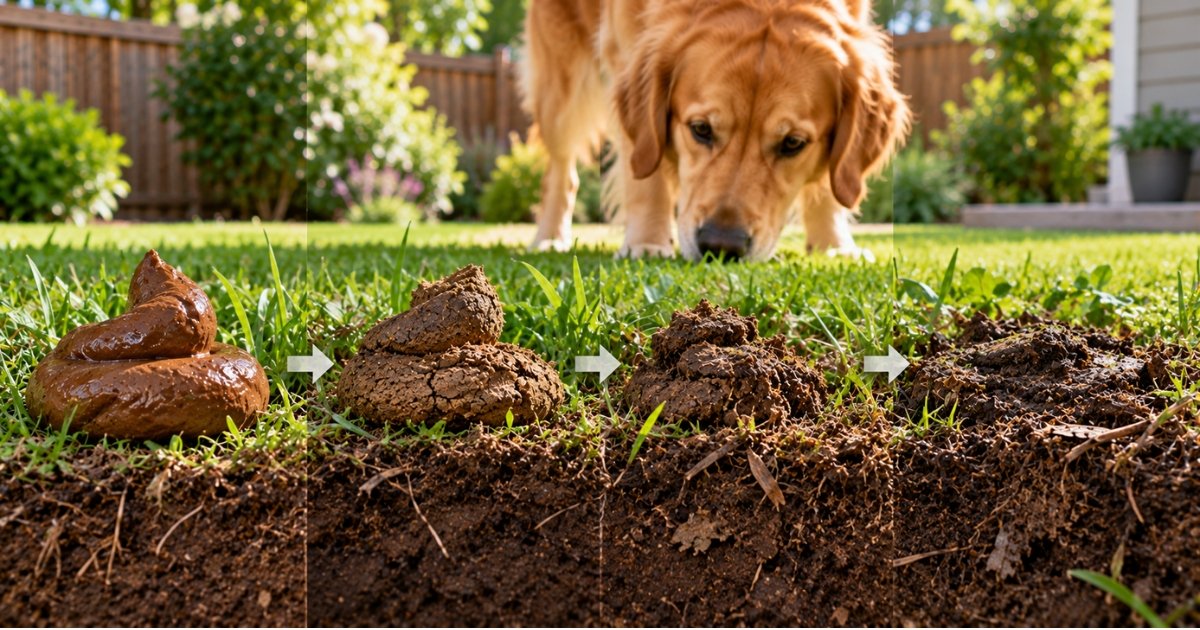
How long does dog poop take to decompose? Get real timelines, why it matters, and cleaner cleanup tips for your yard and the planet in 2026.