Pooper Scoopers
Dog Poop Vacuum: Worth It? 7 Real Questions to Ask
Can a dog poop vacuum really clean your yard? Here is how suction, powered scoopers and yard robots work, what they struggle with, and what to buy.
 Skip to content
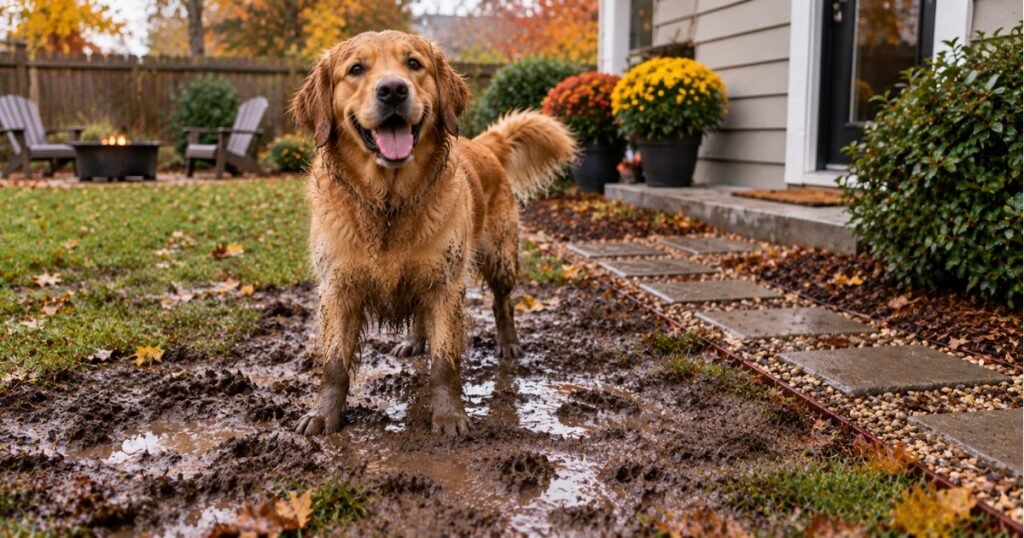
Autumn brings crisp air, falling leaves, and—let’s be honest—a whole lot of mud. If your backyard turns into a swamp every time it rains and your dog tracks it straight onto the carpet, you’re not alone. The good news is that effective muddy dog yard solutions don’t require ripping up your lawn or spending a fortune. With a few smart changes to your drainage, ground cover, and cleanup routine, you can keep your pup’s play zones tidy all season long.
In this guide, we’ll walk through why fall gets so messy, how to fix the muddiest spots, and the quick paw-and-belly cleanup habits that stop dirt at the door. Let’s dig in (the last time you’ll want to, we promise).
Fall is uniquely tough on yards. Shorter days and cooler temperatures slow grass growth, so worn patches don’t recover the way they do in summer. Add frequent autumn rain, decomposing leaves, and heavy paw traffic along fences and gates, and you get compacted, soggy soil that never quite dries out.
Dogs make it worse by nature. They pace the same “patrol routes,” dig at favorite corners, and skid to a stop at the back door. Those high-traffic lanes lose their grass first and become the muddiest offenders. Understanding these patterns is the first step toward lasting muddy dog yard solutions—you treat the cause, not just the symptom.
Long-term mud control starts underfoot. The goal is to move water away from play areas and give paws a stable, dry surface. Here are the most reliable fixes, from quick wins to weekend projects.
If you need relief this weekend, mulch and a gravel path deliver instant results. If you’re planning ahead, aeration, reseeding, and drainage work pay off for years. Most homeowners get the best results by combining a quick fix now with one bigger project before winter sets in.
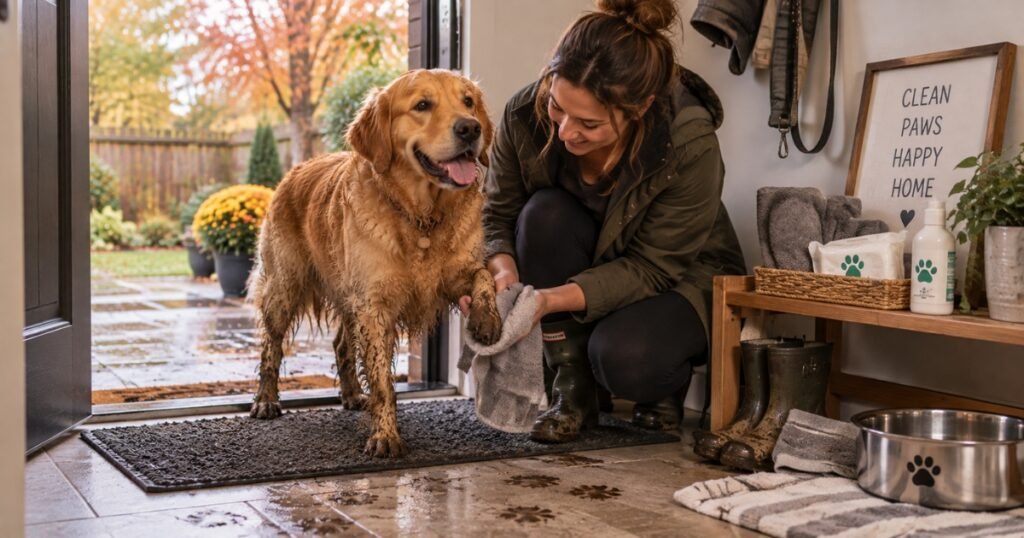
Even the best-drained yard will have damp days. That’s where a fast cleanup station earns its keep. Set up a simple zone right inside your back door with an absorbent mat, a towel, and pet-safe wipes so muddy paws never reach the hardwood.
Our own testing with high-energy dogs showed that a 20-second wipe-down at the door cuts indoor cleaning time dramatically. The trick is having supplies within arm’s reach—if you have to hunt for a towel, the mud wins.
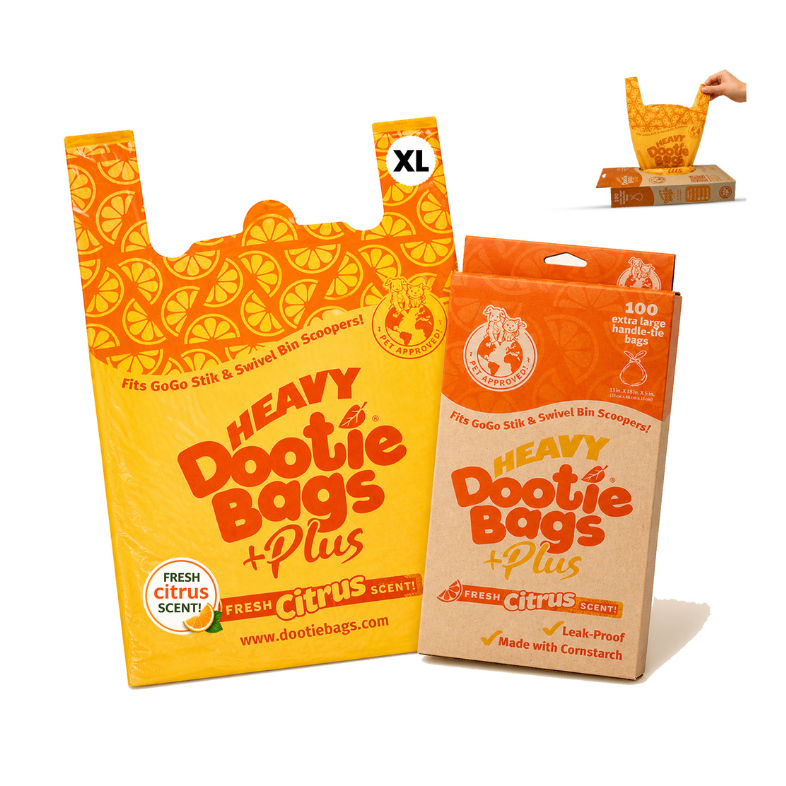
For this routine, thick, textured wipes matter. Our Heavy Dootie Pet Wipes for butt, body, and paws are made with bamboo fiber and a light citrus scent, so one or two handle even a muddy Lab without falling apart. Keeping a resealable pack by the door turns cleanup into a habit instead of a chore.
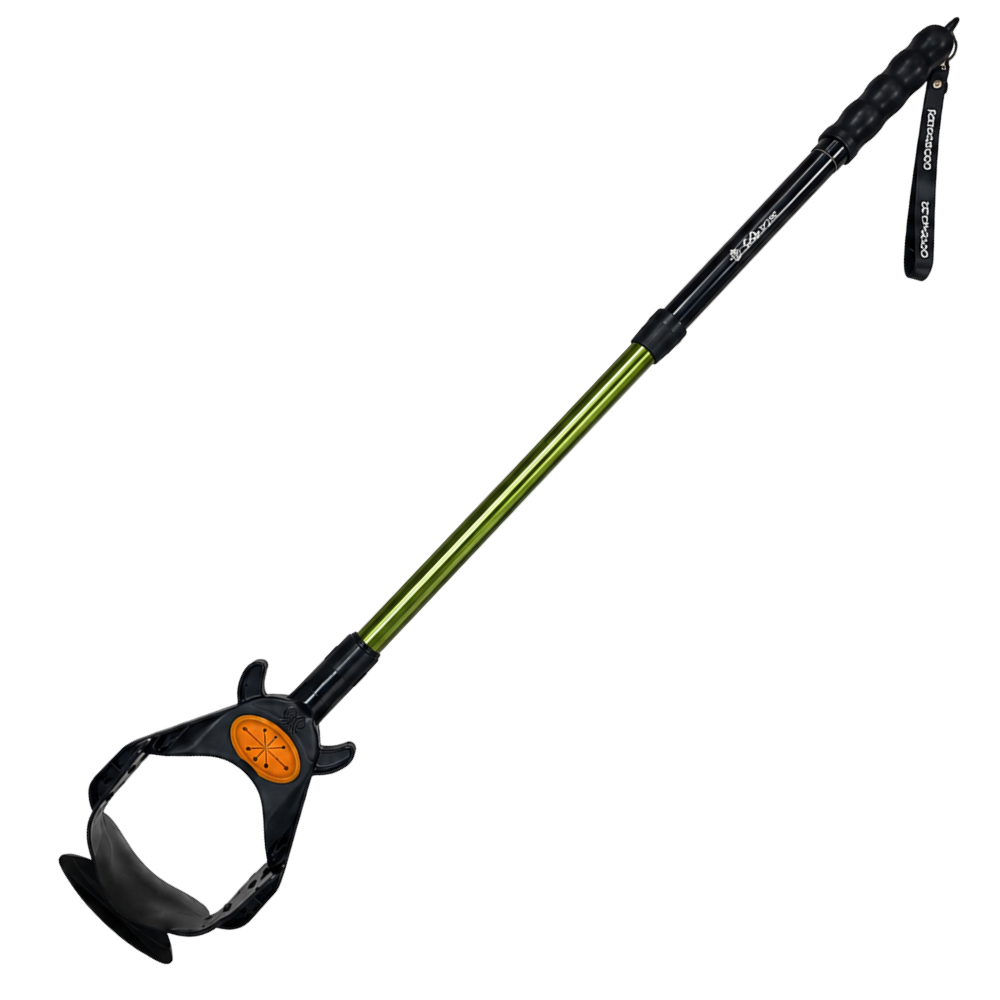
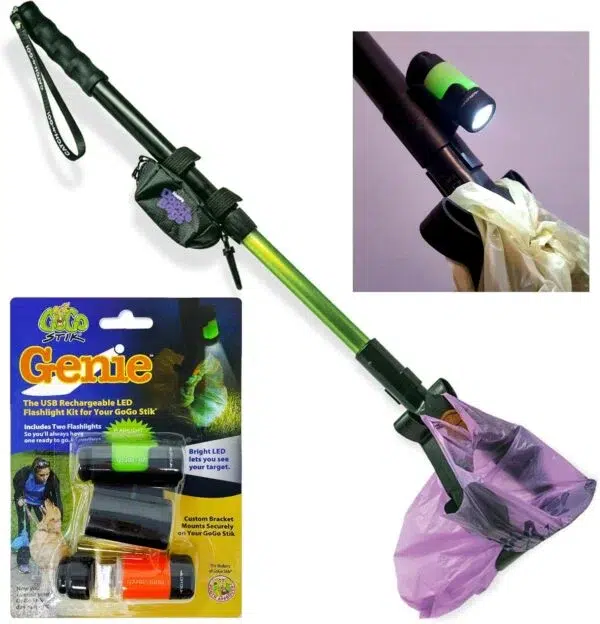
Wet fall ground makes waste pickup extra unpleasant—soft soil, hidden piles under leaves, and mud that clings to everything. A no-touch scooper keeps your hands and shoes clean while you tackle the yard, and it’s far easier than bending with a bag in the rain.
Pairing a scooper with reliable, leakproof bags means you can clear the yard in one pass, even on soggy days. Bundling your wipes and bags together keeps your whole cleanup kit in one spot. Explore the full lineup on our no-touch cleanup shop to build the setup that fits your yard.
Clearing waste every day or two prevents it from mixing into mud and spreading bacteria across play areas. The American Veterinary Medical Association notes that prompt waste removal reduces parasite risk for pets and people alike—an underrated reason to stay on top of a muddy yard.
The simplest of all muddy dog yard solutions is preparation. When your gear is ready before the rain hits, mud stops being a crisis. A complete fall kit looks like this:
For an all-in-one starting point, our Heavy Dootie Wipes & Poop Bags Bundle pairs 100 wipes with 100 leakproof bags—enough to cover a busy fall season without constant reorders.
The quickest fix is adding ground cover—cedar mulch or pea gravel—along your dog’s most-used path, plus a door-side cleanup station with pet wipes and a towel. This combo tackles both the source of the mud and the mess it creates indoors, often within a single afternoon.
Yes, as long as they’re formulated for pets and free of harsh chemicals like alcohol or artificial fragrance overload. Bamboo-based wipes such as our Heavy Dootie Pet Wipes are gentle enough for daily use on paws, pads, belly, and rear. Always dry paws afterward to prevent irritation between the toes.
Aerate compacted soil, reseed thin spots with cool-season grass, and improve drainage by redirecting downspouts and adding gravel to low areas. Rotating your dog’s play zone and clearing wet leaves promptly also lets the lawn recover before winter.
Aim for waste pickup every one to two days, and wipe your dog’s paws after each muddy outing. Frequent, small cleanups prevent mud and waste from combining and spreading—far easier than a weekend-long deep clean.
Muddy season doesn’t have to mean muddy floors. With smarter drainage, targeted ground cover, and a fast paw-cleanup habit, these muddy dog yard solutions keep your dog happy and your home clean well into 2026’s cooler months. Ready to gear up? Browse our full range of no-touch scoopers, leakproof bags, and pet wipes at the GoGo Stik shop and make this the cleanest fall yet.
Alec Beaton is the Founder & Inventor of Pooch Approved Products and GoGo Stik®. Inspired by real-life pet parenting, he turns everyday cleanup challenges into simple, innovative solutions that make life better for pets and their people.
Can a dog poop vacuum really clean your yard? Here is how suction, powered scoopers and yard robots work, what they struggle with, and what to buy.
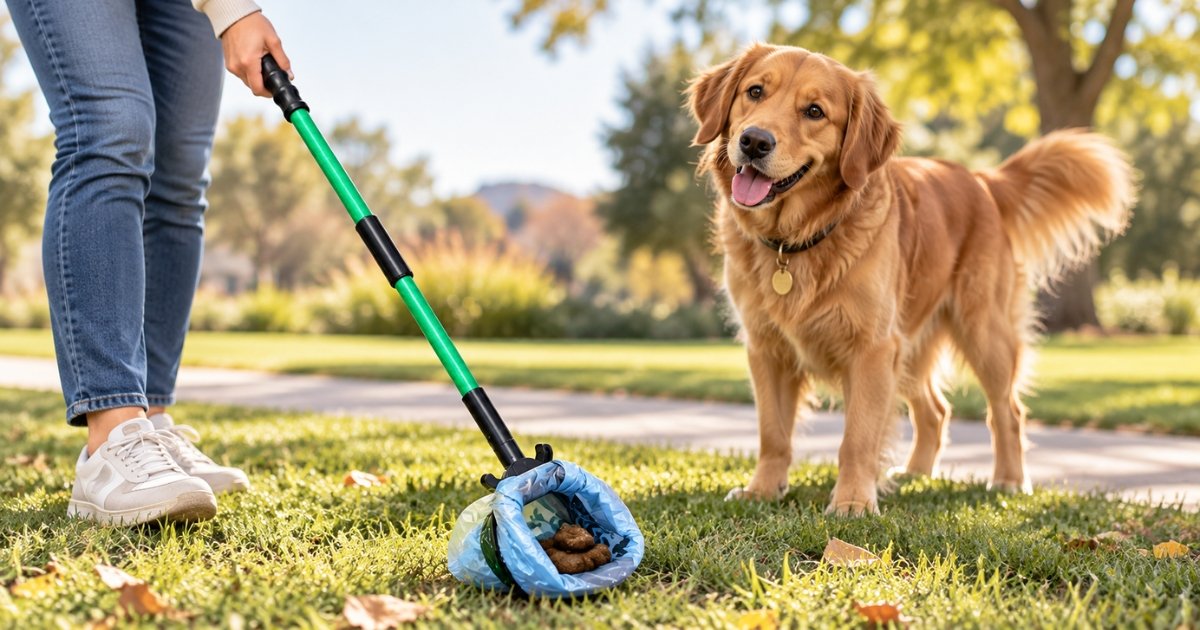
A claw pooper scooper is cheap and one-handed, but it fails on soft stool and gravel. Here are 5 checks before you buy, plus a cleaner alternative.
How long can a dog go without pooping? Learn normal timeframes, warning signs of constipation, and when to call the vet. Clear, vet-backed answers.