
Pooper Scoopers
Dog Poop Vacuum: Worth It? 7 Real Questions to Ask
Can a dog poop vacuum really clean your yard? Here is how suction, powered scoopers and yard robots work, what they struggle with, and what to buy.

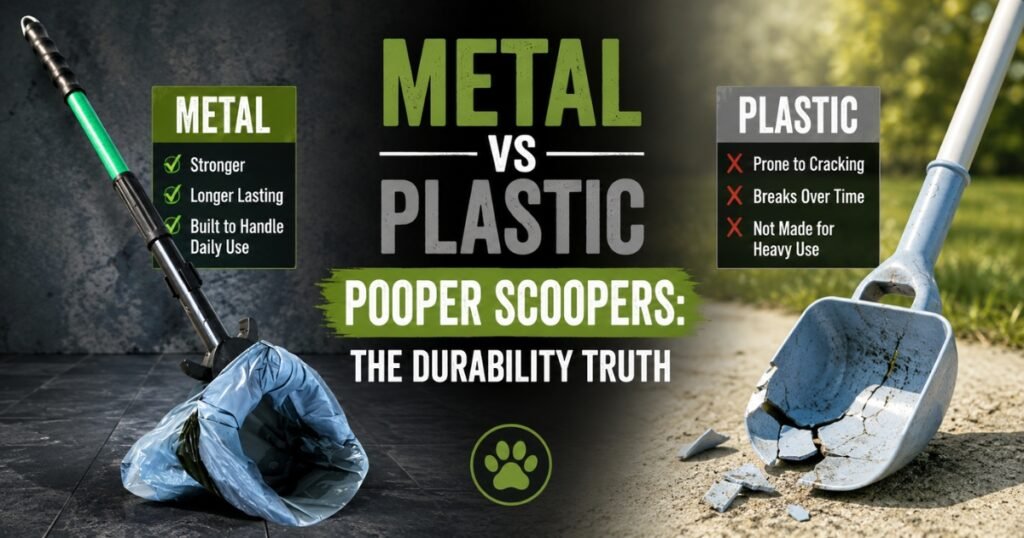
When you’re choosing a pooper scooper, one question quietly decides how long it lasts: is it metal or plastic? It’s easy to overlook next to handle length and design, but the material is what determines whether your scooper survives years of daily use or cracks in a cold snap. This guide breaks down the real metal vs plastic pooper scooper durability differences — and where a smart hybrid of both beats going all-in on either one.
Durability is not only about the material itself but about how the tool is stored and used. The American Kennel Club notes that outdoor dog equipment lasts far longer with basic care, which is worth remembering in any metal vs plastic pooper scooper decision.
For the part that takes the stress — the handle — metal (aluminum) wins on durability. For the scooping edge and moving parts, quality reinforced plastic is often lighter and won’t rust. The best tools use both: a strong aluminum handle with durable plastic working parts. Here’s why.
All-plastic scoopers are cheap and light, which is their appeal. But plastic has three real weaknesses for a tool that lives outdoors:
Not all plastic is equal, though — thick, reinforced HDPE holds up far better than the thin stuff in bargain-bin scoopers.
An aluminum handle is the durability upgrade that matters most:
The one caveat: cheap thin-walled metal can dent or bend. Quality aluminum tubing avoids that while staying light enough for easy one-handed use.
| Factor | All-plastic | Aluminum handle |
|---|---|---|
| Cold-weather durability | Can crack | Excellent |
| UV / sun resistance | Degrades over time | Unaffected |
| Stiffness under load | Flexes | Rigid |
| Rust | None (but that’s its only edge) | None (aluminum) |
| Weight | Lightest | Light |
The handle isn’t the only part that matters — the business end takes a lot of wear too. Here the answer flips slightly. A reinforced-plastic scooping edge or rake has two advantages over metal at that spot: it won’t rust from constant contact with moisture and waste, and it’s gentler on hard surfaces like concrete and pavers, where a metal edge can scrape or scratch. The key word is reinforced — thick, quality plastic at the working edge lasts; thin bargain plastic chips. So the ideal isn’t “all metal” or “all plastic,” it’s the right material in the right place: metal where you need rigidity and reach, plastic where you need no-rust and surface-safe contact.
A little. A heavier all-metal tool feels indestructible, but the extra weight makes one-handed use tiring and can actually work against you — people set a heavy tool down carelessly, drop it, and stress the joints. A light aluminum-and-plastic hybrid is easier to handle precisely, which means fewer drops and less accidental damage over its life. Durability isn’t only about raw material strength; it’s also about a tool being pleasant enough to use correctly every day.
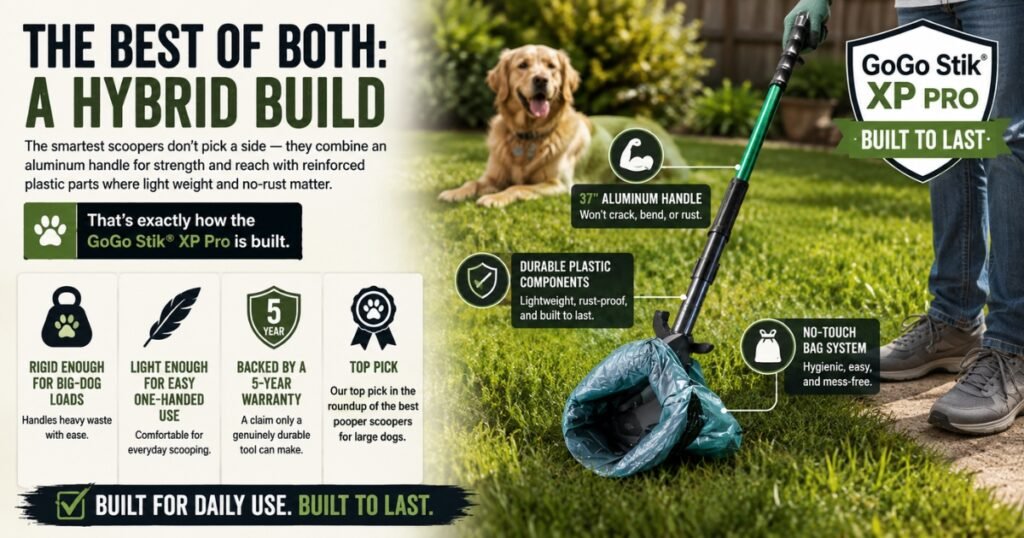
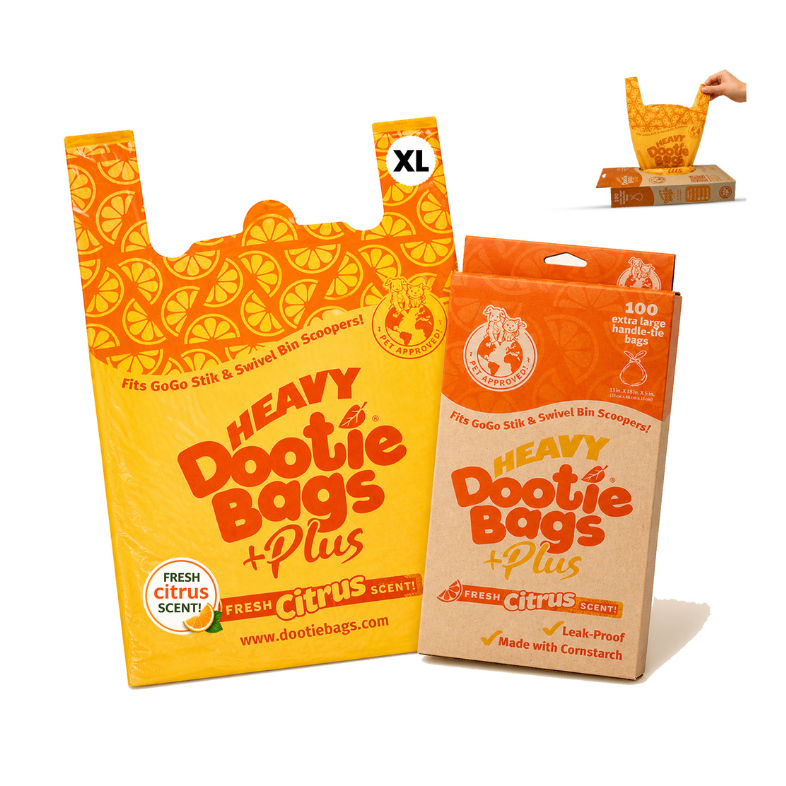
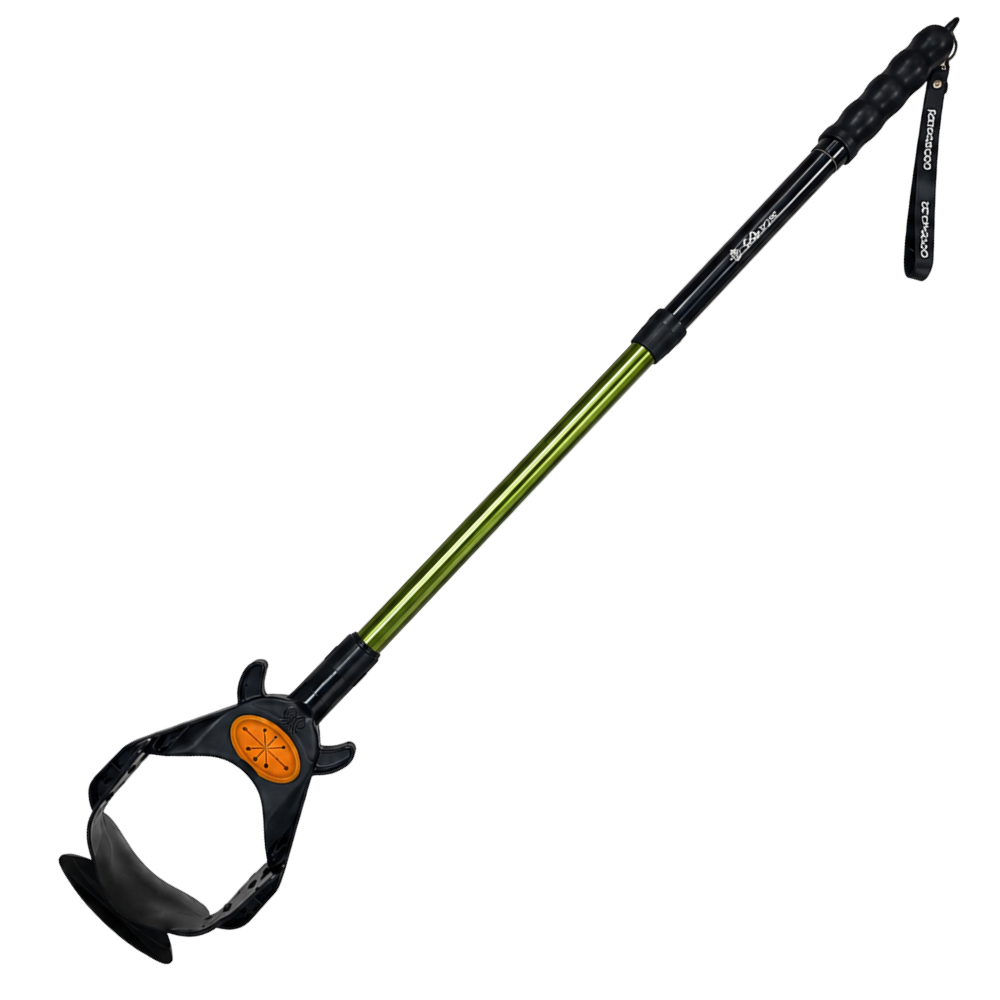
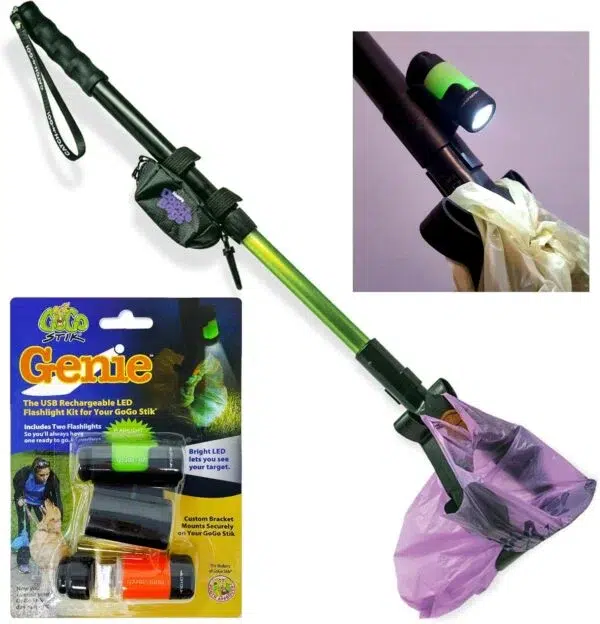
The smartest scoopers don’t pick a side — they combine an aluminum handle for strength and reach with reinforced plastic parts where light weight and no-rust matter. That’s exactly how the GoGo Stik® XP Pro is built: a 37-inch aluminum handle that won’t crack, bend, or rust, paired with durable plastic components and a no-touch bag system. It’s rigid enough for big-dog loads, light enough for easy one-handed use, and it’s backed by a 5-year warranty — a claim only a genuinely durable tool can make. It’s also our top pick in the roundup of the best pooper scoopers for large dogs, precisely because that build survives heavy daily use.
Whatever material you choose, a few habits add years:
| Product | Build | Price | |
|---|---|---|---|
| XP Pro Pooper Scooper 37″ + 100 Heavy Dootie Bags | Aluminum handle + reinforced plastic, 5-year warranty | $22.95 |
Order Now → |
Price shown at time of writing; current promotions apply automatically at checkout.
For the handle, aluminum is more durable — it won’t crack in cold, degrade in sun, or flex under load. Quality reinforced plastic is fine for lighter parts. A hybrid of both is ideal.
Aluminum ones don’t. Only steel-based tools rust, which is why quality scoopers use aluminum for the handle.
Thin plastic gets brittle in cold and sun and flexes under heavy loads, so it fatigues and cracks at stress points — usually within a season or two of daily use.
No — aluminum is one of the lightest structural metals, so a quality aluminum handle stays easy to control with one hand while being far more rigid and durable than plastic.
A well-built hybrid tool should last many years of daily use — which is why the XP Pro can be backed by a 5-year warranty. Cheap all-plastic tools often fail within a season or two.
Metal wins the durability contest where it counts — the handle — while good plastic has its place in lighter parts. Skip the all-plastic bargain tools that crack by winter, and choose a hybrid build like the aluminum-handled XP Pro that’s made to last for years.

Alec Beaton is the Founder & Inventor of Pooch Approved Products and GoGo Stik®. Inspired by real-life pet parenting, he turns everyday cleanup challenges into simple, innovative solutions that make life better for pets and their people.
Can a dog poop vacuum really clean your yard? Here is how suction, powered scoopers and yard robots work, what they struggle with, and what to buy.

A claw pooper scooper is cheap and one-handed, but it fails on soft stool and gravel. Here are 5 checks before you buy, plus a cleaner alternative.

How long can a dog go without pooping? Learn normal timeframes, warning signs of constipation, and when to call the vet. Clear, vet-backed answers.