Home/Blogs/How to Teach Your Dog to Love Being Cleaned with Dog Wipes
How to Teach Your Dog to Love Being Cleaned with Dog Wipes
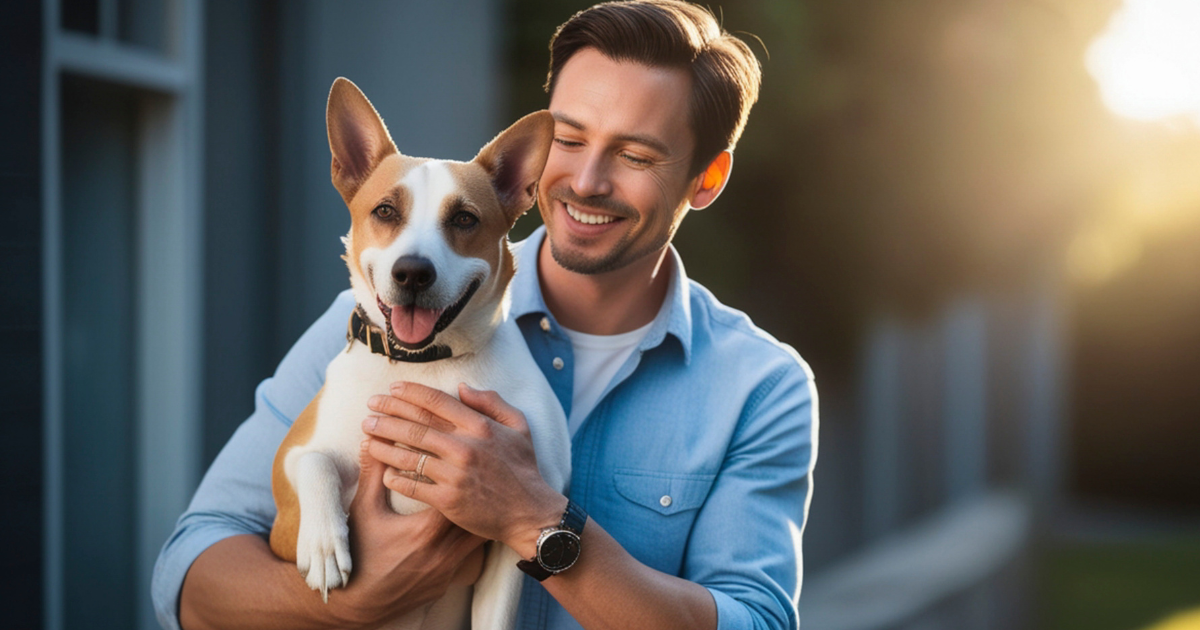
Keeping your dog clean doesn’t have to be a wrestling match. Many pet parents struggle when it comes to wiping down their furry friend after walks, messy meals, or muddy adventures. However, with patience and the right approach, you can transform cleanup time into a bonding experience your dog actually enjoys.
Why Dog Wipes Matter for Your Pet’s Health
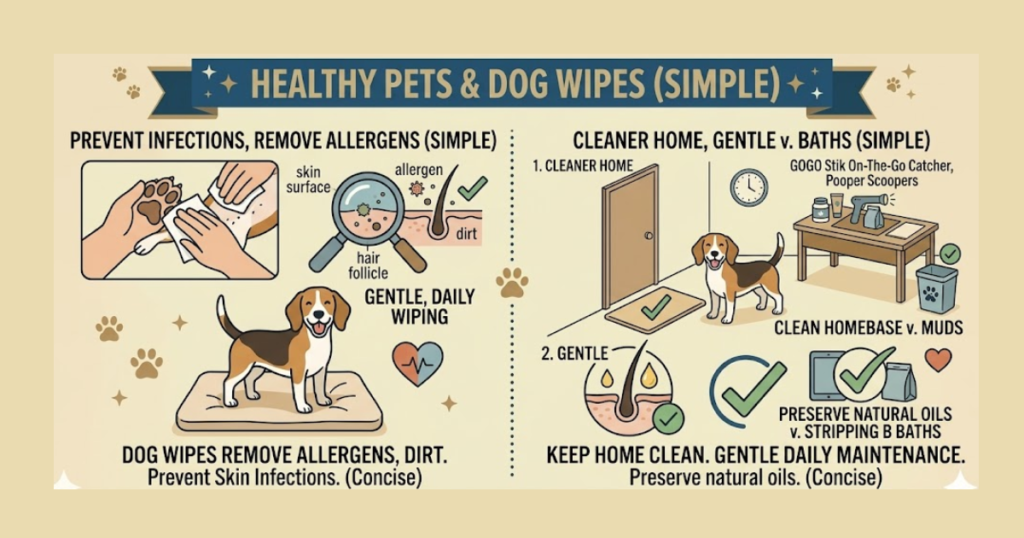
Regular cleaning with dog wipes helps prevent skin infections, removes allergens, and keeps your home cleaner. Unlike frequent baths that can strip natural oils from your dog’s coat, wipes offer a gentle alternative for daily maintenance. They’re especially useful for cleaning paws after outdoor activities, wiping muddy bellies, or freshening up your pet between baths.
Start Young When Possible
Puppies adapt more quickly to new routines than adult dogs. If you have a young pup, start introducing wipes during their early socialization period (between 3-14 weeks). That said, older dogs can absolutely learn to accept and even enjoy wipe sessions—it just takes a bit more time and consistency.
Create Positive First Impressions
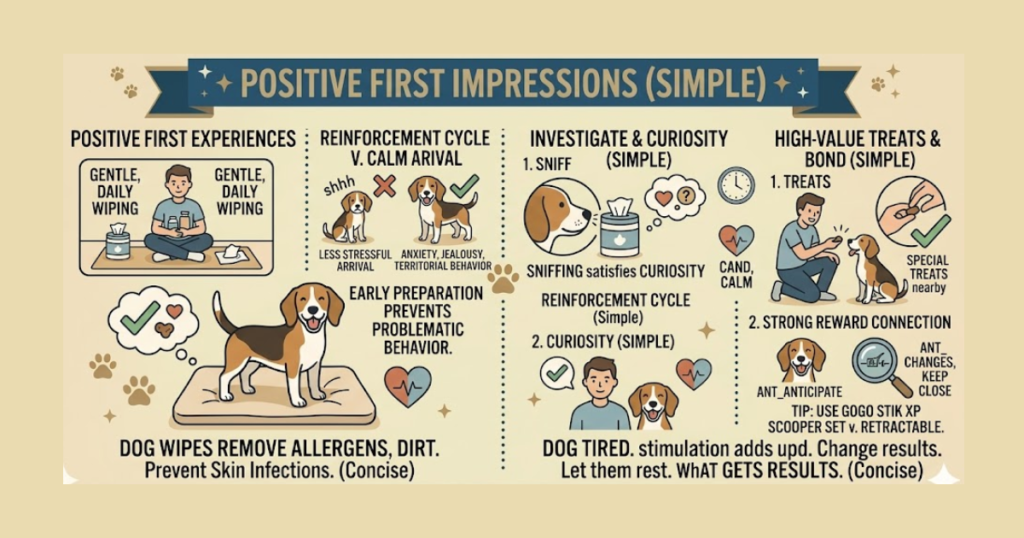
Your dog’s initial experience with wipes sets the tone for future sessions. Follow these steps to build a positive association:
Choose the Right Moment Pick a time when your dog is calm and relaxed, not immediately after energetic play. A tired dog is often more receptive to new experiences.
Let Them Investigate Before wiping, allow your dog to sniff the wipe container and a single wipe. This satisfies their curiosity and reduces anxiety. Consequently, they’ll feel more in control of the situation.
Pair with High-Value Treats Keep special treats nearby that your dog only gets during wipe sessions. This creates a strong reward connection. Therefore, your dog starts looking forward to cleanup time.
The Gradual Desensitization Process
Rushing the process often backfires. Instead, break training into small, manageable steps:
Week 1: Touch Without Wiping
Simply touch your dog’s paws, face, and body with your dry hand while offering treats. This builds tolerance for handling before introducing the wipe texture.
Week 2: Introduce the Wipe Texture
Hold a wipe in your hand and gently touch one paw for just a second. Immediately reward. Repeat with different paws and body areas. Keep sessions under five minutes to prevent overwhelming your pet.
Week 3: Quick Wipe Sessions
Perform brief, actual wipes on one or two paws. Praise enthusiastically and offer treats. Gradually increase the number of paws and body areas you clean.
Week 4 and Beyond: Full Routine
Work up to complete wipe-downs. Maintain the treat rewards, though you can eventually reduce frequency as your dog becomes comfortable.
Choose Quality Products
Not all dog wipes are created equal. Pet wipes designed specifically for dogs contain safe, pH-balanced ingredients that won’t irritate sensitive skin. Look for options that are fragrance-free or use natural scents like citrus, which many dogs find pleasant.
Avoid human baby wipes, as they may contain chemicals or fragrances that can harm pets. Quality dog wipes should be thick enough to clean effectively without tearing, yet soft enough for comfortable use on delicate areas.
Use Calming Techniques During Sessions
Your energy directly affects your dog’s response. Stay relaxed and speak in a soothing, upbeat tone throughout the process. If your dog shows signs of stress (panting, whining, or pulling away), pause and let them settle before continuing.
Consider these calming strategies:
Play soft background music
Offer a lick mat or stuffed Kong to occupy their mouth
Have a helper provide gentle pets while you wipe
Practice deep breathing yourself to maintain calm energy
Focus on Sensitive Areas Gradually
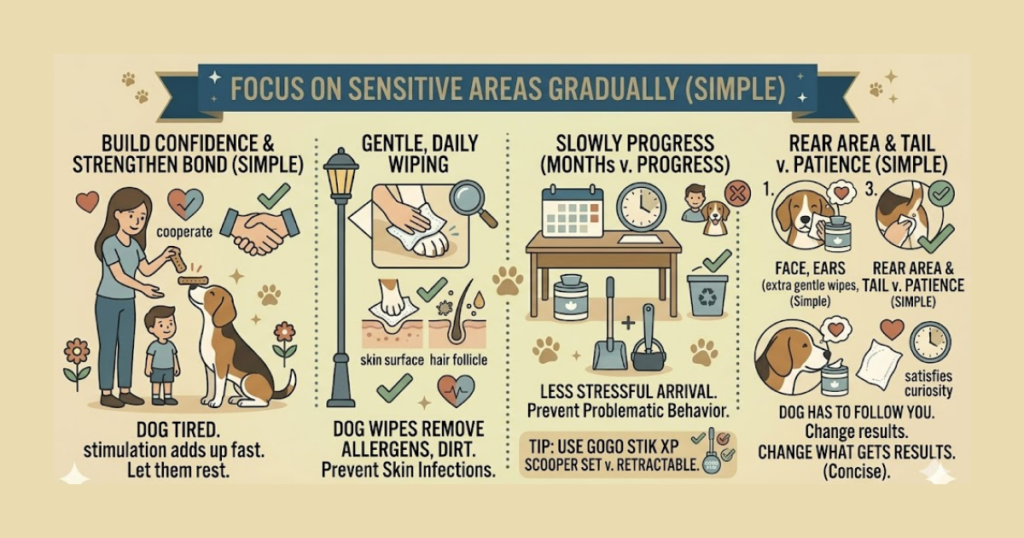
Paws are usually the easiest starting point since most dogs tolerate paw handling relatively well. Once comfortable with paw wipes, slowly progress to:
Legs and belly
Back and sides
Face and ears (use extra gentle wipes)
Rear end and tail area
The rear end often requires the most patience. Take your time building up to this area, and always reward generously when your dog cooperates.
Make It Part of Your Routine
Consistency helps your dog know what to expect. Try wiping at the same time each day—for example, right after your evening walk. Routines provide structure and reduce anxiety because dogs thrive on predictability.
Similarly, always follow the same sequence. You might start with the front left paw, then front right, back left, back right, then move to the body. This predictable pattern helps your dog relax into the process.
Troubleshooting Common Challenges
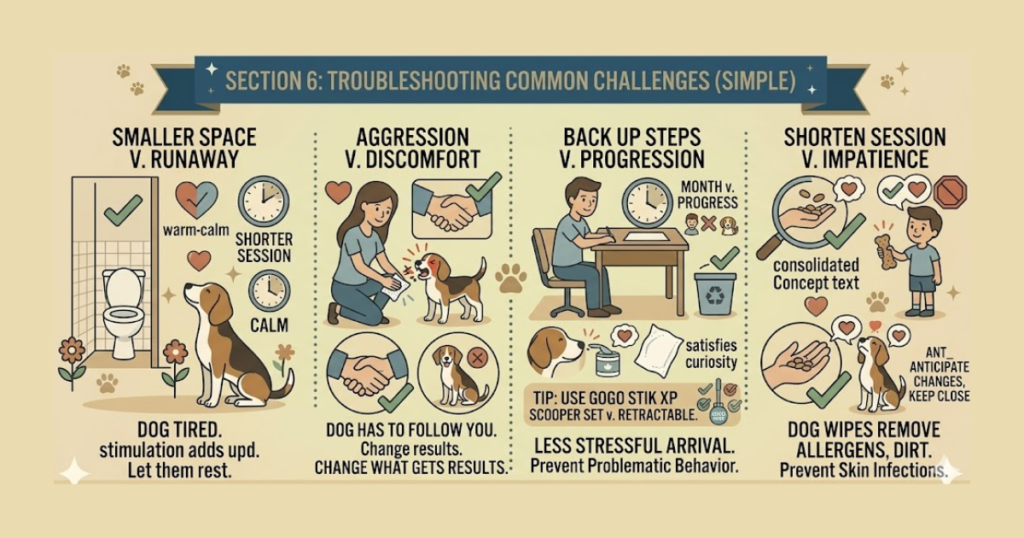
My dog keeps running away: Start in a smaller space where they can’t easily escape. Use higher-value treats and shorter sessions. On the other hand, never chase or force them, as this creates negative associations.
They snap or growl when I wipe certain areas: This indicates discomfort or past negative experiences. Back up several steps in the training process. Work with a professional trainer if aggression persists.
They’re fine at first but get impatient: You’re likely going too long. Shorten your sessions and end on a positive note before they lose patience. Gradually increase duration over weeks.
Pair Wipes with Other Cleanup Tools
Dog wipes work best as part of a complete hygiene system. For instance, combine regular wiping with proper waste removal using quality cleanup tools and waste bags. A clean yard means less dirt tracked indoors, which reduces how often you need to wipe your dog down.
Track Progress and Celebrate Wins
Keep a simple log of your training sessions. Note what worked well and what challenged your dog. This helps you identify patterns and adjust your approach accordingly. Even small improvements deserve celebration—every time your dog tolerates an extra second of wiping, you’re moving forward.
Know When to Seek Professional Help
Most dogs respond well to patient, positive training. However, if your dog shows extreme fear, aggression, or anxiety despite weeks of gentle practice, consult a certified dog trainer or veterinary behaviorist. Some dogs have had traumatic grooming experiences that require professional intervention to overcome.
The Long-Term Benefits
Once your dog accepts wipe sessions, you’ll both benefit tremendously. Regular cleaning:
Reduces allergens brought indoors
Prevents dirt and bacteria buildup
Catches skin issues early before they worsen
Strengthens your bond through positive handling
Makes vet visits easier since your dog is comfortable being touched
Final Thoughts
Teaching your dog to love wipe sessions requires patience, consistency, and plenty of rewards. Start slowly, respect your dog’s comfort level, and never rush the process. Over time, what once felt like a chore can become a pleasant routine that keeps your pet healthy and your home cleaner.
The effort you invest now pays dividends for years to come. Soon enough, your dog may even come running when they see you reach for the wipe container—because they know it means treats, attention, and quality time with you.
Keeping your dog clean doesn’t have to be a wrestling match. Many pet parents struggle when it comes to wiping down their furry friend after walks, messy meals, or muddy adventures. However, with patience and the right approach, you can transform cleanup time into a bonding experience your dog actually
Dog anxiety is more common than most pet owners realize. Your furry friend might pace nervously, bark excessively, or hide when stressed. Recognizing these signs early helps you address the root cause before the behavior worsens. Understanding Why Dogs Feel Anxious Dogs experience anxiety for various reasons. Loud noises like
Walking your dog should be one of the best parts of your day — fresh air, bonding time, and a little exercise for both of you. But if your dog is constantly yanking, zigzagging, or dragging you down the street, it stops being fun fast. The good news? Leash pulling