


Pooper Scoopers
Dog Poop Vacuum: Worth It? 7 Real Questions to Ask
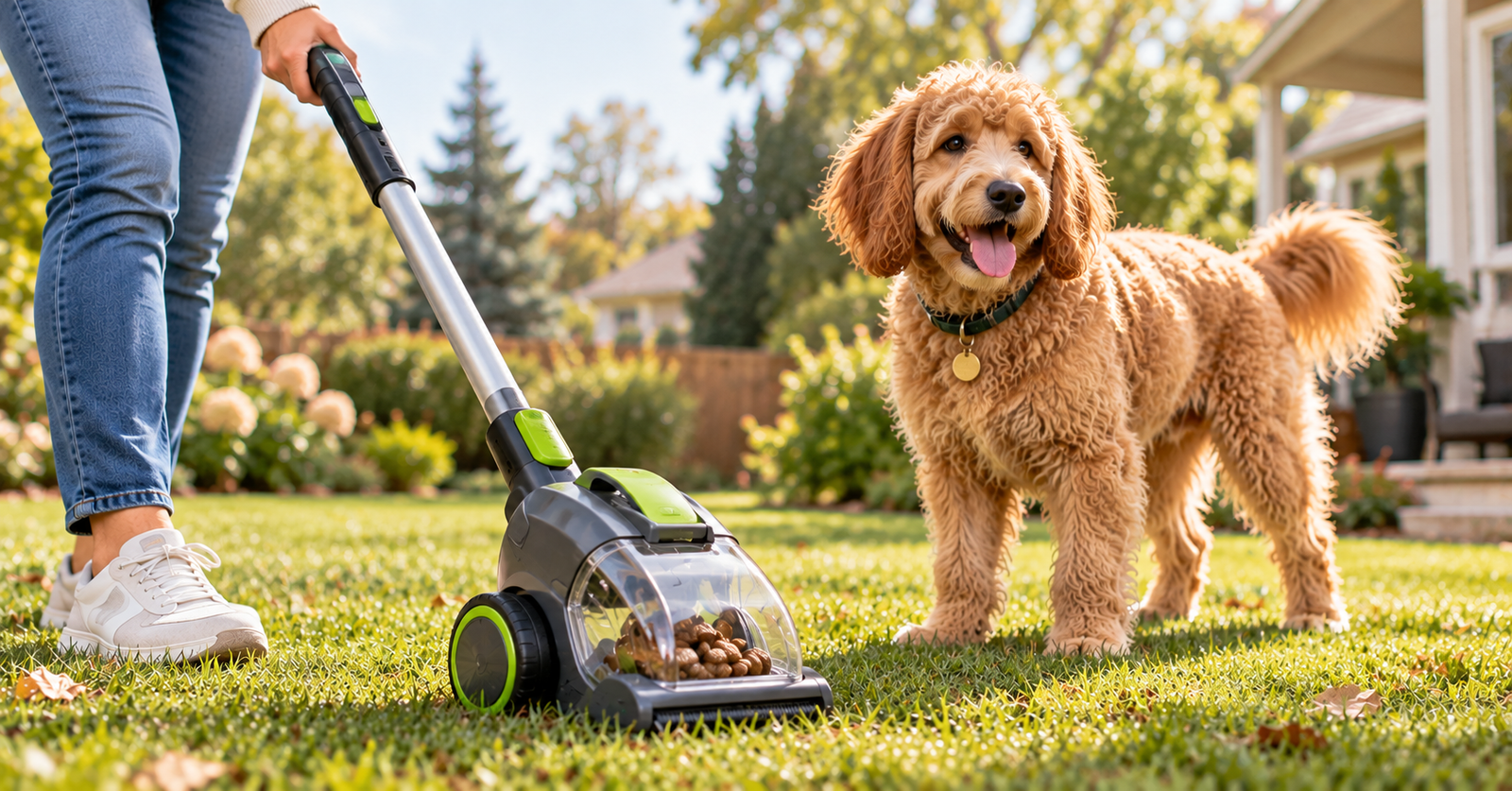
Can a dog poop vacuum really clean your yard? Here is how suction, powered scoopers and yard robots work, what they struggle with, and what to buy.
 Skip to content
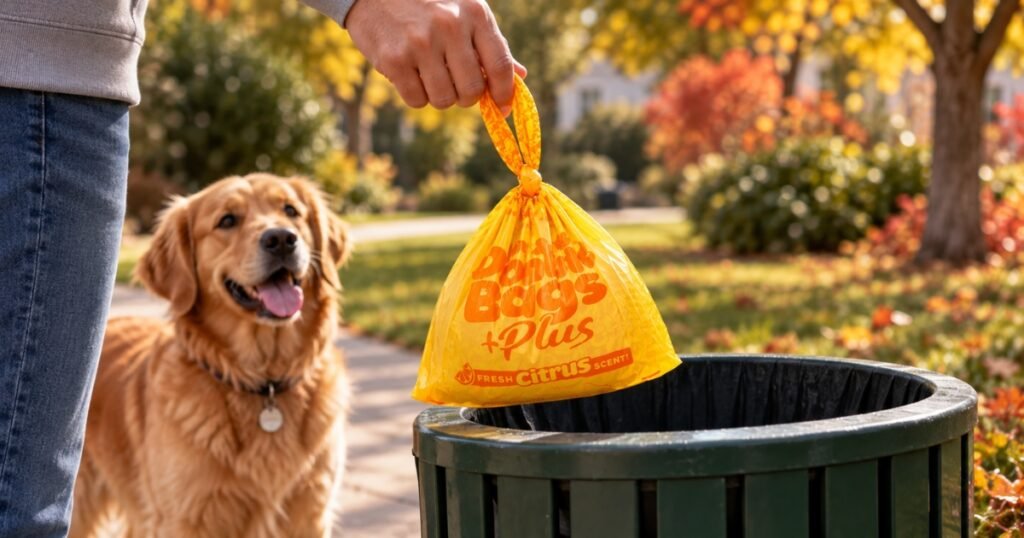
The short answer on how to dispose of dog poop: bag it in a leakproof bag and put it in your household trash. That single method is legal almost everywhere in the US, safe for your family, and faster than any alternative.
Flushing, composting and in-ground digesters all work in specific situations. Below is a plain breakdown of each one, plus the mistakes that turn a simple chore into a health problem.
If you only remember one thing about how to dispose of dog poop, make it this: seal it in a bag and bin it.
Everything else is situational. Flushing depends on your plumbing. Composting depends on space and discipline. Digesters depend on your soil. Bagging works on a sidewalk, in a yard, at a park and in an apartment hallway.
Dog waste is not fertilizer. It carries roundworm and hookworm eggs, plus bacteria that can transfer to people and other pets. The AVMA’s guide to parasites covers which ones show up in dog faeces and how they spread.
Left on the ground, waste also washes into storm drains. The EPA’s yard guidance lists pet waste as a source of nutrient pollution in local waterways.
So the question of how to dispose of dog poop is really a question about keeping pathogens out of soil, water and your house.
This is the default answer to how to dispose of dog poop, and it covers about 95% of situations.
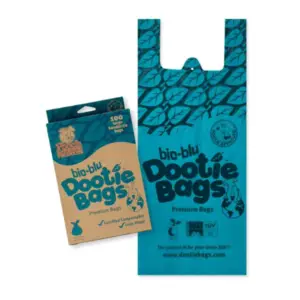
Thin bags fail at the seam when the load is heavy or soft. Large-breed owners should use a wide, thick bag like the Original HEAVY Dootie Bags, which run 18 microns with a 29-inch circumference and tie handles.
Flushing raw dog poop down a toilet is acceptable if you are on a municipal sewer line. Treatment plants are built to handle pathogens. Scrape it in, flush, wash your hands.
Do not flush dog waste if you have a septic tank. It adds solids and hair the system was not sized for, and can shorten the life of your drain field.
Flushable dog poop bags exist, but they only dissolve reliably in certain conditions. Many municipalities ask you to flush the waste and bin the bag. Check your local utility before you make it a habit.
Dog waste can be composted, but not in the bin you use for vegetable scraps. Backyard piles rarely hold the sustained high temperature needed to kill parasite eggs.
If that sounds like a lot of management, it is. Composting suits rural owners with space, not most suburban yards.
A digester is a lidded plastic chamber buried in the yard. You drop waste in, add water and enzyme tablets, and liquid seeps into the surrounding soil.
They work in loose, well-draining soil with a low water table, in a warm climate. Bacterial activity slows in cold weather, so northern owners often see the unit back up over winter.
Heavy clay soil floods the chamber. Never install one near a well, a vegetable garden or a stream.
On trails, beaches and long neighbourhood loops, the hard part of how to dispose of dog poop is carrying the bag until you find a can.
Our guide on carrying poop bags while walking has more hands-free setups. Never stash a bag behind a bush to retrieve later. You will forget.
| Method | Safe? | Best for | Main drawback |
|---|---|---|---|
| Bag and bin | Yes | Everyone | Plastic in landfill |
| Flush (sewer) | Yes | Home cleanup | Not for septic |
| Flushable bags | Sometimes | Indoor accidents | Local rules vary |
| Dog poop composter | With care | Rural yards | Needs high heat |
| In-ground digester | With care | Warm, sandy soil | Fails in clay or cold |
| Leaving it | No | Nothing | Parasites, runoff |
Biodegradable dog poop bags break down faster than conventional plastic under the right conditions. In a sealed landfill, where there is little oxygen, almost nothing breaks down quickly, including them.
That does not make them pointless. They matter most if your waste goes to an industrial composting facility or a dedicated digester.
Judge a bag on leak resistance first. A torn eco bag creates a bigger mess than an intact standard one. For the full breakdown, see biodegradable vs compostable vs regular bags.
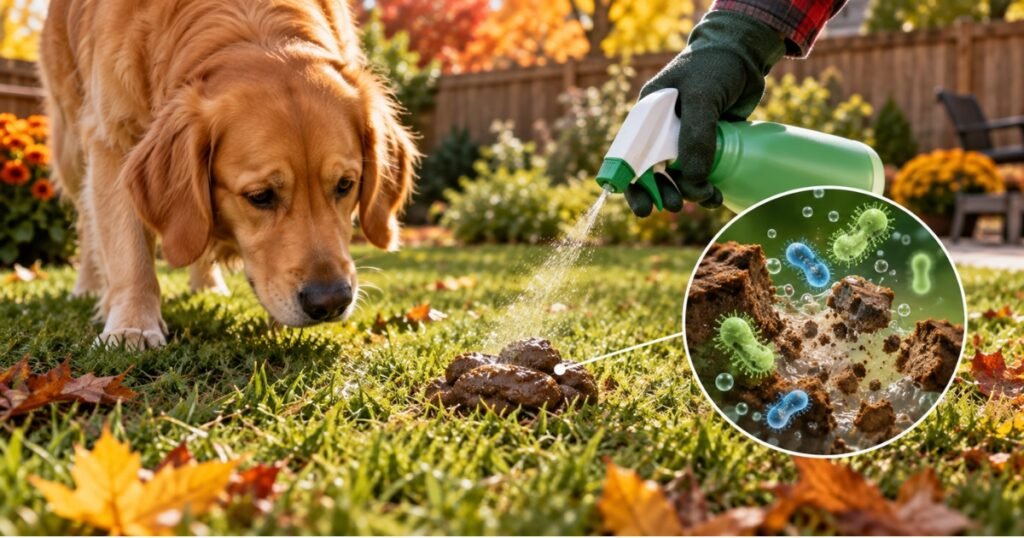
Owners often ask what dissolves dog poop in the yard so they can skip scooping. Enzyme and bacterial dissolver sprays do soften and reduce stools over days, and they help with residue on concrete and turf.
What they do not do is sanitize. Parasite eggs can survive in the soil after the visible waste is gone. Treat dissolvers as a finishing step, not a replacement for pickup.
Lime is the worst offender here. It masks odour, burns paws and grass, and leaves the hazard in place.
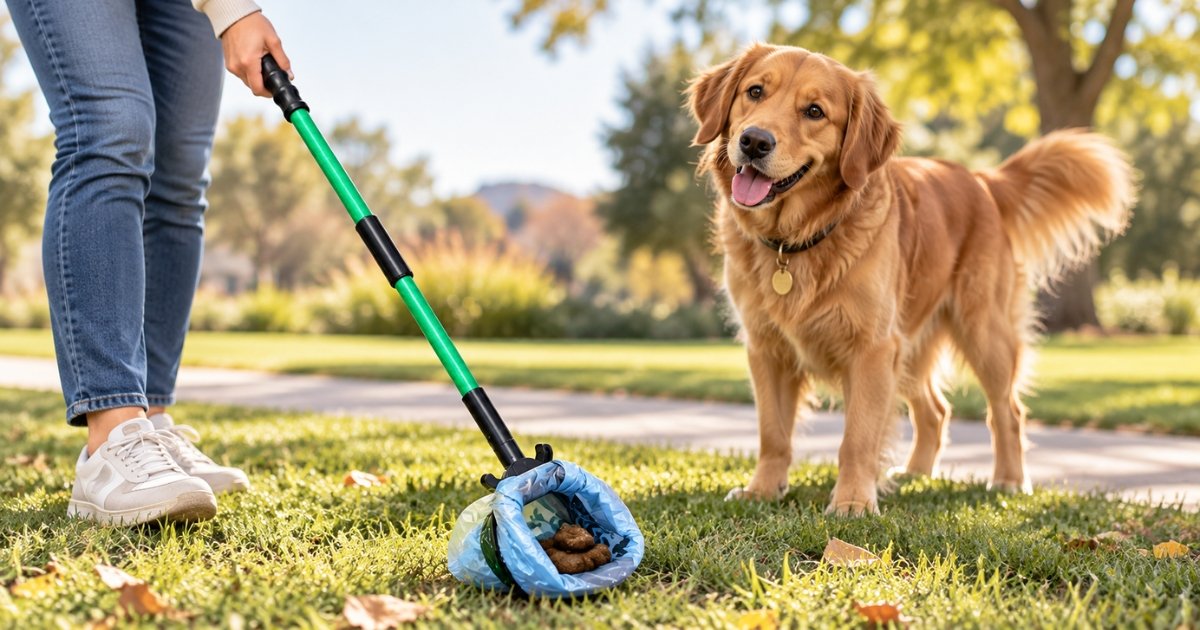
The fastest way to get rid of dog poop in yard space is a long-handle tool and a weekly sweep. Bending 15 times per session is what makes people quit.
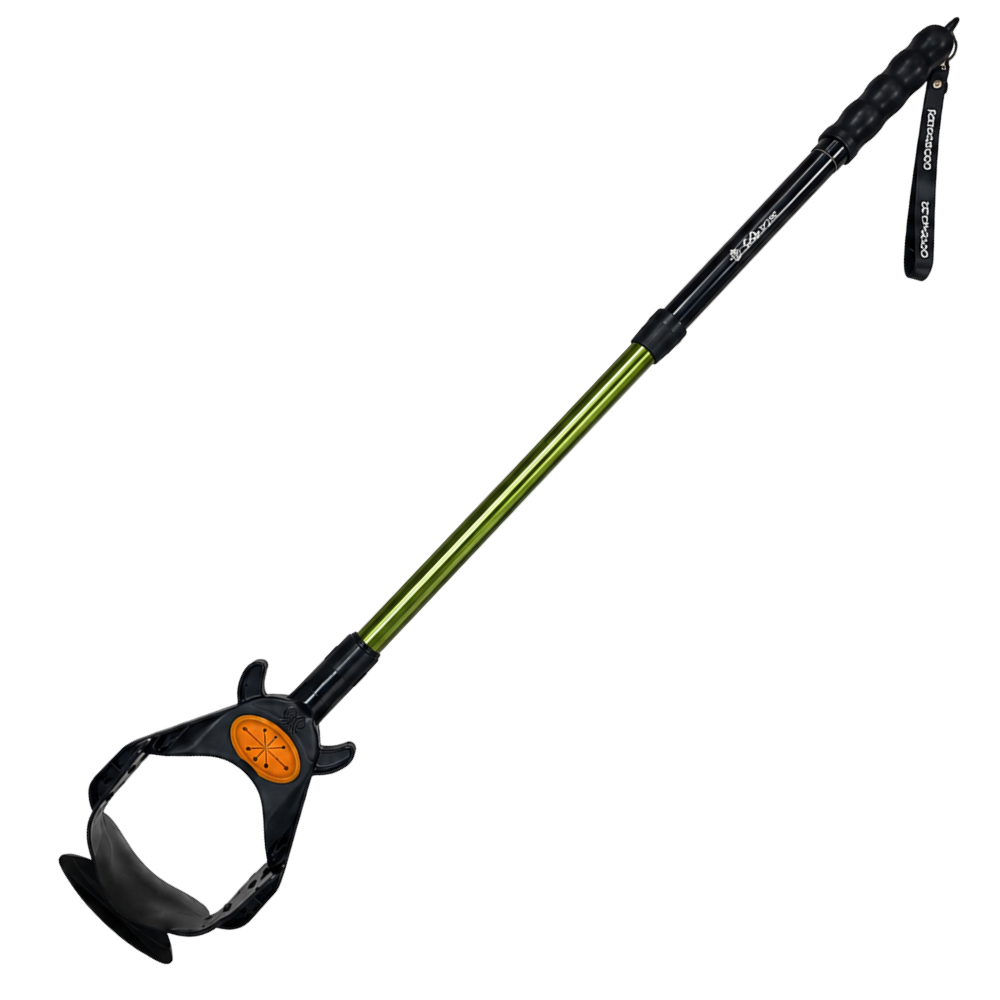
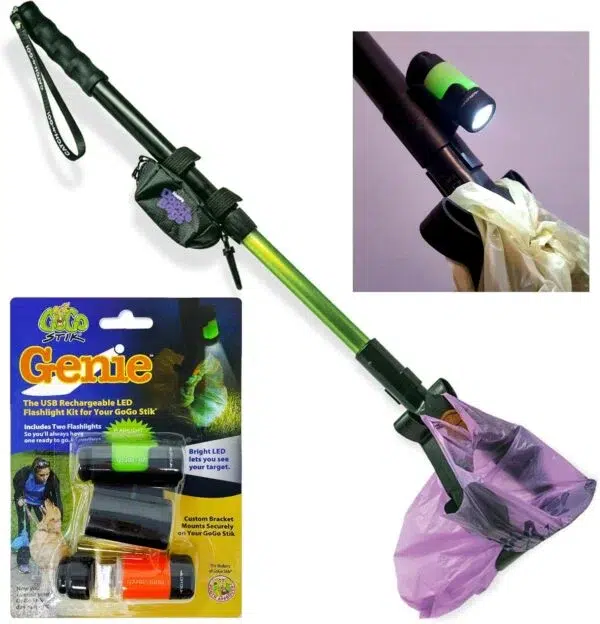
The XP Pro Pooper Scooper holds the bag open at 37 inches, so nothing touches your hands. Add the Dootie Rake-Spade accessory tool for wet grass and mulch.
Knowing how to dispose of dog poop also means knowing where it must not go. Where to put dog poop bags covers the disposal points most owners overlook.
A dog poop disposal system is just three decisions made once: what you scoop with, what you bag with, and where the bag ends up.
Pick one tool, keep it by the door. Keep bags in two places, the leash hook and the scooper. Choose one outdoor can with a tight lid and empty it on trash day.
For walks, a catcher with a built-in dispenser like the Catch-N-Go scooper with bag pouch removes the step where you fumble for a bag one-handed.
Once the system exists, how to dispose of dog poop stops being a decision and becomes a habit.
Yes, if your home is on a municipal sewer. Treatment plants are designed to handle pathogens in human and animal waste. Scrape the stool into the bowl and flush, then wash your hands. Do not flush dog waste if you are on a septic system, and do not flush plastic bags, litter or wipes of any kind along with it.
Yes. Bagging and binning is the standard method almost everywhere in the US and is what most city sanitation departments recommend. Tie the bag securely, use a lidded outdoor can, and never place waste in a neighbour’s bin. The only common exception is yard-waste or green bins, which usually prohibit pet waste. Check your hauler’s rules if you are unsure.
Aim to clear it within a day or two. Odour and fly activity start fast in warm weather, and parasite eggs in the soil can stay viable long after the visible waste disappears. A weekly full sweep plus daily spot pickups keeps the load manageable. Waiting a month means a longer job and a higher chance of lawn burn.
For nearly every US dog owner, how to dispose of dog poop comes down to a sturdy bag and a lidded trash can. Flushing works on sewer lines, composting and digesters work in the right yard, and dissolvers are a finishing touch rather than a substitute for pickup. Pick the method that matches your setup, then make scooping easy enough that you actually do it. A long-handle scooper and a box of leakproof bags by the door is the whole system.

Alec Beaton is the Founder & Inventor of Pooch Approved Products and GoGo Stik®. Inspired by real-life pet parenting, he turns everyday cleanup challenges into simple, innovative solutions that make life better for pets and their people.
Can a dog poop vacuum really clean your yard? Here is how suction, powered scoopers and yard robots work, what they struggle with, and what to buy.
A claw pooper scooper is cheap and one-handed, but it fails on soft stool and gravel. Here are 5 checks before you buy, plus a cleaner alternative.
How long can a dog go without pooping? Learn normal timeframes, warning signs of constipation, and when to call the vet. Clear, vet-backed answers.