Dog Poop Color Chart :Nobody talks about it. Everybody deals with it. And according to veterinarians, almost nobody pays enough attention to it. Your dog’s poop is one of the most informative health indicators available to you as a pet owner — and most of the time it goes unexamined, bagged up, and tossed away without a second glance.
The color, consistency, coating, and content of your dog’s stool can reveal early signs of digestive issues, infections, parasites, dietary problems, organ dysfunction, and more. Catching these signals early can make a genuine difference in your dog’s health outcomes — and potentially save you a very expensive emergency vet visit.
In this complete guide we break down every color, texture, and warning sign your dog’s poop might show — so you know exactly when to watch and wait, when to call your vet, and when to rush to an emergency clinic.
Quick Answer: Healthy dog poop is chocolate brown, firm but not rock-hard, log-shaped, and easy to pick up without it falling apart or smearing. Any significant deviation from this — especially black, red, white, or very pale poop — warrants immediate attention.
What Does Healthy Dog Poop Look Like?
Before examining what goes wrong, it helps to know what normal actually looks like. A healthy dog’s stool has four consistent qualities that vets use as a baseline:
Color: Chocolate brown — the result of bile salts produced by the liver and gallbladder during digestion. Any consistent shade of medium to dark brown is healthy.
Consistency: Firm but not rock-hard. It should hold its log shape but yield slightly under gentle pressure. It should pick up cleanly without smearing or crumbling.
Coating: None. Healthy stool has no visible mucus coating, no blood, no greasy sheen, and no undigested food particles on the surface.
Size and Frequency: Proportional to your dog’s size and meal intake. Most dogs go 1 to 3 times per day. Large breeds produce significantly more volume — which is exactly why heavy-duty waste bags matter.
Vet Tip: Establish a baseline for your dog’s normal poop during healthy periods — color, frequency, and consistency. This makes it significantly easier to spot deviations early when something is off.
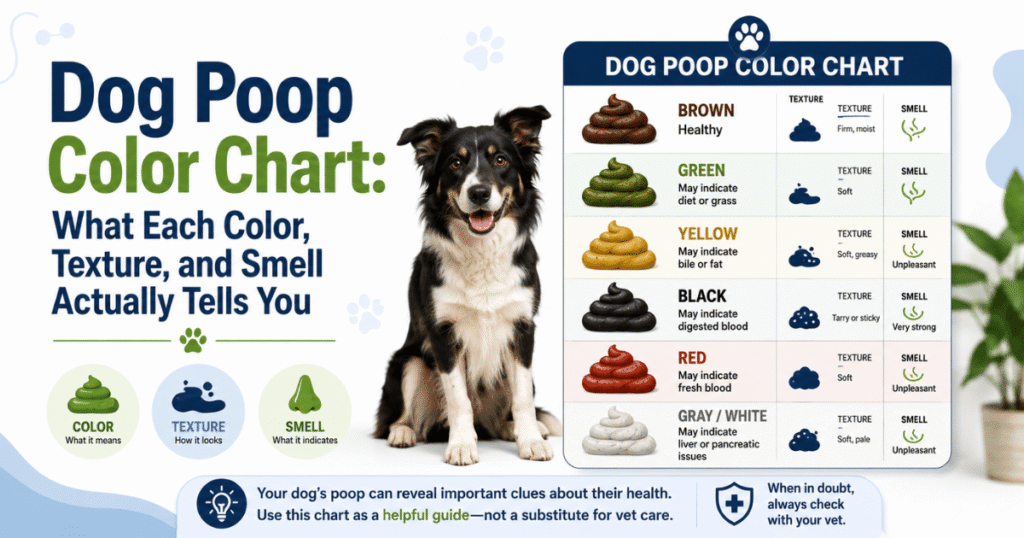
The Complete Dog Poop Color Chart
Use this reference table to identify what your dog’s stool color indicates and what action to take:
Color
What It Means
What To Do
Urgent?
🟤
Chocolate Brown
GOOD: Normal, healthy digestion. Bile is processing correctly.
No action needed. Keep up the good work!
NO
🟫
Dark Brown
GOOD: Can be slightly darker after high-protein meals or certain foods.
Normal variation. Monitor if it persists more than 2 days.
NO
🟢
Green
Grass eating (most common), rapid gut transit, bile issues, or rat poison ingestion.
If occasional: monitor. If frequent or intense green: call vet immediately.
MAYBE
🟡
Yellow / Pale
Liver or gallbladder issue, food intolerance, coccidia, or diet change.
Vet visit recommended if it persists beyond 24 hours.
MAYBE
🟠
Orange
Bile duct issues, diet high in beta-carotene, or liver problems.
Monitor for 24 hours. Vet if it persists or dog seems unwell.
MAYBE
⬛
Black / Tarry
URGENT: Digested blood from upper GI tract — stomach or small intestine bleeding.
Emergency vet immediately. Do not wait.
YES
🔴
Bright Red Streaks
Fresh blood from lower GI — colon, rectum, or anal glands. Colitis, injury, or polyps.
Call vet same day. Emergency if large amounts of blood.
YES
⬜
White / Chalky
Too much calcium (raw bone diet), or old poop that has dried out.
Reduce bone content in diet. Normal if poop was left outside.
MAYBE
⬜
White Specks
Tapeworm segments — appear as small white rice-like particles in stool.
Vet visit required. Deworming treatment needed.
YES
🩶
Gray / Greasy
Exocrine pancreatic insufficiency (EPI) or fat malabsorption. Stool may smell very bad.
Vet visit required. Blood panel and pancreatic testing needed.
YES
🟣
Purple / Very Dark Red
Hemorrhagic gastroenteritis (HGE) — a serious and life-threatening condition.
Emergency vet immediately. HGE can be fatal without rapid treatment.
YES
Never Wait on These Colors: Black, bright red, purple, white specks, or gray/greasy stool are all medical emergencies or urgent situations requiring immediate vet contact. When in doubt, call your vet — they would always rather hear from you than have you wait.
Dog Poop Color Chart: The Bristol Stool Scale for Dogs
Consistency matters as much as color. Veterinarians use a consistency scoring system similar to the human Bristol Stool Scale to evaluate canine stool health. Here is the simplified version for dog owners:
Type
Appearance
What It Means
What To Do
Type 1 – Rock Hard
Separate dry pellets, crumbles
Constipation, dehydration, too much bone in diet
Increase water. Add fiber. Reduce bone content. Vet if persistent.
Type 2 – Firm Logs
Segmented but holds shape
Slightly dry but acceptable. Could use more hydration
Ensure fresh water always available. Monitor.
Type 3 – Perfect
Smooth log, slight moisture, picks up cleanly
IDEAL. Healthy digestion and diet
Keep doing exactly what you are doing.
Type 4 – Soft Log
Soft, loses shape slightly, leaves some residue
Mild dietary imbalance or recent food change
Monitor for 24 to 48 hours. Check for food change.
Type 5 – Soft Piles
No defined shape, soft mounds
Digestive upset, stress, dietary issue, or mild infection
Bland diet for 24 hours. Vet if does not resolve.
Type 6 – Mushy
Liquid edges, hard to pick up
Colitis, infection, parasites, or food intolerance
Vet visit if it persists beyond 24 hours.
Type 7 – Liquid
Pure liquid, no form whatsoever
Severe diarrhea — risk of dehydration. Multiple possible causes.
Vet visit same day. Emergency if bloody or dog seems weak.
What Coatings and Extras in Dog Poop Mean
Sometimes the color and consistency are normal but there is something ON the stool that warrants attention. Here is what to look for:
Mucus Coating: A thin mucus coating is normal and helps poop move through the colon. A thick, jelly-like mucus coating — especially with blood — indicates colitis or large intestine irritation. See a vet if it appears consistently.
Greasy or Shiny Surface: Fat malabsorption or exocrine pancreatic insufficiency. The stool often smells particularly foul. Vet visit required for proper diagnosis.
White Rice-Like Specks: Tapeworm segments. These may be visible in fresh stool or dried around your dog’s rear end. Requires deworming treatment from a vet.
Moving Specks: Roundworms or other intestinal parasites. Always requires immediate vet treatment.
Undigested Food: Occasional vegetable or grain pieces are normal. Consistent undigested food indicates malabsorption or that food is passing too quickly through the digestive tract.
Hair or Fur: Common in dogs that self-groom excessively. Usually not a concern in small amounts but large amounts of fur in stool can indicate skin irritation or anxiety-related over-grooming.
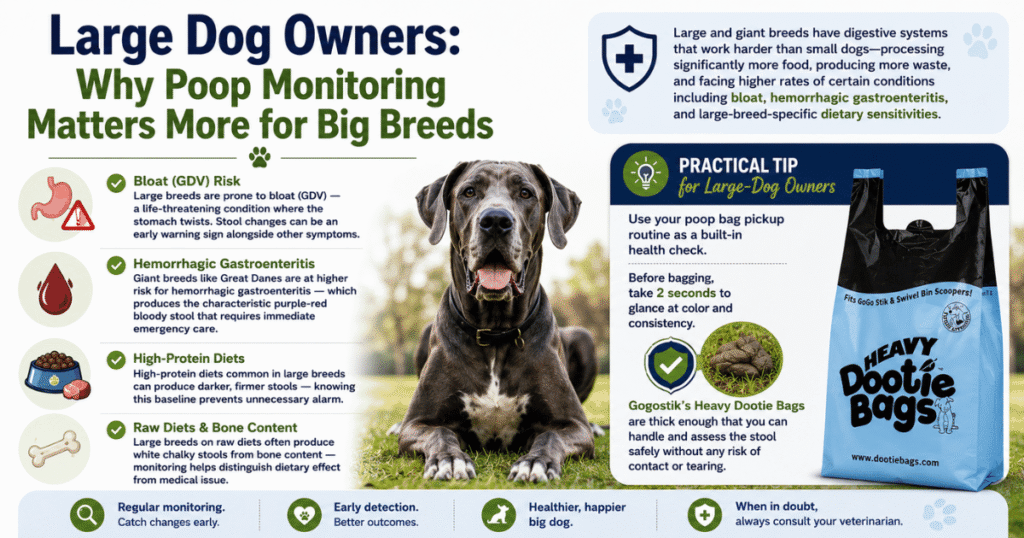
Large Dog Owners: Why Poop Monitoring Matters More for Big Breeds
Large and giant breeds have digestive systems that work harder than small dogs — processing significantly more food, producing more waste, and facing higher rates of certain conditions including bloat, hemorrhagic gastroenteritis, and large-breed-specific dietary sensitivities.
For large-breed dog owners, regular poop monitoring is especially valuable because:
Large breeds are prone to bloat (GDV) — a life-threatening condition where the stomach twists. Stool changes can be an early warning sign alongside other symptoms.
Giant breeds like Great Danes are at higher risk for hemorrhagic gastroenteritis — which produces the characteristic purple-red bloody stool that requires immediate emergency care.
High-protein diets common in large breeds can produce darker, firmer stools — knowing this baseline prevents unnecessary alarm.
Large breeds on raw diets often produce white chalky stools from bone content — monitoring helps distinguish dietary effect from medical issue.
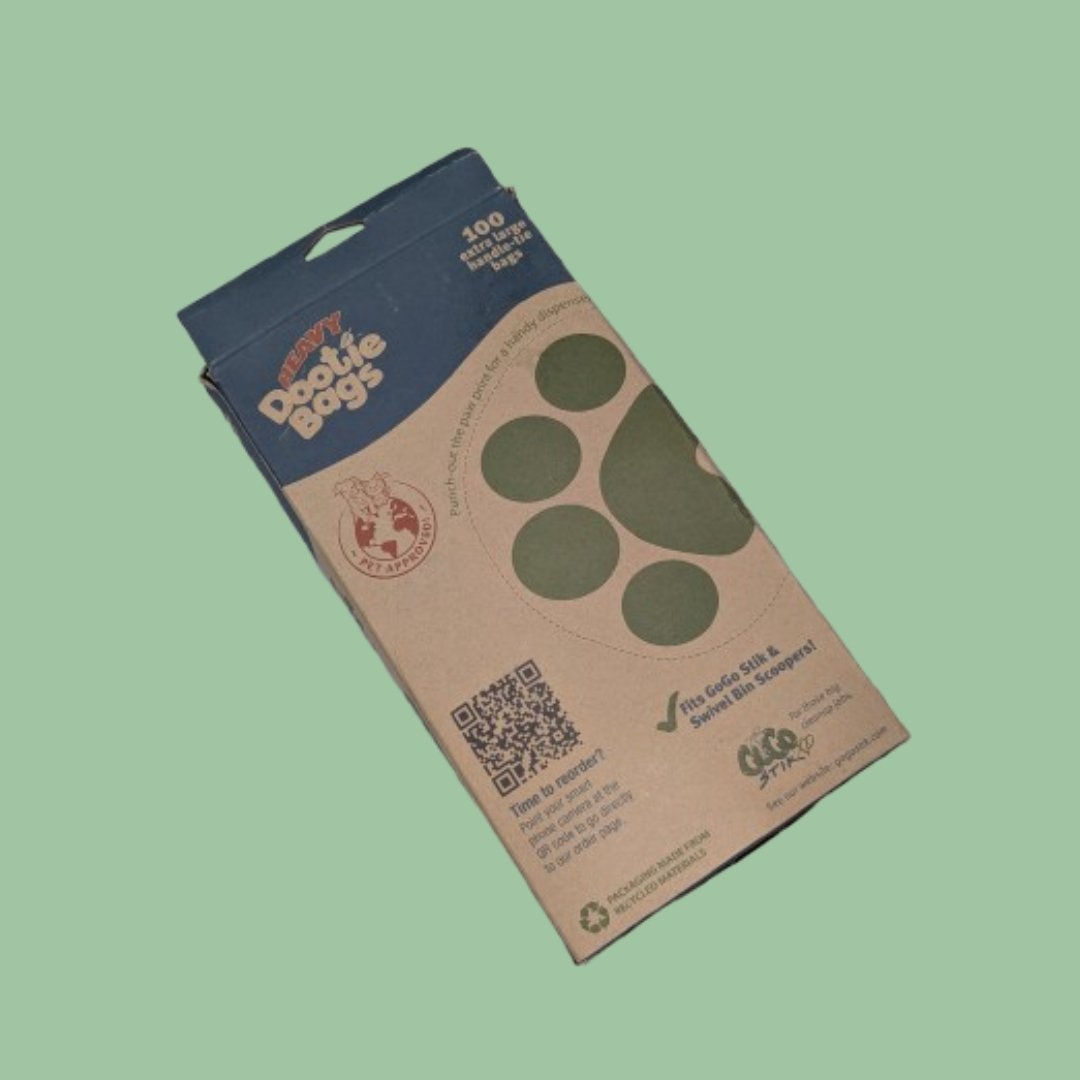
Practical Tip for Large-Dog Owners: Use your poop bag pickup routine as a built-in health check. Before bagging, take 2 seconds to glance at color and consistency. Gogostik’s Heavy Dootie Bags are thick enough that you can handle and assess the stool safely without any risk of contact or tearing.
How Diet Directly Affects Dog Poop Color and Consistency
Many Dog Poop Color Chart and consistency changes are diet-related rather than medical emergencies. Here is how common dietary factors affect what you see:
High Protein Diet: Produces darker, firmer, smaller stools. Very normal for large breeds on quality kibble or raw diets.
Food Change: Any transition to a new food should happen over 7 to 10 days. Abrupt changes cause soft stool, loose poop, and temporary color shifts.
Too Many Treats: Rich treats cause soft, discolored stool. The 10% rule applies — treats should be no more than 10% of daily calorie intake.
Raw Bone Content: Too much bone produces white, crumbly, chalky stool. Reduce bone content if you see this consistently.
Vegetables and Beta-Carotene: Carrots, sweet potato, and pumpkin can produce orange-tinted stool. Completely normal if diet-related.
Grass Eating: Green stool after grass consumption is very common and usually harmless. Persistent green stool without grass eating is a different matter entirely.
When to Call the Vet: A Clear Decision Guide
Use this simple framework to decide when to act:
Call Your Vet Immediately (Emergency):
Black or tarry stool — digested blood from upper GI
Large amounts of bright red blood in stool
Purple or very dark maroon bloody diarrhea (possible HGE)
White worm-like movement in stool
Stool changes combined with vomiting, lethargy, bloating, or loss of appetite
Poop with a raspberry jam appearance — classic HGE presentation
Call Your Vet Within 24 Hours:
Yellow or pale stool persisting more than one day
Gray or greasy stool that smells particularly foul
White rice-like specks (tapeworm segments)
Consistent mucus coating on every stool
Liquid diarrhea lasting more than 24 hours in an adult dog
Monitor for 24 to 48 Hours First:
Green stool after obvious grass eating
Slightly soft stool after a food change
Orange tint after high beta-carotene foods
One or two episodes of loose stool without other symptoms
Start Paying Attention Dog Poop Color Chart
Your dog cannot tell you when something hurts or when something feels off in their digestion. Their stool can. The two seconds it takes to glance at color and consistency during your daily pickup routine is one of the simplest and most effective things you can do for your dog’s long-term health.
Healthy is chocolate brown, firm, log-shaped, and coating-free. Anything that deviates significantly and persists deserves attention. When in doubt, photograph it and call your vet — most clinics are happy to give quick phone guidance before you make the trip.
Make poop monitoring part of your routine. Gogostik’s Heavy Dootie Bags give you a safe, clean pickup experience every time — so you can check what matters without any mess. Shop at gogostik.com with free shipping on orders over $50.
Frequently Asked Questions
What does healthy dog poop look like?
Healthy dog poop is chocolate brown, firm but not rock-hard, log-shaped, easy to pick up cleanly, and has no coating of mucus or blood. It should be proportional in size to your dog’s body and meal intake.
What does green dog poop mean?
Green dog poop most commonly means your dog ate a lot of grass. However persistent green stool without obvious grass eating can indicate rapid gut transit, bile issues, or in rare cases rat poison ingestion — which requires immediate emergency care
What does black dog poop mean in dogs?
Black or tarry dog poop indicates digested blood from the upper gastrointestinal tract — the stomach or small intestine. This is a medical emergency. Contact your vet or emergency clinic immediately.
You know the moment. You’ve just picked up after your dog, the bag is fuller than you’d like, and now you’re trying to tie it shut without your fingers getting anywhere near the contents. With a standard bag, that usually means a clumsy double-knot attempt right at the opening close
Unscented Heavy Duty Dog Bags : If you’ve ever opened a roll of scented dog poop bags and immediately regretted it, you already know the problem. That artificial lavender or lemon scent doesn’t neutralize anything it just blends with the smell underneath it, and somehow the combination is worse than
If you own a Great Dane, Saint Bernard, Mastiff, Newfoundland, Irish Wolfhound, or Bernese Mountain Dog, you have probably stood on a sidewalk holding a bag that is clearly not big enough for the job. Maybe it barely closed. Maybe it split. Maybe you ended up using two or three