




Dog Poop Etiquette & Rules
7 Questions to Ask a Pet Waste Removal Service
Hiring a pet waste removal service? Ask these 7 questions first – what’s included, how quotes are priced, winter policy, and when DIY is cheaper.

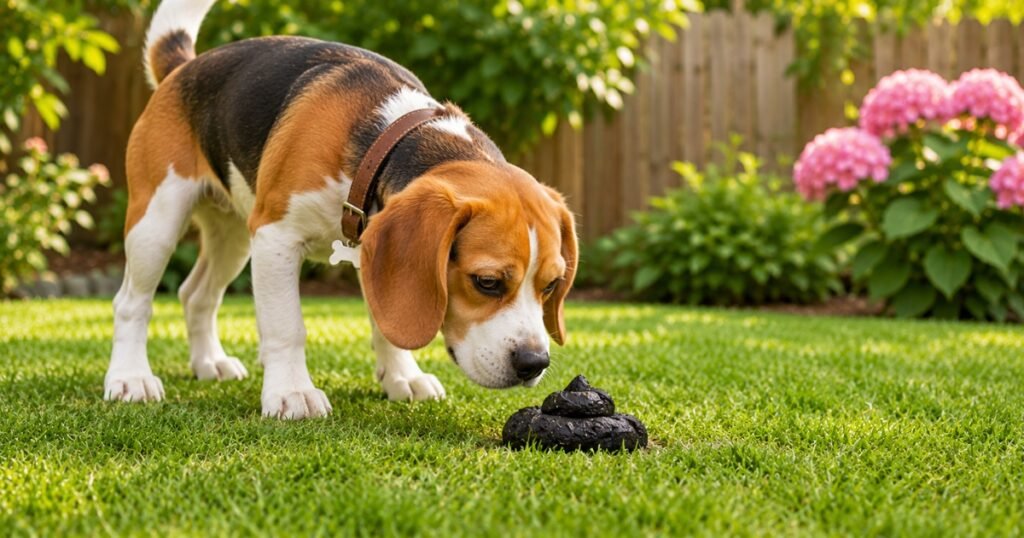
Genuinely black, tarry, sticky stool is a reason to call your veterinarian the same day, not something to watch for a week. If your dog also has pale gums, is vomiting repeatedly, is weak or will not stand, go straight to an emergency vet instead of waiting for an appointment. Black dog poop can also come from food, supplements or something scavenged in the yard, and this page helps you tell what you are looking at and describe it accurately when you call.
Do not wait for a regular appointment if any of the following are present alongside dark stool:
Any one of these turns a phone call into a trip.
Blood that enters the digestive tract high up, in the stomach or small intestine, is partly digested before it leaves. That process turns it dark, so it shows up as black, tarry stool rather than as red streaks. Vets call this melena, and because it points upstream rather than to a scratch near the exit, it is handled quickly.
That is mechanism, not a diagnosis. Dark droppings have several harmless explanations too, and only an examination can tell which applies to your dog. For context on other shades, see what stool color says about health.
This is the possibility that sets the default. Blood from the stomach or upper intestine is broken down on the way through and darkens the stool, often making it sticky and shiny. You cannot judge the amount by looking. If the stool matches that description, same-day contact with your vet is the right call even if your dog is bouncing around the yard.
Iron products and bismuth-containing stomach remedies are well known for darkening stool. So are a few other prescriptions. Write down every medication, supplement and chew your dog receives, including doses and when each was last given, and read that list to the vet. Do not stop, start or adjust anything on your own.
Raw diets, organ meat such as liver, blood meal in some foods, and very dark treats can all produce dark dog poop with nothing wrong at all. A recent food switch is one of the first questions a vet asks, so check your bag for a new formula or batch and note the date you changed.
Charcoal, fire ash, soil, bark mulch, compost and bin contents all darken what comes out the other end. This is common and often looks worse than it is. It is also unpredictable, because what was swallowed matters more than the colour. Mention anything your dog could have reached in the last two or three days.
Stool that sits longer in the colon loses water, so it comes out darker and harder. The useful distinction: this usually looks dry, firm and crumbly, and breaks apart when you pick it up. Tarry stool does the opposite, smearing and sticking. Note which one you are seeing before you call.
Some dogs simply produce very dark brown stool on their usual food. Wet grass, deep shade, dark soil and a phone camera that boosts contrast all push brown towards black. Lighting is a real explanation, but it belongs at the end of the list, after the possibilities above have been ruled in or out by someone who can examine your dog.
Smear a small amount on white paper or a white paper towel using a stick or the edge of a bag, then look at the thin outer edge of the smear in daylight.
This is an observation that helps you describe what you see. It does not rule anything out, and it is not a substitute for the call.
| Appearance | What it can suggest | How fast to act |
|---|---|---|
| Black, shiny, tarry or sticky | Possible digested blood from higher in the gut; also seen with iron or bismuth products | Call the vet today; emergency vet if gums are pale or the dog is weak |
| Very dark brown, dry, crumbly | Can go with slow transit, low water intake or a dark diet | Mention it today if it repeats or your dog seems off |
| Dark with fresh red streaks | Can suggest irritation or bleeding lower down, nearer the exit | Call the vet today |
| Normal brown, formed, dog acting normally | Usually ordinary variation | No action needed |
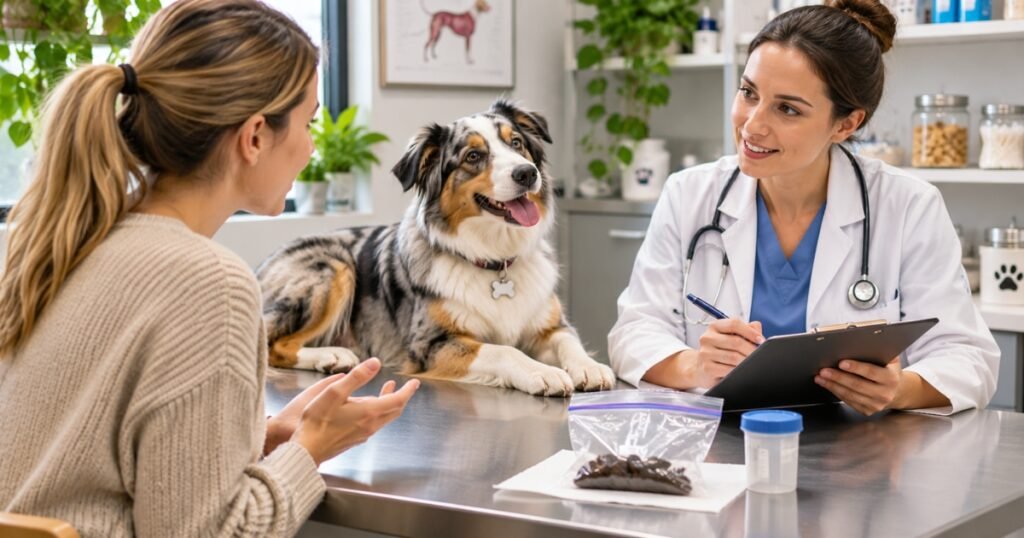
Gather this first. It makes the call faster and the advice better.
Bag a small fresh sample and bring it. Stool samples are also how vets check for intestinal parasites, and checking for worms in dog poop is part of the same look.
Puppies, very small dogs and older dogs with existing health problems tolerate less before they start to decline, and they can go downhill faster than a healthy adult. If your dog falls into one of those groups, waiting is a worse idea than it would otherwise be. Move the call earlier rather than later, and be quicker to choose the emergency clinic if anything else looks off.
A clear phone description beats a guessed answer every time.
Brown on dark soil, long grass or bark mulch hides a lot, and evening walks hide more. Plenty of owners only notice a colour change days after it started, because they scoop without ever really looking.
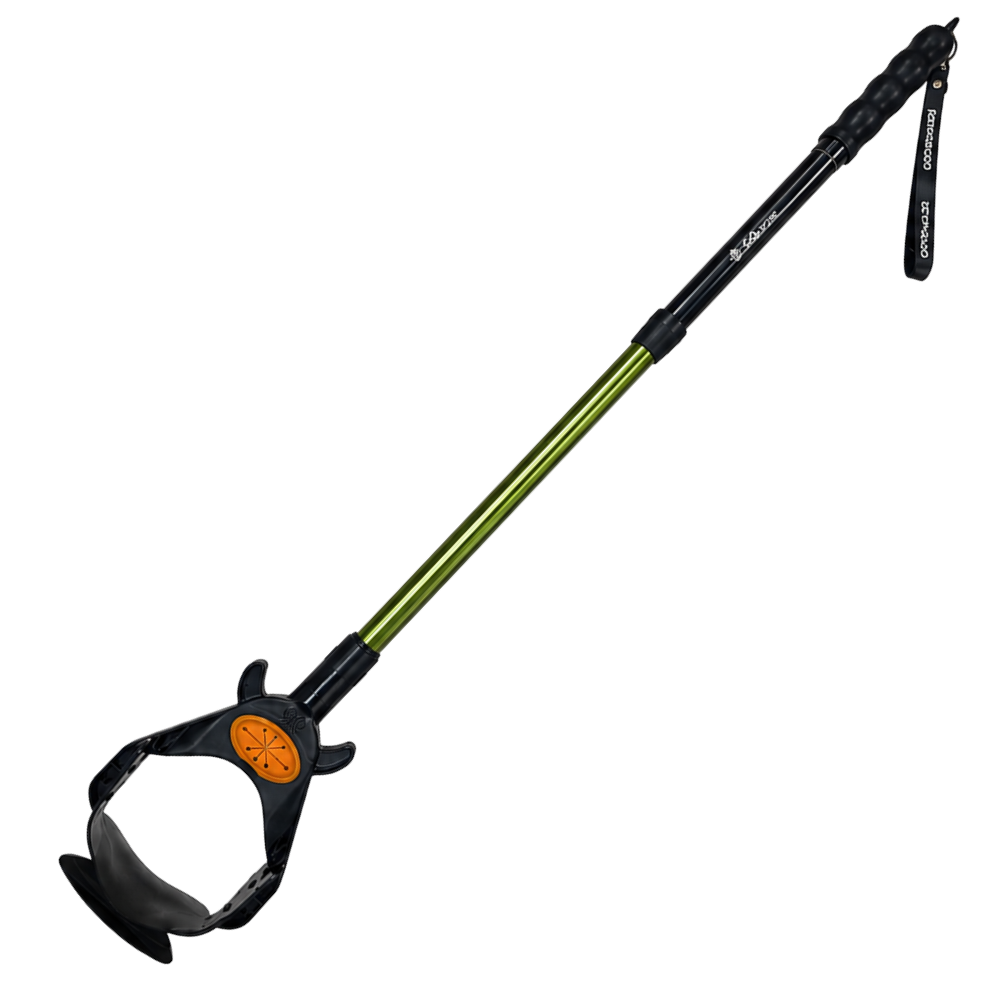
The fix is a habit, not a purchase: glance at what you collect before you tie the bag. A long-handled XP Pro pooper scooper lifts stool clear of the grass so you can actually see it, which is the whole point of the glance.
Dark is one of several shades worth knowing. The full dog poop color chart covers the range from yellow to grey, and what green dog poop means handles the other shade owners panic about most.
One point of confusion worth clearing up: if you arrived here looking for information on black versus colored poop bags, that page is about bag material and visibility, not about your dog’s stool.
A dog can look bright and energetic while something is going on internally, so normal behaviour is not a reason to skip the call. Tarry black stool still warrants same-day contact with your vet. If the stool is simply very dark brown and dry, note any recent food, treats or supplements and raise it at your next appointment.
Yes. Raw diets, organ meat such as liver, blood meal in some formulas and very dark treats all darken stool without anything being wrong. A food change in the last few days is one of the first things a vet asks about, so check whether you switched brands, formulas or batches and have the date ready.
Tarry stool is black or reddish-black, shiny rather than matte, and sticky. It smears instead of breaking apart and often looks like wet coffee grounds. Smeared thinly on white paper, the edge still reads black. Dark brown stool caused by diet or dehydration is usually dry, dull and crumbly, and the smeared edge reads clearly brown.
If the stool is black, shiny and tarry, call your veterinarian today and describe exactly what you saw. If your dog also has pale gums, repeated vomiting, weakness or collapse, go to an emergency clinic now rather than waiting for an appointment slot. Black dog poop has harmless explanations as well as serious ones, and only an examination can tell them apart, so make the call and let the vet decide. Bag a fresh sample and bring your list of foods and medications with you.

Alec Beaton is the Founder & Inventor of Pooch Approved Products and GoGo Stik®. Inspired by real-life pet parenting, he turns everyday cleanup challenges into simple, innovative solutions that make life better for pets and their people.
Hiring a pet waste removal service? Ask these 7 questions first – what’s included, how quotes are priced, winter policy, and when DIY is cheaper.
Choosing a cat litter disposal system? Compare 6 ways to dispose of cat litter, from sealed pails to litter box bags, plus flushing facts and multi-cat tips.
Skip the novelty mugs. These 12 practical gifts for dog owners get used weekly, chosen by the daily chore they remove, plus what not to buy.