Dog Wipes
Puppy Wipes: 6 Things to Check Before You Buy
Are baby wipes safe for puppies? Here are 6 honest checks for choosing puppy wipes, plus routines for muddy paws, accidents and nervous first-time owners.

Puppy wipes are simply pet cleaning wipes used on a young dog’s paws, rear and coat between baths, and the thing that matters is what is in them, not the brand on the pack. If you are standing in the kitchen holding a packet of baby wipes wondering whether you are allowed to use one: a single wipe on a muddy paw in a pinch is not a crisis, but it is not what you want to reach for three times a day.
First-time owners are right to be cautious here. A young dog is small, new to you, and you have no baseline yet for what its skin normally looks like. The checks below are about what to look at, not about trusting any one product.
A puppy is not a small adult dog. Its skin is thinner and more reactive, and the coat covering it is finer, so anything you apply sits closer to the skin itself.
The frequency is different too. An adult dog might get wiped after a muddy walk once or twice a week. A puppy in house-training can need a rear or paw clean several times in a single day, which means a mild product and a light touch matter far more than they would later on.
Baby wipes are formulated for human skin, and human skin and dog skin do not have the same pH. That mismatch is the core reason they are not a daily tool for a dog, even a very clean-smelling one.
The bigger issue is ingredients. Scan any pack, human or pet, for these categories:
Using one baby wipe on a paw after a muddy dash to the car is not something to panic about. Using the pack as your everyday system is the part worth changing.
These are the six checks worth running on any pack before it becomes part of your routine.
The front says “gentle” and “natural”. The back tells you the truth. Look for alcohol, added fragrance and essential oils, in that order. Pet products carry labelling for a reason, and the FDA’s Center for Veterinary Medicine is the authority on how animal products are regulated and labelled in the US. If a pack will not tell you what is in it, that is information in itself.
Smell is a dog’s primary sense. A heavy perfume that reads as “fresh” to you is overwhelming to an animal whose nose is its main way of understanding a room. Unscented or barely scented is the safer default, and it also makes it easier to notice a genuine odour change later.
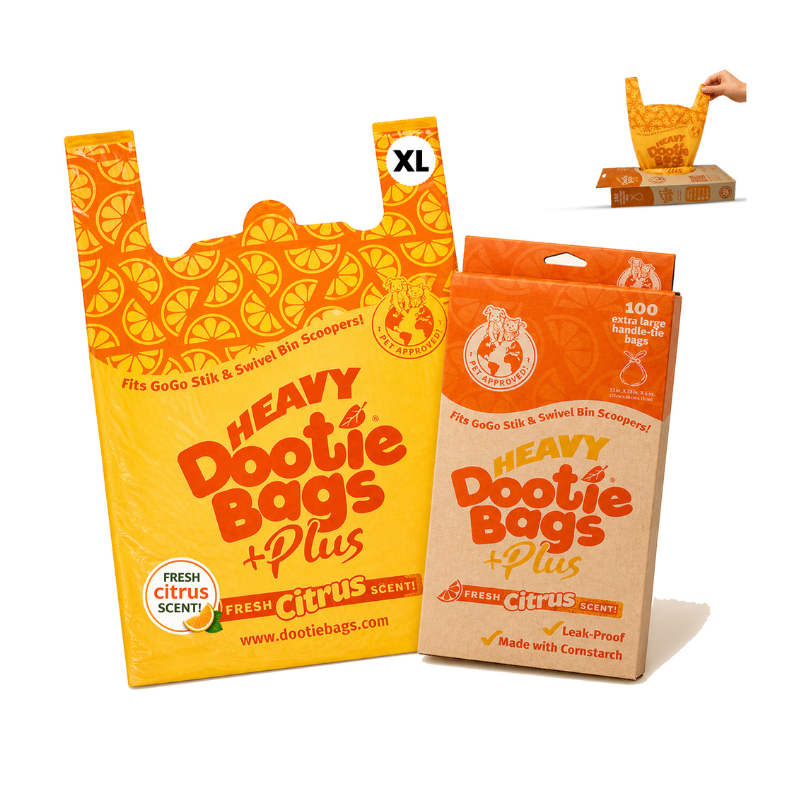
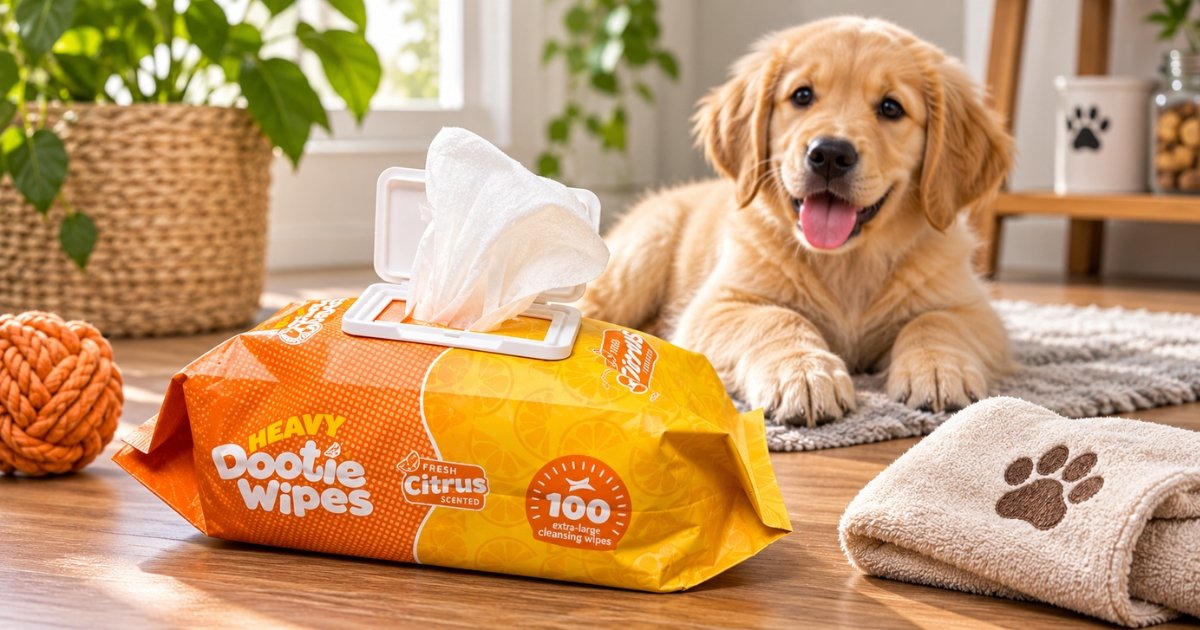
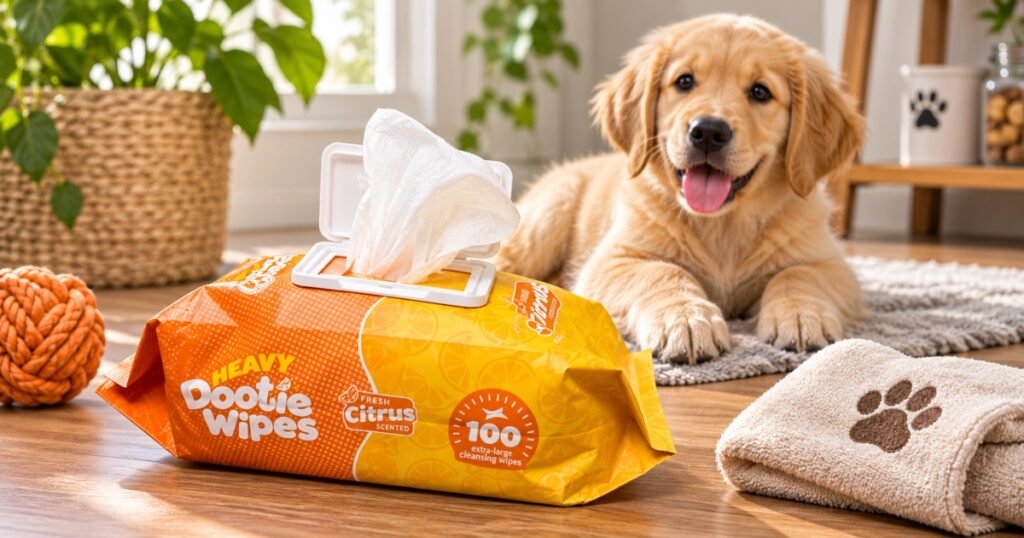
Thin wipes tear on grit. You end up using three where one would do, and your fingers end up in the mess anyway. For a muddy paw or a rear end, you want a wipe with enough body to take pressure without shredding. Heavy Dootie Pet Wipes are bamboo-based, come 100 to a pack, and are made for paws and rear ends, which is where most of a puppy’s cleaning happens. Check any pack you buy against the job in front of you.
Paws and rear are routine cleaning. Faces, ears and eyes are not the same job. Those areas are more delicate, mistakes are harder to undo, and a general-purpose wipe is often the wrong tool. Keep routine cleaning routine and treat anything near the head as a separate, slower task.
After each wipe, look at the skin you just touched. You are watching for redness, flaking, or the puppy returning to scratch or lick that spot.
If the skin is red, broken or weeping, or the puppy is scratching at it, stop wiping that area and speak to your vet. Do not switch products and keep going to see what happens.
A half-open pack dries out, and a dried-out pack is the single most common reason people give up and go back to the box of baby wipes. Press the lid shut properly, store the pack flat and out of direct sun, and keep it somewhere room temperature rather than in a hot car.
A damp cloth gets dismissed too easily. For plain mud and water, it is free and it works.
| Skin suitability | Scent | Grip when wet | Best use | |
|---|---|---|---|---|
| Baby wipes | Made for human skin; check for alcohol and fragrance | Often perfumed | Thin, tears on grit | One-off emergency only |
| Pet wipes | Formulated for animal use; still read the label | Unscented or light | Thicker, holds together | Rear cleaning, daily paw jobs |
| Damp cloth | Water only, nothing added | None | Excellent, washable | Plain mud, big surface areas |
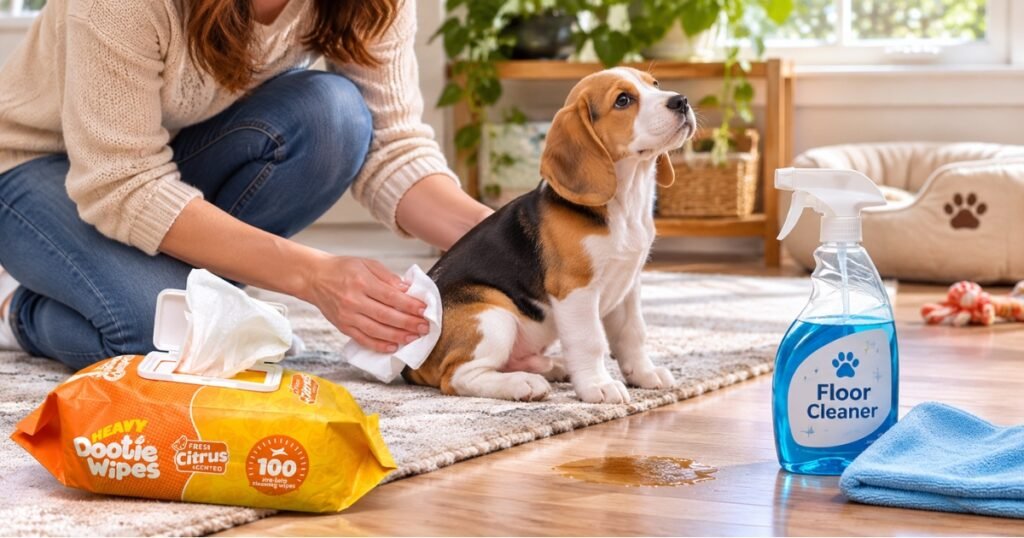
The common first-time mistake is using one product for both. Floor cleaners are built to cut odour on hard surfaces and should not go near the dog. Wipes meant for an animal are not going to lift anything out of a rug.
Cleaning a soiled rear matters because faeces can carry roundworm, hookworm and other parasites described by the American Veterinary Medical Association, and a puppy sits on your furniture. Keep the two supplies in different places so you never grab the wrong one at speed.
Solve this at the door and you solve it everywhere. Once a muddy puppy is loose in the hall, you are cleaning a house instead of four feet.
A washable mat, a towel on a hook and the wipes within arm’s reach of the back door. Nothing else. If you have to walk to a cupboard, you will skip it.
A baby gate across the hall buys you thirty seconds. That is all the time this job actually takes once the supplies are already there.
Handling is the real skill. A puppy that learns early that paw handling is normal will tolerate nail trims and vet exams for the rest of its life.
Wipe one paw, give a treat, stop. Build up over days rather than forcing all four at once. The method behind teaching a dog to enjoy wipe cleaning matters more at this age than at any other.
Mud collects in the webbing, not on the pad. Our guide to using dog paw wipes step by step covers the grip and the order to work in, and the same approach scales down to puppy paw wipes.
Any wipe leaves moisture behind. Follow with a dry towel, especially between the toes and in skin folds, and let the puppy finish settling on something absorbent rather than a cold tile floor. It takes ten seconds and it stops the damp-dog smell before it starts.
Several spot cleans a day during house-training is normal and expected. What is not useful is wiping a clean puppy because it feels productive.
Wipe what is dirty, leave what is not. For adult dogs the picture changes completely, and our full body-area wipe breakdown and post-walk paw cleaning routine cover how the frequency drops as the dog matures.
There is no universal age at which wipes become fine. It depends on the individual puppy, its coat, its skin and what you are cleaning.
You will be at the clinic repeatedly during the first few months for vaccinations and checks. Take the pack with you, show the label, and ask. It costs nothing and it settles the question properly.
Once, on a paw, it is not something to lose sleep over. Baby wipes are made for human skin and many contain added fragrance or alcohol, so they are a poor daily choice for a dog. If you do use one, rinse or wipe the area with plain water afterwards, dry it, and switch to a product made for animals for anything routine.
The best pack is the one that passes the label check: no alcohol, no added fragrance, no essential oils, and thick enough not to shred on a muddy paw. Beyond that, match the wipe to the job. Paws and rear ends need a sturdy wipe. Faces and ears are a different, more careful task. Ask your vet to look at the label at your next visit.
Work from clean fur inwards, use a fresh wipe for each pass rather than reusing one, and do not scrub. Dry the area gently afterwards. If the skin there looks red, raw or the puppy keeps licking or scooting, stop cleaning that area with wipes and call your vet rather than trying a different product.
Choosing puppy wipes comes down to reading the back of the pack, watching your dog’s skin for the first week, and keeping the supplies where the mess actually happens. A damp cloth handles plain mud for free, and nothing you buy replaces checking in with your vet at a routine appointment. Pick one pack, run the six checks on it, and build the doorway routine before the next rainy day.
Alec Beaton is the Founder & Inventor of Pooch Approved Products and GoGo Stik®. Inspired by real-life pet parenting, he turns everyday cleanup challenges into simple, innovative solutions that make life better for pets and their people.
Are baby wipes safe for puppies? Here are 6 honest checks for choosing puppy wipes, plus routines for muddy paws, accidents and nervous first-time owners.
Hiring a pet waste removal service? Ask these 7 questions first – what’s included, how quotes are priced, winter policy, and when DIY is cheaper.
Choosing a cat litter disposal system? Compare 6 ways to dispose of cat litter, from sealed pails to litter box bags, plus flushing facts and multi-cat tips.