


Dog Health & Wellness
Is Dog Poop Dangerous to Humans? 6 Real Risks
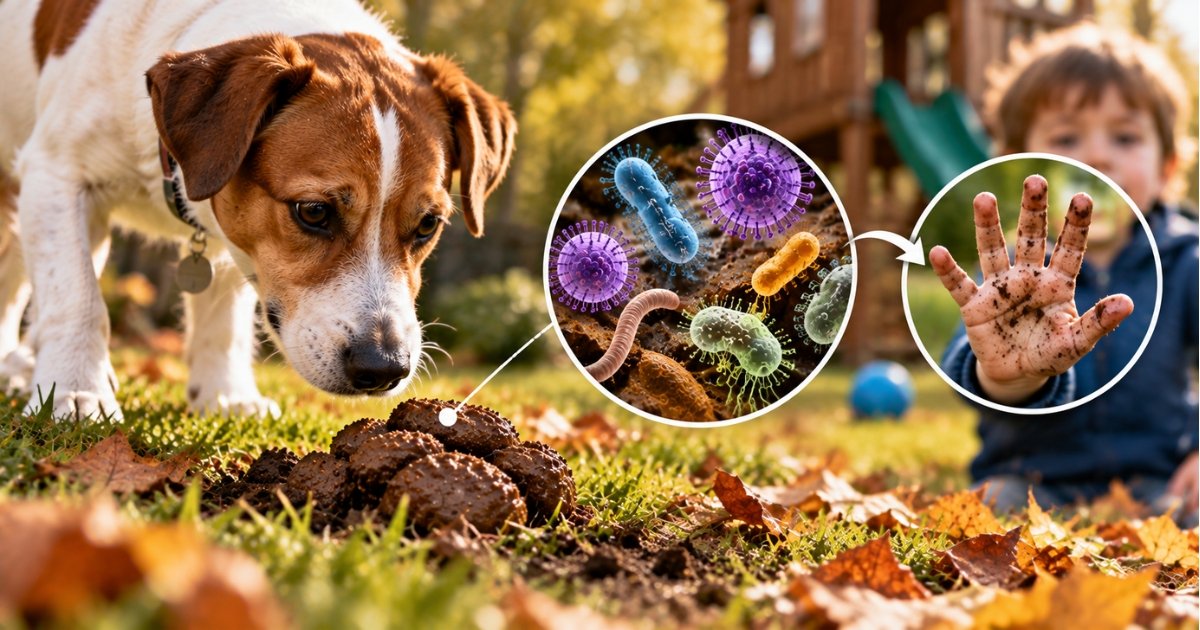
Is dog poop dangerous to humans? It can carry parasites and bacteria. The 6 real risks, who is most at risk, and the routine that stops them.
 Skip to content
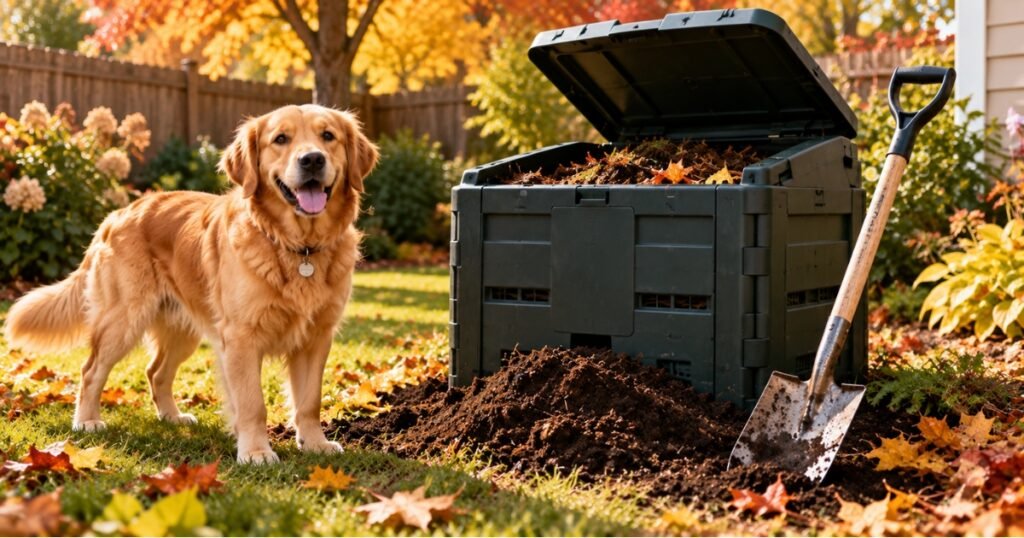
A dog poop composter is a sealed in-ground chamber that uses bacteria and enzymes to break waste down into liquid that drains away into the surrounding soil, so nothing goes out with the trash. It works well in warm weather and well-draining soil, but a dog poop composter only succeeds if you site it correctly, feed it regularly, and follow one hard rule: nothing it produces goes anywhere near food crops.
A dog poop composter is essentially a miniature septic tank for your yard. Waste goes in through a lid at ground level, bacteria break it down inside the chamber, and the liquid left over seeps out through the open or perforated base into the soil below.
Most units are a tapered plastic tub, 15 to 24 inches deep, with a hinged foot-pedal lid flush with the lawn and an open bottom that sits on a gravel bed.
Breakdown is mostly anaerobic, like a septic system rather than a garden heap. It runs on moisture, warmth and a steady bacterial population, which is why water and starter powder matter more than stirring.
Placement decides whether a dog poop composter works or becomes a smelly hole you regret. Pick a spot that is sunny, downhill from the house, and well away from anything you eat, drink or play on.
Dig a two-foot hole, fill it with water, and come back a day later. If water is still standing, your clay soil will not drain and an in-ground unit will back up.
If your soil will not drain, hot composting in a dedicated bin is the alternative. It demands more work: a carbon source such as sawdust or dry leaves at roughly two parts carbon to one part waste, weekly turning, and enough volume to hold heat.
The pile needs to run hot and stay hot for several days, then cure for a year. Our guide to pet waste composting safety walks through the temperature and curing detail.
A homemade dog poop composter costs very little and performs much like a commercial one. The classic build is a five-gallon bucket sunk into a gravel-lined hole.
A bought dog poop composter buys you a better lid and a foot pedal, not better biology. Here is how the common approaches compare.
| Option | Setup effort | Best for | Main drawback |
|---|---|---|---|
| DIY bucket digester | One afternoon | Sandy or loamy yards | Lid seal is basic |
| Commercial digester kit | Under an hour | Anyone wanting a foot pedal | Same soil limits apply |
| Hot compost bin | Ongoing | Clay soil, patient owners | Needs turning and space |
| Airtight outdoor container | Minutes | Renters, frozen ground | Still goes to the trash |
A dog poop composter needs a bacterial population, and cold, dry waste alone will not supply one. Most owners add a scoop of digester powder or a septic-tank starter tablet dissolved in warm water.
A reasonable rhythm is a dose weekly for the first month, then every two to four weeks. Add a gallon of water with each dose in dry weather. Avoid bleach, drain cleaner or disinfectant near the unit, since those kill the bacteria you are cultivating.
A dog poop composter only stays ahead of the yard if you scoop most days. Drop waste in loose, without a bag, unless the bag is certified compostable.
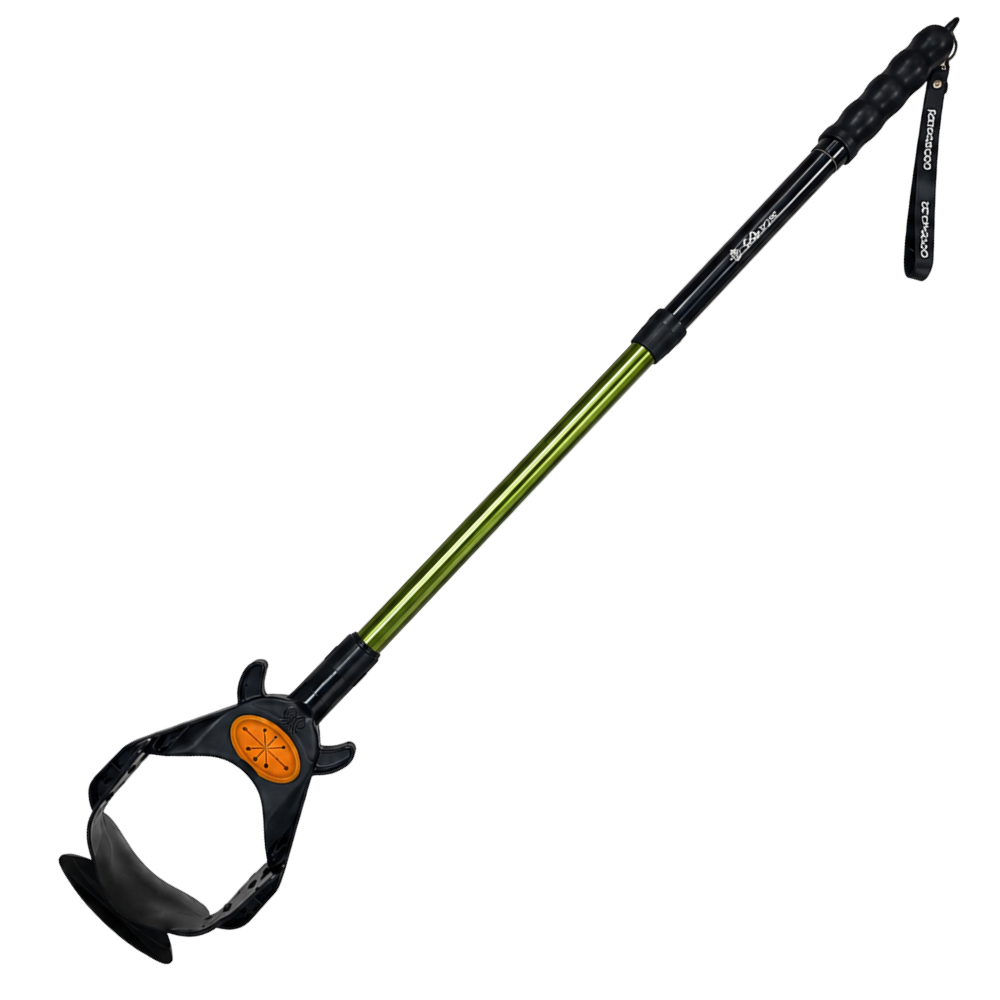
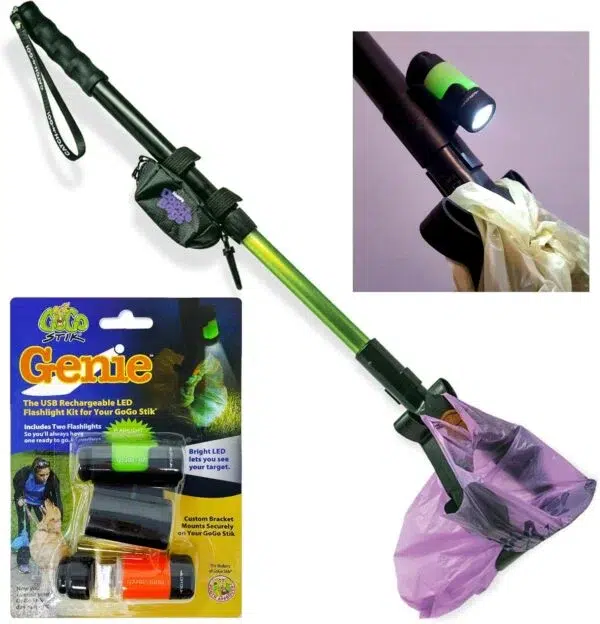
A long-handled tool makes that painless. The XP Pro long-handle scooper lets you collect and release straight over the open lid without bending, and the hybrid rake-spade attachment handles soft piles in grass. For anything the digester cannot take, keep strong EZ-tie poop bags nearby.
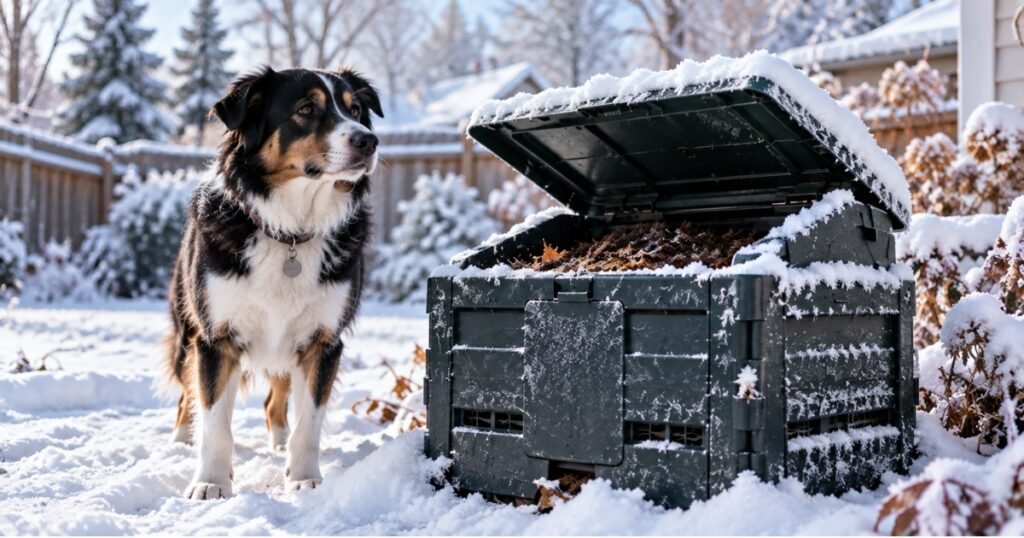
Below roughly 40 degrees Fahrenheit, the bacteria in a dog poop composter slow down and the chamber fills faster than it empties. Frozen ground also stops liquid from draining.
Plan for a pause. Stop adding once the top few inches of soil freeze, bag waste through the cold months, and restart with a double dose of enzyme starter in spring. Our winter dog waste handling guide covers the snow-season workaround.
Whatever comes out of a dog poop composter is not garden fertilizer. Dog waste can carry roundworm and hookworm eggs, and roundworm eggs in particular are stubborn survivors in soil, as the AVMA’s parasite guidance explains.
Keep the output in the ground where it lands. Never spread it on vegetable beds, herbs, berry patches or anywhere children dig. For more on this myth, see whether dog waste works as fertilizer.
Siting matters for water as much as for parasites. Pet waste is a recognized source of nutrient and bacterial pollution in waterways, which the EPA’s yard guidance addresses directly.
Keep your digester off slopes that drain toward a ditch, curb or creek, and out of any area that puddles after rain. If your property has a shallow water table or a private well, skip the in-ground route and compost above ground or bag instead.
A dog poop incinerator sounds efficient and rarely is. Backyard burning of animal waste is restricted or banned in many US municipalities, the smoke is unpleasant for neighbors, and wet waste needs a lot of fuel to burn cleanly.
Commercial incineration exists for kennels and veterinary facilities, but home units are niche and expensive. For almost every household, a digester, a hot bin or bagged trash disposal is the more practical choice.
If digging is out, an airtight dog poop container on the patio does the same odor job with none of the siting rules. Use a lidded pail with a gasket, line it, and empty it on trash day.
Scented, leak-resistant bags keep the pail tolerable in summer heat; the citrus-scented Heavy Dootie bags are sized for a week of large-dog output. See also our general waste disposal guide.
Most problems trace back to water, temperature or soil.
If liquid still stands after a month of correct dosing, move the unit to higher, sandier ground rather than fighting the site.
One standard digester suits one small or medium dog. Two medium dogs usually need a larger chamber or a second unit spaced several feet away, and a household with three dogs or a giant breed will outpace almost any single in-ground system in summer.
A practical hybrid works best: digest what you can, bag the overflow, and read how often to scoop your yard to keep the load predictable.
In warm weather with regular enzyme dosing, a fresh deposit usually liquefies within a few days to a couple of weeks. Cooler soil slows that dramatically, and below about 40 degrees Fahrenheit the process largely stops. Most owners find a single-dog unit keeps up from late spring through early fall, then needs a winter break while the ground is frozen.
Only certified compostable bags, and even those break down slowly in a cool anaerobic chamber. Standard polyethylene bags will never disappear and will clog the unit within weeks. The cleanest method is scooping waste loose with a long-handled tool and dropping it straight in, keeping your bags for trash-day disposal or for walks away from home.
A properly sited unit with an intact lid gasket should produce very little odor between openings. Smell almost always means one of three things: the chamber is overloaded, the soil is not draining, or the lid seal is fouled. Re-dose with enzyme starter, rinse the rim, and pause additions for a few days to let the bacteria catch up.
A dog poop composter is a genuinely good solution for a single-dog household with sunny, well-draining soil and room to keep it far from wells and vegetable beds. Run the drainage test before you buy or dig, budget for enzyme starter, and plan a winter pause with bags instead. Pair it with a long-handled scooper so daily collection takes two minutes, and keep strong bags on hand for everything the chamber cannot absorb.

Alec Beaton is the Founder & Inventor of Pooch Approved Products and GoGo Stik®. Inspired by real-life pet parenting, he turns everyday cleanup challenges into simple, innovative solutions that make life better for pets and their people.
Is dog poop dangerous to humans? It can carry parasites and bacteria. The 6 real risks, who is most at risk, and the routine that stops them.
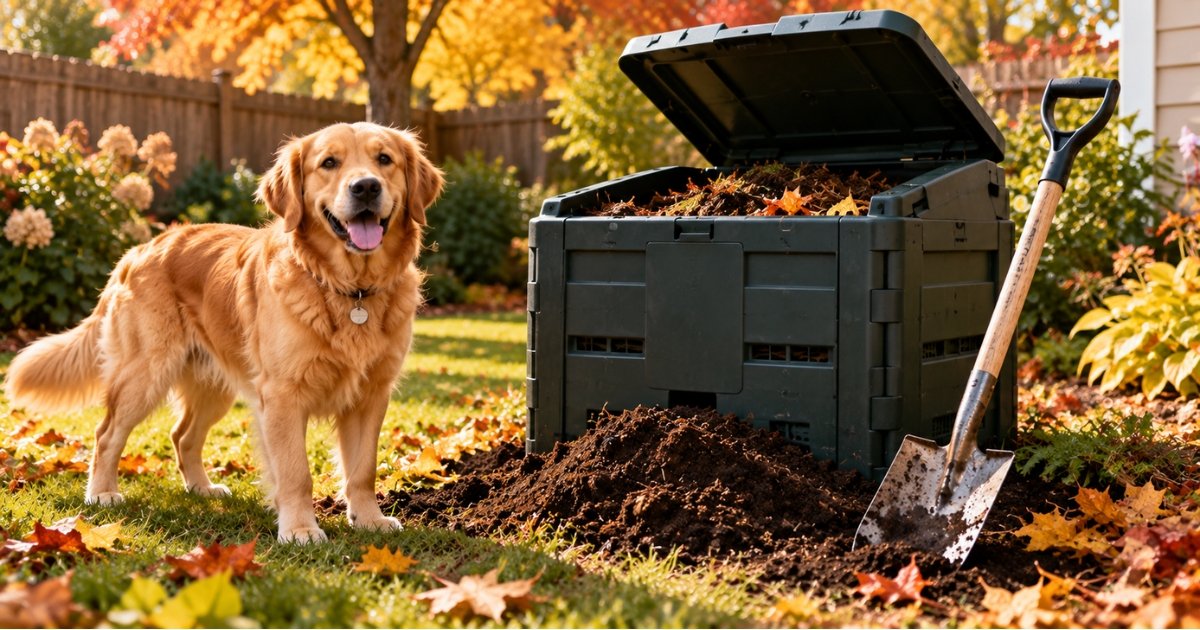
A dog poop composter turns waste into soil drainage instead of landfill. Learn siting rules, enzyme starters, DIY builds, winter fixes and safety limits.
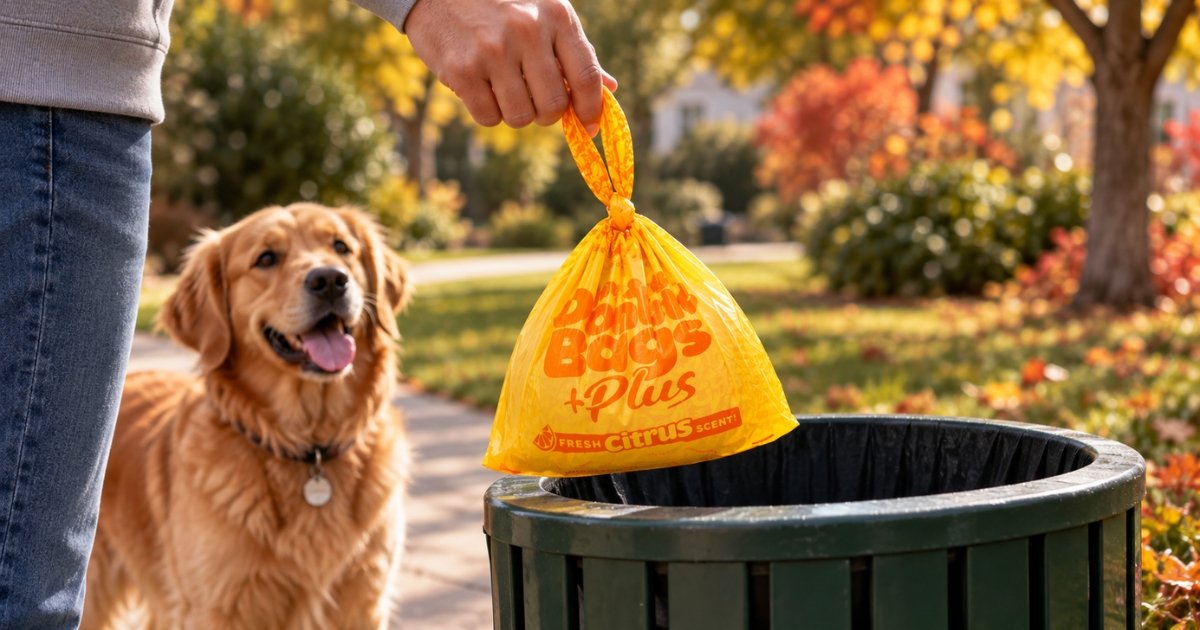
Learn how to dispose of dog poop safely: bagging and binning, flushing, composting, digesters and no-bin walks. What is safe, what is not, and why.