Dog Health & Wellness
Is Dog Poop Dangerous to Humans? 6 Real Risks
Is dog poop dangerous to humans? It can carry parasites and bacteria. The 6 real risks, who is most at risk, and the routine that stops them.
 Skip to content
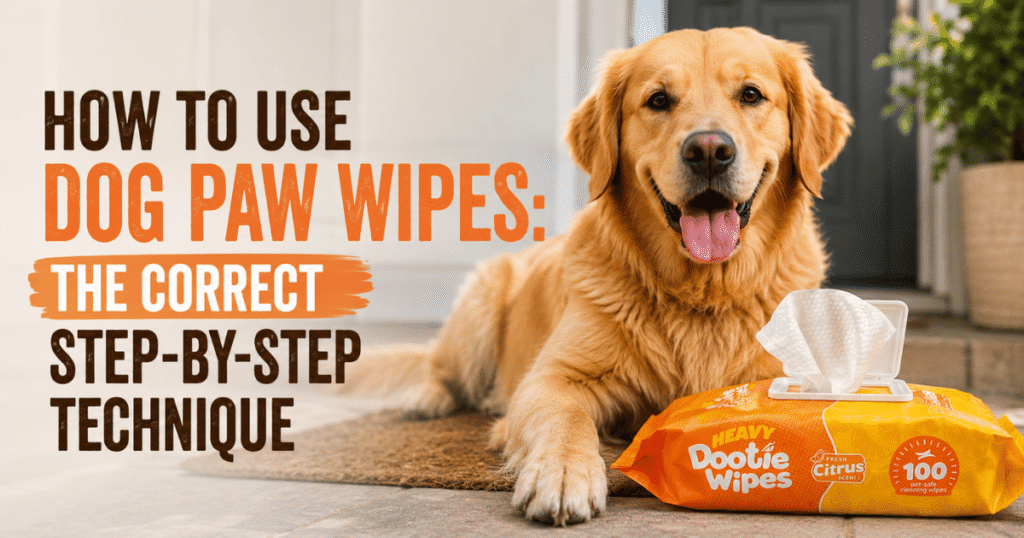
How to Use Dog Paw Wipes : Your dog just had a great walk. Now they are bolting through the front door, paws first bringing along everything they stepped on outside. Mud. Pollen. Bacteria. Pesticides. Road salt. Bird droppings. Urine from other dogs. All of it, tracked directly across your floors, your rugs, and within seconds, your furniture.
Most dog owners know they should clean their dog’s paws after a walk. But a full bath every day is not realisticit’s time-consuming, hard on your dog’s coat, and frankly exhausting. That’s exactly where dog paw wipes come in. Used correctly, they are the single most effective daily hygiene habit you can build for your dog taking less than three minutes and preventing a long list of health and cleanliness problems.
In this guide you will learn exactly how to use dog paw wipes properly, when to do it, what to look for in a quality product, and why this simple routine matters more than most dog owners realize.
Quick Answer: Wipe all four paws immediately after every walk before your dog enters the house. Use a large, thick, alcohol-free dog paw wipe. Focus on the pads, between the toes, and the lower leg fur. The whole process takes under 3 minutes and protects your dog’s health and your home’s cleanliness every single day.
It sounds simple, but the reasons behind paw cleaning go well beyond dirty floors. Here is what your dog’s paws actually pick up on every walk:
Pollen and Allergens: Dogs walk through grass, brush against plants, and step on pollen-covered ground constantly. When they come inside, they carry those allergens directly onto your floors and furniture — and then lick their paws, ingesting them directly. For dogs with seasonal allergies, this is a major trigger for paw licking, chewing, and skin irritation.
Pesticides and Lawn Chemicals: Sidewalks, parks, and neighbors’ lawns are frequently treated with pesticides, herbicides, and fertilizers. Your dog’s paw pads absorb these chemicals through skin contact. Regular paw wiping is one of the most practical ways to reduce your dog’s exposure to lawn chemicals.
Bacteria and Fecal Matter: Shared outdoor spaces sidewalks, dog parks, trail paths contain bacteria and traces of fecal matter from other animals. Dogs lick their paws instinctively, meaning whatever is on the paws often ends up in their mouths.
Road Salt and De-Icers (Winter): In cold months, road salts and chemical de-icers are applied to sidewalks and roads. These are highly irritating to paw pads causing cracking, redness, and pain and toxic if ingested through licking.
Mud and Moisture: Wet paws left uncleaned create a breeding ground for yeast and bacteria between the toes a common cause of the ‘corn chip’ smell and chronic paw licking that many dog owners notice.
Vet Insight: Dermatologists and veterinarians increasingly recommend daily paw wiping as a first-line defense against environmental allergies in dogs particularly for breeds prone to atopic dermatitis like Golden Retrievers, Labradors, and West Highland Terriers.
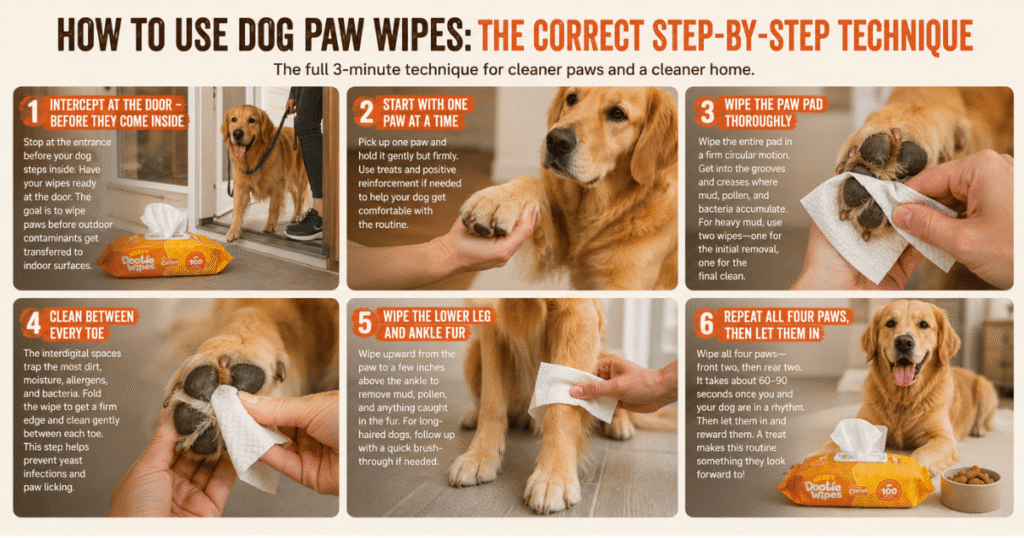
Most dog owners wipe paws in a rush a quick swipe across the bottom and done. But to actually remove allergens, bacteria, and chemicals, there is a right way to do it. Here is the full 3-minute technique:
The moment you return from your walk, stop at the entrance before your dog steps inside. Have your wipes ready at the door a dispenser mounted near the entrance works well. The goal is to wipe paws before outdoor contaminants get transferred to indoor surfaces.
Pick up one paw and hold it gently but firmly. Some dogs resist paw handling if yours does, start with short positive sessions using treats to build comfort with this routine. Most dogs accept it easily once it becomes a familiar part of coming home.
The paw pad is the primary contact surface with the ground. Wipe the entire pad in a firm circular motion. Get into the grooves and creases of the pad where mud, pollen, and bacteria accumulate. For heavy mud, use two wipes one for the initial removal, one for the final clean.
This is the step most owners skip and it is the most important one. The interdigital spaces (between the toes) trap moisture, dirt, allergens, and bacteria more than any other part of the paw. Fold the wipe to get a firm edge and work it gently between each toe. For dogs prone to yeast infections or paw licking, this step alone can make a dramatic difference.
Particularly for medium and long-coated breeds, the fur above the paw picks up mud and pollen just as much as the pads. Wipe upward from the paw to a few inches above the ankle to remove anything caught in the fur. For long-coated breeds, a quick brush-through after wiping helps.
Work through all four paws — front two, then rear two. The whole process takes about 60–90 seconds per dog once you and your dog are comfortable with the routine. Then let them in and reward them. A treat at the end of the wipe routine makes most dogs genuinely excited to come to the door for their post-walk cleanup.
Timing matters. Here is when dog paw wipes make the most difference:
After Every Walk (Non-Negotiable): This is the core habit. Every walk ends with a paw wipe before coming inside. No exceptions — especially during pollen season or after rain.
After Dog Park Visits: Shared dog parks are high-traffic areas with multiple dogs’ waste, urine, and bacteria on the ground. Always wipe immediately after a park visit.
During Winter After Salted Sidewalks: Road salt is painful and toxic. In winter, paw wiping after every outdoor outing is a health necessity — not just a hygiene preference.
After Hiking or Trail Walks: Trails carry wild animal feces, plant sap, and thorns. A thorough wipe-down after trail walks protects both your dog and your car interior on the way home.
Before Bed: If your dog sleeps in your bed or on furniture, a quick paw wipe before bedtime removes whatever accumulated since the last walk.
Your dog’s paws face different challenges throughout the year. Here is how to adjust the routine seasonally:
| Season | Main Hazards | Key Wipe Focus |
| 🌸 Spring | Heavy pollen, wet mud, first lawn chemical applications | Wipe between toes thoroughly — pollen builds up there. Double-wipe after rainy walks. |
| ☀️ Summer | Pesticides, fertilizers, hot pavement residue, bacterial growth | Focus on pads and lower legs. Check for cracks in pads from hot surfaces. |
| 🍂 Autumn | Fallen leaves (harbor mold), wet ground, early frost treatments | Wipe fully — moldy leaves contain allergens. Check for burrs caught in fur. |
| ❄️ Winter | Road salt, de-icers, antifreeze residue, ice and snow | Most critical season. Wipe immediately after every outdoor trip. Apply paw balm after wiping. |
Not all How to Use Dog Paw Wipes are created equal — and the wrong product can do more harm than good. Here is what separates a quality paw wipe from a cheap one:
✅ Extra-Large Size: Big dogs need big wipes. A small wipe will not cover a Labrador’s paw in a single swipe. Look for generously sized wipes that cover the full pad and lower leg without tearing.
✅ Thick, Durable Material: Thin wipes shred mid-wipe — especially when cleaning between toes or scrubbing off dried mud. Bamboo-based wipes are significantly more durable than standard synthetic wipes.
✅ pH-Balanced Formula: Dog skin has a different pH than human skin. Wipes formulated for humans can disrupt the skin barrier on paw pads with repeated use. Always choose a formula designed specifically for dogs.
✅ Alcohol-Free: Alcohol dries paw pads and causes cracking and discomfort — the opposite of what you want from a hygiene routine. Avoid any wipes containing alcohol.
✅ Gentle Natural Scent: A light citrus or herbal fragrance helps neutralize the outdoor smell from paws without chemical irritants. Avoid heavily fragranced wipes with artificial perfumes.
✅ Safe if Licked: Dogs lick their paws. Whatever is on your wipe will partially end up in their mouths. Only use wipes that are explicitly formulated as pet-safe.
⚠️ Avoid using: Baby wipes (wrong pH), antibacterial hand wipes (too harsh), bleach-based cleaning wipes, or paper towels with cleaning solution. These can cause paw pad irritation, dryness, and chemical exposure.
Some dogs resist paw handling, especially if they were not introduced to it as puppies. Here is how to build the routine comfortably for both of you:
Gogostik’s Heavy Dootie Pet Wipes were designed with the daily paw-wiping routine in mind — and with large-dog owners as the primary user.
✅ Extra-large bamboo wipes — sized for big breeds like Labradors, German Shepherds, and Golden Retrievers
✅ Thick and durable — does not tear when cleaning between toes or scrubbing dried mud from pads
✅ Fresh citrus scent — removes outdoor smell without artificial chemicals
✅ Alcohol-free and pH-balanced for dogs — safe for daily use on sensitive paw pads
✅ Pet-safe formula — fully safe if your dog licks their paws after wiping
Used as part of a daily post-walk routine, they are one of the most practical investments you can make in your dog’s long-term health — and one of the simplest ways to keep your home cleaner every single day.
The paw wipe routine is one of those small daily habits that pays enormous dividends over time. Done consistently after every walk, every day it protects your dog from allergens, chemicals, and bacteria. It keeps your floors and furniture cleaner. It reduces chronic paw licking and the skin irritation it causes. And it only takes three minutes.
The technique is simple: intercept at the door, wipe each pad, clean between every toe, wipe the lower leg fur, and reward your dog with a treat. Use a quality, thick, alcohol-free, pH-balanced dog paw wipe — and do it every single time they come in from outside.
Shop Gogostik’s Heavy Dootie Pet Wipes at gogostik.com extra-large bamboo wipes with citrus scent, built for large breeds and daily use. Free shipping on orders over $50.
After every single walk without exception. Daily paw wiping removes allergens, bacteria, and chemicals before your dog tracks them inside or licks them off their paws.
No. Baby wipes have a different pH balance than dog-safe wipes and can irritate paw pads with regular use. Always use wipes specifically formulated for dogs.
Start by handling paws during calm moments and rewarding with treats. Use a folded wipe to create a firm edge and work gently between each toe. Most dogs adapt within 1–2 weeks of consistent practice.
Alec Beaton is the Founder & Inventor of Pooch Approved Products and GoGo Stik®. Inspired by real-life pet parenting, he turns everyday cleanup challenges into simple, innovative solutions that make life better for pets and their people.
Is dog poop dangerous to humans? It can carry parasites and bacteria. The 6 real risks, who is most at risk, and the routine that stops them.
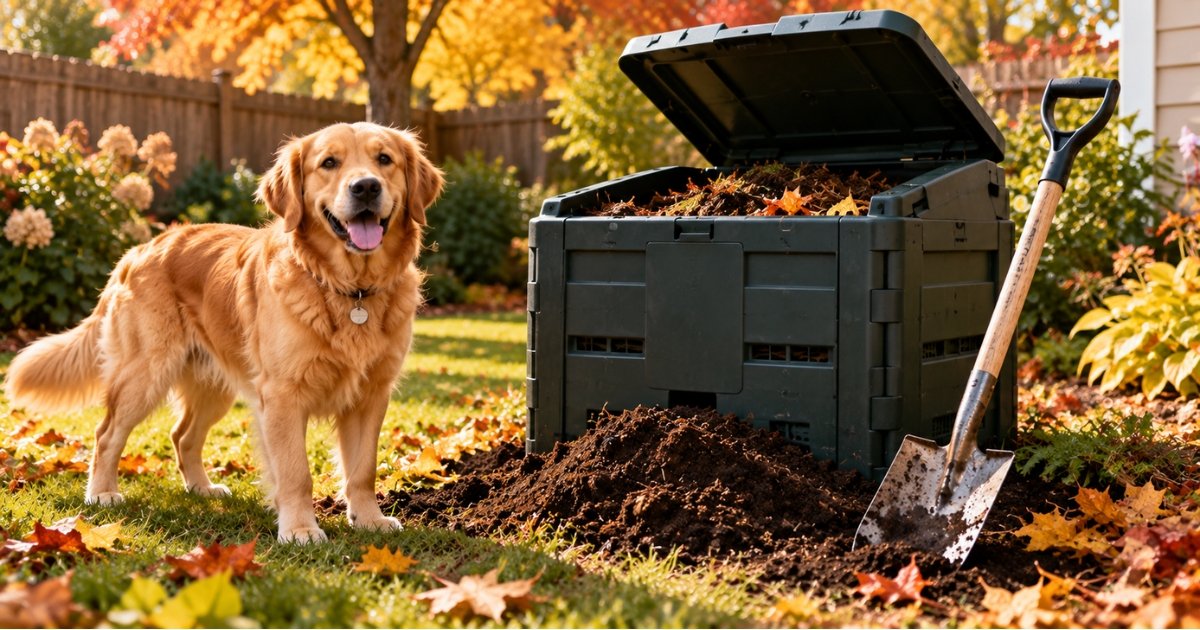
A dog poop composter turns waste into soil drainage instead of landfill. Learn siting rules, enzyme starters, DIY builds, winter fixes and safety limits.
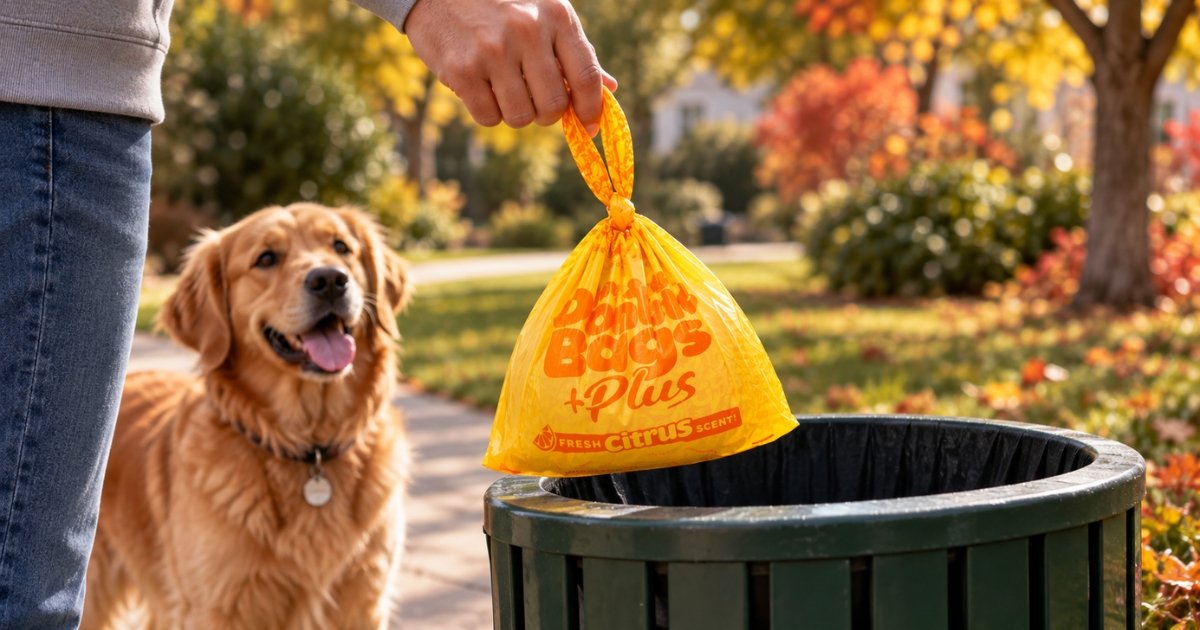
Learn how to dispose of dog poop safely: bagging and binning, flushing, composting, digesters and no-bin walks. What is safe, what is not, and why.